Reviewed by Thomas B. · Last Updated September 23, 2026 · How we review
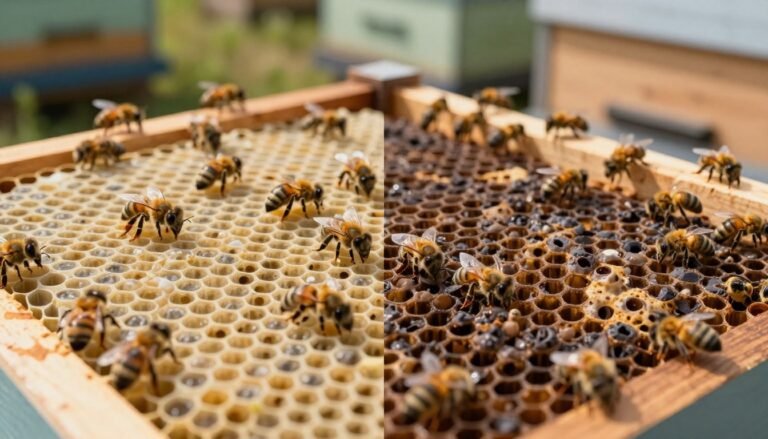
Slimy brood usually has one of three causes: American foulbrood, European foulbrood, or small hive beetle larvae. American foulbrood (AFB) turns dead larvae in capped cells into a brown, sticky mass that stretches into a rope. European foulbrood (EFB) leaves young, open larvae melted and watery. Small hive beetle larvae ferment the honey and pollen around the brood into a glistening slime. Brood killed by sacbrood, chilling, overheating, or heavy mite loads can also turn watery and look slimy. Where the slime is, whether the cells are capped or open, and whether it ropes will usually tell you which cause you are dealing with.
Treat slimy brood as a possible AFB case until you have ruled that out. AFB is the one cause here that can spread through your equipment for decades. This guide walks through each cause, then gives a five-minute field check and what to do next.
Key Takeaways
- AFB kills larvae after their cells are capped. The remains are soft, then sticky to ropy, and coffee-brown. A matchstick drawn out of the cell pulls a string.
- EFB kills younger, uncapped larvae. They look melted and twisted, and are watery rather than ropy. The smell can range from slightly to strongly sour.
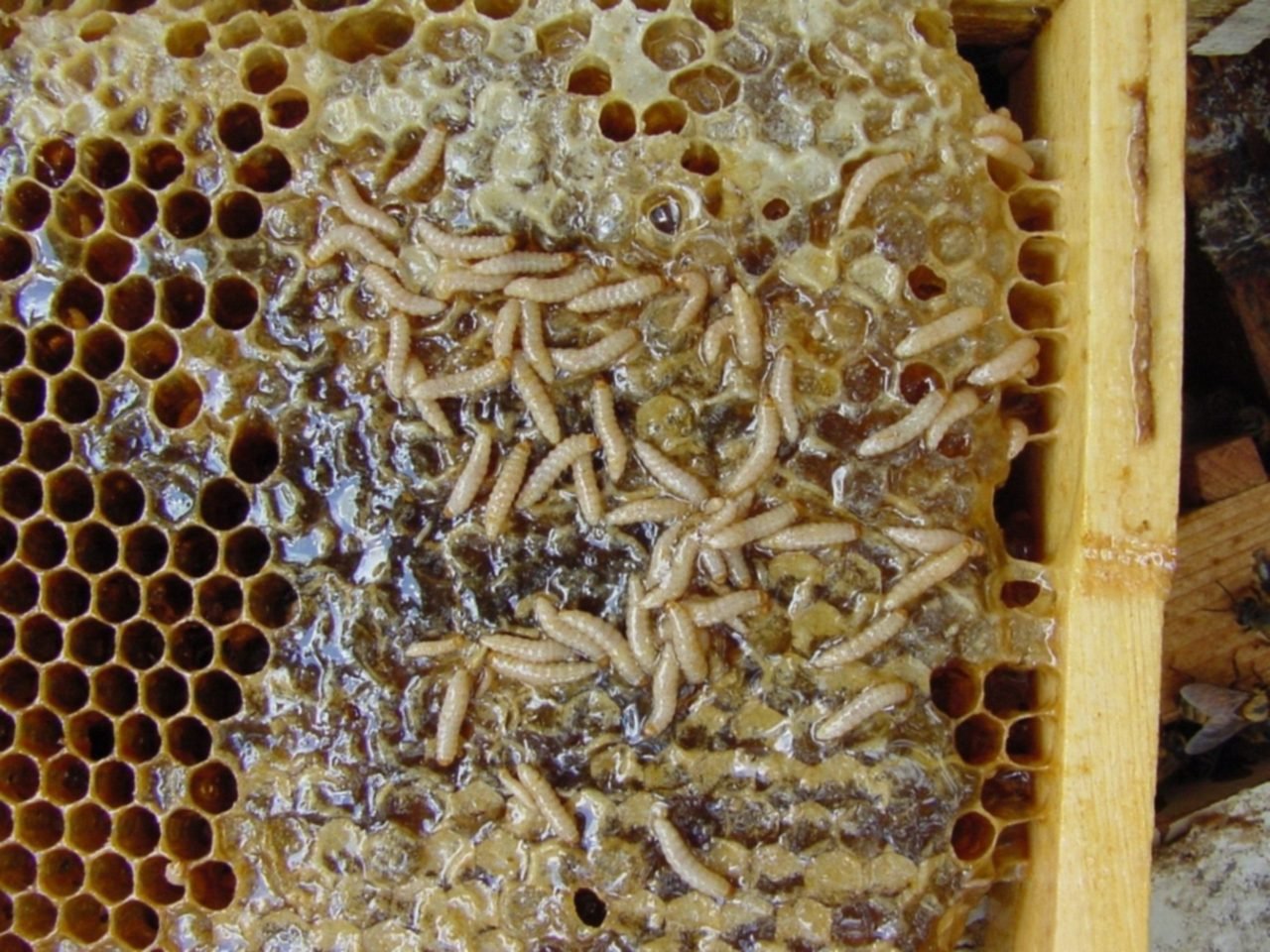
- Small hive beetle slime coats combs, honey, and pollen, not just individual cells. Look for small, spiny beetle larvae and a fermented smell.
- Sacbrood, chilled brood, overheated brood, and brood killed during varroa collapse can all look watery, but none of them produce a true rope.
- Stop moving frames between hives and get a lab or field test before you decide anything is harmless. The USDA Bee Research Laboratory in Beltsville diagnoses samples for free.
Table of Contents
- The Causes at a Glance
- American Foulbrood: Brown, Sticky, and Ropy
- European Foulbrood: Melted, Watery Open Brood
- Small Hive Beetle Slime: Fermented Honey and Pollen
- Sacbrood, Chilling, Overheating, and Mite Collapse
- A Five-Minute Field Check
- What to Do Next
- Frequently Asked Questions
The Causes at a Glance
The brood descriptions below follow the USDA Agricultural Research Service’s Diagnosis of Honey Bee Diseases (Shimanuki and Knox, Agriculture Handbook 690). The beetle row follows Mississippi State University Extension.
| Cause | Which brood | Consistency | Odor | Key field sign |
|---|---|---|---|---|
| American foulbrood | Older larvae and young pupae, in capped cells | Soft, becoming sticky to ropy | Slight to pronounced | Sunken, perforated cappings; remains rope out on a matchstick; flat, tight scale |
| European foulbrood | Young, usually uncapped larvae | Watery; rarely sticky or ropy | Slightly to penetratingly sour | Twisted, melted, off-color larvae; scale does not stick tightly |
| Small hive beetle | Brood, honey, and pollen alike | Glistening slime over comb surfaces; honey discolored and frothy | Fermented fruit | Small spiny larvae, no webbing; adult beetles running from light |
| Sacbrood | Larvae just after capping | Watery and granular inside a tough sac | None to slightly sour | Larva lifts out whole as a fluid-filled sac |
| Varroa collapse (parasitic mite syndrome) | Larvae to prepupae | Watery to pasty | No typical odor | Many mites, crawling bees, spotty brood |
| Chilled or overheated brood | All stages together | Chilled: crumbly, pasty, or watery. Overheated: watery | No characteristic odor described | Follows a cold snap, heat wave, or sudden loss of bees |
American Foulbrood: Brown, Sticky, and Ropy
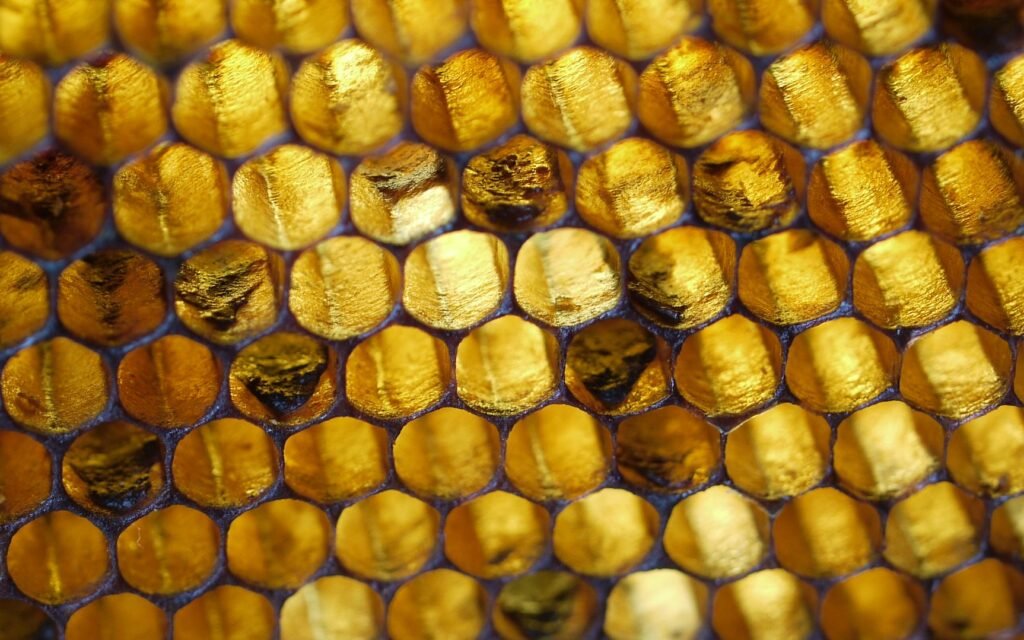
AFB is caused by the spore-forming bacterium Paenibacillus larvae. Larvae swallow spores in their food, and the infection kills them after their cells are sealed. That is why the first signs are in the cappings. They turn dark, sink inward, and look greasy, and some are chewed open by house bees.
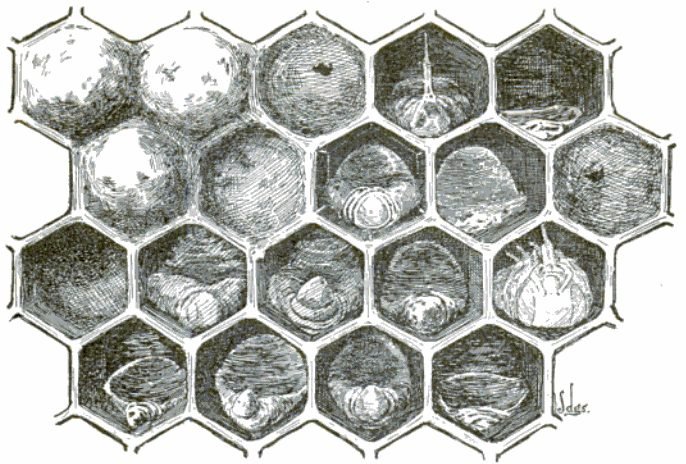
Inside, the dead larva first turns dull white, then light brown to coffee-colored, and finally dark brown. According to the USDA handbook, its consistency goes from soft to sticky to ropy. That ropy stage is what most beekeepers mean by slimy brood. In time, the remains dry into a dark scale that lies flat on the lower side of the cell and sticks so tightly the bees cannot remove it.
The same handbook reports that AFB spores have remained viable for over 70 years. That is why a confirmed AFB colony usually means burning or professionally sterilizing the equipment, and why your state apiary program needs to know. Our guide to what foulbrood smells like explains why odor alone never confirms AFB.
European Foulbrood: Melted, Watery Open Brood
EFB is caused by the bacterium Melissococcus plutonius. It kills larvae younger than AFB does, usually before their cells are capped. Affected larvae lose their plump, glossy C-shape. They twist, slump against the cell wall, or lie melted in the bottom of the cell, and turn yellowish, then brown.
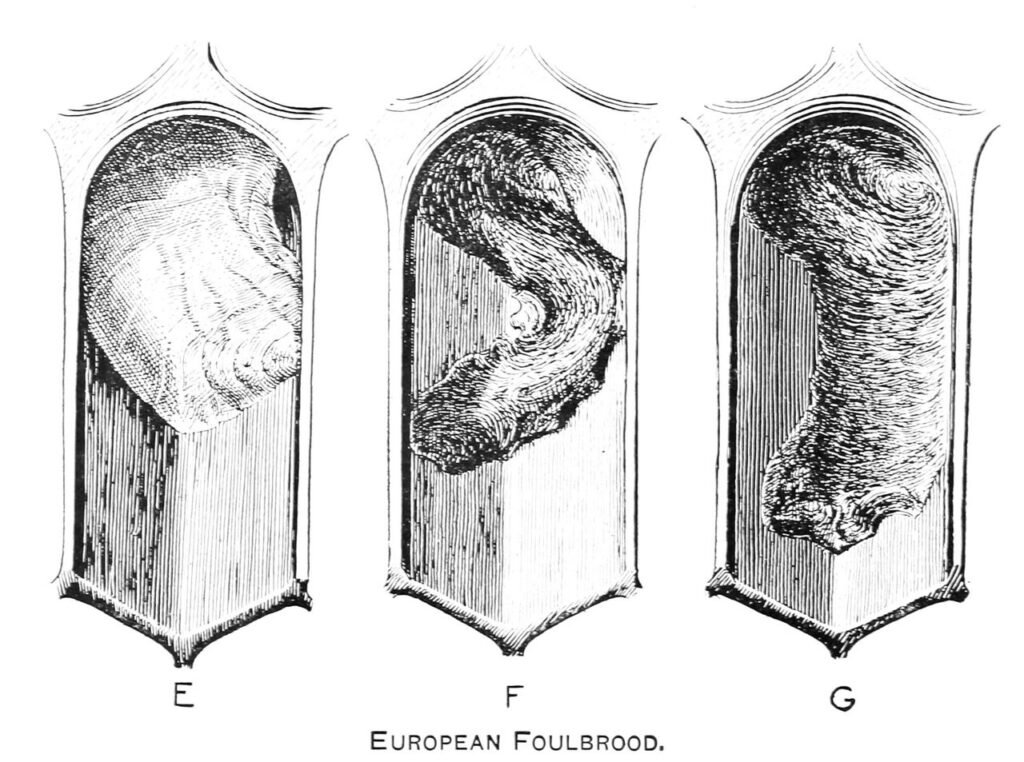
The handbook describes EFB remains as watery, rarely sticky or ropy, and sometimes granular. That rare ropiness is why a single rope test is not a diagnosis. EFB scales are rubbery and easy to remove, unlike AFB scales. Odor ranges from slightly sour to strongly sour when secondary bacteria take hold.
EFB is most common in spring when brood rearing outpaces the nurse bee population. For the earliest signs, see European foulbrood early signs.
Small Hive Beetle Slime: Fermented Honey and Pollen
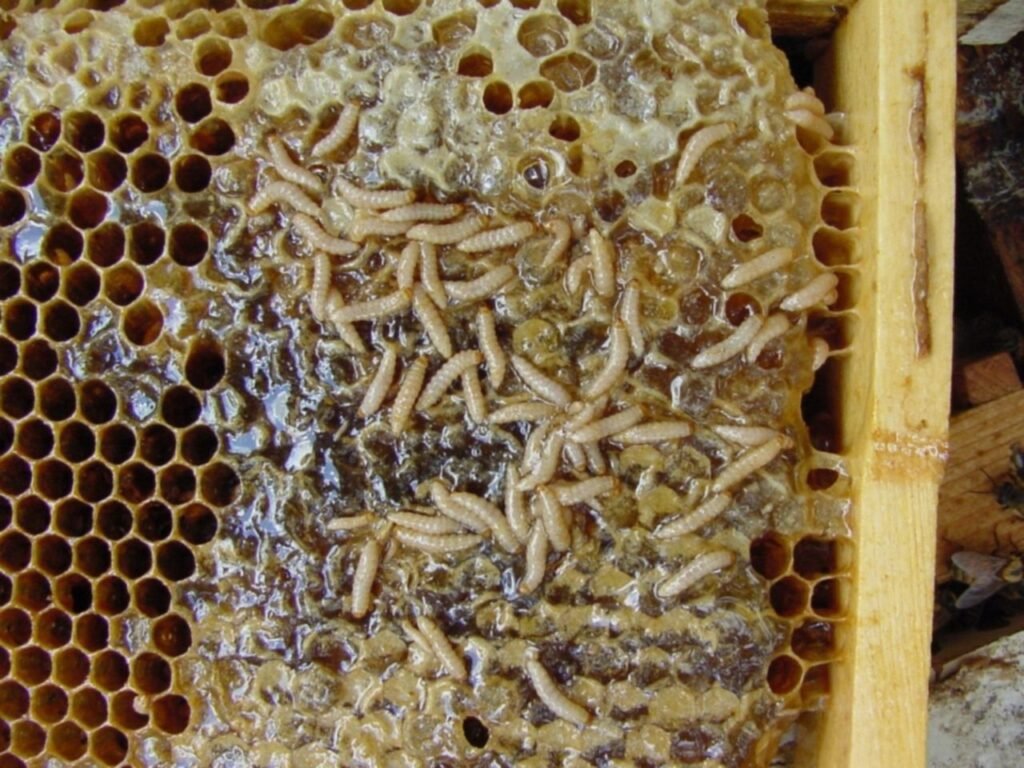
Small hive beetle slime is not dead brood turning to liquid. Beetle larvae tunnel through comb, eating brood, pollen, and honey. As they feed, they spread a yeast, Kodamaea ohmeri, in their feces. According to Mississippi State University Extension, the yeast rapidly ferments honey and pollen into a slimy, foul-smelling mess that bees avoid and adult beetles are drawn to. A 2007 study in PNAS (Torto and colleagues) found this yeast, grown on pollen, gives off the same compounds as honey bee alarm pheromone, and those compounds attract more beetles.
A beetle slime-out looks different from foulbrood. The slime covers comb surfaces and runs across frames, honey turns discolored and frothy and smells like fermented fruit (as the USDA handbook describes it), and you will find crowds of small cream-colored larvae with rows of spines. Unlike wax moth larvae, they spin no webbing.
“…it almost always coincides with the collapse of the honey bee colony.”
In other words, beetle slime is usually a sign that the colony was already failing, whether from queen loss, mites, disease, or a split too small to guard its comb. It is rarely the first cause. For a beetle-specific walkthrough, see how to recognize small hive beetle slime.
In the northern plains: MSU Extension notes that small hive beetles do not overwinter outside the hive where the ground freezes, though a few adults survive inside clustering colonies. Beetles are reintroduced to northern apiaries each spring through migratory beekeeping and package sales. In eastern North Dakota and western Minnesota, that makes a beetle slime-out possible but less likely than in the South, especially in colonies that came north from southern winter yards or started from packages. When a local colony’s brood is slimy, rule out foulbrood first.
Sacbrood, Chilling, Overheating, and Mite Collapse
Several non-foulbrood problems leave wet-looking dead brood:
- Sacbrood leaves the larva stretched on its back in a capped or uncapped cell, with the head raised. Lifted out, it comes free as a whole, fluid-filled sac. It looks watery but never ropes. See sacbrood versus chilled brood for side-by-side checks.
- Chilled brood dies in a band on the edges of the brood nest after a cold snap, when too few bees are left to cover it. It can be pasty or watery.
- Overheated brood, according to the USDA handbook, turns brownish or black and watery, and pupae look black and greasy. It follows a heat wave in a colony that lost its foragers or was shut in without ventilation or water.
- Parasitic mite syndrome, where brood dies during varroa collapse, can be watery to pasty and “molten” in the cell. The handbook notes it can resemble EFB, AFB, and sacbrood. High mite counts, crawling bees, and a spotty pattern point to this cause.
A Five-Minute Field Check
Work through these in order, wearing gloves you can wash or throw away.
Step 1: Note where the slime is
Is it in individual brood cells scattered through the nest, or spread across comb surfaces, honey, and pollen? Slime spread across comb surfaces points to beetles. Individual cells point to brood disease.
Step 2: Capped or open?
Dead brood under sunken, dark, perforated cappings points to AFB. Twisted, melted larvae in open cells point to EFB.
Step 3: Rope test
Push a matchstick or twig into a suspect cell, stir, and draw it out slowly. AFB remains usually stretch into a brown thread before snapping back. EFB, sacbrood, and chilled brood usually do not. Burn the stick afterward. A negative result does not clear AFB, and a weak positive does not confirm it. Remains that are too fresh or too dry may not rope.
Step 4: Look for beetles and mites
Look for spiny larvae in corners and adult beetles running from the light. Take an alcohol-wash mite count from a brood frame.
Step 5: Get a confirmation
Lateral-flow field kits give a quick AFB or EFB result. See our guide to the Vita AFB/EFB test kit. For a definitive answer, the USDA Bee Research Laboratory in Beltsville examines brood samples from U.S. beekeepers free of charge. It asks for a comb piece at least 2 by 2 inches, wrapped in paper, not plastic or foil.
What to Do Next
- Until you know, contain it. Close the hive, reduce the entrance so it cannot be robbed, and do not move frames, boxes, or honey to other colonies. Our rules for preventing disease spread between apiaries apply here.
- Mark it. Tag the colony and its equipment so nothing gets mixed up. See how to label quarantined hives.
- If AFB is confirmed, contact your state apiary program before doing anything else. In North Dakota that is the Department of Agriculture, and in Minnesota the Department of Agriculture’s apiary program. Expect to destroy or sterilize comb.
- If EFB is confirmed, strong colonies sometimes recover after requeening and a brood break. Antibiotic treatment in the U.S. requires a veterinary feed directive or prescription. Talk to a veterinarian and your state inspector.
- If beetles are the cause, remove the slimed frames, since MSU Extension says exposed honey supers are unfit for harvest. Shrink the colony to the comb it can guard, and fix whatever weakened it.
- Clean your tools with a method that matches the disease. See how to disinfect hive tools after disease. If the colony has died, follow how to clean a deadout, but only after AFB has been ruled out.
Frequently Asked Questions
Is slimy brood always foulbrood?
No. Small hive beetle fermentation, sacbrood, chilling, overheating, and varroa-related brood death can all leave wet or slimy-looking brood. But AFB is the most serious possibility, so rule it out with a rope test and a lab or field test before assuming anything else.
What does American foulbrood slime look like?
It is coffee-brown, sticky, and stretchy. It sits in cells under sunken, dark, often perforated cappings. A matchstick drawn out slowly usually pulls a brown thread. Over time it dries to a flat, dark scale that sticks tightly to the lower cell wall.
Can European foulbrood be ropy?
Occasionally. The USDA handbook describes EFB remains as watery and rarely sticky or ropy. That is one reason a rope test alone cannot separate AFB from EFB.
What is a small hive beetle slime-out?
A slime-out is a heavy infestation of beetle larvae. The yeast they carry ferments honey and pollen into a foul slime across the combs. Bees usually abandon or lose the colony. It almost always follows a colony that was already weak.
Can a colony recover from slimy brood?
It depends on the cause. Sacbrood and chilled brood often clear on their own in a strong colony. EFB can sometimes be managed. A beetle slime-out rarely leaves a viable colony. Confirmed AFB usually requires destroying or sterilizing infected equipment.
Should I report slimy brood to my state?
If you suspect AFB, contact your state apiary program. Many states treat AFB as a regulated disease, and inspectors can help confirm the diagnosis. In North Dakota and Minnesota, start with the state Department of Agriculture.
The Bottom Line
Slimy brood is a symptom, not a diagnosis. Check whether the slime is in capped or open cells, whether it ropes, and whether it covers comb surfaces. Those three checks usually separate AFB, EFB, and beetle damage. Until a test rules out AFB, keep the colony closed and keep its frames to itself.