Reviewed by Thomas B. · Last Updated September 24, 2026 · How we review
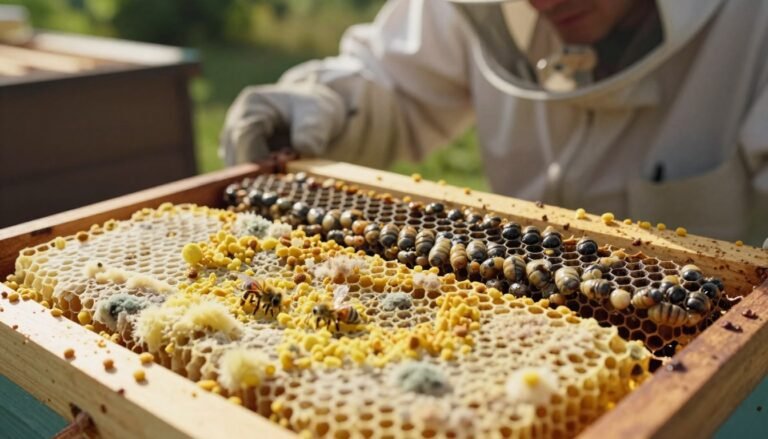
When the brood nest shrinks during a nectar dearth, the colony is usually rationing, not collapsing. Workers eat eggs and the youngest larvae, the queen lays less, and the capped brood left behind can look patchy. The way to tell rationing from a failing queen or disease is to look at what is missing and what is still there. A dearth takes the youngest brood first and leaves healthy capped brood alone. Queen failure and disease leave different marks.
This guide covers diagnosis: how to read a shrinking brood nest in late summer and decide whether to act. For feeding methods, see our guide on how to feed bees during a nectar dearth. For the wider management picture, see nectar dearth solutions for beekeepers.
Key Takeaways
- Brood shrinkage in a dearth is mostly deliberate. USDA-ARS research found that workers in nutritionally stressed colonies cut the brood mainly by eating eggs and young larvae, and often start rearing again when food returns.
- Pollen matters more than syrup for brood. In that research, colonies deprived of pollen cut brood sharply within about a week. Colonies given pollen supplement kept rearing brood.
- The dearth pattern is a missing bottom layer. Eggs and young larvae are scarce, but the capped brood is healthy and evenly coloured, with no sunken or perforated cappings.
- Recheck in 7 days before you requeen. If eggs come back once protein and a little syrup arrive, the queen is fine.
- A brood pause pushes varroa onto adult bees. Do a mite wash during or just after a dearth, because that is when winter bees are being reared.
On this page
- What actually happens to brood in a dearth
- Pollen dearth vs nectar dearth
- Reading the frames: the dearth signature
- Dearth, bad queen or disease? A side-by-side check
- The 7-day recheck
- Dearth timing in the Red River Valley
- Why a dearth brood pause matters for varroa
- What to do, and what not to do
- Frequently Asked Questions
What Actually Happens to Brood in a Dearth
A honey bee colony matches the number of mouths it feeds to the food coming in. When forage dries up, nurse bees do not just feed every larva a little less. They remove some brood completely. That is why the brood nest can look wrecked within a week or two even though nothing is wrong with the queen.
The clearest recent evidence is a 2025 study by Mark Carroll, Nicholas Brown and Eden Huang at the USDA-ARS Carl Hayden Bee Research Center in Tucson, published in PLOS ONE. They followed colonies during a summer dearth and a severe drought. Their summary:
“Workers limit colony populations primarily through brood cannibalism of eggs and young larvae but often resume brood rearing when conditions improve.”
Three findings from that paper matter at the hive:
- It happens fast. In pollen-deprived colonies, brood rearing had dropped sharply by about day 7. Eggs and young larvae were nearly gone by about day 13.
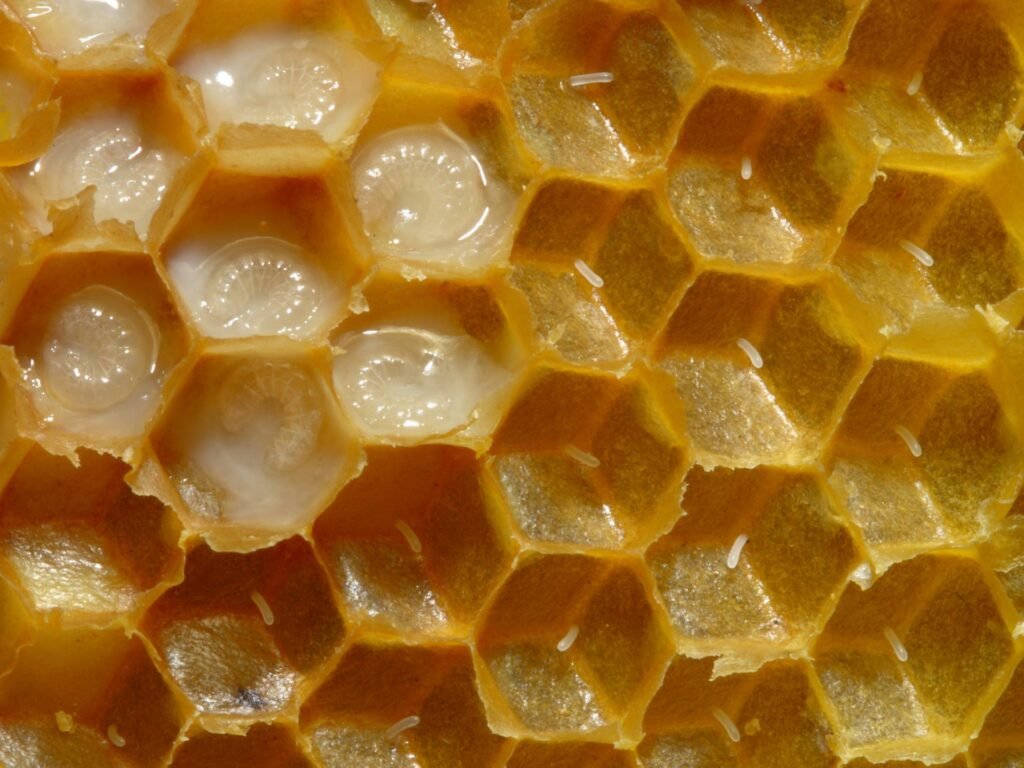
- It is selective. Eggs and the youngest larvae were eaten first. Older larvae were mostly spared, and capped brood and pupae were rarely touched.
- It can feed on itself. Eggs and young larvae give off a pheromone called E-β-ocimene that encourages workers to keep rearing brood. As that brood is eaten, the signal fades and more brood is lost. When the researchers added synthetic ocimene to broodless nucs, those nucs kept far more eggs and young larvae than untreated nucs. Half of the untreated nucs ate all of theirs.
In practice, the queen may still be laying, but the eggs vanish before you see them. That is why a hive in a dearth can look queenless when it is not.
Pollen Dearth vs Nectar Dearth: Why the Difference Matters for Brood
Beekeepers say “nectar dearth” for any lean stretch, but brood depends mainly on protein. Nurse bees turn pollen into the brood food that larvae need. A colony short on nectar but still bringing in pollen will often keep rearing a reasonable amount of brood. A colony short on pollen will cut brood even if it has capped honey.
In the USDA-ARS work, the treatment that decided whether brood survived was pollen supplementation. Pollen-supplemented colonies reared significantly more brood and gave off more of the brood pheromone. So a jar of syrup alone may keep the adults alive without saving the brood nest.
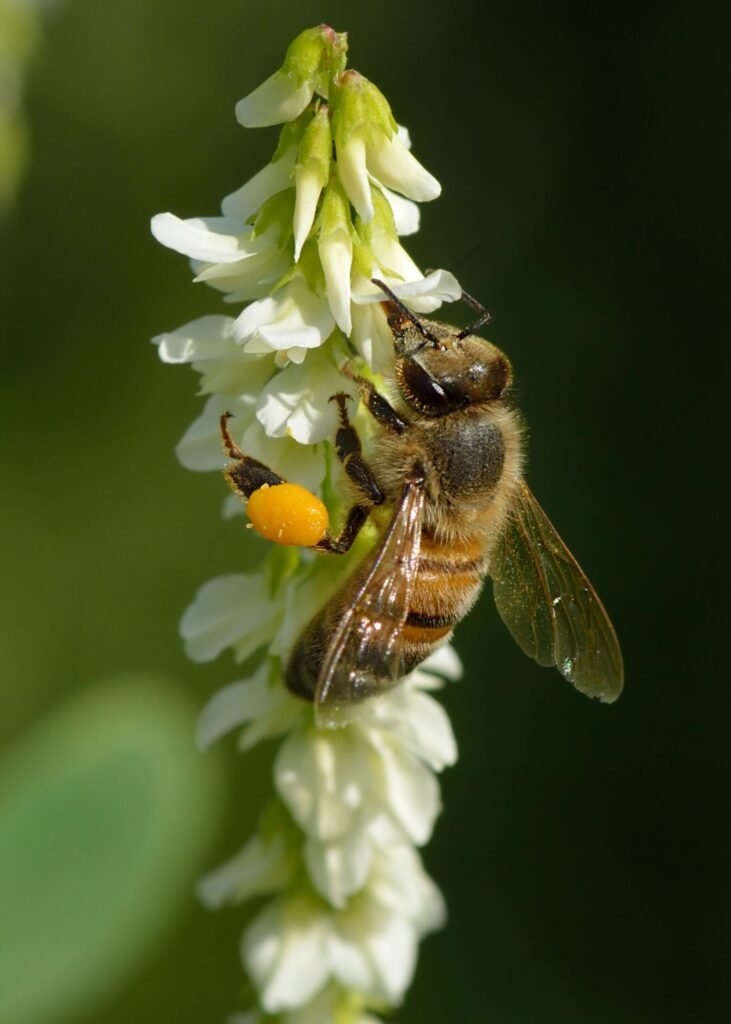
Check which dearth you have. Watch the entrance for foragers carrying pollen, and look for a band of fresh, varied-coloured pollen around the brood. No incoming pollen and no fresh pollen band means protein is the problem. For product comparisons, see our review of pollen substitute patties.
Reading the Frames: The Dearth Signature
A steady brood nest has a predictable mix of ages. Worker brood spends about 3 days as an egg, about 5 as an open larva and about 13 capped. So a queen laying at a steady rate produces roughly 3 egg cells for every 5 open-larva cells and 13 capped cells. The Apiarist sets out this 3:5:13 ratio. It also notes that when eggs and larvae fall well below about 40% of all brood, the queen has slowed down. A dearth is one of the usual reasons.
A dearth-rationed frame usually shows:
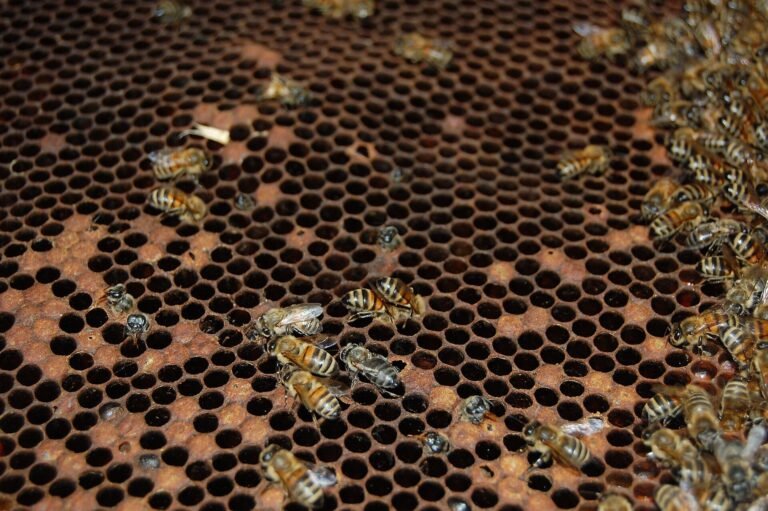
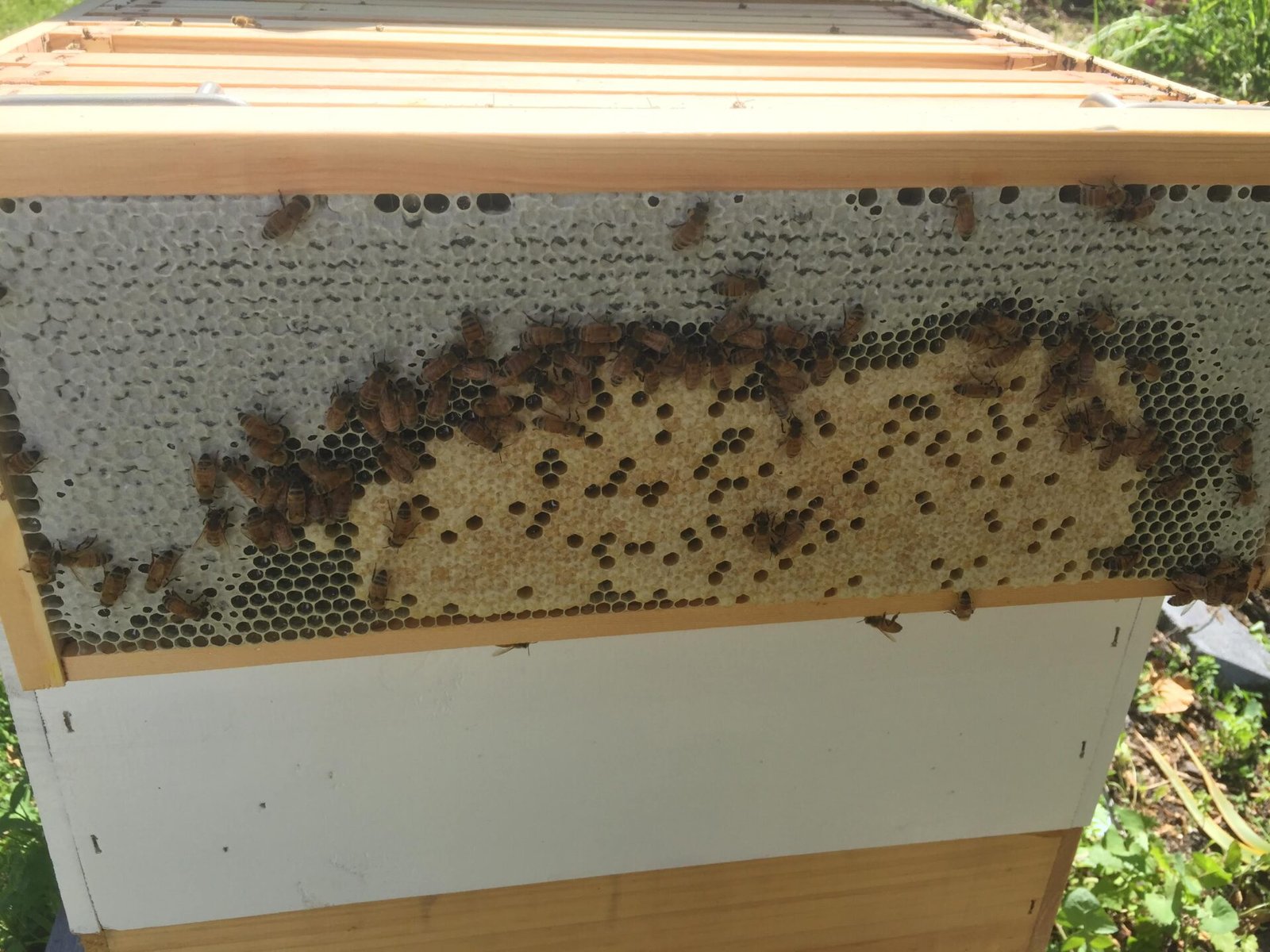
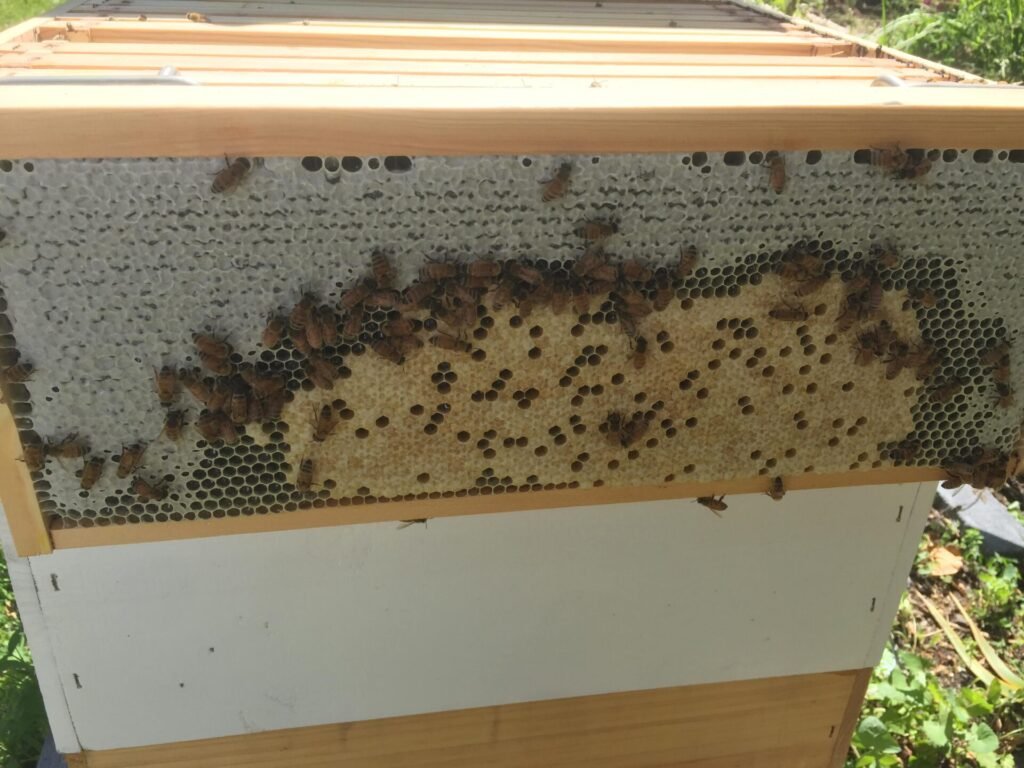
- Capped brood that looks healthy. Cappings are convex, evenly tan, and not sunken or perforated. It may be patchy because it came from a laying period that was already slowing.
- Few or no eggs, and very few young larvae. Cells in the centre of the nest look polished and empty, ready for eggs that are not arriving or are being removed.
- Older larvae that look normal. They are pearly white, C-shaped and glistening, not yellowed, melted or twisted.
- Thin stores. There is little uncapped nectar, and the fresh pollen band is missing or small.
- A calm, queenright colony. There is no roaring, no new emergency cells, and the bees behave normally.
For a reminder of what normal looks like, see what a healthy brood pattern looks like. For patchy brood in general, see the spotty brood pattern and when to worry.
Dearth, Bad Queen or Disease? A Side-by-Side Check
A shrinking brood nest in late summer has several possible causes, and some need quick action. The BeeMD diagnostic key lists brood cannibalism alongside disease, varroa-related brood problems and weak colonies because they can look alike at first glance. This table sets out how they differ.
| Cause | Eggs | Young larvae | Capped brood | Other clues | First move |
|---|---|---|---|---|---|
| Dearth rationing | Few or none | Scarce | Healthy, may be patchy | Thin stores, little pollen coming in, calm colony | Protein and light feeding inside the hive, recheck in 7 days |
| Failing queen | Few, often irregular | Few | Scattered, sometimes with domed drone cappings in worker cells | Stores often fine, supersedure cells possible | Confirm after protein feeding, then requeen |
| Queenless | None (or several per cell if laying workers) | None after about 5 days | Only older capped brood, shrinking | Roaring, emergency cells, agitated bees | Add a frame of eggs as a test |
| European foulbrood | Present | Twisted, melted, yellowish larvae | Patchy | Sour smell, often when the colony is stressed | Consult your state apiary inspector |
| Varroa / parasitic mite syndrome | Present | Some slumped or discoloured | Spotty, chewed or perforated cappings | Deformed wings, high mite wash | Mite wash now, treat to threshold |
| Starvation | Few | Few, some dead | Some cells uncapped and removed | No capped honey, bees head-first in cells | Feed immediately |
If you see melted larvae, a sour smell or sunken, perforated cappings, you are not looking at a dearth. Go to our guides on early European foulbrood signs, parasitic mite syndrome vs foulbrood and queenless vs diseased brood patterns.
The 7-Day Recheck: Confirming a Dearth Before You Requeen
The most expensive mistake in late summer is replacing a good queen who has simply been told to slow down. This sequence lets the colony show you which it is.
Step 1: Record what you see. Note how many frames have eggs, open larvae and capped brood, and roughly how much capped honey and fresh pollen there is. A photo of each brood frame helps.
Step 2: Give protein and a little carbohydrate inside the hive. Put a pollen-substitute patty on the top bars above the cluster. If stores are light, add a modest amount of 1:1 syrup in an internal feeder. Never feed in the open during a dearth. See feeding bees without causing robbing.
Step 3: Tighten the entrance. Reduce it to what the colony can guard, or fit a robbing screen. A colony that is being robbed will keep cutting brood no matter what you feed.
Step 4: Leave the colony alone for 7 days. Frequent, long inspections during a dearth invite robbers and chill the brood.
Step 5: Recheck for eggs. Eggs in the centre frames standing on end, one per cell, mean you have a working queen and the dearth was the cause. No eggs, but a queen present and moving about, means wait a few more days if stores are still thin, or consider a failing queen if they are not. For that decision, see whether you can requeen during a dearth.
Step 6: If you can’t find a queen, add a test frame. A frame of eggs and young larvae from another colony will show within a few days whether the bees start queen cells, which means they are queenless.
Dearth Timing in the Red River Valley and Western Minnesota
In eastern North Dakota and western Minnesota, the main flows usually come from sweet clover, alfalfa, canola and, later in summer, sunflower. That means brood contraction tends to show up at three predictable times, not as a single mid-summer event:
- The early-summer gap. This falls between spring bloom (willow, dandelion, fruit trees) and the start of clover. Colonies building hard in spring can run short of pollen here and cut brood noticeably.
- Dry stretches in mid-summer. Crops still bloom in drought but secrete less nectar. Our piece on how nectar composition changes during drought explains why.
- The end of the main flow in late summer. Here a brood reduction is partly seasonal anyway. Don’t mistake the normal autumn slowdown for failure, but don’t let a dearth push it too early either.
Timing varies by year and by farm mix within a few miles. A hive scale or a weekly heft is a better guide than a calendar. If weight stops rising or starts falling for more than a few days in summer, you are in a dearth whatever the date.
Why a Dearth Brood Pause Matters for Varroa
Less brood sounds like bad news for mites, since they breed in capped cells. In the short run it works the other way. The Honey Bee Health Coalition’s Tools for Varroa Management guide explains that when brood declines, mite numbers can rise sharply on the adult bees. It also says that having a low mite population at the start of the late-season decline is critical.
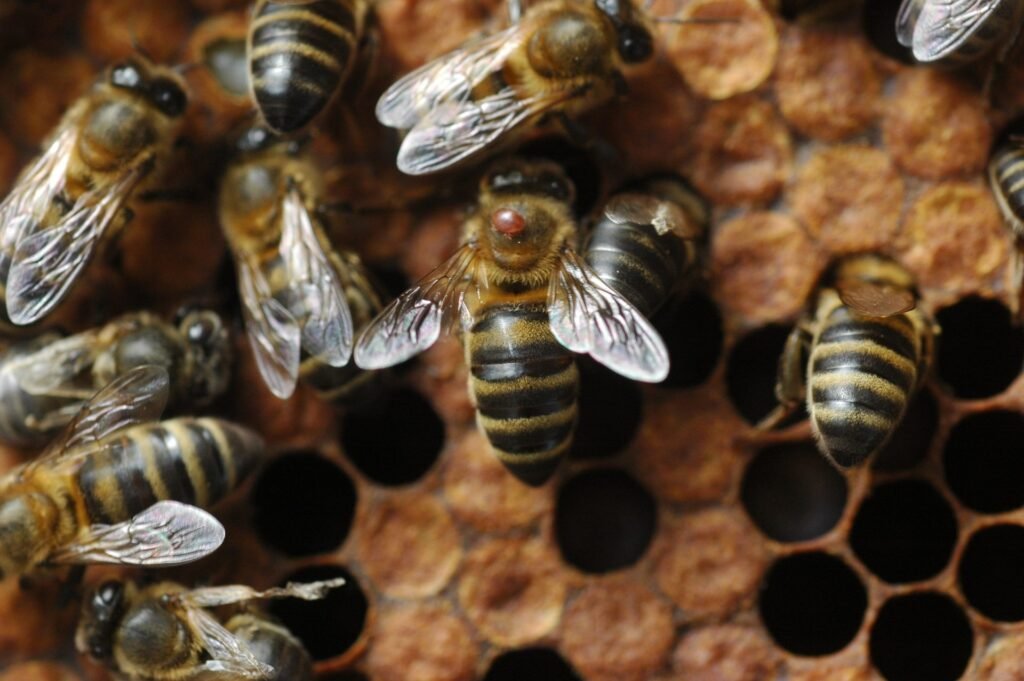
That late-season decline is when colonies rear the long-lived winter bees. A late-summer dearth in the Upper Midwest overlaps almost exactly with that window. So a dearth is a good time for an alcohol wash, not a reason to skip one. Heavy robbing during a dearth can also bring mites in from collapsing colonies nearby. That is another reason the HBHC guide lists robbing screens as useful when robbing is common.
What to Do, and What Not to Do
| Do | Avoid |
|---|---|
| Check whether pollen is coming in and whether there is a fresh pollen band | Assuming syrup alone will restart brood |
| Feed protein, and light syrup if stores are low, inside the hive | Open feeding or spilling syrup near the apiary |
| Reduce entrances and use robbing screens on weaker colonies | Long inspections with boxes left open |
| Do a mite wash and act on the result | Delaying mite control because “there’s hardly any brood” |
| Recheck for eggs after 7 days | Requeening on the first broodless-looking inspection |
| Combine a colony that is truly weak with a stronger one | Spreading a small cluster across too many frames |
A brood pause from a dearth is usually short. Colonies that go into it strong, with low mites, a guarded entrance and some protein, tend to come out of it rearing brood again within a week or two of food returning.
Frequently Asked Questions
Why is there no brood in my hive during a nectar dearth?
Usually because workers are eating eggs and young larvae and the queen has slowed down, in response to low pollen and nectar. It is a rationing response. Check for a queen, capped brood and older larvae before assuming the colony is queenless, and recheck for eggs after about a week of protein feeding.
How long does a dearth brood break last?
It lasts as long as the food shortage does, plus a short lag. In the USDA-ARS study, brood fell sharply within about a week and eggs and young larvae were nearly gone by about day 13 in pollen-deprived colonies. Colonies often resume rearing once pollen and nectar come back or are supplemented.
Should I requeen if my queen stops laying in late summer?
Not straight away. Confirm the cause first. Feed protein inside the hive, reduce the entrance and look for eggs 7 days later. Replace her only if she still isn’t laying once food is available, or if the brood shows signs of a failing queen, such as drone brood in worker cells.
Does feeding sugar syrup stop brood loss during a dearth?
Only partly. Syrup supports the adults and can keep the queen laying, but brood rearing depends on protein. In the USDA-ARS research, pollen supplementation was the factor that kept colonies rearing brood.
How do I tell dearth brood loss from European foulbrood?
In a dearth, the brood that remains looks healthy: white, glistening larvae and normal cappings, with eggs and young larvae simply missing. European foulbrood leaves sick larvae behind, yellowish, twisted or melted, often with a sour smell. If you see sick larvae, contact your state apiary inspector.
Is it normal for the brood pattern to look spotty after a dearth?
Yes, for a cycle or two. The capped brood from a period when the queen was slowing, or when young larvae were being removed, will look patchy. Judge the new pattern the queen lays once food returns, not the patch left over from the dearth.
The Bottom Line
A shrinking brood nest during a dearth usually means the colony is rationing, not failing. Look for the pattern: missing eggs and young larvae, but healthy capped brood. Give protein and a guarded entrance, check the mite count, and let a 7-day recheck decide before you replace the queen.