Reviewed by Thomas B. · Last Updated September 24, 2026 · How we review
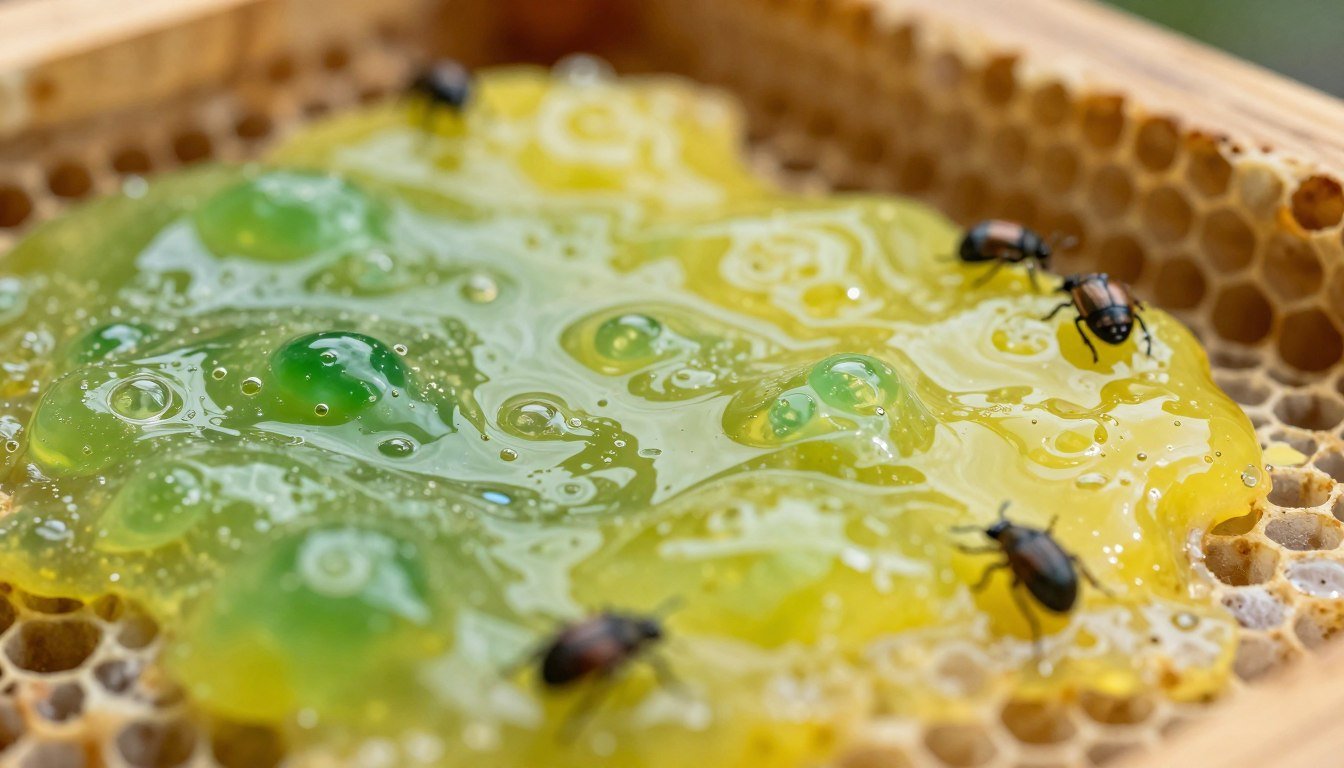
Small hive beetle slime is a wet, glistening film over comb, honey, and pollen. Honey weeps out of the cells and froths, and the whole mess smells like rotting oranges. It comes from beetle larvae feeding and fouling the comb with a yeast that ferments everything it touches. If you see that slime and find small, spiny, cream-colored larvae in it that are hard to squish, you are looking at a small hive beetle slime-out. By that stage the colony has usually collapsed or is about to leave.
This guide shows how to recognize slime early, how to confirm it is the beetle and not foulbrood or wax moth, what to salvage, and how beetles reach hives in the Red River Valley, where they cannot survive winter in the soil.
Key Takeaways
- Slime-out is a mass outbreak of small hive beetle larvae. Their yeast ferments honey and pollen into a slick, frothy mess that bees abandon.
- Look for honey weeping from cells, a greasy sheen on comb, frothy honey, and a smell like decaying oranges.
- Confirm with the larvae. Small hive beetle larvae have three pairs of legs near the head and rows of spines, and they leave no webbing. Wax moth larvae are soft and spin silk.
- Slime that is confined to brood cells and ropes on a matchstick is not beetle slime. Test for American foulbrood.
- Fermented honey from a slime-out is unfit to eat. Freeze or bag slimed frames right away, and treat an unexplained deadout as possible foulbrood until you have ruled it out.
Table of Contents
- What Small Hive Beetle Slime Looks Like
- Why Slime-Out Happens
- Confirming It Is the Beetle
- Early Warning Signs Before a Slime-Out
- What to Do After a Slime-Out
- Preventing the Next One
- Small Hive Beetles in North Dakota and Minnesota
- Frequently Asked Questions
What Small Hive Beetle Slime Looks Like
Mississippi State University Extension’s small hive beetle publication is blunt about what the word means:
An outbreak of hive beetle larvae, especially in the honey supers, is referred to as a “slimeout”; it almost always coincides with the collapse of the honey bee colony.
Here is what you will see and smell:
- Weeping, frothy honey. Capped and uncapped honey leaks out of the cells, runs down the comb, and pools on the bottom board. It often looks bubbly or foamy and darker than normal.
- A slick, glistening coat. The comb surface looks wet and greasy, as if it had been sprayed with oil. It is slippery to the touch.
- Soggy, collapsed pollen. Stored pollen and pollen patties turn into wet paste. Tunnels run through them where larvae have been feeding.
- Larvae everywhere. In a full slime-out, cream-colored larvae crawl over the comb, in the corners of boxes, and under the lid, often in large numbers.
- The smell. It is a sour, fermented odor, often described as rotting oranges. You may notice it before you open the hive.
- Bees gone or leaving. Bees will not use slimed comb. Weak colonies abscond, and the ones left behind shrink quickly.
Slime-out also happens off the hive. Supers stacked in a garage or honey house before extraction can slime out in a few warm days if beetle eggs came in with them. The USDA ARS Honey Bee Lab in Baton Rouge notes that fermented honey runs out of the comb and makes a mess in the hive or the honey house.
Why Slime-Out Happens
The slime is not something the larvae make on their own. University of Florida entomologists James and Amanda Ellis, in their UF/IFAS profile of the small hive beetle, link the fermentation to yeasts associated with the beetle. They say beetle-damaged honey is rendered foul and unfit for human consumption. The main yeast is Kodamaea ohmeri. A 2007 study in PNAS by Torto and colleagues found that this yeast, growing on pollen in the hive, gives off the same compound bees use as an alarm pheromone. That smell draws in even more beetles, which is why a slime-out snowballs.
A female beetle can lay more than 1,000 eggs in her lifetime, according to the UF profile, and eggs go into cracks and crevices that bees cannot reach. A strong colony can usually keep adult beetles herded into corners so they cannot lay among the brood. Slime-out follows when that defense breaks down. Common triggers are a colony weakened by mites, queen failure, or a split; too many supers for the bees to patrol; and pollen patties left on a weak hive. The Baton Rouge lab notes that weak colonies are more prone to invasion but strong ones can be overwhelmed too.
Confirming It Is the Beetle
Wet, slimy comb has more than one cause. Make sure it is the beetle before you act, because one lookalike is a reportable disease.
| Clue | Small hive beetle | Wax moth | American foulbrood |
|---|---|---|---|
| Where the mess is | Honey, pollen, and brood; supers and box corners | Mostly old brood comb and stored combs | Only in capped brood cells |
| Texture | Wet, slick, frothy; honey weeps out | Dry, with silk webbing, tunnels, and frass | Brown remains that rope out on a matchstick |
| Larvae | Up to about 1 cm; firm; three pairs of legs near the head; spiny | Larger and soft; squish easily | No insect larvae |
| Odor | Fermented, rotting-orange | Musty | Foul, rotten |
| Adults | Dark oval beetles about 5 to 6 mm that run from light | Gray-brown moths | None |
Mississippi State gives a simple field test. If you can easily squish a larva between thumb and forefinger, it is a wax moth. If you cannot, it is a hive beetle. The UF profile gives adult beetles as about 5.5 to 5.7 mm long, light brown when new and nearly black later. They are fast and duck into corners when you open the lid.
If the slime is only inside capped brood cells, with sunken, dark cappings and no beetle larvae, do a rope test for American foulbrood. Our guide to what causes slimy brood walks through the other causes. For beetle damage short of a full slime-out, see identifying small hive beetle damage.
Early Warning Signs Before a Slime-Out
You can nearly always catch trouble before the comb runs. At each inspection from midsummer on, check these:
Step 1: Check under the lid
Adult beetles gather there. Mississippi State advises taking a closer look at your bees if you see even a few larvae in the brood nest or supers.
Step 2: Look in the corners and on the bottom board
Beetles hide in cracks and corners, and bees herd them there. A dozen beetles running in the corners of a strong hive is pressure. A crowd of them in a weak hive is a warning.
Step 3: Check pollen patties and the edges of stored pollen
Early larval feeding often starts in patties and pollen. The first sign is a wet sheen or a few firm, spiny larvae.
Step 4: Match supers to colony strength
Every super the bees cannot patrol is beetle habitat. Pull empty supers off a colony that is struggling.
What to Do After a Slime-Out
- Contain it right away. Close up the hive or bag the slimed boxes so larvae cannot crawl out to pupate in the soil. The New South Wales Department of Primary Industries’ slime-out guidance recommends blocking up or bagging the hive and freezing the gear to kill every beetle life stage.
- Freeze what you want to keep. Mississippi State recommends wrapping supers in heavy-duty trash bags and freezing them for at least 48 hours to kill eggs and young larvae.
- Do not harvest the honey. Fermented honey is unfit for people to eat. Do not feed it back to bees either.
- Salvage the woodenware and cull the worst comb. Badly slimed brood comb is rarely worth saving. Scrape and wash boxes, and let them air out. Our guides to cleaning a deadout and reusing frames from a dead colony cover how to sort what to keep.
- Rule out foulbrood if the colony died without a clear cause. The NSW guidance warns that treating unexplained deadouts casually is how American foulbrood spreads.
- Save any surviving bees. Shake them onto clean, frozen comb in a smaller box, with no more space than they can cover.
Preventing the Next One
Mississippi State’s recommended approach combines good colony management with trapping adult beetles during peak breeding season. The Baton Rouge lab says infestations peak from late summer into fall, as new beetles come up out of the soil. In practice:
- Keep colonies strong and sized to their boxes. Combine weak ones before they become beetle nurseries.
- Trap adults with oil trays under screened bottoms or oil traps between frames. See our comparisons of hive beetle traps that work and named trap designs.
- Extract promptly. Mississippi State says to extract the same day if you cannot freeze supers. The UF profile notes that keeping honey-house relative humidity at 50% stops beetle eggs from hatching.
- Get rid of slumgum and cappings quickly. Mississippi State calls slumgum excellent food for beetle larvae.
- Use chemicals only as labeled. In the US, the permethrin soil drench GardStar is labeled for use on the ground around hives to kill larvae as they go into the soil to pupate. The coumaphos strip CheckMite+ has been used inside hives against beetles under state emergency exemptions (Section 18), according to the Baton Rouge lab. Coumaphos builds up in wax, and what is allowed varies by state. Check with your state’s lead pesticide agency and read the current label before using either.
Small Hive Beetles in North Dakota and Minnesota
Northern beekeepers sometimes assume beetles are a southern problem. They are less of a threat here, but not absent. According to Mississippi State, beetles do not overwinter outside the hive where the ground freezes, but a few adults survive inside the winter cluster. The same publication says beetles are reintroduced to northern apiaries every spring through migratory beekeeping and package sales. Both happen in North Dakota and Minnesota: many commercial operations move hives south for winter and almond pollination and bring them back in spring, and hobbyists buy southern-produced packages.
The North Dakota Department of Agriculture’s apiary program lists small hive beetles among the pests its inspectors screen for, along with Varroa and foulbrood. The practical risk for a Red River Valley hobbyist is highest in late summer, in weak colonies near migratory yards, and in supers stored warm before extraction. If you find beetles or a slime-out and want an inspection, contact your state program. North Dakota requires beekeepers to be licensed and to register hive locations.
Frequently Asked Questions
What does small hive beetle slime smell like?
A sour, fermented smell most often compared to rotting or decaying oranges. It comes from yeast fermenting the honey and pollen, and it can be strong enough to notice before you open the hive.
Can you eat honey from a hive with small hive beetle slime?
No. University of Florida entomologists describe beetle-damaged honey as foul and unfit for human consumption. Honey from supers that stayed clean and dry can still be harvested, but do not extract slimed or weeping frames.
Can slimed frames be saved?
Often the woodenware can be saved. Freeze the frames for at least 48 hours to kill beetles, then wash off the slime and let them air out before reuse. Badly slimed brood comb is usually better culled.
How do I tell small hive beetle larvae from wax moth larvae?
Try to squish one between your thumb and forefinger. Wax moth larvae squish easily and leave silk webbing. Small hive beetle larvae are firm and spiny, have three pairs of legs near the head, and never spin webbing.
Do small hive beetles survive winter in North Dakota?
Not in the frozen soil. A few adults survive inside the winter cluster, and more arrive each spring with migratory hives and packages from the south.
Is slime in brood cells always small hive beetle?
No. If the slime is only in capped brood cells and ropes out on a matchstick, suspect American foulbrood and get it tested. Beetle slime covers honey and pollen too and comes with beetle larvae.
The Bottom Line
Weeping, frothy honey, a greasy coat on the comb, a rotting-orange smell, and firm, spiny larvae mean a small hive beetle slime-out. Bag and freeze what you can, don’t harvest the honey, and rule out foulbrood if the colony died. Up here the beetles arrive mostly with bees from the south. Keeping colonies strong and matched to their space, and extracting promptly, prevents most slime-outs.