Reviewed by Thomas B. · Last Updated September 23, 2026 · How we review
During drought, the biggest change in nectar is how much there is, not how sweet it is. Water-stressed plants produce fewer flowers and less nectar per flower. In controlled studies, the total sugar each flower offers bees fell by roughly 60 to 70 percent. Nectar sugar concentration does not reliably rise. Depending on the plant, it stayed the same or even fell. What does shift is the mix: several studies found less sucrose relative to glucose and fructose, and more amino acids per drop.
That runs against a common beekeeping assumption that dry weather “concentrates” nectar into a richer flow. This article sets out what the research actually measured, where the evidence is still thin, and what it means for your colonies in a dry summer.
Key Takeaways
- A 2021 meta-analysis in Global Change Biology found consistent drops in flower size, flower number, and nectar volume when plants are short of water.
- Sugar concentration is not consistently higher in drought. It was unchanged in buckwheat and lower in a clover studied for the National Honey Board.
- Sugar balance shifts. Drought-stressed buckwheat nectar had a lower share of sucrose, and preliminary clover data showed the same pattern.
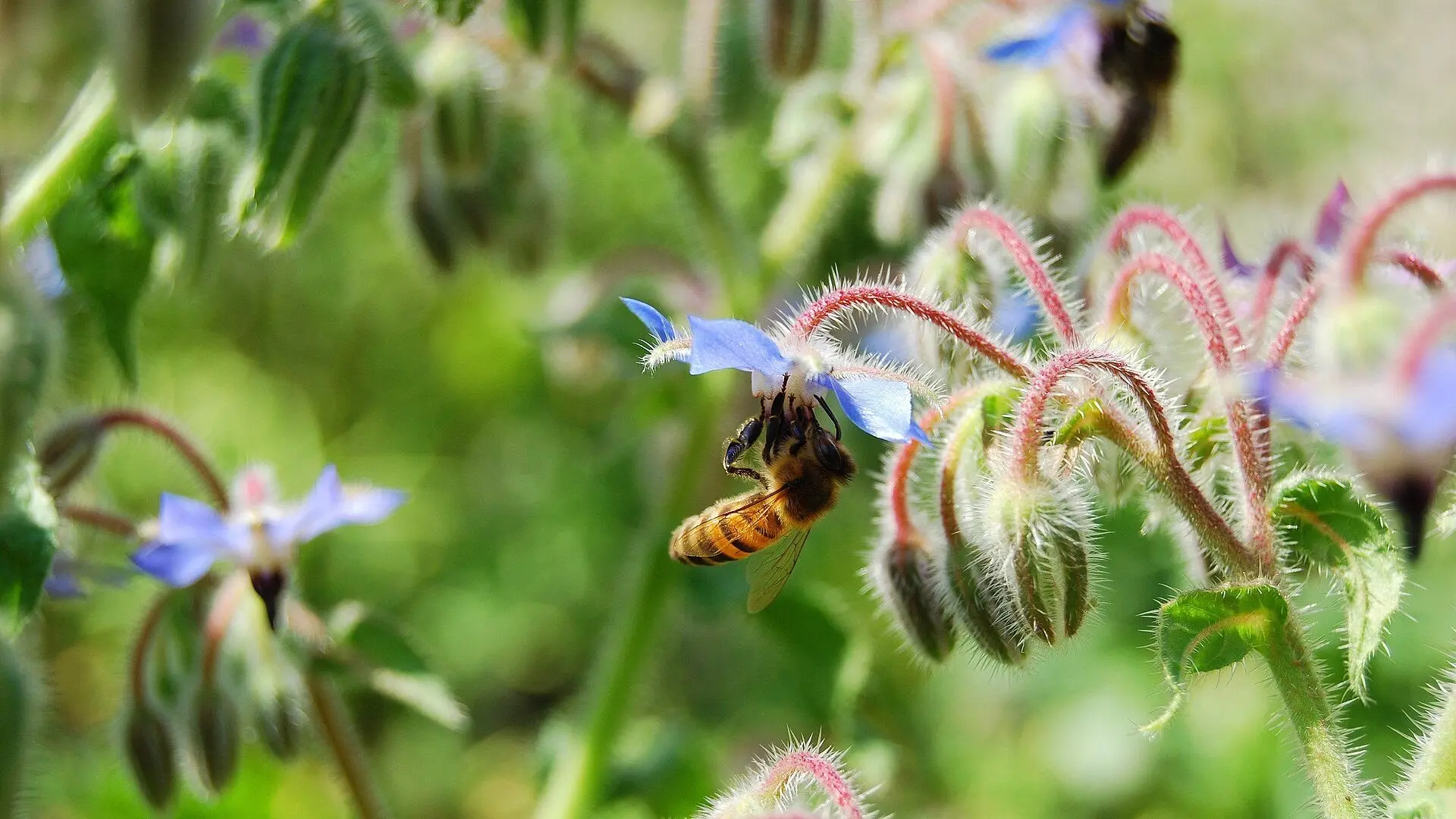
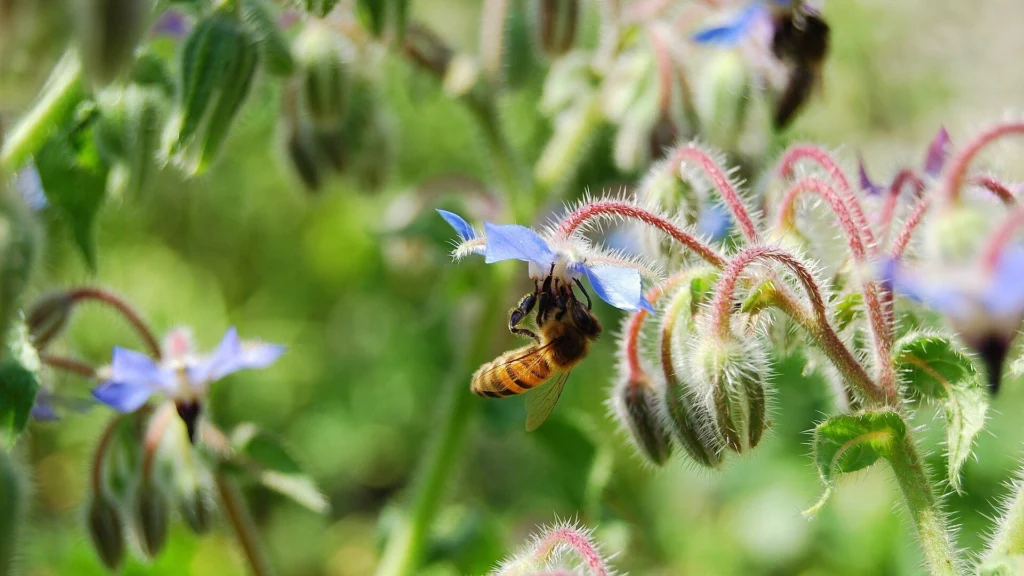
- Amino acid concentration rose in drought-stressed borage nectar, but far less nectar was produced, so each flower still offered bees much less food.
- In the 2021 northern plains drought, North Dakota’s average honey yield fell from 78 to 55 pounds per colony, according to USDA data.
Table of Contents
- What Changes and What Doesn’t
- Quantity: Fewer Flowers, Less Nectar in Each
- Concentration: Why Drought Nectar Isn’t Reliably Sweeter
- The Sugar Mix: Less Sucrose, More Glucose and Fructose
- Amino Acids and Other Compounds
- What It Means for Honey Bee Colonies
- The 2021 Drought in the Red River Valley
- Frequently Asked Questions
What Changes and What Doesn’t
| Nectar trait | Typical drought response | Evidence |
|---|---|---|
| Number of flowers | Down | Meta-analysis (Kuppler and Kotowska, 2021); borage, buckwheat, clover, grassland experiments |
| Nectar volume per flower | Down, often sharply | Meta-analysis; borage 6.1 to 0.8 µL with heat and drought combined; morning glory about 53% less (García et al., 2023) |
| Total sugar per flower | Down | Borage: about 60% less (Descamps et al., 2021); 3.9 to 1.3 mg in an earlier borage study |
| Sugar concentration | Inconsistent: unchanged or lower | Buckwheat unchanged (Rering et al., 2020); clover lower (Wilson Rankin, National Honey Board report); borage unchanged by water stress, raised by heat (Descamps et al., 2021) |
| Sucrose share of sugars | Down | Buckwheat (significant); clover (preliminary) |
| Amino acid concentration | Up | Borage (Descamps et al., 2021) |
| Flowers with any nectar | Fewer | Grassland wildflowers (Phillips et al., 2018) |
Most of this work is on a small number of plant species, often grown in pots or greenhouses. It points in a consistent direction, but it is not a field survey of every honey plant.
Quantity: Fewer Flowers, Less Nectar in Each
The strongest finding across the research is that drought shrinks the nectar supply. Kuppler and Kotowska pooled experimental water-deficit studies in a 2021 meta-analysis in Global Change Biology. They found consistent decreases in floral size, number of flowers, and nectar volume when water was reduced.
Individual experiments show how large the drop can be:
- Borage. Descamps and colleagues, reporting in Frontiers in Plant Science (2021), measured about 6.1 microliters of nectar per flower under control conditions. Under combined heat and water stress, it fell to 0.8 microliters, and total nectar sugar per flower dropped by about 60 percent. In the same group’s 2018 study, water stress also cut flower numbers from about 15 to 8 per plant.
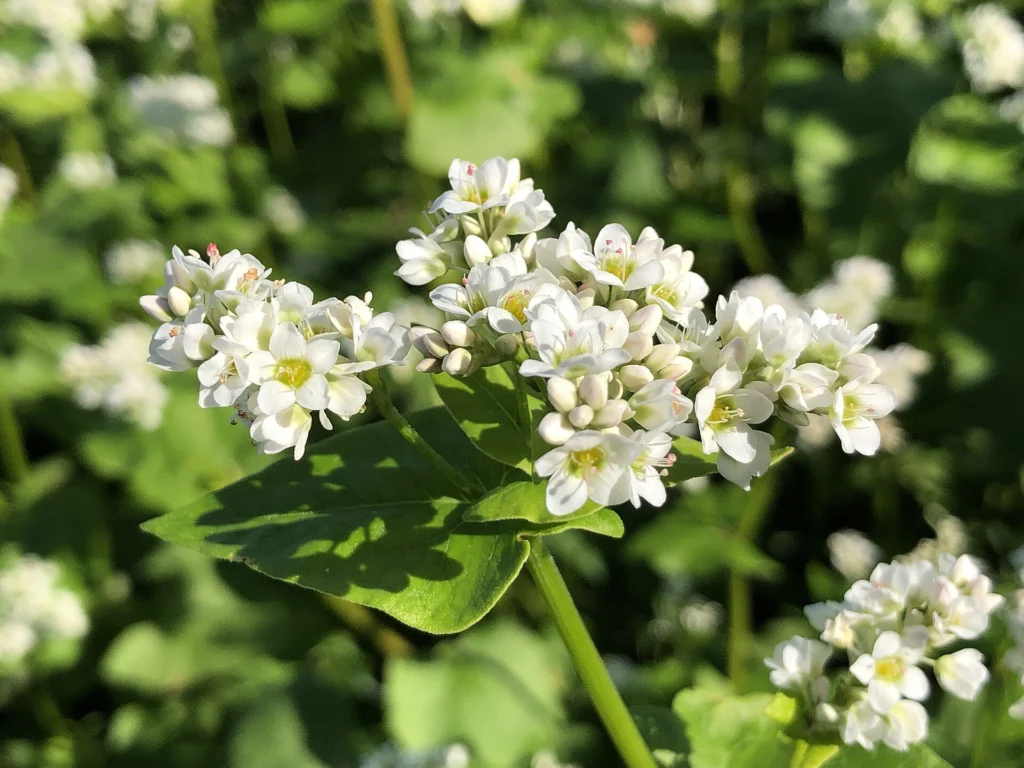
- Buckwheat. In a study published in Ecosphere (Rering et al., 2020), drought-stressed buckwheat produced significantly fewer flowers and less nectar per flower, while pollen per flower was unaffected.
- Common morning glory. García, Dow and Parachnowitsch (AoB PLANTS, 2023) grew morning glory outdoors with reduced watering. Flowers were about 23 percent smaller in diameter and held about 53 percent less nectar each than flowers on well-watered plants.
- Grassland wildflowers. Phillips and colleagues (Global Change Biology, 2018) used rain shelters to simulate drought on calcareous grassland. Fewer flowers contained nectar at all, and total floral units dropped across every plant community tested.
Results for whole plant communities are more mixed than in single-species experiments. In a drought experiment on Swedish grasslands, Roth and colleagues (Ecological Solutions and Evidence, 2023) found that nectar supply stayed relatively stable overall, although flower counts fell in regularly mown plots. Most of the nectar came from just three species: meadow vetchling (Lathyrus pratensis), tufted vetch (Vicia cracca) and cow parsley (Anthriscus sylvestris). Adding compost increased flowers and nectar in the mown plots.
For bees, this means each foraging trip returns less, and a field in bloom offers far less than it appears to.
Concentration: Why Drought Nectar Isn’t Reliably Sweeter
It seems logical that a thirsty plant would make thicker, sweeter nectar. The measurements do not support that as a general rule.
- In the buckwheat study, overall nectar sugar concentration was unaffected by drought.
- In the borage experiment, nectar concentration rose from about 50 to 60°Brix when plants were grown 6°C warmer, but water stress on its own did not change it (Descamps et al., 2021). Heat, not dryness, made that nectar more concentrated.
- In a University of California, Riverside project funded by the National Honey Board, Erin Wilson Rankin’s team grew a native clover (Trifolium willdenovii) with 30 percent less water. The final report found nectar from well-watered plants had about 46 percent higher sugar concentration than nectar from water-reduced plants. Nectar per floret fell to a small fraction of the well-watered amount.
Plants appear to protect the makeup of their nectar and cut the amount they make. Where concentration does change, it can go down as well as up. Nectar sitting in open flowers can also lose water to hot, dry air, but that is a separate, weather-driven effect, not a change in what the plant secretes.
“[D]rought stress can have significant effects on floral traits and pollinator attraction.”
The Sugar Mix: Less Sucrose, More Glucose and Fructose
Nectar sugars are mainly sucrose and its two components, glucose and fructose. The balance between them varies naturally from plant to plant. Two studies found that drought moves this balance in the same direction:
- Drought-stressed buckwheat nectar had a lower proportion of sucrose relative to total sugars (Rering et al., 2020).
- In the National Honey Board clover project, sucrose was the dominant sugar in well-watered plants, while glucose and fructose made up higher proportions under reduced water. The authors describe this as preliminary and needing replication.
What this means for finished honey is an open question. Bees convert most sucrose to glucose and fructose while ripening honey, and we found no study that follows drought-shifted nectar all the way through to honey composition or crystallization. Treat any claim that “drought honey” behaves differently in the jar as unproven.
Amino Acids and Other Compounds
Nectar carries small amounts of amino acids as well as sugar. In the 2021 borage study, both heat and water stress raised the total amino acid concentration in nectar and the percentage of essential amino acids. The relative proportions of individual amino acids also changed. Pollen amino acids did not show the same response.
A higher concentration does not mean more protein for the bees. Nectar volume fell so steeply that each flower still delivered much less in total. Pollen nutrition remains the colony’s main protein source.
Drought also changes flower scent. The buckwheat study found drought-stressed plants gave off a different blend of volatile compounds, and significantly fewer honey bees, bumble bees, and flies visited them.
What It Means for Honey Bee Colonies
The Wilson Rankin project went one step further and raised honey bee larvae on artificial diets modeled on the nutrition of well-watered versus water-reduced clover. More than twice as many larvae pupated on the well-watered diet, and development was slower on the drought diet, even though the larvae could eat as much as they wanted. The report treats these as early results from lab-reared larvae, but they suggest drought affects nutrition as well as quantity.
In the apiary, that shows up as:
- A shorter, weaker flow. Fields bloom but produce less nectar per flower, so hive-scale gains shrink and stop earlier. A hive scale will show this before your supers do.
- Dearth behavior in midsummer. Expect robbing pressure, defensive colonies, and reduced brood rearing. Our guide to brood pattern collapse during a nectar dearth explains what to watch for.
- Higher water demand. Colonies use water to cool the nest in heat, so provide a reliable source near each yard.
- Stores to check before fall. See managing bees during drought conditions and how to feed bees during a nectar dearth.
Flower shape can change too. The meta-analysis found flowers get smaller under water deficit. Some beekeepers report honey bees working red clover in drought years, and a shorter corolla tube would explain that, since red clover’s normal tube is too deep for most honey bees. We have not found a study that measures this directly, so treat it as a field observation.
If you plant for bees, low-water species help, though no plant is drought-proof. Our list of drought-resistant flowers for bees is a starting point. When the flow returns, check that frames are ripe before you pull supers. See how honey matures in the comb.
The 2021 Drought in the Red River Valley
Eastern North Dakota and western Minnesota lived through this in 2021. According to the North Dakota State Climate Office’s summer 2021 climate bulletin, the summer was on track to be the state’s third-warmest on record. Exceptional (D4) drought had persisted for 18 straight weeks from May 18, the longest D4 run in the state since 2000, and all of North Dakota was in drought by the end of the season.
| State | 2020 yield (lb/colony) | 2021 yield (lb/colony) | Change |
|---|---|---|---|
| North Dakota | 78 | 55 | -29% |
| South Dakota | 61 | 49 | -20% |
| Minnesota | 55 | 57 | +4% |
| United States | 54.5 | 46.9 | -14% |
Source: USDA NASS Honey report, March 2022. North Dakota’s total production fell from 38.6 to 28.3 million pounds.
Yield per colony depends on many factors, including where migratory colonies spent the summer, so drought is not the only explanation. Still, the size of the drop in the most drought-affected state fits what the plant research predicts: fewer flowers and far less nectar per flower.
Frequently Asked Questions
Does drought make nectar sweeter?
Not reliably. Studies found sugar concentration unchanged in drought-stressed buckwheat and lower in drought-stressed clover. The dependable change is less nectar, and less total sugar, per flower.
Why do bees stop bringing in nectar during a drought even when things are blooming?
Drought-stressed plants produce fewer flowers, and each flower makes much less nectar. Some flowers make none at all. A field can look in bloom while offering bees very little.
Does drought change the type of sugar in nectar?
It can. Drought-stressed buckwheat nectar had a lower share of sucrose, and preliminary clover data showed more glucose and fructose relative to sucrose.
Is drought nectar less nutritious for bees?
Early evidence suggests so. In a National Honey Board-funded study, honey bee larvae raised on a diet modeled on drought-stressed clover pupated at less than half the rate of larvae on a diet modeled on well-watered clover. Amino acid concentration can rise in drought nectar, but far less nectar is produced.
Does drought affect honey quality or crystallization?
We found no study linking drought-shifted nectar sugars to finished honey composition or crystallization. The clearest effect of drought is on honey quantity.
How can I tell if drought is cutting my nectar flow?
Watch hive weight and foraging. A flat or falling hive-scale trend during bloom, supers that stop gaining, more robbing, and more bees at water sources all point to a drought-shortened flow.
The Bottom Line
Drought doesn’t turn nectar into a richer syrup. It cuts the amount of nectar and sugar each flower offers, may lower the sucrose share and nutritional value, and leaves bees working harder for less. In a dry northern plains summer, plan for a short flow and a lighter honey crop, and check colony stores well before fall.