Reviewed by Thomas B. · Last Updated September 23, 2026 · How we review
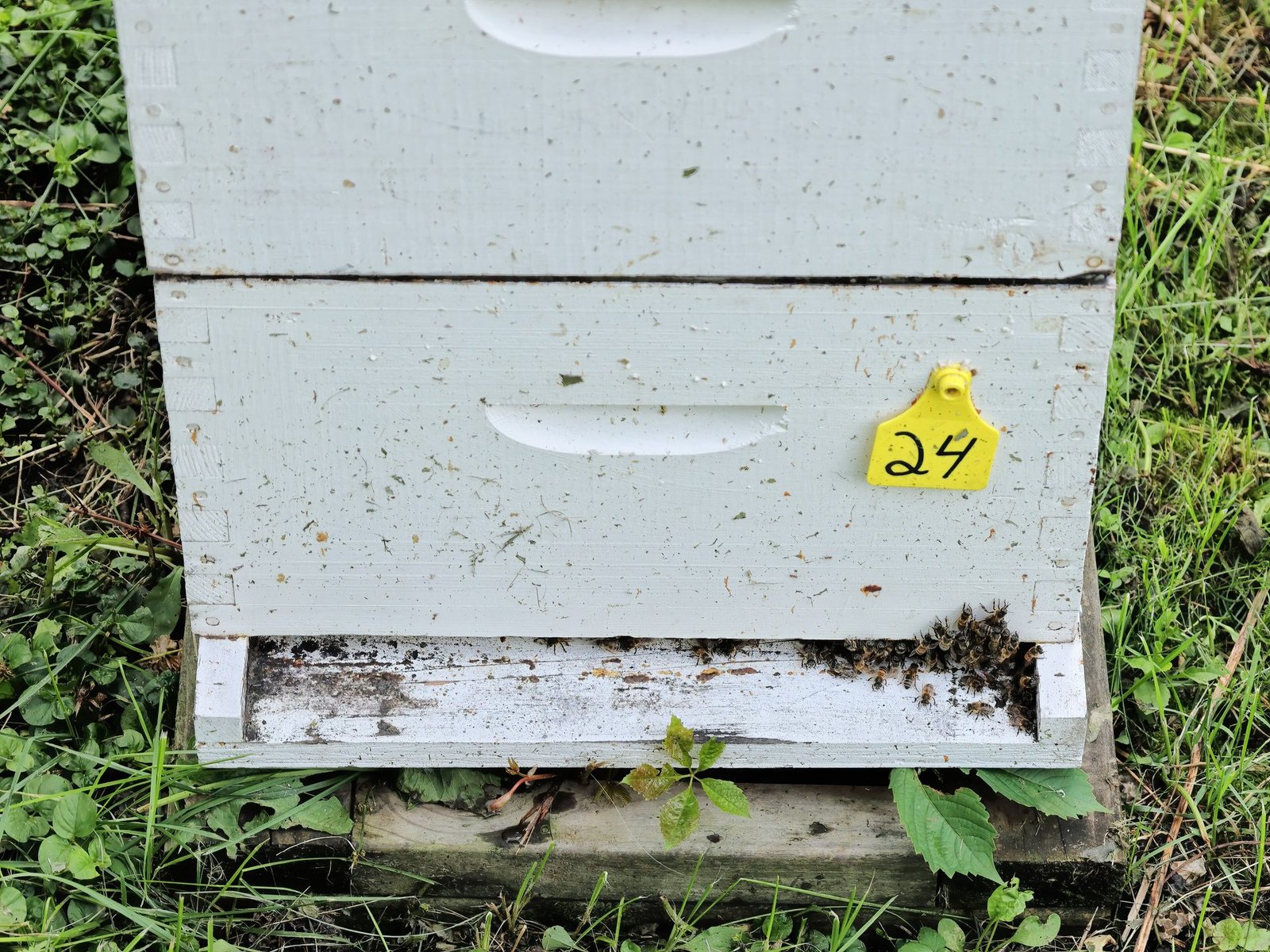
Label a quarantined hive in two separate layers. The first is a permanent colony ID that never changes (for example “B-07”: apiary B, hive 7), written on the lid, every box and the frame top-bars. The second is a removable status tag that shows why the colony is quarantined, the date it started and the date of the next check. Keeping the two separate means that when a colony comes out of quarantine, you remove one tag instead of relabeling the whole hive, and your records still make sense.
The labels themselves are quick to make. The payoff is that a colony, its boxes and its frames stay together, and anyone who opens the yard can see at a glance which hives not to touch.
Key Takeaways
- Give every colony a permanent, unique ID and never reuse a number when a colony dies. Canada’s national bee biosecurity standard and Iowa State’s biosecurity checklist both call for unique colony identifiers.
- Mark supers and frame top-bars with the colony number, as the UK National Bee Unit recommends, so equipment only goes back on its own colony.
- Use a separate, removable status tag for quarantine, with the reason, start date and next check date.
- Mark quarantine tools and spare equipment too, not just the hive.
- In North Dakota, every apiary also needs a legal sign: your name and phone number in letters at least 1.5 inches high, and your beekeeper ID at least 3 inches high.
Table of Contents
Why Quarantine Labels Matter
Most disease moves between colonies on equipment and combs, not through the air. The UK National Bee Unit’s Apiary hygiene and quarantine fact sheet recommends keeping queen excluders, supers, brood boxes and combs for the sole use of one colony, and marking supers and top-bars with the colony number to make that possible. It reports that these measures have been shown to significantly reduce the occurrence and spread of disease.
Labels make that system work in practice. Without them, a quarantined colony’s supers end up on a healthy hive after extraction, a helper borrows a frame of eggs from the wrong box, or you can’t remember in September which hive was the swarm you caught in June. Colonies usually end up in quarantine for one of four reasons:
- a new swarm, package or purchased nuc still being observed (see quarantining new bees)
- a colony showing suspicious brood signs (see quarantining a suspect diseased hive)
- a weak colony isolated to protect the yard from robbing (see when to isolate a weak hive)
- a colony under treatment, whose honey must not be harvested
Layer 1: The Permanent Colony ID
Canada’s Honey Bee Producer Guide to the National Bee Farm-level Biosecurity Standard advises giving hives a unique identifier and marking equipment with numbers or colors. A simple format that scales:
- Apiary letter + hive number: A-01, A-02, B-01. The letter tells you the yard, even when equipment is back in the honey house.
- Never reuse a number. If B-07 dies, the next colony in that spot is B-12, not a new B-07. Otherwise your records merge two unrelated colonies, which is exactly what you don’t want when tracing a disease.
- Splits get new numbers, with the parent noted in your records (B-12 from B-07).
- Put the ID on the lid and on the front of every box. In our region, colonies are wrapped from October to April, so a label on the side of a box disappears for half the year. Label the outer cover and the wrap as well.

Layer 2: The Quarantine Status Tag
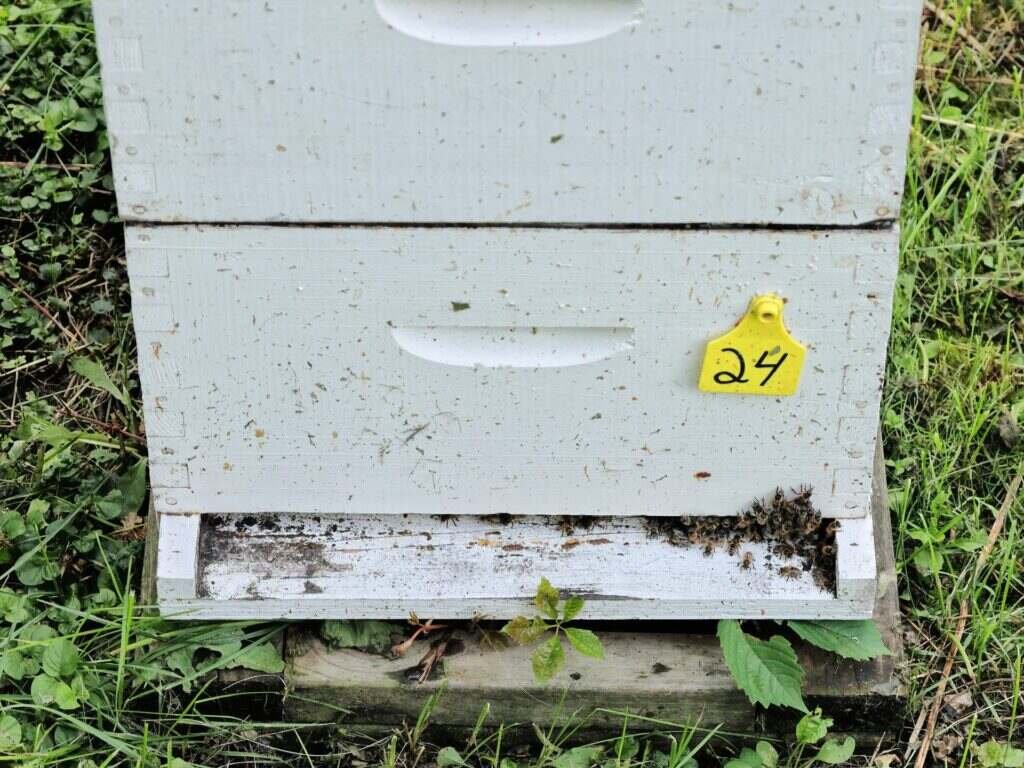
The status tag should be removable, highly visible from a few steps away, and have space for writing. A laminated card zip-tied to the lid handle, a painted wooden clothespin, or a colored aluminum tag on a nail all work. On it, write:
- the reason (e.g., “new swarm,” “suspect brood,” “treatment”),
- the start date,
- the next check date, and
- any restriction (e.g., “no frames out,” “no supers for harvest until [date]”).
A color code makes the yard readable at a glance. There’s no official standard, so the scheme below is simply the one we suggest. Whatever you choose, write it in your logbook so helpers read it the same way.
| Tag color | Status | Typical rule | Clears when |
|---|---|---|---|
| Red | Suspected or confirmed notifiable disease | Nothing enters or leaves; entrance reduced; dedicated tools only; state apiarist contacted | Inspector’s instructions are completed |
| Orange | Observation (new swarm, package, bought nuc) | No frame or equipment swaps; work this colony last | About two clean brood cycles (six weeks) for swarms, per NBU guidance |
| Yellow | Under treatment | No honey supers harvested; note product and date | Treatment removed and label waiting period has passed |
| Blue | Isolated weak colony | Entrance reduced; no feeding outside the hive | Colony strength recovers, or it is combined |
Avoid the international queen-marking colors if you color-code frames or boxes by year, so the two systems don’t get confused. Our queen marking color chart lists them.
Labeling Boxes, Frames and Tools
A quarantine label on the hive doesn’t protect you if the equipment inside it wanders. Label equipment as well:
- Boxes and supers: colony ID on the front hand-hold side, where you can see it when boxes are stacked in the honey house.
- Frame top-bars: colony ID with a paint pen or queen-marking pen, as the NBU suggests. For quarantined colonies, add a “Q” so the frames stand out if they ever leave the hive. If you already number frames for comb rotation, put the colony ID on the opposite end of the top-bar.
- Feeders, excluders and inner covers: these travel more than boxes. Mark them.
- Tools: keep a separate hive tool, brush and gloves for quarantined colonies. Wrap the handles in red tape so nobody mixes them up. Store them in their own bucket with disinfectant, as in our apiary tool bucket setup. If disease is confirmed, follow how to disinfect hive tools after disease.
Materials That Survive a Northern Winter
A label has to outlast sun, rain and a winter of wraps and wind. What holds up and what doesn’t:
| Method | Durability | Best for | Watch out for |
|---|---|---|---|
| Oil-based paint pen | Several seasons | Box fronts, top-bars, lids | Fades in full sun; re-mark each spring |
| Branding iron or wood-burned number | Permanent | Box IDs and ownership | Can’t change; best for the permanent ID only |
| Stamped aluminum tag on a nail | Many years | Colony ID on the lid or stand | Make sure the tag stays with the colony when boxes move |
| Laminated card on a zip tie | One season | Quarantine status tags | Write with a pencil or permanent marker; ballpoint runs |
| Chalk or grease pencil | Weeks | Quick inspection notes on the lid | Washes off; never use it for the ID |
The Apiary Sign the Law Requires
Hive labels are for you. The apiary sign is for inspectors, landowners and pesticide applicators, and in some states it’s a legal requirement. The North Dakota Department of Agriculture’s information for beekeepers requires a sign at every apiary with the beekeeper’s name and phone number in letters at least 1.5 inches high, and the beekeeper ID in letters at least 3 inches high and 0.5 inches thick. It must be visible when approaching the yard. Beekeepers of every size, from one colony up, must also be licensed and register hive locations.
Keep the legal sign factual. A public-facing “DISEASED BEES” notice invites trouble and isn’t required. Use it only if your state inspector tells you to. Quarantine details belong on the hive tag and in your records. Rules differ from state to state, so check yours in our guide to beekeeping regulations by state.
Tying Labels to Your Records
Labels only work if the colony ID is also the key in your records. Iowa State’s Beekeeping Biosecurity and Best Practices Checklist lists marking all colonies and apiaries with unique identification alongside recording inspection findings, treatments and new stock. For each quarantined colony, log:
- ID, apiary and source (e.g., “B-12, swarm from farmstead near Casselton, June 14”)
- quarantine reason and start date
- each inspection: brood pattern, signs, actions
- any equipment that entered or left, and its ID
- clearance date and who cleared it
A paper logbook works fine. Apps make searching easier. See our guide to beekeeping records and our comparison of apiary record apps.
Frequently Asked Questions
What should a quarantine tag on a beehive say?
The reason for quarantine, the start date, the next check date and any restriction, such as “no frames out” or “no honey harvest.” Pair it with the colony’s permanent ID so records match.
How long should a new swarm stay labeled as quarantined?
The UK National Bee Unit suggests keeping swarms from unknown sources in quarantine for about two brood cycles, around six weeks, and checking the brood for disease before moving them into the main apiary.
Should I mark frames from a quarantined colony?
Yes. Write the colony ID and a “Q” on each top-bar. Frames move more often than any other equipment and are the most likely to carry disease to another colony.
Do I have to post a quarantine sign at my apiary?
Generally not, unless an inspector requires it. What North Dakota does require is an apiary sign with your name, phone number and beekeeper ID. Check your own state’s rules.
What’s the best way to number hives in an apiary?
Use an apiary letter plus a hive number (A-01), never reuse numbers, and give splits new numbers with the parent noted in your records. Put the ID on the lid and every box.
Can I reuse labeled equipment after quarantine ends?
If the colony was only under observation and stayed healthy, yes. If disease was confirmed, clean and disinfect equipment to the level the disease requires first, or destroy it if an inspector directs.
The Bottom Line
Give every colony a permanent ID, add a removable status tag when it goes into quarantine, and mark the equipment and tools that belong to it. Tie all of it to your records. For the wider picture of isolating colonies, see our guide to setting up a quarantine yard.