Last Updated September 17, 2026
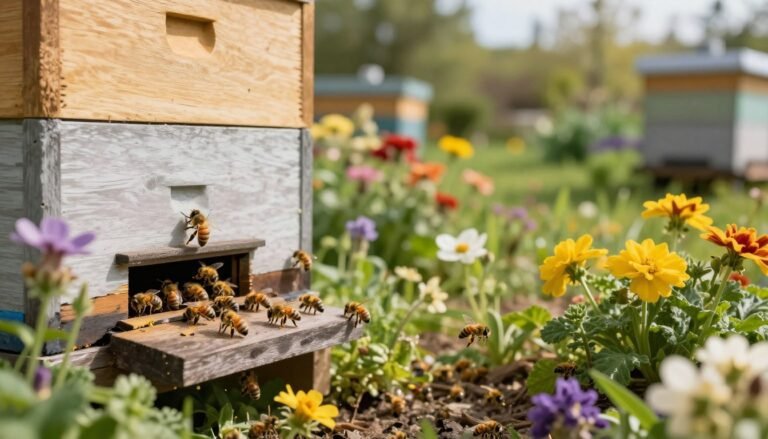
The most effective way to prevent drifting between hives is to make each hive look different from its neighbors and to break up long, straight rows: space colonies a few feet apart in small irregular groups, face entrances in different directions, paint fronts in contrasting colors bees can see, and give each entrance a landmark such as a shrub, post, or log. Drifting — a returning bee entering the wrong hive by mistake — is far more common than most beekeepers assume. Published studies have found that anywhere from a few percent to more than a third of a colony’s bees can end up in a neighbor’s hive depending on layout and season, and every drifter can carry Varroa mites, viruses, or Nosema with her — see this guide on how drifting bees spread Varroa mites (and how to stop it) for a closer look at that specific disease-transfer mechanism. The layout rules below apply equally to full-size hives, nucs, and mating nucs, with the nuc-yard specifics called out in their own section.
Key Takeaways
- Drift is an orientation error, not robbing: young bees on their first flights and drones (which drift two to three times more than workers) are the main culprits, and guard bees readily admit a bee that arrives carrying nectar or pollen.
- Research puts drift anywhere from about 4% to 37% of bees in their first week of adult life, and 13–42% of a colony’s population can be “alien” bees in crowded row layouts, so this is a real management problem rather than a curiosity.
- Layout is the biggest lever: irregular groups instead of straight rows, 3–6 feet between hives inside a group with wider gaps between groups, and entrances facing different directions.
- Visual cues work because bees learn them on orientation flights: contrasting front colors (blue, yellow, white, black — not red), simple shapes near the entrance, and a landmark per hive.
- Drift moves mites and disease between colonies, so monitor Varroa in every hive, not just the weak ones, and keep tools separate for sick colonies.
- When drift is already unbalancing the yard, swap the positions of a strong and a weak hive during peak flight, reduce the strong hive’s entrance, and move a frame or two of bees and brood into the weak one.
Table of Contents
- What Drifting Is, and How It Differs From Robbing
- How Much Drift Actually Happens: What the Research Shows
- Why Bees Drift: Layout, Weather, and Colony Behavior
- Apiary Layout That Prevents Drifting
- Visual Cues Bees Actually Use
- Nucs and Mating Nucs: The Highest-Stakes Case
- Corrective Actions When Drift Is Already Happening
- Monitoring Drift and Managing the Disease Risk
- Seasonal Timing
- FAQ
What Drifting Is, and How It Differs From Robbing
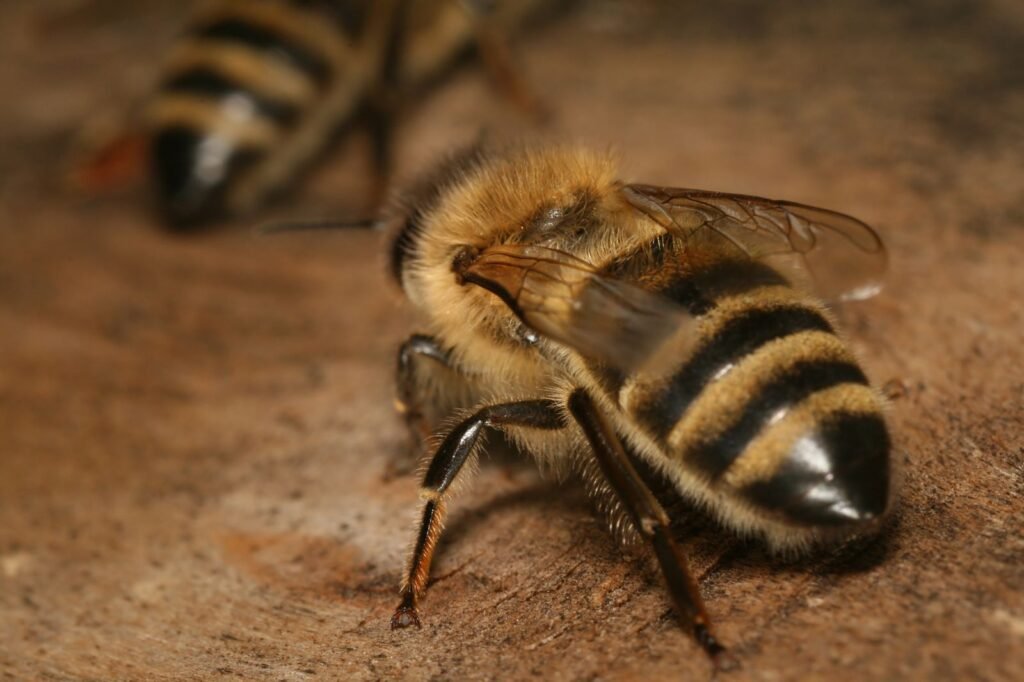
Drifting happens when a bee returning from a flight lands at and enters a colony that is not her own, and is accepted there. It is accidental. Robbing is the opposite: a deliberate raid on another colony’s honey stores, with fighting at the entrance, bees wrestling on the landing board, and wax cappings scattered below the hive. A drifter slips in quietly; within a day or two she takes on the new colony’s odor and is indistinguishable from her adopted nestmates.
Who drifts
Young workers on orientation flights and their first foraging trips drift most, because they are still learning the landmarks that mark home. Drones drift far more than workers — roughly two to three times as often in classic observations (Free, 1958, as summarized by The Apiarist) — and are accepted by almost any colony, which is why marking a few dozen drones with paint is a quick way to watch drift happen in your own yard. Loaded foragers are also admitted more readily than empty ones: a bee arriving with nectar or pollen is a gain for the guards’ colony, and, as Randy Oliver’s review of the drift literature at Scientific Beekeeping notes, colony acceptance rises during a nectar flow and falls during a dearth.
Why it matters
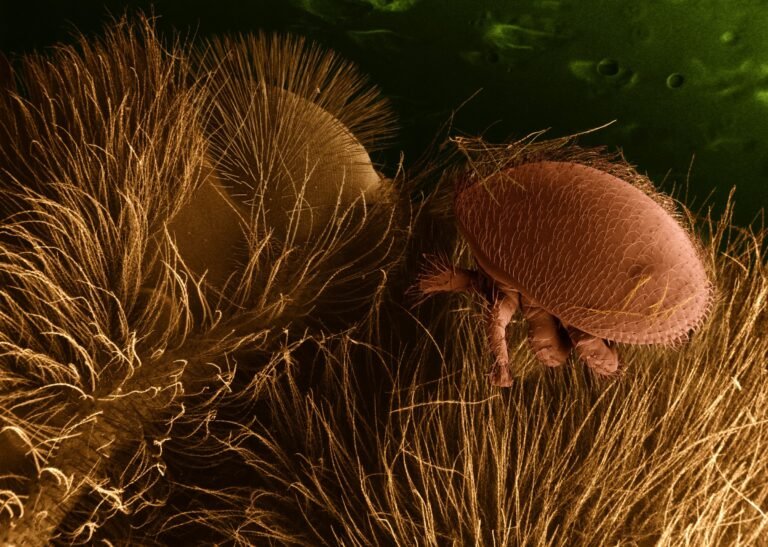
Two consequences follow. First, colonies at the ends of a row accumulate bees while middle colonies bleed them, so the yard becomes lopsided: some hives boom and swarm, others stall. Second, and more seriously, drifters carry whatever they are infested with. Varroa mites, deformed wing virus, chronic bee paralysis virus, Nosema, and even American foulbrood can move between hives on drifting bees, which is why a single untreated colony can reinfest its neighbors and why our guide to drift that spreads mites and disease treats layout as a Varroa-management tool.
| Sign | Likely cause | Consequence |
|---|---|---|
| End-of-row hives much stronger than the middle | Repeated drift toward the visually distinct ends | Uneven workforce; swarming at the ends, weak middles |
| Marked drones turning up in several hives | Normal drone mobility, amplified by tight spacing | Fast mite and virus movement across the yard |
| A treated colony’s mite count climbing again | Mite immigration on drifting foragers and drones | Need for yard-wide, not hive-by-hive, mite control |
| Fighting, torn cappings, frantic entrance activity | Robbing, not drifting | Reduce entrances and remove attractants immediately |
How Much Drift Actually Happens: What the Research Shows
Drift is one of the better-measured behaviors in beekeeping, because it is easy to mark bees and count where they turn up. The numbers are larger than most beekeepers expect.
“By the end of the first week of adult life, 4% to 37% of honey bees have drifted into another hive, with variation based on colony location in the apiary and number of colonies.”
| Study | Finding | What it means for layout |
|---|---|---|
| Pfeiffer & Crailsheim (1998) | 13–42% of a colony’s population were “alien” bees from adjacent hives, depending on season; drift was heaviest in crowded rows and from center hives | Tightly packed, identical rows are the worst case |
| Coleman, Street & Walsh (2026 review) | 4–37% of bees drift by the end of their first week; colonies arranged in a circle showed roughly 12% drift versus roughly 27% in a U-shape | Arrangement shape changes drift by a factor of two |
| Bordier et al. (2017) | About 10% of tracked bees drifted; acceptance by the host colony rose during nectar flow | Expect more drift during the main flow |
| Free (1958) | Drones drift two to three times more than workers | Drones are the main long-distance mite carriers |
| Frey et al. (2011) | Heavily infested colonies posed a mite-immigration risk to treated colonies up to about 1.5 km away | Spacing alone does not solve mite drift; treat yard-wide |
The practical reading of all of this: you cannot eliminate drift, but the difference between a well-designed yard and a row of identical white boxes is roughly a halving of the problem, and the difference between a managed yard and an untreated neighbor is what decides your mite loads in late summer.
Why Bees Drift: Layout, Weather, and Colony Behavior
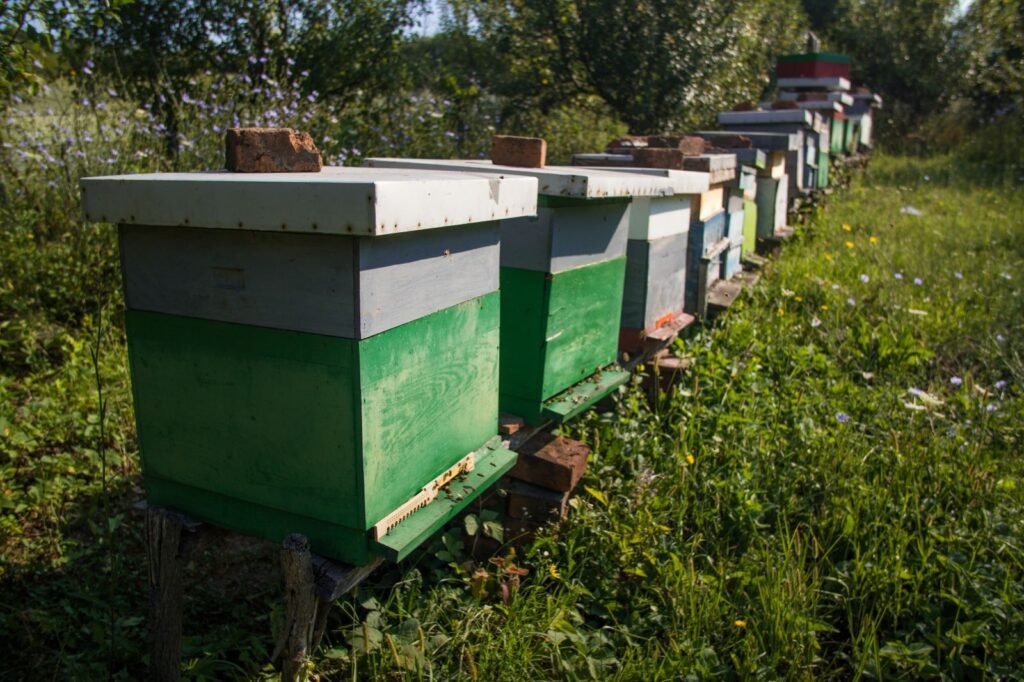
Bees learn their home during orientation flights — the slow, looping, zig-zagging departures you see young bees make on warm afternoons — by memorizing landmarks around the entrance. Anything that makes those landmarks ambiguous invites mistakes:
- Long, straight rows of identical hives. Every entrance presents the same picture. Bees returning along the row tend to stop at the first or last box that matches their memory, which is why end colonies grow.
- Tight spacing. Hives touching or a foot apart give a bee no margin for error on her final approach.
- Wind. A crosswind pushes heavily loaded foragers sideways on approach, and under pressure a bee takes the nearest entrance rather than the exact one.
- Crowded flight periods. During spring buildup and the main nectar flow the air in front of the hives is thick with bees, orientation flights peak, and guards are at their most permissive.
- Uniform paint. A yard of identical white boxes offers no color or pattern cue at all.
Apiary Layout That Prevents Drifting
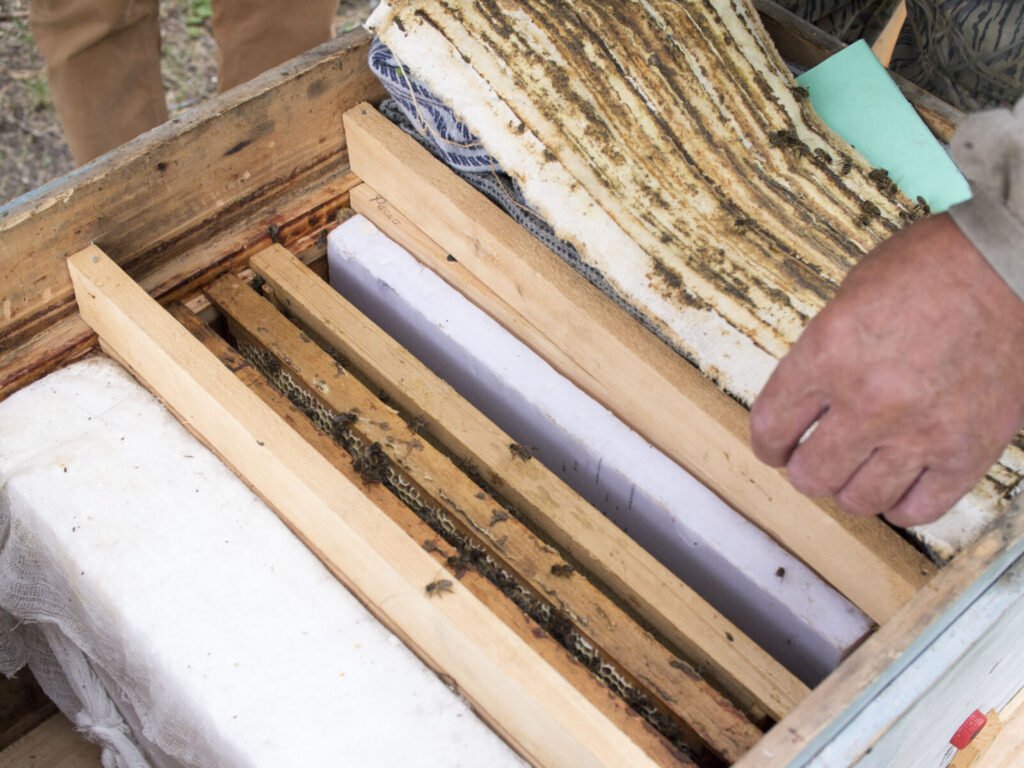
Layout is the single biggest lever a beekeeper has, and it costs nothing but planning.
Break up the rows
Arrange hives in small clusters, pairs, or an irregular pattern rather than one long line, and if you must use rows, keep them short and put a gap or a landmark between groups. Circular or horseshoe arrangements with entrances facing outward have measured lower drift than straight lines. Inside a group, 3–6 feet between hives is a practical minimum; between groups, leave a wider break of 10–20 feet or a physical feature such as a shrub or fence post.
Face entrances in different directions
Rotating hive fronts so that neighbors’ entrances point in different directions spreads out the flight lanes and stops the “which one is mine” problem at the last second of the approach. In a pair, turning the two hives 90 degrees to each other is enough; in a cluster of four, facing each outward works well.
Use hedgerows, fences, and trees as windbreaks and landmarks
“Windbreaks like hills and tree lines can also act as local landmarks that improve honey bee homing abilities.”
| Windbreak type | Primary benefit | Placement tips |
|---|---|---|
| Hedgerow or shrub line | Filters gusts; doubles as a landmark | Plant on the windward side, roughly 10–20 feet from entrances |
| Fence or wall | Immediate shelter; strong visual cue | Run it along the prevailing wind; vary hive facing in front of it |
| Tree line or slope | Stable microclimate; long-term landmark | Use natural contours; avoid dense shade directly over the brood nest |
The video above, from the nonprofit Apiaries & Bees for Communities, walks through the same layout and marking techniques in a working yard: breaking up rows, varying entrance direction, and adding color and landmarks so returning bees can tell hives apart.
Visual Cues Bees Actually Use
Honey bees see blue, violet, and ultraviolet well, yellow and green reasonably, and red poorly, so a contrasting scheme of blues, yellows, whites, and blacks near the entrance gives them the most information. Paint the front of each hive (or just the landing board and the area around the entrance) a different color from its neighbors, or add a simple bold shape — a circle, a bar, a triangle — since bees discriminate shapes as well as colors on their orientation flights.
Physical landmarks work even better than paint. Scott Souders of The Bee Supply describes fixing a persistent drift problem in a line of five hives by placing an upright section of log in front of the middle hive; in his account it “made all the difference” within days (Reducing Drifting, The Bee Supply, 2026). A painted rock, a stake with a flag, a potted plant, or a post at different distances from each entrance all do the same job. Keep the cues in place: a landmark that moves or disappears mid-season causes exactly the confusion it was meant to prevent.
- Vary color, shape, and position — a different color on every identical white box in a straight row helps less than a different color on hives that are also staggered.
- Number or tag hives for your records, but do not rely on small labels as bee cues; they are too small to matter on the final approach.
- Add distinguishing cues before you install bees, so the first orientation flights learn the finished picture.
Nucs and Mating Nucs: The Highest-Stakes Case
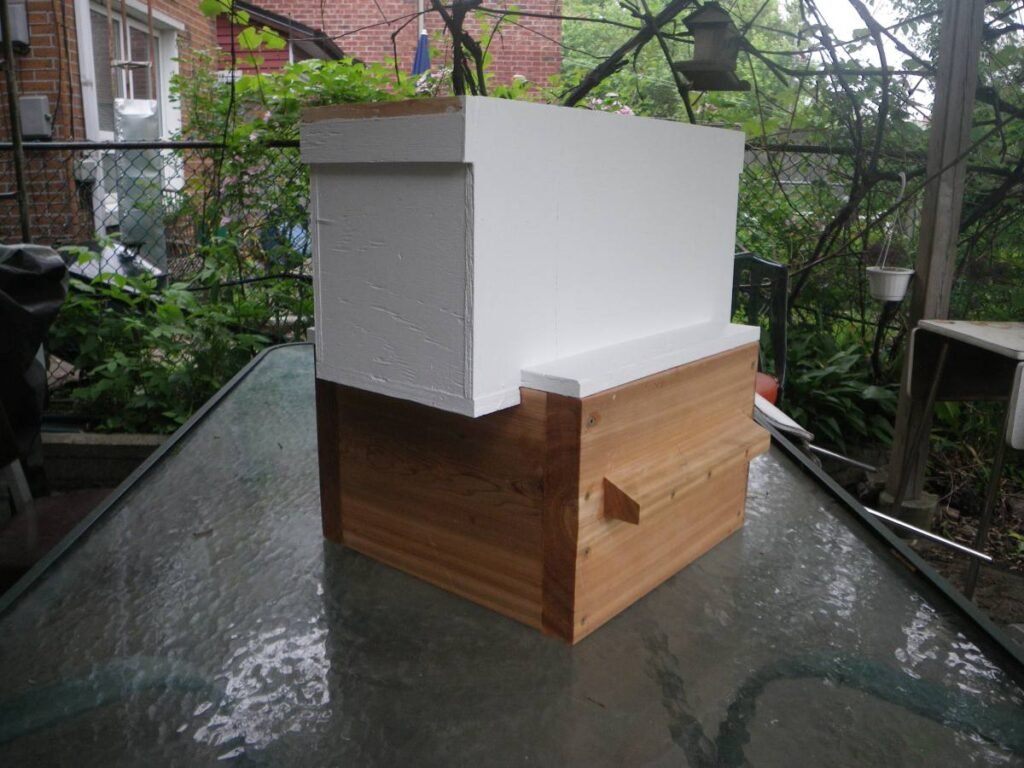
Everything above applies to nucleus colonies, but the stakes are higher. A five-frame nuc has few foragers to lose, so a steady drain to a strong neighbor can stall it completely, and a nuc raising a new queen faces a risk a full hive never does: the virgin queen returning from her mating flight must find her own box. If she enters a queenright colony next door she is killed, and weeks of work are undone.
- Keep nucs away from strong full-size hives. A booming colony next to a small nuc pulls the nuc’s foragers in; give new nucs their own group, ideally 10–20 feet from established colonies. For a deeper dive on this exact setup, see preventing drifting in new nuc yards.
- Arrange mating nucs in pairs or quads with entrances facing different directions, and make every front distinct with color or a marker. Queen breeders routinely paint mating-nuc fronts in different colors and patterns for exactly this reason.
- Do not line nucs up on a single shared stand in a row. If space forces it, alternate entrance direction along the stand and stagger the boxes.
- Give a new split a distinct location from its parent hive, or move it more than three miles for a couple of weeks, so foragers do not simply fly home to the original site.
- Check weekly for imbalance and swap a gaining and a losing nuc’s positions during the day if one is clearly absorbing the other’s bees.
For a yard made up entirely of nucs, see our dedicated guide to reducing drifting in new nuc yards, and for choosing boxes with distinct, well-ventilated fronts, our nuc box buying guide.
Corrective Actions When Drift Is Already Happening
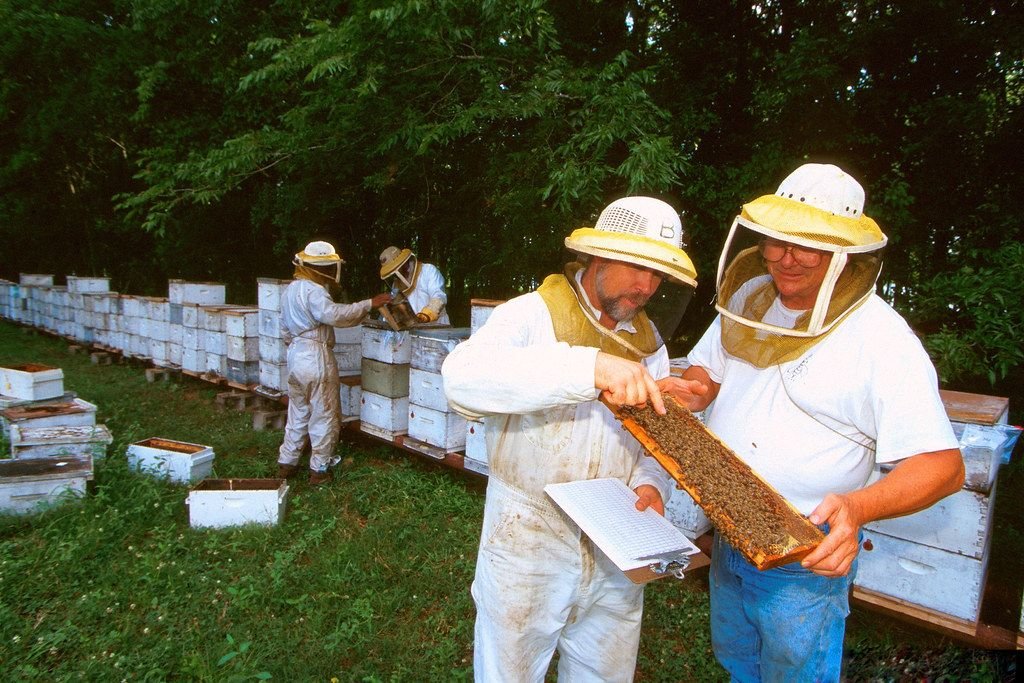
When end hives have ballooned and middle hives have thinned, act during a busy foraging day so the fix takes hold quickly.
| Action | How | Why it works |
|---|---|---|
| Swap positions | Exchange the places of a strong and a weak hive in the middle of a warm day when most foragers are out | Returning foragers land at the familiar spot and boost the weak colony |
| Adjust entrances | Fit an entrance reducer on the strong hive; open the weak one wider | Slows incoming traffic at the gainer and removes bottlenecks at the loser |
| Transfer frames | Move one or two frames of bees and capped brood (not just empty comb) from strong to weak | Restores workforce and nurse bees immediately |
| Requeen | If a drained colony’s brood pattern stays poor after rebalancing | Persistent weakness is often a queen problem drift only exposed |
| Add cues | Paint, landmark, or turn the hives that keep losing bees | Fixes the cause rather than the symptom |
Time interventions away from weather fronts and mating flights, and watch entrances for several days afterward to confirm the pattern has changed. Before moving frames between colonies, make sure the donor is healthy; our note on keeping separate tools for sick and healthy colonies explains why.
Monitoring Drift and Managing the Disease Risk
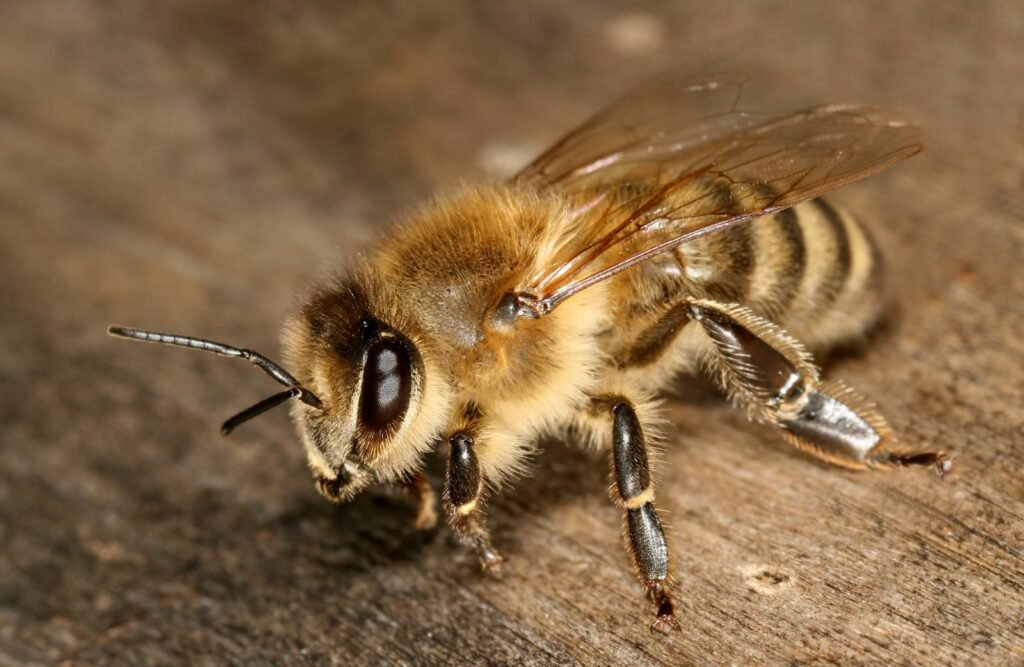
A simple field test quantifies drift in any yard: mark 20–30 drones in one hive with a paint pen, then check neighboring entrances and frames over the following week and log where they appear. Pair that with short weekly notes on colony strength and stores, and end-of-row gainers and middle-row losers show up within a season.
Because drift moves mites regardless of how well you lay out the yard, treat Varroa monitoring as a whole-apiary task. Sample every colony, not just the ones that look weak, treat on a schedule, and remember that a neglected colony — yours or a neighbor’s — can reinfest treated hives over a kilometer away. The University of Arkansas Division of Agriculture’s beekeeping IPM guide lays out sampling and treatment timing, and our guide to current Varroa control methods covers the options. If you run hives in commercial pollination, where hundreds of colonies sit in rows, see reducing drift in pollination yards.
Seasonal Timing
Drift peaks when flight is heaviest and guards are most permissive: spring buildup, the main nectar flow, and any period of intense orientation activity after installing packages, nucs, or splits. Add spacing and visual cues before those windows, not during them. In a summer or fall dearth the risk flips toward robbing rather than drifting, so entrance reducers and robber screens matter more than paint at that point. Windy seasons call for windbreaks and entrances turned out of the prevailing wind; hot spells call for shade and ventilation so bearding bees do not spill toward neighboring entrances (see reducing bearding in hot climates).
Conclusion
Design the yard so that every hive stands out, keep nucs and mating nucs in their own well-marked groups, and monitor mites across the whole apiary rather than hive by hive. Drift cannot be eliminated, but a staggered, colorful, landmark-rich layout roughly halves it, and that is the difference between a balanced, healthy yard and one where the end hives swarm while the middles starve. For the closely related problem of colonies leaving en masse, see our guide to preventing swarming.
FAQ
What is bee drifting and how is it different from robbing?
Drifting is a returning bee accidentally entering and being accepted into a neighboring colony. Robbing is a deliberate raid on another hive’s honey, marked by fighting at the entrance and scattered wax cappings. Drifters slip in quietly; robbers fight.
How far apart should hives be to reduce drifting?
Leave 3–6 feet between hives within a group and 10–20 feet or a landmark between groups, and avoid long straight rows. Arrangement and visual differences matter more than raw distance; a circle of distinct hives drifts less than a widely spaced but identical row.
What colors should I paint hives to prevent drifting?
Use colors bees see well and can tell apart: blue, yellow, white, and black in contrasting combinations. Bees see red poorly, so it adds little. Painting just the front or landing board is enough, and adding a simple shape or a landmark helps more than color alone.
Do drones drift more than workers?
Yes. Classic observations found drones drift roughly two to three times more than workers and are accepted by almost any colony, which makes them the main carriers of Varroa mites between hives and even between apiaries.
How do I stop drifting between adjacent nucs and mating nucs?
Keep nucs in their own group away from strong full-size hives, arrange them in pairs or quads with entrances facing different directions, give every front a distinct color or marker, and avoid lining them up on one long stand. A virgin queen returning to the wrong nuc is lost, so these cues matter most during mating.
What should I do if one hive is gaining all the bees?
During a warm afternoon when foragers are out, swap the positions of the strong and the weak hive, put an entrance reducer on the strong one, and move a frame or two of bees and brood into the weak one. Then add a color or landmark cue so the pattern does not repeat.
Does drifting spread Varroa mites and disease?
Yes. Drifting bees and drones carry mites, viruses, and Nosema between colonies, and heavily infested colonies can reinfest treated hives more than a kilometer away. Good layout reduces drift, but only yard-wide mite monitoring and treatment controls the disease risk.