
Reviewed by Michael R. · Last Updated September 24, 2026 · How we review
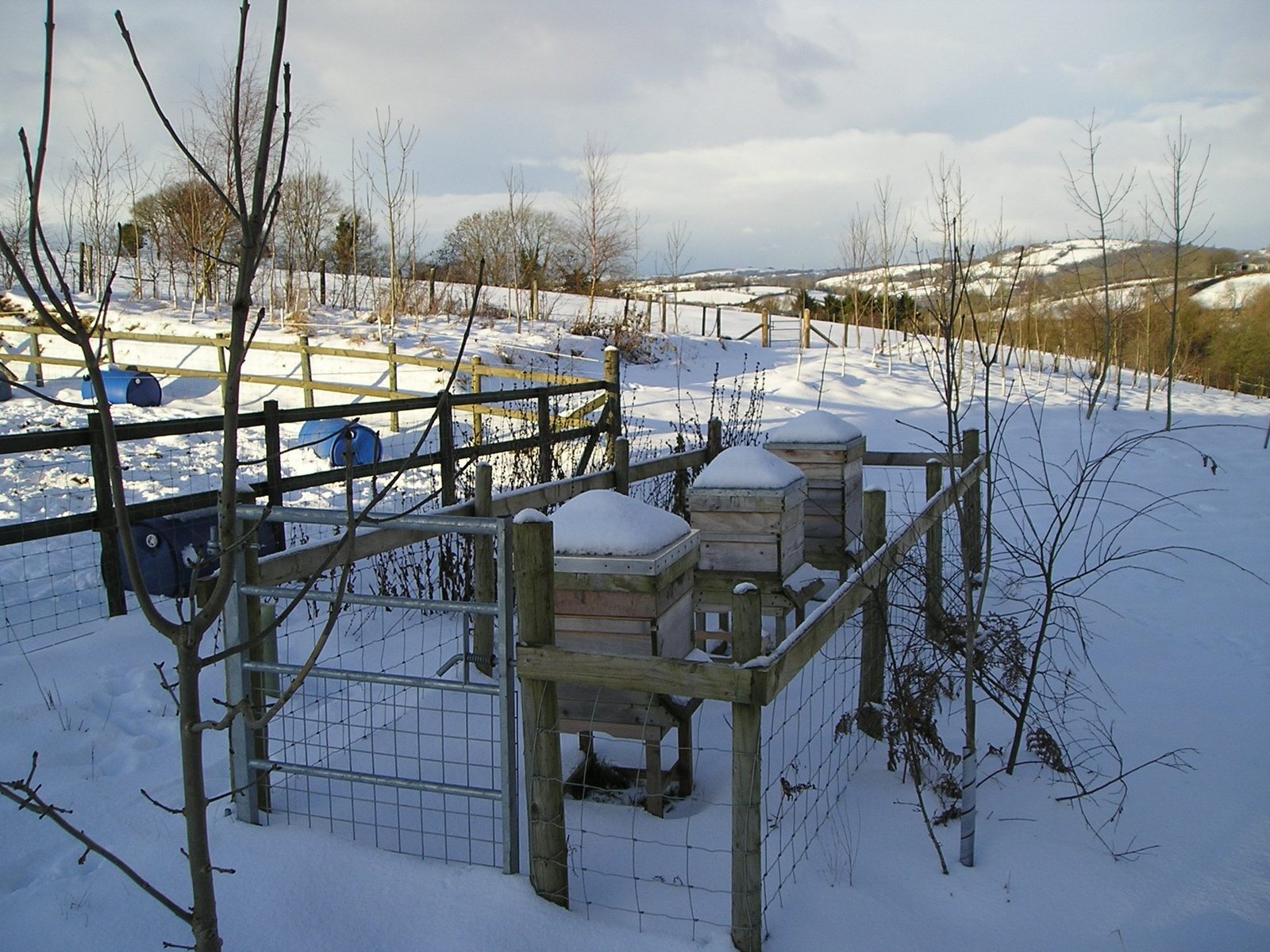
To build a nuc into a colony that can survive a northern winter, keep the queen laying through August, get mite levels down by mid-August, and feed heavy syrup until the hive reaches winter weight by early October. Then make an honest late-August decision: winter it as is, combine it, or winter it as a small insulated unit. In eastern North Dakota and western Minnesota the season is short. The Fargo average frost-free period ends around September 24, so most of the work that decides winter survival happens in July and August, not in fall.
This guide follows a first-year colony from a nuc through its first winter preparations. For winter hive setup in general, see our guide to winterizing beehives in northern states.
Key Takeaways
- The bees that carry the colony through winter are raised in late summer, so build-up work in July and August matters most.
- Test for mites in late July or early August and treat promptly. First treatments in September or October come too late.
- Feed 2:1 syrup in fall and finish by about October 1. Target at least 80 pounds of honey for a full-size colony.
- By late August, a colony that is still small should be combined or wintered as an insulated nuc rather than left to struggle.
- Upper ventilation and moisture control matter more than extra wrapping for a small cluster.
Table of Contents
- Winter Targets and a Build-Up Calendar
- Step 1: Keep the Queen Laying Through August
- Step 2: Knock Mites Down Before Winter Bees Are Raised
- Step 3: Feed to Weight Before October
- Step 4: The Late-August Decision
- Step 5: Set Up for a Northern Winter
- Frequently Asked Questions
Winter Targets and a Build-Up Calendar
A spring nuc starts with about five frames. By October it needs to be a full colony with a large population of young, healthy bees and enough honey to last until spring. Cornell’s cold-climate guidance sets a minimum of 80 pounds of honey for a full-size hive (two deep Langstroth boxes or the equivalent) and no less than 50 pounds for a nuc wintered as a nuc (Cornell CALS, Wintering Bees in Cold Climates). Michigan State’s Zachary Huang puts a typical colony’s needs at 70 to 100 pounds (MSU, Feeding Honey Bees).
| When (Red River Valley) | Goal | Action if behind |
|---|---|---|
| Early July | First deep box full; bees working the second box | Check the queen; feed 1:1 syrup in any dearth; give drawn comb if you have it |
| Late July to early August | Mite test done; treat if over threshold | Treat now, while the colony can still raise healthy winter bees |
| Mid-August | Queen laying well; brood in the second box | Requeen by mid-August at the latest, or plan to combine |
| Late August | Decision point: bees covering roughly 8 or more deep frames | Combine, or reduce to an insulated nuc |
| September | Post-treatment mite check; heavy feeding | Feed 2:1 syrup; guard against robbing |
| By about October 1 | Winter weight reached; feeding finished | Use fondant or a candy board later if the hive is still light |
The “8 or more frames” figure is our working rule of thumb for a two-deep colony, not a published standard. Colonies that miss it by a wide margin rarely catch up once the flows end.
Step 1: Keep the Queen Laying Through August
Winter bees are raised in late summer and early fall. Penn State Extension notes they can live up to six months, compared with about six weeks for summer bees (Honey Bee Management Throughout the Seasons). A first-year colony whose queen slows down in August goes into winter with too few of them.
- Give space ahead of need. Add the second deep when the first is about 70–80% occupied. See when to add a second box to a nuc.
- Feed through dearths. Brood rearing drops when nectar stops. Light 1:1 syrup in a midsummer dearth keeps the queen laying and the bees drawing comb.
- Check pollen. Pollen fuels brood rearing. If the frames around the brood nest have little stored pollen late in the season, a pollen substitute patty can help.
- Judge the queen early. A spotty pattern in July is a warning. Our guide to finding a failing queen on frames helps you decide, and the best time to requeen explains why mid-August is the practical cutoff up here.
Step 2: Knock Mites Down Before Winter Bees Are Raised
A colony can look strong in August and still collapse in winter if the bees raised in late summer were parasitized as they developed. Cornell recommends measuring mites in late July or early August and treating promptly, then rechecking in September.
“Treating bees for the first time in September or October is already too late.”
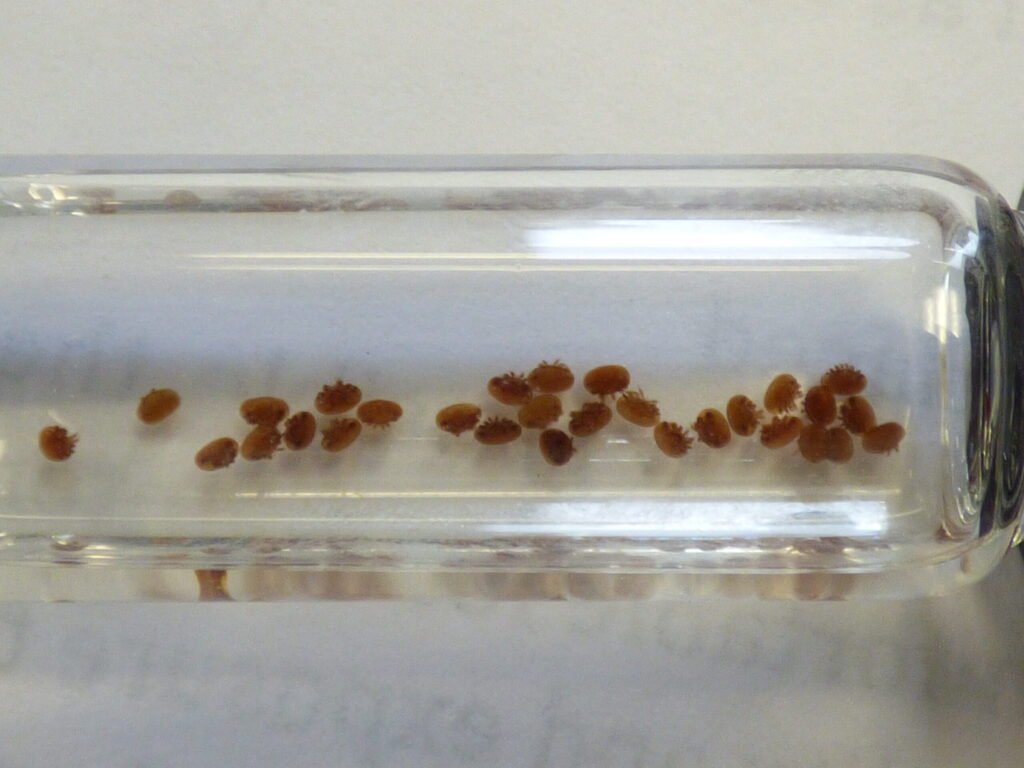
First-year colonies are not exempt. The Honey Bee Health Coalition’s guide says that even newly established colonies, including nucs, packages and swarms, should be sampled and treated if mites exceed threshold. For the fall population-decrease phase, it recommends prompt control above 2–3 mites per 100 bees (Tools for Varroa Management, 8th ed.). Use an alcohol wash or sugar roll, choose a treatment that suits the temperature and whether honey supers are on, and follow the product label exactly. Don’t scale doses down by guesswork for a smaller colony.
Step 3: Feed to Weight Before October
First-year colonies rarely store enough honey on their own, because they spent the summer drawing comb. Plan to feed.
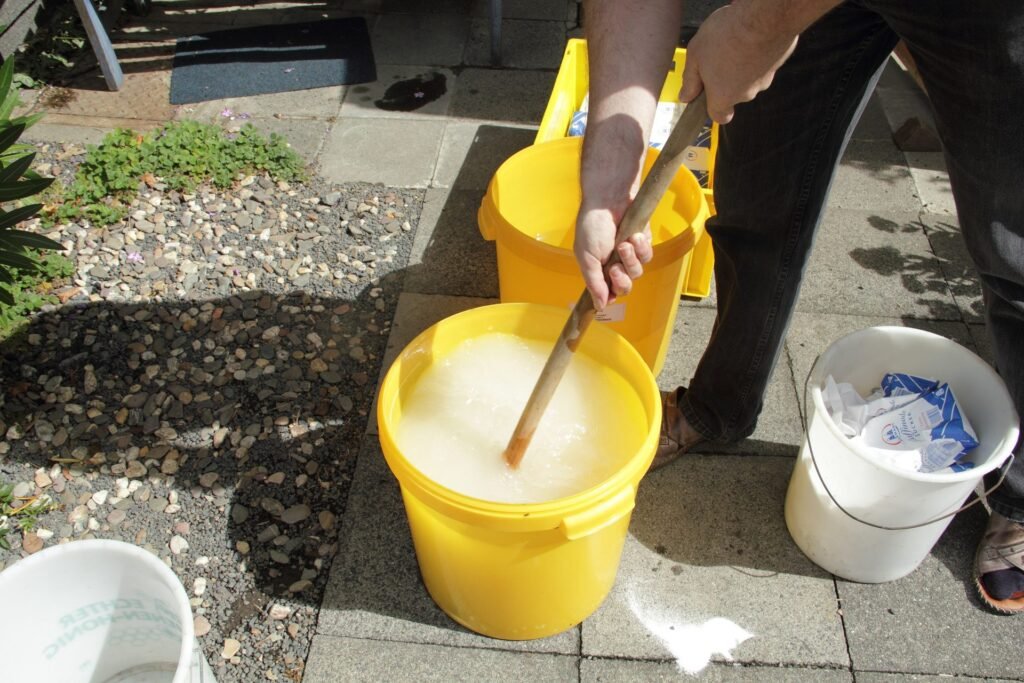
- Use 2:1 syrup in fall. Both Cornell and MSU recommend two parts sugar to one part water, because bees have little time or warmth left to evaporate thinner syrup.
- Finish by about October 1. MSU’s guidance is to finish feeding by October 1. Around Fargo, where the average first frost is late September, starting in late August or early September leaves enough warm days for the bees to store and cap the syrup.
- Heft the hive. Lift the back of the hive weekly. Once feeding stops, use fondant, dry sugar or a candy board or sugar bricks as backup rather than syrup.
- Prevent robbing. Use internal feeders, reduce entrances and never spill syrup in the yard. A small first-year colony is an easy target.
Step 4: The Late-August Decision
Don’t wait until October to find out a colony is too small. In late August, count the frames covered with bees on a cool morning when most of them are home.
| What you find in late August | Best option |
|---|---|
| 8 or more deep frames of bees, a good queen and low mites | Winter in two deeps; feed to weight |
| 5–7 frames of bees and a good queen | Reduce to one deep or an insulated nuc box and feed heavily, or combine |
| Fewer than 5 frames, a poor queen or high mites | Combine with a stronger colony (keep the better queen) |
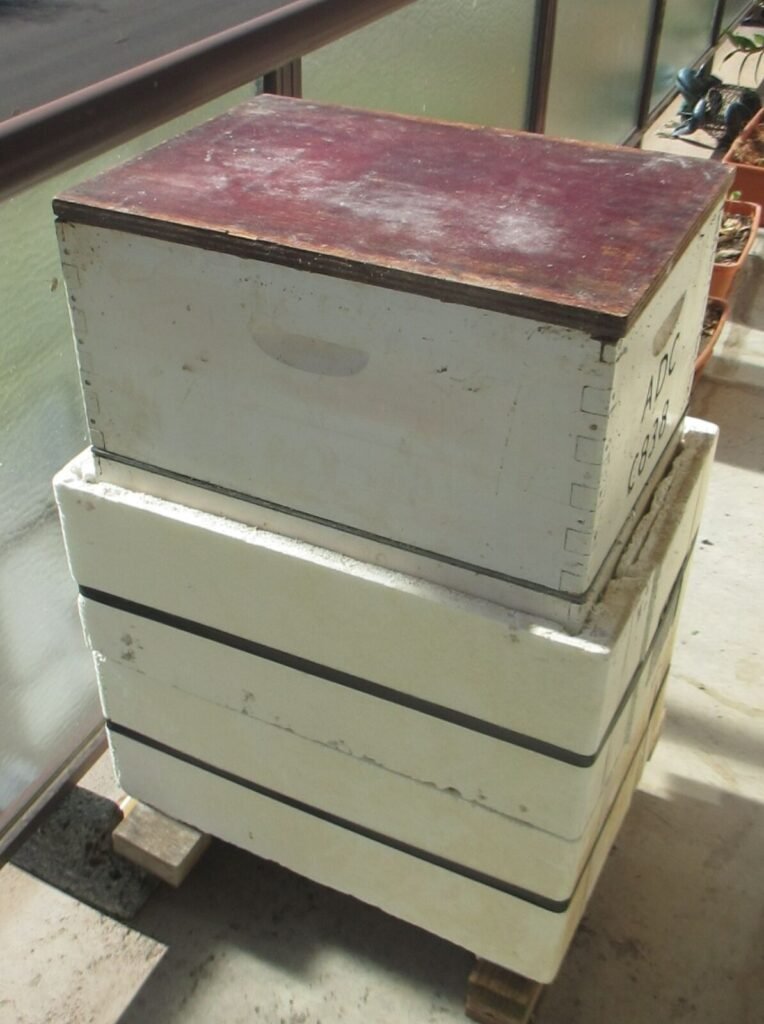
Combining two small colonies usually produces one that survives, instead of two that don’t. See how to combine two small nucs. If you want to winter a small colony anyway, an insulated nuc box or the double nuc method gives it a better chance.
Step 5: Set Up for a Northern Winter
Once weight and mites are handled, the hive setup mainly deals with moisture and wind. Give the cluster an upper exit (see upper vs lower entrance in winter), put an absorbent layer above the cluster (see the best moisture board for winter hives), reduce the lower entrance against mice and wind, and wrap or insulate as your yard’s exposure requires. Some Minnesota and Dakota beekeepers move colonies indoors instead. Our article on indoor overwintering explains how.
Frequently Asked Questions
Can a nuc installed in spring survive its first winter?
Yes, if it reaches full size, has low mite levels by mid-August and is fed to weight before October. Colonies that miss those targets are better combined in late August.
How much honey does a first-year colony need for winter?
Cornell sets a minimum of 80 pounds for a two-deep colony and 50 pounds for a nuc wintered as a nuc. Michigan State puts typical needs at 70 to 100 pounds.
When should I stop feeding syrup before winter?
Aim to finish 2:1 syrup by about October 1, while days are still warm enough for the bees to store it. After that, switch to fondant, dry sugar or a candy board if the hive is light.
Should I treat a first-year nuc for mites?
Yes, if a test shows mites above threshold. The Honey Bee Health Coalition specifically includes newly established nucs and packages in that advice. Test in late July or early August so treatment protects the winter bees.
Is it better to winter a small colony or combine it?
If it covers fewer than about five deep frames in late August, combining is usually safer in a northern climate. A colony with five to seven frames and a good queen can be wintered in a reduced, insulated setup.
The Bottom Line
A first-year nuc is ready for winter when three things are done by early fall: a laying queen raising winter bees, mites under control by mid-August, and enough stores fed in before October. Make the combine-or-keep decision in late August, while you can still act on it.
Image credits: Photo: Forest and Kim Starr, CC BY 3.0 US via Wikimedia Commons; Photo: C.hahn, CC BY-SA 3.0; Photo: Marion Phillips, CC BY-SA 2.0, via Wikimedia Commons (https://commons.wikimedia.org/wiki/File:Beehives_in_the_snow_-_geograph.org.uk_-_2202491.jpg).

.jpg)

