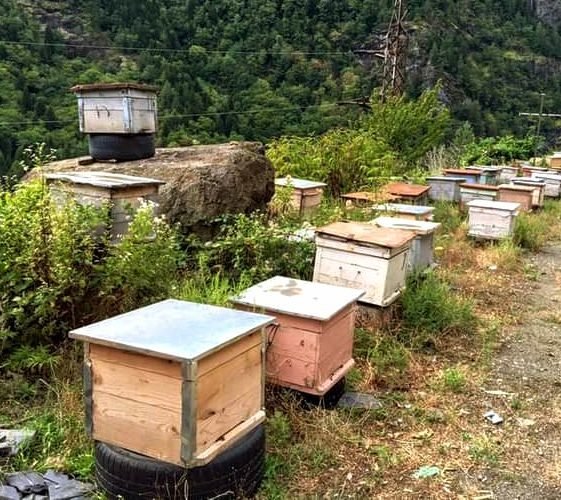
Every October, one North Dakota operation moves more than 15,000 beehives — an entire commercial apiary the size of a small city’s worth of livestock — into a specially built indoor storage facility, and leaves them there until the weather outside is reliably survivable again. It sounds like an extreme measure, but for large-scale beekeepers wintering colonies in the northern Plains, it’s increasingly the rational choice, not the eccentric one: a controlled building can do something an outdoor hive wrapped in insulation never can, which is hold a stable temperature regardless of what a Dakota winter throws at it.
Key Takeaways
- Indoor overwintering means moving entire colonies into a climate-controlled building for the coldest months, rather than leaving them outdoors with wind breaks and insulation.
- The practice has real historical roots: beekeepers in northern states traditionally used potato cellars sitting empty over winter, loading hives in once outdoor temperatures settled into the 30s and 40s Fahrenheit.
- Modern large-scale versions of the practice are still active today — one North Dakota operation moves more than 15,000 hives into a purpose-built overwintering building each October.
- Some commercial beekeepers still rent potato cellars, particularly in Idaho, though those buildings are designed for potatoes first and bees second, which creates real scheduling friction.
- Purpose-built modern overwintering facilities have increasingly replaced repurposed potato cellars, offering more reliable temperature and humidity control than a building designed for a different job.
Table of Contents
- The Potato Cellar Origins of Indoor Wintering
- Modern Commercial Practice: 15,000 Hives, One Building
- Why Move Bees Indoors At All?
- The Idaho Potato Cellar Problem
- The Real Tradeoffs Beekeepers Weigh
- Does This Apply to a Backyard Beekeeper?
- Frequently Asked Questions
The Potato Cellar Origins of Indoor Wintering
Long before anyone built a structure specifically to winter bees, northern beekeepers noticed an obvious opportunity sitting empty every winter: the potato cellar. These large, insulated, temperature-buffered storage buildings exist to keep root vegetables from freezing or sprouting prematurely, and by early November — once potato harvest and shipping had wound down — many stood mostly unused for months. Beekeepers in cold-winter regions began timing their own move indoors to match: waiting until outdoor temperatures settled reliably into the 30s and 40s Fahrenheit, then loading up entire apiaries and stacking hives inside the cellar for the winter.
It’s a genuinely practical piece of improvisation — using existing agricultural infrastructure built for an entirely different crop, on a seasonal calendar that happened to align well enough to make it work.
Modern Commercial Practice: 15,000 Hives, One Building
That improvised tradition has a direct modern descendant. Miller Honey Farms, a commercial operation with roots in both North Dakota and California, moves more than 15,000 beehives into a specially designed overwintering building each October — no longer a repurposed potato cellar, but a facility built for the specific job of holding tens of thousands of colonies at a stable, bee-appropriate temperature through the harshest months. That’s not a hobbyist decision or a niche technique; at that scale, it’s a core piece of how a commercial pollination and honey business plans its entire year, timed to get colonies into and back out of storage in step with almond pollination contracts and the rest of the migratory beekeeping calendar this site covers in its migratory beekeeping guide.
Why Move Bees Indoors At All?
Outdoor overwintering works across most of the country, and this site covers the practical version of it in detail in its guide to beekeeping in cold-winter, short-summer climates. The case for going indoors instead comes down to a specific problem outdoor wrapping can reduce but never fully solve: temperature swings. A well-insulated outdoor hive still tracks the outside air to some degree — a brutal cold snap, a sudden thaw-and-refreeze cycle, or weeks of wind exposure all still reach the cluster to some extent. A climate-controlled building removes that variability almost entirely, holding colonies at a steady, bee-appropriate temperature (typically in the mid-40s Fahrenheit) regardless of what’s happening outside, which reduces the energy bees have to spend generating their own heat and can translate directly into stronger, better-fed colonies emerging in spring.
For an operation managing tens of thousands of colonies rather than a handful, that reduced variability also means more predictable outcomes at a scale where unpredictability is expensive — losing a meaningful percentage of 15,000 hives to a bad cold snap is a very different financial event than losing two of ten backyard hives.
The Idaho Potato Cellar Problem
The older model hasn’t disappeared entirely. Some commercial beekeepers, including Miller Honey Farms, still rent out actual potato cellars in Idaho to winter bees — a direct continuation of the original practice. But renting space in a building designed for a different purpose creates a real, documented friction point: those cellars are built to store potatoes, not bees, and if the potato harvest runs long or storage needs shift, beekeepers can find their hives without an open cellar to move into on schedule. In that situation, colonies sometimes end up sitting bunched together in an outdoor holding yard for weeks, waiting for cellar space to free up — exactly the kind of scheduling uncertainty a purpose-built facility is designed to eliminate.
As one account of the practice puts it plainly: potato cellars “are designed to store potatoes, not bees” — a one-line summary of why the industry has been steadily shifting toward buildings engineered specifically for colony storage rather than borrowed agricultural space.
The Real Tradeoffs Beekeepers Weigh
| Factor | Outdoor wintering | Indoor/cellar wintering |
|---|---|---|
| Temperature stability | Tracks outside air, buffered by wraps/insulation | Held steady regardless of outside weather |
| Infrastructure cost | Low — wraps, windbreaks, entrance reducers | High — requires a building, climate control, and handling equipment |
| Scale it suits | Any size, from one hive to thousands | Most economical at large commercial scale |
| Scheduling risk | Minimal — hives simply stay in place | Real, if relying on rented/shared facility space (e.g. potato cellars) |
| Common users | Hobbyists, sideliners, most of the industry | Large commercial operations, especially in the northern Plains |
Does This Apply to a Backyard Beekeeper?
Almost certainly not directly — building or renting climate-controlled storage makes economic sense at a scale of thousands of colonies, not two or three backyard hives, where the infrastructure cost per colony would be enormous. But the underlying principle scales down usefully: temperature stability, not just insulation from wind, is what actually protects a cluster through winter. A hobbyist can borrow the logic without the building, by focusing on windbreak placement, moisture control, and siting a hive somewhere it isn’t hit by the most extreme temperature swings a property has to offer, rather than assuming thicker wrapping alone solves the same problem a commercial operation solves with an entire climate-controlled room.
Frequently Asked Questions
What is indoor overwintering, exactly?
It’s the practice of moving entire honeybee colonies into a climate-controlled building for the winter months, rather than leaving them outdoors with insulation and windbreaks.
Do beekeepers really still use potato cellars for this?
Yes — it’s a real, continuing practice in places like Idaho, though it comes with scheduling challenges since those cellars are built primarily for potato storage, not bees.
How many hives can a modern indoor overwintering facility hold?
At commercial scale, some are large: one North Dakota operation moves more than 15,000 hives into a purpose-built overwintering building every October.
Is indoor overwintering better than leaving hives outside?
It offers more stable temperatures, which can reduce colony stress and energy use during winter, but it requires significant infrastructure investment that only makes economic sense at larger commercial scale.
Should a backyard beekeeper try to winter bees indoors?
Generally no — the infrastructure cost isn’t justified at small scale. Outdoor wintering with proper insulation, windbreaks, and moisture control remains the standard approach for hobbyists.