Last Updated September 15, 2026
Every single February, roughly two-thirds of all managed honeybee colonies in the United States converge on California’s Central Valley for a single event: almond pollination. This genuinely staggering, single-crop concentration of managed bees didn’t happen overnight, and it certainly wasn’t planned that way from the outset — it’s the product of more than a century of gradual change in how American beekeepers moved their colonies, from early, genuinely limited railroad shipments to the large, coordinated fleets of flatbed trucks that now crisscross the entire country every single growing season.
Key Takeaways
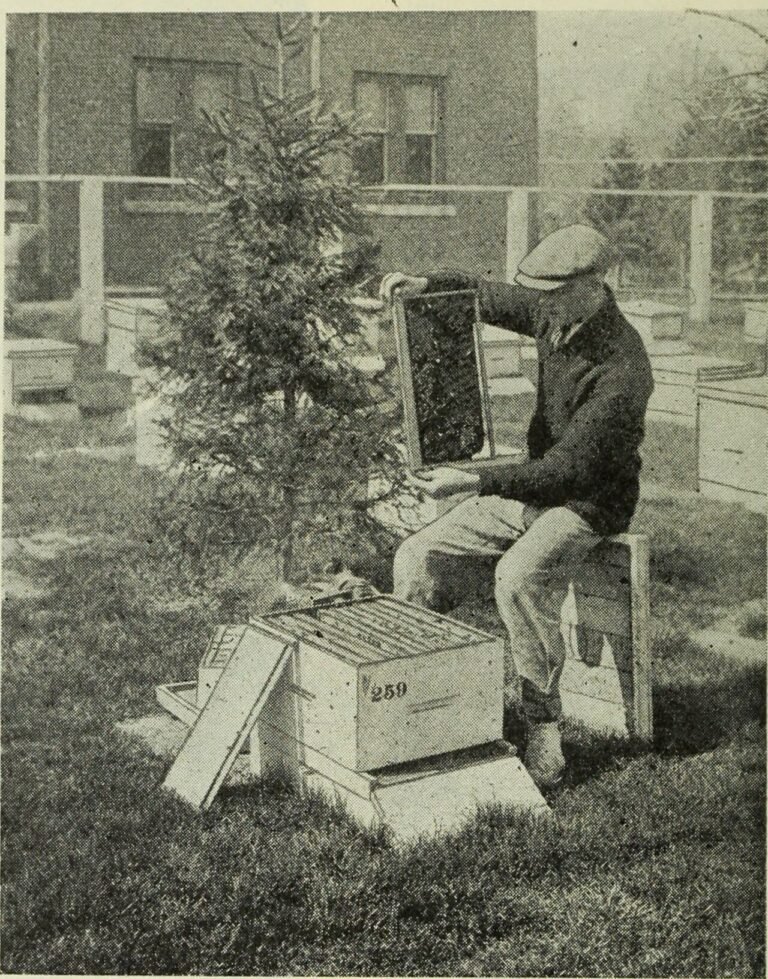
- Migratory beekeeping’s roots go back to early railroad-era shipments; the practice pictured here (loading colonies onto rail freight wagons) was used internationally by the 1920s before trucks took over in the mid-20th century.
- Today, roughly 1.6-2 million colonies – the large majority of all managed US honeybee colonies – are trucked into California each February for almond pollination alone.
- Tractor-trailers typically carry 200-500 colonies each, meaning the annual almond migration requires somewhere between roughly 3,000 and 6,000 truckloads of bees.
- Growers rent about 2 colonies per acre to guarantee pollination, since almonds are 100% dependent on insect pollination and bloom in one narrow, synchronized window each year.
- The practice remains under active scientific study for its possible role in colony stress, alongside pathogen mixing between operations – a genuinely open research question, not a settled one.
Table of Contents
- What Is Migratory Beekeeping?
- The Early Railroad Era
- The Rise of Truck Transport
- Chasing Nectar Flows for Honey Production
- How the California Almond Boom Changed Everything
- Beyond Almonds: Other Major Migratory Pollination Crops
- The Staggering Modern Scale
- The Real Economic Logic Behind Migratory Beekeeping
- Crossing State Lines: Regulatory Complexity
- Colony Collapse Disorder and Renewed Scrutiny
- Migratory vs. Stationary Beekeeping
- Common Misconceptions
- Frequently Asked Questions
What Is Migratory Beekeeping?
Migratory beekeeping refers to the practice of transporting honeybee colonies seasonally, whether to fulfill commercial pollination contracts or to follow blooming nectar sources across different regions, rather than keeping colonies permanently in one fixed location. This practice sits in genuine contrast to stationary beekeeping, and its historical development reflects broader changes in American transportation infrastructure just as much as changes in beekeeping practice itself.
The Early Railroad Era
Before trucks became the dominant method, early beekeepers on both sides of the Atlantic relied on railroad transport to move colonies longer distances, a genuinely significant logistical undertaking given the era’s more limited infrastructure and the delicate nature of a living colony compared to typical rail freight. The 1921 photograph below, showing beekeeper Leopold Gombocz loading his specially designed hives onto Austrian State Railways freight wagons at Radkersburg station, illustrates exactly this practice — moving whole apiaries by rail was an established technique internationally by the early 20th century, not just an American experiment. This early period established the basic commercial logic that would later scale up dramatically: that moving bees to where they were needed, rather than only relying on what grew locally, could be genuinely profitable.

The Rise of Truck Transport
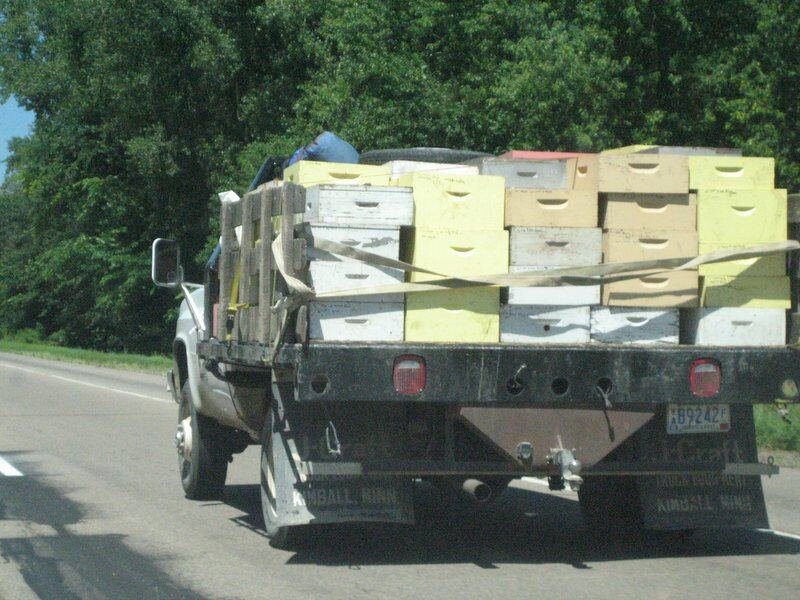
The wider availability of trucks in the early-to-mid 20th century transformed migratory beekeeping from a limited, logistically challenging practice into something considerably more flexible and scalable. Trucks allowed beekeepers to move colonies more precisely, on shorter notice, and to a wider range of destinations than fixed railroad routes ever could, a genuine infrastructure shift that helped set the stage for the scale of migratory beekeeping seen today. Loading typically happens at night, when bees are calmer and less active, and colonies are covered with netting and kept moving through the day to manage heat.
Chasing Nectar Flows for Honey Production
Beyond pollination contract work specifically, migratory beekeeping has long included beekeepers moving colonies to follow blooming nectar sources across different regions and seasons, maximizing honey production by keeping colonies actively foraging on fresh blooms rather than relying on a single fixed location’s more limited seasonal bloom window. This honey-production-driven migration represents a genuinely separate, parallel historical thread from the pollination-contract side of migratory beekeeping, even though many commercial operations today combine both purposes within the same migratory schedule.
How the California Almond Boom Changed Everything
The dramatic expansion of California almond acreage, particularly in the decades following World War II, created pollination demand at a scale genuinely unmatched by any other single crop in American agriculture. Almonds depend entirely on insect pollination and bloom in a narrow, synchronized window each February, meaning growers need an enormous concentration of pollinators available at precisely the right time. Growers typically rent about two colonies of honeybees per acre to ensure a commercial nut set — a demand that reshaped commercial migratory beekeeping around almond pollination contracts as a central, defining annual event rather than one job among many.
“More than 31 billion honeybees converge on California’s Central Valley each February to pollinate the almond trees.”
Beyond Almonds: Other Major Migratory Pollination Crops
While almonds represent the single largest migratory pollination event, commercial beekeepers following a full migratory schedule often move colonies to multiple other crops throughout the growing season as well, including apples, blueberries, and various cucurbit crops that similarly depend on insect pollination during specific bloom windows. This broader multi-crop migratory pattern means many commercial operations follow a genuinely demanding annual circuit rather than a single almond trip, moving colonies repeatedly across different regions and crops as each successive bloom window arrives.
The Staggering Modern Scale
Today, California almond pollination alone requires somewhere between roughly 1.6 and 2 million honeybee colonies trucked in from across the United States each February, representing the large majority of the country’s entire managed honeybee population converging on a single region for a single crop’s bloom window. Since a tractor-trailer typically carries between 200 and 500 colonies, moving that many bees requires an estimated 3,000 to 6,000 truckloads every year. This particular concentration is genuinely without parallel anywhere in American commercial pollination services more broadly, making almond season the single largest managed pollination event anywhere in the world.
The Real Economic Logic Behind Migratory Beekeeping
Migratory beekeeping’s growth reflects a genuine economic logic that has only strengthened over time: pollination contract income can represent a substantial, reliable revenue stream for commercial beekeepers, often complementing or even exceeding honey production income depending on the specific operation and season. This economic reality helps explain why migratory beekeeping expanded from a logistical curiosity into a central pillar of commercial beekeeping business models, rather than remaining a marginal practice only a small number of operations bothered with.
Crossing State Lines: Regulatory Complexity
Moving colonies across state lines involves genuine regulatory complexity, including health certification requirements in many states aimed at limiting the spread of pests and diseases between regions. This regulatory layer reflects a real, practical tension inherent to migratory beekeeping: the same movement that makes large-scale commercial pollination possible also creates genuine pathways for disease and pest transmission between otherwise separated bee populations, requiring ongoing regulatory management rather than being a solved problem. It’s a similar underlying tension to the one that shaped early American foulbrood laws and apiary inspection a century earlier.
Colony Collapse Disorder and Renewed Scrutiny
Following the emergence of Colony Collapse Disorder in the mid-2000s, migratory beekeeping practices came under renewed scrutiny as researchers examined whether the stress of frequent transport, exposure to unfamiliar pathogens from mixing with other operations’ colonies, and other migratory-specific pressures might contribute to broader colony health problems. This remains a genuinely active area of ongoing research and debate rather than a settled question, and it’s worth stating honestly that migratory beekeeping’s specific contribution to colony health challenges continues to be studied rather than definitively resolved either way.
Migratory vs. Stationary Beekeeping
| Feature | Migratory Beekeeping | Stationary Beekeeping |
|---|---|---|
| Colony movement | Seasonal, often long-distance | Fixed location year-round |
| Income sources | Pollination contracts + honey | Primarily honey and local pollination |
| Disease/pest exposure risk | Higher, from mixing with other operations | Lower, more isolated |
| Typical transport unit | 200-500 colonies per truckload | N/A |
| Scale suitability | Commercial, large operations | Any scale, common for hobbyists |
Common Misconceptions
The most common misconception is assuming migratory beekeeping is a purely modern invention tied only to almond pollination, when the underlying practice of moving colonies to follow nectar flows or fulfill pollination needs has real roots extending back over a century – including railroad-era shipments used internationally by the 1920s – well before almonds became its defining modern application. A second common misconception is assuming migratory beekeeping has been definitively proven to harm bee health, when the actual research remains genuinely ongoing and more nuanced than a simple yes-or-no verdict.
Frequently Asked Questions
When did migratory beekeeping first begin?
Early forms of the practice, relying on railroad transport, developed internationally in the decades before trucks became widely available – documented examples exist from the 1920s – with the practice scaling up considerably in the US as truck transport became more accessible in the early-to-mid 20th century.
Why does almond pollination specifically require so many bees compared to other crops?
Almonds bloom in a narrow, synchronized window and depend entirely on insect pollination for fruit set, and growers renting roughly 2 colonies per acre across California’s enormous almond acreage creates pollination demand that vastly exceeds what any regionally available bee population could supply on its own.
Is migratory beekeeping considered harmful to bee health?
This remains an active area of genuine scientific research and debate rather than a settled conclusion, with researchers examining transport stress and pathogen mixing as potential contributing factors alongside many other possible causes of broader colony health challenges.
Do all commercial beekeepers practice migratory beekeeping, or is it limited to a subset of the industry?
It’s primarily practiced by larger commercial operations pursuing pollination contracts and honey production across multiple regions, while many smaller-scale and hobbyist beekeepers remain stationary, making migratory beekeeping a significant but not universal part of the broader American beekeeping industry.
How many trucks does it actually take to move the bees for almond season?
With tractor-trailers typically carrying 200 to 500 colonies each, moving the roughly 1.6-2 million colonies needed for almond pollination requires an estimated 3,000 to 6,000 truckloads every February.
How do beekeepers protect colonies from overheating during long truck transport?
Operations use ventilated transport netting, load and travel mostly at night and in cooler hours, and plan routes to minimize total transit time, reflecting genuine, ongoing operational attention to the real physical stress transport can place on a colony.
Sources and further reading: Almond Board of California, official pollination page; “The Mind-Boggling Math of Migratory Beekeeping,” Scientific American; NPR, on bees traveling cross-country for the almond harvest.
Related reading: the history of package bees, today’s migratory beekeeping routes across the US.