Last Updated September 15, 2026
Lorenzo Lorraine Langstroth (1810-1895) was a Philadelphia-born, Yale-educated minister often called the “Father of American Beekeeping” for developing and patenting the movable-frame hive design in 1852 that became the foundation of modern beekeeping equipment still in near-universal use today. Understanding his actual story — both his genuine contribution and its honest limits — gives real context for why the standard hive most beekeepers use is called “Langstroth” specifically.
Key Takeaways
- Langstroth patented the movable-frame hive on October 5, 1852 (U.S. Patent #9300), after observing in 1851 that bees leave a consistent gap — “bee space,” roughly 6-10 millimeters (about 1/4 to 3/8 inch) — unfilled with comb or propolis.
- European beekeepers, building on Johann Dzierzon’s work, had already applied similar spacing principles up to 14 years earlier; Langstroth’s real contribution was combining bee space with a practical, manufacturable movable-frame design.
- Langstroth struggled to enforce his own patent against widespread infringement and suffered from severe recurring depression he called “bee melancholy,” profiting far less than the design’s dominance might suggest.
- An estimated 75% of hives in use today trace directly back to his 1852 design (National Inventors Hall of Fame), which inducted him in 2007.
- The design’s legacy extends beyond hive management to standardizing the entire beekeeping supply chain — interchangeable frames, foundation, and boxes across manufacturers.
Table of Contents
- Who Lorenzo Langstroth Was
- The Bee Space Discovery
- An Honest Note on Priority: Europe Got There First
- Langstroth’s Real, Distinct Contribution
- The 1852 Patent
- A Life Marked by Illness and Financial Hardship
- Why the Movable-Frame Design Actually Mattered
- The Design’s Legacy in Today’s Hives
- A Quick Timeline: Before, During, and After 1852
- Johann Dzierzon’s Foundational Role
- Langstroth’s Own Written Legacy
- A Related Innovation: The Honey Extractor
- Standardization’s Ripple Effect on the Whole Industry
- How Alternative Hive Designs Fit Into This History
- Modern Historical Recognition
- Global Adoption Beyond the United States
- Common Mistakes
- Frequently Asked Questions
Who Lorenzo Langstroth Was
Lorenzo Lorraine Langstroth (1810-1895) was a Philadelphia-born, Yale-educated minister often called the “Father of American Beekeeping” for developing and patenting the movable-frame hive design in 1852 that became the foundation of modern beekeeping equipment still in near-universal use today. For related reading, see our guides to The History of the Warre Hive, The History of the Top Bar Hive, and The History of the Queen Excluder.
The Bee Space Discovery
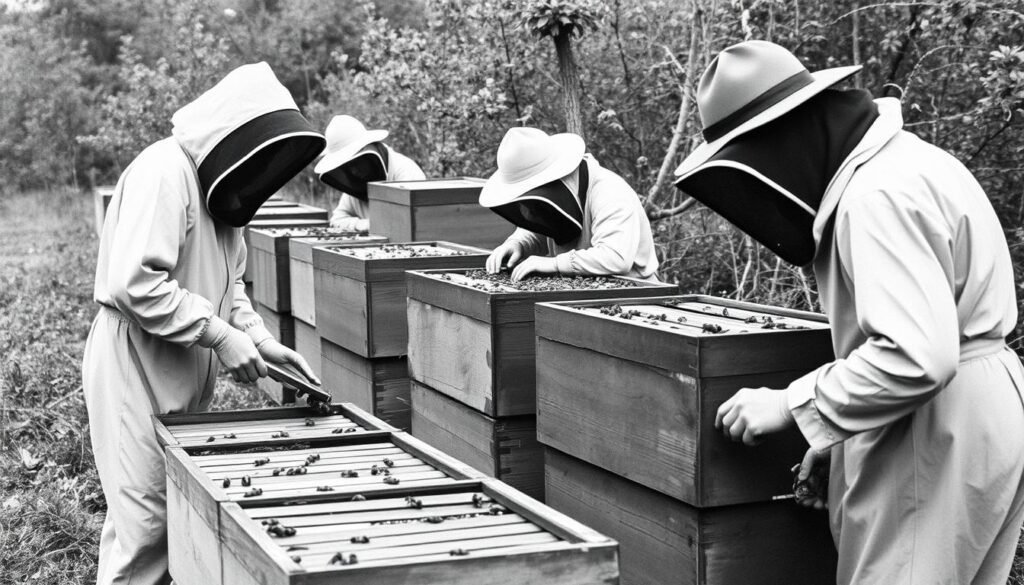
In 1851, Langstroth observed that bees consistently left a specific gap — roughly 6 to 10 millimeters (about 1/4 to 3/8 inch), now called “bee space” — unfilled with either comb or propolis, while any gap smaller or larger than this range would get sealed or built into by the colony. Recognizing this precise behavioral pattern was the key insight that made a genuinely practical movable-frame hive design possible, since maintaining exactly this gap between frames and hive walls prevents bees from cementing everything into one immovable mass.
An Honest Note on Priority: Europe Got There First
While Langstroth is popularly credited with discovering bee space, the historical record is more nuanced. Johann Dzierzon devised the first practical movable-comb hive in 1838 — 13 years before Langstroth’s 1851 observation — and by 1848 had introduced 8-by-8-millimeter grooves into hive side walls, a spacing landing almost exactly in the middle of what’s now called the bee-space range. This is worth stating honestly rather than repeating the simplified American-beekeeping-mythology version of the story, since it doesn’t diminish Langstroth’s real contribution so much as clarify exactly what that contribution actually was.
Langstroth had access to translations of Dzierzon’s work, though the two were largely unaware of each other’s full body of work due to the language barrier — a detail that complicates any simple “who was first” framing of this history.
“His recognition of ‘bee space’—the idea that bees will not obstruct passages approximately their size, about one-fourth inch—led him to invent the ‘Langstroth hive,’ which contained frames carefully spaced in a box that could be removed and inspected.”
Langstroth’s Real, Distinct Contribution
Langstroth’s genuine, specific achievement wasn’t discovering bee space in isolation — it was combining the bee-space principle with a genuinely practical, manufacturable movable-frame hive design that let ordinary beekeepers easily inspect, remove, and manage individual frames without destroying comb or provoking the colony unnecessarily, at a moment when American beekeeping badly needed exactly this kind of accessible, scalable equipment. This combination of scientific insight and practical engineering, refined and actually brought to market, is the real legacy worth crediting him for.
The 1852 Patent
Langstroth received U.S. Patent #9300 for the movable-frame beehive on October 5, 1852, formally establishing the design that would eventually become the standard hive configuration used throughout American (and much of global) beekeeping. Despite holding the patent, Langstroth famously struggled to enforce it against widespread infringement, meaning he personally profited far less from his invention’s eventual massive commercial success than the design’s ubiquity might suggest.
A Life Marked by Illness and Financial Hardship
Langstroth suffered from what he described as severe recurring depressive episodes — referred to in his own era as “bee melancholy” — throughout much of his adult life, on top of the financial hardship stemming from his inability to effectively enforce his own patent against infringement. This human dimension is genuinely worth knowing: the design underlying nearly all modern beekeeping equipment came from someone who developed it while managing serious personal and financial struggles, not from a comfortably resourced inventor operating without hardship.
Why the Movable-Frame Design Actually Mattered
Before movable-frame hives, beekeepers largely relied on fixed-comb designs (skeps and simple box hives) that required destroying comb to harvest honey, made colony health inspection difficult or impossible without significant disruption, and offered essentially no practical way to manage disease, requeen deliberately, or move frames between colonies. The movable-frame design solved all of these limitations simultaneously, transforming beekeeping from a largely passive, harvest-only activity into the actively managed practice modern beekeepers recognize today.
The Design’s Legacy in Today’s Hives
The overwhelming majority of hives in commercial and hobbyist use today, including the standard equipment covered throughout most beekeeping guides, are direct descendants of Langstroth’s original 1852 design — the specific box dimensions, frame spacing, and modular stacking-box structure beekeepers take for granted trace directly back to his patent. The National Inventors Hall of Fame estimates roughly 75% of hives currently in use worldwide are based on his design. Alternative designs like top-bar hives exist and have genuine advocates, but the Langstroth design’s overwhelming market dominance reflects just how thoroughly his original solution to the bee-space problem has held up over more than 170 years. See our full guide to the Langstroth hive itself for the modern equipment this history produced.
A Quick Timeline: Before, During, and After 1852
| Year | Event |
|---|---|
| 1835 | Johann Dzierzon discovers parthenogenesis in bees (drones from unfertilized eggs) |
| 1838 | Dzierzon devises the first practical movable-comb hive in Europe |
| 1848 | Dzierzon introduces 8x8mm grooves for moving top bars — near the middle of the bee-space range |
| 1851 | Langstroth independently observes the bee-space gap in his own hives |
| October 5, 1852 | Langstroth is granted U.S. Patent #9300 for the movable-frame hive |
| 2007 | Langstroth is inducted into the National Inventors Hall of Fame |
Johann Dzierzon’s Foundational Role
Johann Dzierzon, a Silesian priest and beekeeper working roughly two decades before Langstroth, made foundational discoveries about honey bee reproduction and hive management that European hive designers built upon when developing early bee-space-aware frame arrangements, making him a genuinely important figure in this history most American beekeeping education gives far less attention than Langstroth himself. Giving Dzierzon and other European contributors their due credit doesn’t diminish Langstroth’s real achievement — it just tells a more historically complete and accurate version of how modern beekeeping equipment actually developed.
Langstroth’s Own Written Legacy
Beyond the patent itself, Langstroth authored Langstroth on the Hive and the Honey-Bee, a detailed treatise on his design and management philosophy that became genuinely foundational reading for generations of American beekeepers, functioning as both a practical manual and a documented explanation of his own reasoning behind the design choices he made. This written legacy is part of why his name, specifically, became so permanently attached to the movable-frame hive design in popular memory, beyond the patent alone.
A Related Innovation: The Honey Extractor
The movable-frame hive’s practical value expanded further with the roughly contemporaneous invention of the centrifugal honey extractor, which let beekeepers spin honey out of frames without destroying the comb at all, meaning the same frame could be returned to the colony and reused rather than rebuilt from scratch after every harvest. This combination — movable frames plus non-destructive extraction — is really what completed the transformation from harvest-only beekeeping into the fully manageable, comb-preserving practice recognized today.
Standardization’s Ripple Effect on the Whole Industry
Beyond the immediate management benefits, the Langstroth design’s eventual near-universal adoption also enabled standardization across the entire beekeeping supply chain — interchangeable equipment between different manufacturers, consistent frame dimensions letting beekeepers buy foundation, boxes, and extraction equipment from different suppliers with confidence they’d actually fit together. This industry-wide standardization effect is a less obvious but genuinely significant part of the design’s lasting impact, extending well beyond the direct hive-management benefits to shape how the entire commercial beekeeping supply industry developed.
How Alternative Hive Designs Fit Into This History
Designs like the top-bar hive and Warre hive represent genuinely different philosophical approaches to hive management developed after and partly in response to Langstroth-style beekeeping, prioritizing different trade-offs (simpler construction, less standardized equipment, different management philosophy) rather than simply being inferior or outdated alternatives. Understanding Langstroth’s history helps clarify that these alternatives aren’t rejecting a flawed original design so much as making different, deliberate trade-offs than the specific ones Langstroth’s movable-frame system optimized for. It’s also simply good general knowledge for anyone serious about the craft, similar to knowing the origin stories behind named breeding lines like Buckfast bees or queen-rearing techniques like the Doolittle method.
Modern Historical Recognition
Langstroth was inducted into the National Inventors Hall of Fame in 2007 for inventing the movable-frame beehive, reflecting a broader modern effort to properly document and credit the specific technical and practical achievements behind his design, alongside a more historically accurate understanding of the earlier European groundwork his work built upon. This kind of formal recognition, paired with honest historical scholarship, gives a fuller and more accurate picture than either uncritical hero-worship or dismissing his real contribution — the truth sits between both extremes.
Global Adoption Beyond the United States
While developed in the United States, the Langstroth-style movable-frame design was adopted internationally over the following decades, becoming a genuinely global standard across most commercial beekeeping regions worldwide, even as some regions maintained or developed their own regional variations and alternative traditions alongside it. This global reach is a significant part of why the design’s underlying bee-space principles are relevant well beyond American beekeeping specifically, shaping equipment standards across most of the modern beekeeping world.
Common Mistakes
Repeating the oversimplified claim that Langstroth single-handedly discovered bee space, without acknowledging the earlier European work his design built upon, overstates the story in a way that’s easy to avoid with accurate sourcing. Assuming “Langstroth hive” refers to a single unchanging design overlooks that modern Langstroth equipment has been incrementally refined over more than a century, even while preserving the core bee-space and movable-frame principles from the original patent. Building custom equipment without respecting standard bee-space tolerances, assuming the exact dimensions don’t matter much, risks the same comb-building and propolis-sealing problems Langstroth’s original design specifically solved.
For the hive designs in use today, see types of beehives compared.
Frequently Asked Questions
Did Langstroth actually invent bee space?
Not entirely — European beekeepers, particularly Johann Dzierzon, had already applied similar spacing principles to hive designs starting in 1838, well over a decade before Langstroth’s own 1851 observation. His genuine, distinct contribution was combining the principle with a practical, patentable movable-frame hive design.
Did Langstroth profit significantly from his patent?
Not as much as the design’s eventual widespread adoption might suggest — he struggled to enforce his patent against significant infringement and faced real financial hardship despite his invention’s massive commercial impact.
Are modern hives identical to Langstroth’s original 1852 design?
No — modern Langstroth equipment has been incrementally refined over more than 170 years, though the core bee-space principle and movable-frame structure from the original patent remain intact.
Why does bee space matter for DIY hive equipment?
Deviating meaningfully from standard bee-space tolerances causes bees to build comb into or seal gaps with propolis, recreating exactly the practical problems Langstroth’s original movable-frame design was specifically built to solve.
What is “bee space” exactly?
A gap of roughly 6 to 10 millimeters (about 1/4 to 3/8 inch) that bees consistently leave open rather than filling with comb or propolis — maintaining exactly this spacing between frames and hive walls is what allows individual frames to be removed without being cemented in place.
Why is it called a “Langstroth hive” if Europeans got there first?
Langstroth’s specific combination of the bee-space principle with a practical, patented, easily manufactured movable-frame design is what actually caught on and became the dominant American standard, which is why his name became permanently attached to the design despite the earlier, less widely adopted European groundwork.
Sources
Last reviewed September 15, 2026.