Last Updated September 16, 2026
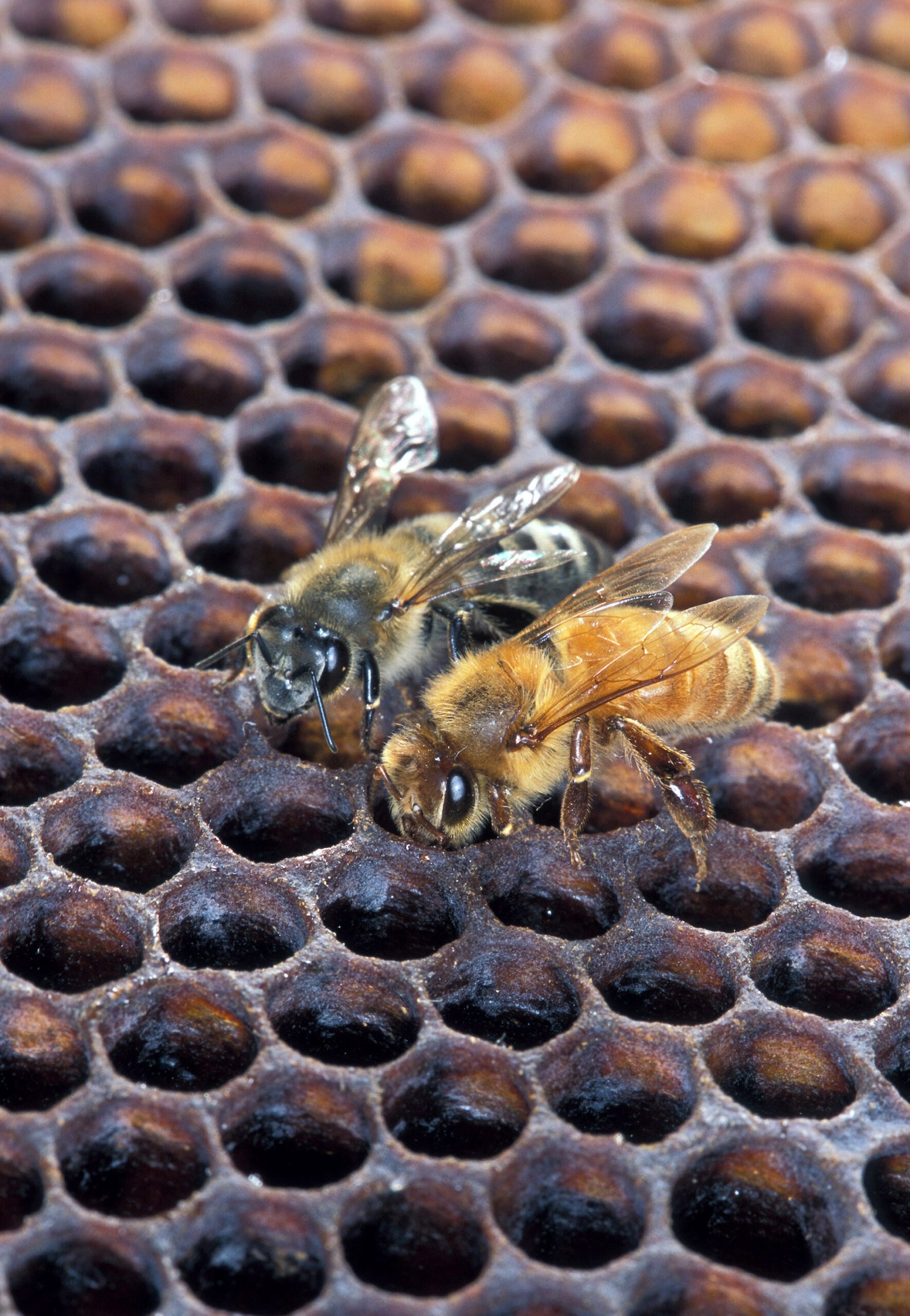
Africanized honey bees exist because of a single accident in October 1957, when a visiting beekeeper at a Brazilian research station removed wire queen excluders he mistook for a mistake, releasing 26 swarms of African-queened bees that a geneticist named Warwick Kerr had imported the year before as a legitimate, government-backed breeding experiment. Kerr never intended to create what the press would later sensationalize as “killer bees” — he was trying to solve a real production problem, and the outcome he actually hoped for was almost the opposite of what happened.
Key Takeaways
- In 1956, Brazilian geneticist Warwick Kerr traveled to Tanzania and South Africa and brought back 63 live African honey bee queens, at the encouragement of Brazil’s Ministry of Agriculture, specifically to breed a honey bee better suited to Brazil’s tropical climate than struggling European stock.
- Of the queens that survived the trip, 48 were established at a quarantined research apiary near Rio Claro, São Paulo, reduced over time to 29 colonies kept behind queen excluders specifically to prevent uncontrolled swarming during the breeding trial.
- In October 1957, a visiting local beekeeper saw the wire queen excluders, apparently assumed they were an installation mistake, and removed them — allowing 26 swarms carrying African queens to escape directly into the Brazilian forest.
- Kerr hoped the escaped bees would either die out or interbreed with local European-derived stock and lose their African traits; instead, the opposite happened, and African genetics came to dominate in the resulting hybrid populations.
- Over the following decades, descendants of that single 1957 release spread through South and Central America and reached the United States (South Texas) in 1990 — the entire Africanized bee population across two continents traces back to this one incident.
Table of Contents
- The Production Problem Kerr Was Actually Trying to Solve
- The 1956 Import and Quarantine
- The October 1957 Escape
- Why Kerr’s Own Prediction Was Wrong
- From One Research Station to Two Continents
- How Big the 1957 Escape Actually Became
- Frequently Asked Questions
The Production Problem Kerr Was Actually Trying to Solve
By the mid-1950s, Brazilian beekeeping had a real, well-recognized problem: the European honey bee subspecies most commonly kept there struggled with the country’s hot, tropical conditions, and honey yields lagged behind what beekeepers in more temperate climates were getting from bees actually adapted to their environment. Warwick Kerr, a Brazilian geneticist already known for research on stingless bees, was asked by Brazil’s Ministry of Agriculture to look into a genuinely reasonable solution: import honey bee stock from a region with a climate much closer to Brazil’s own, in the hope of breeding a more productive, better-adapted bee for Brazilian conditions. This wasn’t an improvised or reckless idea — crossbreeding for climate adaptation is a standard tool in agricultural genetics, and the logic behind targeting African bee populations, evolved for hot climates, was sound on its face.
The 1956 Import and Quarantine
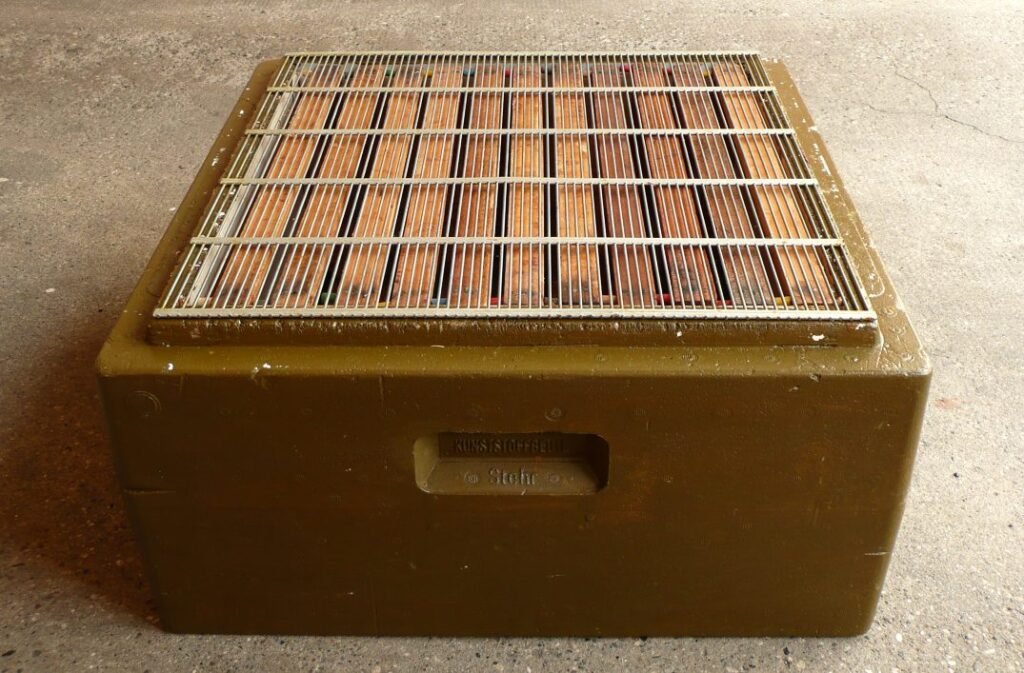
Kerr traveled to Tanzania and South Africa in 1956 and returned to Brazil with 63 live African honey bee queens. Of these, 48 survived the trip and were established at a research apiary near Rio Claro, in São Paulo state, eventually consolidated into 29 colonies. Crucially, this wasn’t a casual or unsupervised setup: the colonies were kept behind queen excluders — wire mesh barriers that let smaller worker bees pass through while physically confining the larger queen — specifically to prevent the colonies from swarming and escaping while the breeding program evaluated them. That precaution reflected real awareness of exactly the risk that later materialized; the failure wasn’t in the experimental design, but in what happened next.
The October 1957 Escape
In October 1957, a local beekeeper visiting the research station saw the queen excluders on Kerr’s hives and, according to the widely documented account of the incident, apparently interpreted them as an accidental obstruction rather than a deliberate safeguard, and removed them. With the excluders gone, the colonies were free to swarm normally, and 26 swarms carrying African queens flew out of the research apiary and into the surrounding Brazilian forest within a short span of time. There was no sabotage, no lab break-in, and no design flaw in Kerr’s containment plan — a single well-meaning but mistaken assumption by an outside visitor undid the entire precaution in one afternoon.
Why Kerr’s Own Prediction Was Wrong
What makes this story more than just an account of a lab accident is what Kerr himself expected to happen next, and how wrong that expectation turned out to be. He hoped the escaped African queens and their colonies would either fail to establish themselves in the wild, or interbreed with Brazil’s existing European-derived honey bee population and gradually lose their distinctly African characteristics through genetic dilution — essentially assuming European genetics would dominate in a mixed population over time. Instead, the reverse happened: the hybrid descendants retained the African parent stock’s traits — including faster colony growth, greater swarming tendency, and notably higher colony-level defensiveness — so consistently that the African genetic contribution came to dominate the hybrid populations across an enormous range, rather than being diluted out as Kerr had predicted.
From One Research Station to Two Continents
The scale of what followed from a single afternoon’s mistake is genuinely hard to overstate. Descendants of those 26 escaped swarms spread outward from São Paulo state through the rest of Brazil, then through South America, then into Central America, and ultimately reached South Texas in 1990 — a spread of roughly two continents traceable to one containment failure at one research station. This site has covered the resulting bee population — commonly called Africanized honey bees, and sensationalized in the press and Hollywood films as “killer bees” — from the safety and identification side in its guide to identifying Africanized bees and staying safe around them, and from the pop-culture side in its look at the 1970s killer bee movie panic — but neither piece is the origin story itself. Kerr’s actual experiment, and the single afternoon that changed its outcome, is a different story: not a monster movie premise, but a legitimate, government-backed agricultural genetics program undone by one honest misunderstanding.
How Big the 1957 Escape Actually Became

Kerr went on to a long career in Brazilian genetics after 1957, but the incident he’s most remembered for was never the point of his research career. What actually happened to the escaped population is documented with unusual precision: the first naturally occurring Africanized colony in the United States was trapped by USDA Agricultural Research Service scientists in a routine bee trap near Hidalgo, Texas, on October 15, 1990 — researchers had been tracking the population’s steady northward advance for years, so the arrival itself wasn’t a surprise, only its exact date and location.
Long-term ecological research on the aftermath continues; scientists studying the invasion’s effect on the region’s plant-pollinator relationships have found the picture is more nuanced than a simple story of one species displacing another:
“Our long view of the invasion shows that bees maintain higher-order evolutionary relationships with plants despite ups and downs in bee species within families.”
David Roubik, Senior Scientist, Smithsonian Tropical Research Institute
| Date | Event |
|---|---|
| 1956 | Kerr imports 63 African queens from Tanzania and South Africa to a quarantined apiary near Rio Claro, Brazil |
| October 1957 | A visiting beekeeper removes queen excluders; 26 swarms carrying African queens escape into the forest |
| 1960s-1970s | Descendant populations spread through Brazil and into neighboring South American countries |
| 1980s | Spread continues through Central America and into Mexico |
| October 15, 1990 | First naturally occurring colony trapped in the US, near Hidalgo, Texas |
| 1993-1994 | Confirmed arrival in Arizona, New Mexico, and California |
Frequently Asked Questions
Did Warwick Kerr intend to create Africanized “killer bees”?
No. He was conducting a legitimate, Ministry of Agriculture-backed breeding program to develop a honey bee better adapted to Brazil’s tropical climate, and he specifically hoped the imported African genetics would blend into and be diluted by the existing European-derived population, not dominate it.
How did the bees actually escape?
In October 1957, a visiting local beekeeper saw the queen excluders fitted to Kerr’s research colonies, apparently mistook them for an installation error, and removed them, allowing 26 swarms carrying African queens to fly out into the surrounding forest.
Why didn’t the African genetics just get diluted out, as Kerr expected?
The hybrid offspring retained the African parent stock’s traits — including faster colony growth and greater swarming tendency — consistently enough that African genetics came to dominate the resulting hybrid populations rather than being bred out over generations.
When did Africanized bees reach the United States?
Descendants of the 1957 Brazilian escape spread through South and Central America over the following decades and reached South Texas in 1990.
Is this the same story as the 1970s “killer bee” movies?
No — the movies were sensationalized fiction loosely inspired by real news coverage of the spreading Africanized bee population; Kerr’s actual 1956-57 breeding program and its accidental outcome is the real historical event behind that later media panic.