
Last Updated September 15, 2026
A former jeweler and watchmaker from Medina, Ohio went on to build one of the single most influential beekeeping equipment companies in American history, wrote a reference book still being updated more than a century after its first edition, and — almost as a footnote to his beekeeping career — published one of the earliest eyewitness accounts of powered flight, years before most major newspapers took the Wright Brothers seriously. Amos Ives Root’s remarkable story spans a genuine equipment manufacturing legacy alongside a genuinely surprising, entirely unexpected side chapter in broader American technological history.
Key Takeaways
- Amos Ives Root (December 9, 1839 – April 30, 1923) was born, worked, and died in Medina, Ohio, where he founded the A.I. Root Company in 1869.
- He founded Gleanings in Bee Culture in 1873 and compiled The ABC (later ABC and XYZ) of Bee Culture, first published in the late 1870s and revised across more than a century of editions.
- On September 20, 1904, Root personally watched Wilbur Wright fly the first complete circle in a powered airplane at Huffman Prairie near Dayton, Ohio — then held his account until the Wrights themselves said it was safe to publish, finally printing it in the January 1, 1905 issue of Gleanings.
- Root’s own words on the flight survive in print: “these brothers have probably not even a faint glimpse of what their discovery is going to bring to the children of men” (Gleanings in Bee Culture, January 1, 1905).
- The company he founded continues today as Root Candles, still based in Medina, Ohio, and Gleanings continues in a different form as Bee Culture magazine.
Table of Contents
- Who Was A.I. Root?
- From Jeweler to Beekeeper
- Founding the A.I. Root Company in 1869
- Commercializing Wax Foundation at Scale
- Gleanings in Bee Culture
- The ABC and XYZ of Bee Culture
- The Wright Brothers Connection
- Medina, Ohio’s Lasting Beekeeping Identity
- A Broader Career as a Prolific Writer
- The Candle-Making Legacy
- A.I. Root vs. Charles Dadant
- Common Misconceptions
- Frequently Asked Questions
Who Was A.I. Root?
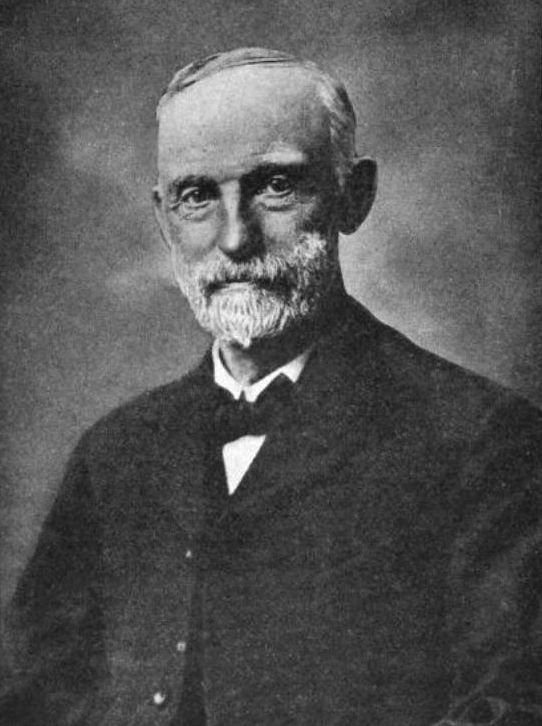
Amos Ives Root (born December 9, 1839; died April 30, 1923, both in Medina, Ohio) was an American entrepreneur who became one of the most significant figures in the commercial development of American beekeeping equipment and publishing during the late 19th and early 20th centuries. His company, publications, and reference works collectively shaped how generations of American beekeepers accessed both equipment and practical knowledge.
From Jeweler to Beekeeper
Before beekeeping became his life’s central focus, Root worked as a jeweler and watchmaker, a trade requiring the kind of careful precision and mechanical attentiveness that would later show up in his approach to beekeeping equipment design and manufacturing. His transition from jewelry to beekeeping reflects a genuine career pivot driven by growing personal fascination with bees rather than a planned or gradual business transition.
Founding the A.I. Root Company in 1869
Root founded his beekeeping supply company in 1869 in Medina, Ohio — the same year, coincidentally, that Charles Dadant emigrated to Illinois and began his own beekeeping work. The company grew to become one of the most significant beekeeping equipment manufacturers in American history, producing hives, foundation, and related supplies at a scale that helped standardize equipment availability for beekeepers across the country. Its founding also made Medina, Ohio a genuinely significant hub within American beekeeping industry history, comparable in some respects to the role Dadant’s Illinois operation played in the same era.
Commercializing Wax Foundation at Scale
Root played a significant role in bringing wax foundation manufacturing to a genuinely large commercial scale in the United States, helping transform Johannes Mehring’s original European innovation from a specialized product into a widely accessible piece of standard American beekeeping equipment. This commercialization work paralleled, and to some extent competed with, similar efforts underway at the same time through Charles Dadant’s company in Illinois.
Gleanings in Bee Culture
In 1873, Root founded “Gleanings in Bee Culture,” a beekeeping periodical that became one of the most widely read and historically significant beekeeping publications in the United States. Early issues were printed using power from an actual windmill at the company’s original Medina site — a small, genuine detail that says something real about the scale Root’s operation started at. The magazine served as an information hub for American beekeepers during a period when reliable, centralized beekeeping knowledge was still difficult to access, and it continues today under a different name, Bee Culture: The Magazine of American Beekeeping.

The ABC and XYZ of Bee Culture
Root also compiled and published “The ABC of Bee Culture” — later expanded into “The ABC and XYZ of Bee Culture” — an encyclopedic beekeeping reference work first released in the late 1870s (sources place the first edition at either 1877 or 1879) that went through numerous revised editions across more than a century of continuous publication. This book’s remarkably long publishing lifespan, with successive editions updated to reflect current beekeeping knowledge over generations, makes it one of the more genuinely enduring reference works in the entire history of American beekeeping literature.
The Wright Brothers Connection
In a genuinely remarkable historical footnote, Root personally traveled to Huffman Prairie, a pasture outside Dayton, Ohio, and on September 20, 1904, watched Wilbur Wright fly the first complete circle ever flown in a powered airplane. He wrote up the account for Gleanings in Bee Culture immediately afterward — but at the Wright brothers’ own request, held off publishing it until they felt it was safe to go public, finally printing it in the January 1, 1905 issue (with a follow-up on January 15). Root had actually tried to place the story with Scientific American first; after nearly a year without a response, the magazine’s editor wrote back that he found it hard to believe the event had happened at all. When Root showed the Wrights that reply, they told him to go ahead and publish it himself.
Root’s own writing captured just how large he understood the moment to be:
“…these brothers have probably not even a faint glimpse of what their discovery is going to bring to the children of men.”
This makes his account one of the only published eyewitness reports of a successful Wright Brothers flight from that period — a genuinely remarkable historical coincidence: the first published account of sustained, controlled powered flight appeared in a beekeeping magazine, not a newspaper or scientific journal.
Medina, Ohio’s Lasting Beekeeping Identity
Root’s company founding gave Medina, Ohio a genuine, lasting association with American beekeeping industry history, similar in kind to how Hamilton, Illinois became linked to Dadant’s legacy. This regional identity wasn’t incidental: a large, established beekeeping equipment manufacturer based in a specific town naturally drew related businesses, expertise, and community identity around it over time, making Medina a genuine historical landmark for anyone interested in the physical geography of American beekeeping’s industrial development.
The Candle-Making Legacy
Root’s company also became closely associated with beeswax candle manufacturing, a natural extension of the beeswax supply chain his beekeeping equipment business already touched. This candle-making side of the business has continued as Root Candles, a recognizable modern brand descended from Root’s original beekeeping enterprise and still headquartered in Medina — representing another example, alongside Dadant & Sons, of 19th-century beekeeping entrepreneurship producing a business legacy that extended well beyond its founder’s own lifetime.
A Broader Career as a Prolific Writer
Beyond his beekeeping publications specifically, Root became a genuinely prolific writer across a broader range of topics later in his life, including religious and inspirational writing that reached readers well outside the beekeeping community entirely. This wider writing career is worth noting honestly as part of a fuller, more accurate picture of Root as a person: someone whose curiosity and output extended considerably further than beekeeping equipment and magazine publishing alone, even though those remain his most historically significant and lasting contributions.
A.I. Root vs. Charles Dadant
| Feature | A.I. Root | Charles Dadant |
|---|---|---|
| Background | American, former jeweler | French immigrant |
| Company founded | 1869, Medina, Ohio | 1863 onward, Hamilton, Illinois |
| Signature publication | Gleanings in Bee Culture (1873), The ABC and XYZ of Bee Culture | Contributions to the American Bee Journal (from 1867) |
| Other notable legacy | Wright Brothers eyewitness account (1904), candle manufacturing | Deeper-brood-chamber hive design |
Common Misconceptions
The most common misconception is assuming A.I. Root and Charles Dadant were direct rivals locked in open conflict, when both were, more accurately, contemporaries independently building parallel, sometimes overlapping commercial infrastructure that collectively benefited the broader American beekeeping industry rather than existing in pure zero-sum competition. A second common misconception is assuming Root witnessed the Wright Brothers’ very first flight at Kitty Hawk in December 1903 — he didn’t. The flight he watched and wrote about was a later, more mature one: Wilbur Wright’s first complete circle, flown at Huffman Prairie near Dayton, Ohio, on September 20, 1904.
Frequently Asked Questions
Is the A.I. Root Company still in business today?
A candle-manufacturing business descended from Root’s original beekeeping enterprise, Root Candles, has continued as a recognizable modern brand headquartered in Medina, Ohio, representing genuine continuity from his 19th-century founding.
Did A.I. Root actually see the Wright Brothers fly in person, or did he rely on secondhand reports?
He personally traveled to Huffman Prairie near Dayton, Ohio, and watched Wilbur Wright fly on September 20, 1904, which is what made his resulting published account genuinely significant as direct eyewitness reporting rather than secondhand or speculative coverage.
Why did A.I. Root wait to publish his account of the flight?
The Wright brothers asked him to hold off until they judged it safe to publish, and Root honored that request — his account finally appeared in the January 1, 1905 issue of Gleanings in Bee Culture, months after he witnessed the flight.
Is “The ABC and XYZ of Bee Culture” still published or referenced today?
The book went through numerous editions over more than a century, and it remains a genuinely significant historical reference work within American beekeeping literature, even as more current guides have also become available.
Did A.I. Root and Charles Dadant ever work together or collaborate directly?
Both were significant, roughly contemporaneous figures in the same growing industry, and while any direct collaboration between them specifically isn’t something this article can confirm with full confidence, their parallel work reflects the same broader era of American beekeeping industry development.
Why would a beekeeping magazine be interested in covering aviation at all?
Root’s personal curiosity about mechanical innovation extended well beyond beekeeping equipment specifically, and as the magazine’s founder and driving editorial voice, his own broader interests genuinely shaped what Gleanings in Bee Culture chose to cover during his tenure.
What happened to Gleanings in Bee Culture after Root’s death?
The publication continued in various forms for well over a century under family and company ownership, and it’s still published today under the name Bee Culture: The Magazine of American Beekeeping.
Sources and further reading: Amos Root biographical overview, Wikipedia; First Site of the A.I. Root Company historical marker, Historical Marker Database.