Most beekeeping books teach technique. Richard Taylor’s teach a way of looking at the world, and they happen to also be some of the most technically sound comb-honey guidance ever published by an American beekeeper. Taylor was a metaphysics professor by day and a working commercial beekeeper by every other hour of daylight, and the tension between those two identities — rigorous philosopher, unhurried backyard naturalist — is exactly what makes The Joys of Beekeeping and The Comb Honey Book still worth reading decades later.
Key Takeaways
- Richard Taylor (1919–2003) was a professional philosopher — PhD from Brown, taught at Brown, Columbia, and the University of Rochester — who kept up to 300 hives on the side for most of his adult life.
- He became one of America’s leading comb-honey producers starting around 1970, switching much of his operation away from extracted honey specifically because comb production rewarded patience and skill over mechanization.
- The Joys of Beekeeping (1974) and The Comb Honey Book (1970) remain in print and are still widely recommended in beekeeping circles for their combination of real technical instruction and genuine literary voice.
- Taylor’s academic philosophy work, especially his book Metaphysics, was serious and influential in its own right — he was not a hobbyist dabbling in writing, but a full-time academic who happened to also run a real commercial apiary.
- His central argument, repeated throughout his beekeeping writing, is that beekeeping rewards patient observation over intervention — a philosophy that shaped his specific preference for comb honey over extraction.
Table of Contents
- Who Was Richard Taylor?
- A Philosopher With 300 Hives
- His Wider Academic Bibliography
- Why He Switched to Comb Honey
- The Books: What’s Actually In Them
- Taylor’s Philosophy of Beekeeping
- How He’s Remembered by the Beekeeping Press
- His Legacy in Modern Beekeeping
- Frequently Asked Questions
Who Was Richard Taylor?
Richard Taylor was born November 5, 1919, and got his first hive of bees at age 14 — decades before he had any inkling he’d also become one of twentieth-century America’s more distinctive metaphysicians. He earned his PhD in philosophy at Brown University and went on to teach principally at Brown, as well as at Columbia University and the University of Rochester, from which he retired in 1985. His academic reputation rested on serious, sometimes deliberately provocative work in metaphysics and free will — his textbook Metaphysics introduced generations of first-year philosophy students to questions about the fundamental nature of reality, time, and causation. He died in 2003.
A Philosopher With 300 Hives
What separates Taylor from most academics who keep a hobby hive or two is scale and seriousness: at his operation’s peak he ran as many as 300 colonies, a genuinely commercial-sized apiary by any measure, alongside a full-time teaching career. This wasn’t a professor’s weekend curiosity — it was a real business, with real production numbers, real market pressure, and real seasonal labor, run by a man who also happened to be teaching Socratic-style seminars on the nature of free will during the week. Bad Beekeeping Blog’s retrospectives on Taylor, drawing on his own writing and American Bee Journal profiles, describe him as combining a philosopher’s dry wit with an internationally recognized beekeeper’s practical authority — a genuinely rare combination that gave his writing a tone almost no other beekeeping author has matched.
Why He Switched to Comb Honey
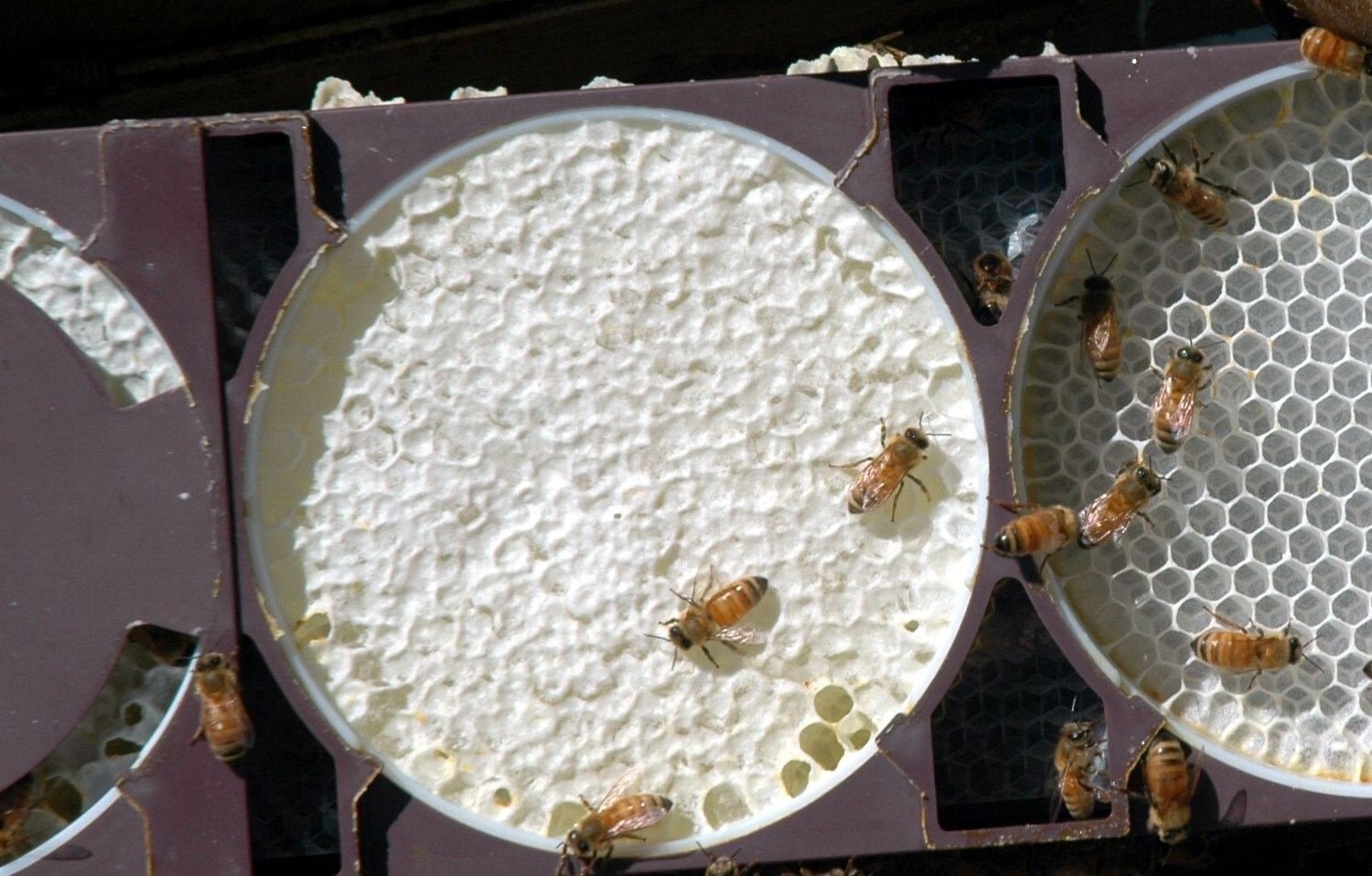
By 1958, Taylor had begun shifting his operation from extracted honey toward comb honey production, and by around 1970 he had become an early and vocal champion of the round comb honey system — thin plastic rings that let bees build and cap comb inside a presentation-ready package, sold and eaten with the comb intact. His reasoning, laid out at length in The Comb Honey Book, was as much philosophical as commercial: comb honey demands a more skilled, more attentive beekeeper than extraction does, but in exchange it requires dramatically less equipment — no extractor, no settling tanks, no sump pumps, no 600-pound drums, no smaller truck needed to haul it all. For Taylor, that trade — more skill and patience for less machinery and infrastructure — was the whole appeal, and it maps directly onto the argument that runs through his general-audience writing: that good beekeeping is fundamentally about paying closer attention, not intervening more.
His Wider Academic Bibliography
Beekeeping writing was a genuine second body of work layered on top of a substantial, entirely separate academic bibliography. Beyond Metaphysics (1964), Taylor published Action and Purpose (1966), Good and Evil (1970), Freedom, Anarchy, and the Law: An Introduction to Political Philosophy (1973), Ethics, Faith, and Reason (1985), Virtue Ethics: An Introduction, and the retrospective anthology Reflective Wisdom (1989). That’s a serious, sustained academic output by any measure — Taylor wasn’t a philosophy professor with one famous textbook who spent his real energy on bees; he was actively publishing across metaphysics, ethics, and political philosophy for essentially his entire beekeeping career in parallel.
The Books: What’s Actually In Them
The Joys of Beekeeping (1974) is a slim, entertaining, deeply personal book, and by most accounts his finest. It is not a comprehensive how-to manual in the mold of a modern beginner’s guide — Taylor assumes some baseline familiarity — but it is genuinely instructive on real technique while being, chapter for chapter, more essayistic than procedural. Reviewers consistently describe it as “replete with homey truisms” that reward re-reading. The Comb Honey Book (1970) is the more technical, production-focused companion: a detailed, still-cited manual specifically on producing comb honey at commercial scale, including the round-comb system Taylor helped popularize. Both remain in print today, sold by specialty beekeeping booksellers and referenced regularly on forums like Beesource, more than fifty years after their original publication.
Taylor’s Philosophy of Beekeeping
Taylor “philosophizes on the beauty in honey production, the joy in tending bees, and the inspiration in beholding a swarm” — rather than writing merely a how-to manual, in the words of reviewers summarizing The Joys of Beekeeping‘s enduring appeal.
That description captures the throughline across Taylor’s beekeeping writing: technique is present, but it’s always in service of a larger argument about attention and patience. Where a modern buying guide might optimize for throughput and yield, Taylor’s writing treats a well-run apiary as something closer to a discipline of observation — not unlike the way his academic work treated careful, patient reasoning as the whole point of philosophy itself. Readers and reviewers, including the essay “The Metaphysical Beekeeper” on Reason and Meaning, have specifically highlighted how unusual it is to find a beekeeping author whose day job trained him to interrogate his own assumptions this rigorously — and how much that shows in the writing.
How He’s Remembered by the Beekeeping Press
Beekeeping historian and Bad Beekeeping Blog author Ron Miksha has written multiple retrospectives on Taylor over the years, including a dedicated piece in American Bee Journal revisiting his life and work for beekeepers who never encountered him directly. These retrospectives consistently return to the same observation: Taylor’s writing reads as authentically unhurried in a way that’s hard to fake, because it was underwritten by a life genuinely structured around patient observation — both at the lectern and at the hive. Miksha’s writing, including a follow-up retrospective, “The Metaphysical Beekeeper”, also documents Taylor’s continued relevance to comb-honey producers specifically, noting that his round-comb advocacy is still referenced by name in modern comb-honey discussions on forums like Beesource decades after The Comb Honey Book first appeared.
Taylor is also frequently discussed alongside Sue Hubbell as one of the two writers most responsible for proving beekeeping literature could stand as literature in its own right — worth reading our companion profile of Sue Hubbell for the contrast: where Taylor approached the craft from a lifetime of chosen commercial practice layered onto an academic career, Hubbell arrived at commercial-scale responsibility by circumstance, with no beekeeping background at all, and wrote from that very different vantage point.
His Legacy in Modern Beekeeping
Taylor’s practical legacy is most visible in comb honey production specifically, where his round-comb advocacy helped popularize a format still sold today by hobbyist and small commercial producers who want an alternative to extracted honey. His literary legacy is broader: he’s frequently cited alongside a small handful of beekeeper-writers — Sue Hubbell among the most notable of his rough contemporaries — as proof that beekeeping writing doesn’t have to choose between technical rigor and genuine literary voice. For a wider survey of writers and researchers who shaped how the craft is understood, see our roundup of famous people who kept bees.
Frequently Asked Questions
What is Richard Taylor’s most famous beekeeping book?
The Joys of Beekeeping (1974) is generally considered his best-known and most-loved work, though The Comb Honey Book (1970) is more frequently cited for hands-on technical instruction.
Was Richard Taylor a professional beekeeper or a hobbyist?
Both labels undersell it. He ran a genuinely commercial-scale operation of up to 300 hives for decades while working full-time as a university philosophy professor — a dual career, not a hobby layered on top of academic work.
What did Richard Taylor teach as a philosopher?
He specialized in metaphysics and questions of free will, taught at Brown, Columbia, and the University of Rochester, and wrote the widely used introductory textbook Metaphysics.
Why did Taylor prefer comb honey to extracted honey?
He argued comb production rewarded a more skilled, attentive beekeeper while requiring dramatically less equipment and infrastructure than extraction — a trade he considered both more satisfying and more honest about what good beekeeping actually involves.
Are Richard Taylor’s books still relevant for beekeepers today?
Yes. While some specific equipment references are dated, his core technical guidance on comb honey production and his broader observational approach to hive management are still regularly recommended on beekeeping forums and by specialty booksellers.
When did Richard Taylor die?
He died in 2003, having retired from the University of Rochester in 1985.