When a honeybee swarm needs to choose a new home, the queen has no vote at all. The decision is made by several hundred scout bees running a genuine collective process — independently scouting candidate cavities, “debating” through waggle dances performed on the surface of the cluster, and committing to move only once a quorum of scouts agrees on the same site. Cornell biologist Thomas D. Seeley spent decades working out exactly how that mechanism functions, publishing the full account in his 2010 book Honeybee Democracy, and it remains one of the most genuinely startling findings in social-insect biology.
Key Takeaways
- A swarm’s new nest site is chosen by several hundred scout bees, not the queen or any single “leader” — a form of direct democracy verified through decades of controlled experiments.
- Scouts advertise candidate sites through waggle dances whose vigor and duration scale with how good the site actually is; better sites get longer, more persistent dances.
- The decision triggers when roughly 15 scouts are physically present at the same site at the same time — a quorum threshold detected on-site, not tallied back at the cluster.
- Seeley ran his most rigorous tests on Appledore Island, Maine, chosen specifically because it has almost no natural tree cavities and no native honeybee population, letting his team fully control which nest boxes were available.
- Seeley’s 2010 Princeton University Press book Honeybee Democracy drew explicit lessons for human group decision-making, arguing that shared interests, minimized leader influence, open debate, and a quorum-style resolution rule work well for both bees and people.
Table of Contents
- A High-Stakes Decision With No Leader
- Who Is Thomas Seeley?
- How Scouts Search and “Debate”
- The Quorum That Actually Triggers the Move
- A Treeless Island, Chosen Deliberately
- How Competing Sites Get Eliminated
- What Seeley Thinks Humans Can Learn From It
- Beyond the Waggle Dance: Seeley’s Wider Body of Work
- Frequently Asked Questions
A High-Stakes Decision With No Leader
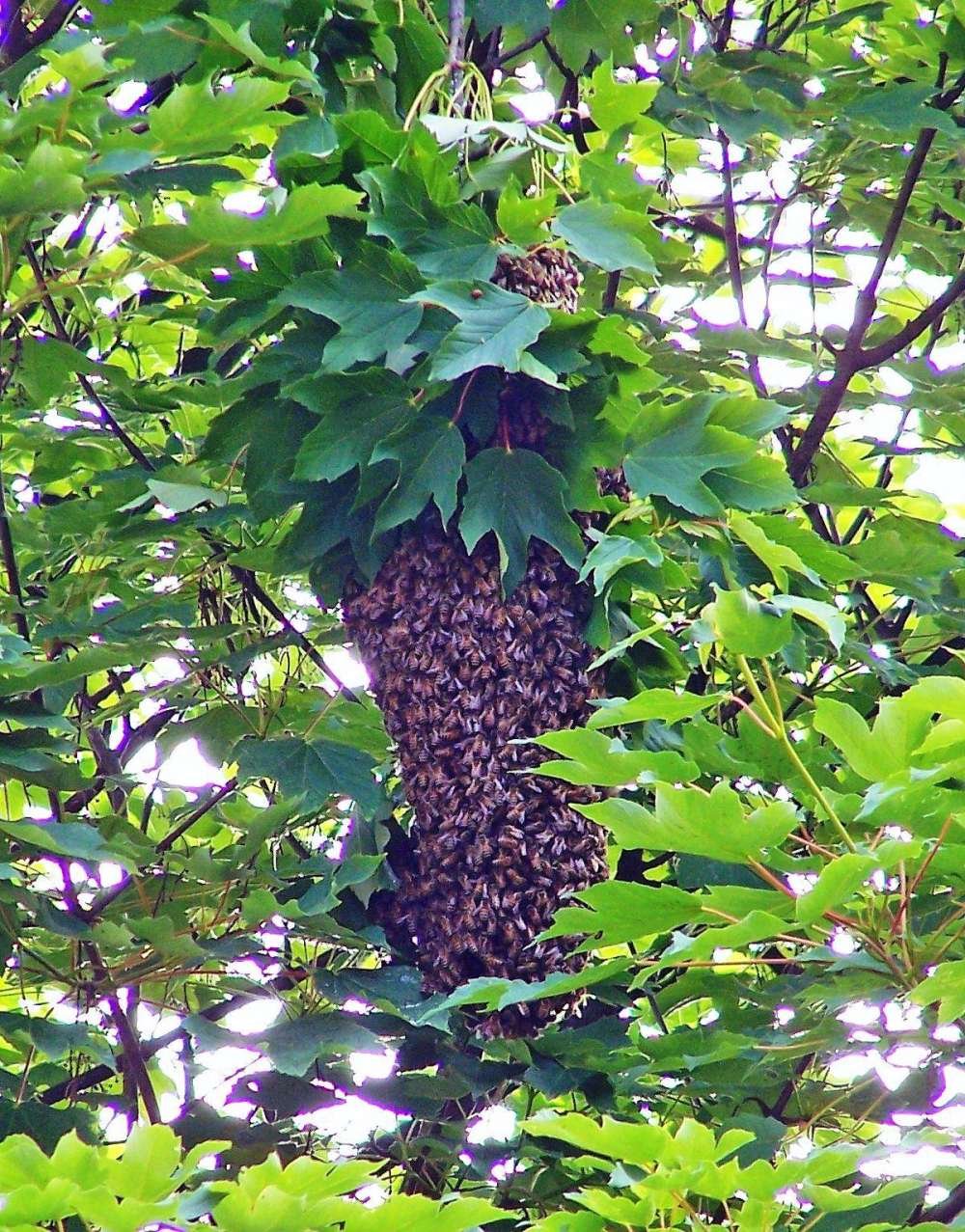
When roughly half a colony leaves with the old queen during swarming, the resulting cluster has no home, no meaningful food reserve, and an urgent problem to solve: find and move into a suitable cavity before exposure, predation, or weather takes a toll. Choose badly — a cavity too small, too exposed, too far from forage — and the new colony’s odds of surviving its first winter drop sharply. That decision is not made by a queen or by any single bee acting as a “leader.” It is made by a distributed process involving several hundred scouts, mostly older, experienced foragers, functioning collectively as the swarm’s search committee.
This is the process Seeley spent much of his career documenting, and he laid out the full arc of it himself in a talk recorded by Cornell’s Albert R. Mann Library — from Karl von Frisch’s original waggle-dance discoveries through his own Appledore Island experiments:
Who Is Thomas Seeley?
Thomas D. Seeley is a biologist at Cornell University who has studied honeybee behavior for more than four decades, building on the foundational dance-language work of Nobel laureate Karl von Frisch (a discovery covered in depth in our profile of von Frisch). Where von Frisch decoded what the waggle dance communicates about forage, Seeley’s signature contribution was showing that the same dance also functions as a real-time democratic ballot during house-hunting, and then proving it with tightly controlled field experiments rather than inference alone. Honeybee Democracy, published by Princeton University Press in 2010, is his own full account of that research program, aimed at a general audience but built entirely on peer-reviewed data collected over decades of fieldwork.
How Scouts Search and “Debate”
Individual scouts fan out from the resting cluster, independently investigating candidate cavities — hollow trees, rock crevices, and any other space that might make a viable nest — often traveling a mile or more from the swarm. A scout that finds a promising site returns and performs a waggle dance on the cluster’s surface, the same basic movement bees use to direct nestmates toward good forage, adapted here to advertise a nest site instead. Critically, the dance’s vigor and duration track how good the site actually is by the scout’s own assessment: a mediocre cavity gets a brief, half-hearted performance, while an excellent one gets a long, sustained dance that recruits more scouts to go check it out themselves.
Multiple candidate sites are typically advertised at once by different scouts — in effect, several competing pitches running simultaneously on the swarm’s surface — and no single scout carries any special authority. A site only gains momentum by convincing enough independent evaluators that it’s worth their own follow-up visit, which is precisely why Seeley frames the process as a real democratic debate rather than a queen’s command or a hive-mind illusion.
Our own guide to what scout bees do before a colony swarms covers the earlier, in-hive stage of this process — the signals that trigger scouts to start searching in the first place — and pairs well with the house-hunting mechanics described here.
The Quorum That Actually Triggers the Move
As more scouts visit and independently endorse a site through their own dancing, the number of bees simultaneously present at that site climbs — and once roughly 15 scouts are physically at the same location at the same time, that concentration itself functions as the decision trigger. It is not a vote tally communicated symbolically back at the cluster; it is a physical threshold detected directly at the site, by the scouts standing there.
“Honeybees make decisions collectively — and democratically… any decision-making group should consist of individuals with shared interests and mutual respect, a leader’s influence should be minimized, debate should be relied upon, diverse solutions should be sought, and the majority should be counted on for a dependable resolution.” — summary of Seeley’s conclusions in Honeybee Democracy, Princeton University Press
That quorum threshold acts as a built-in safeguard against premature or fragile consensus. A single enthusiastic scout — or even a handful — isn’t enough to commit thousands of bees to a decision that determines the entire colony’s survival. Once quorum is reached at a site, the scouts there return to the cluster and produce a distinctive high-frequency “piping” signal that helps trigger the coordinated liftoff of the whole swarm toward its new home.
A Treeless Island, Chosen Deliberately
Testing this rigorously required a location where researchers could fully control which cavities scouts had available to evaluate — nearly impossible on the mainland, where natural tree hollows are everywhere. Seeley ran much of his key experimental work on Appledore Island, off the coast of Maine, specifically because the island has no native honeybee population and very few large trees offering natural cavities. By placing a controlled set of nest boxes of deliberately varied quality around the island, Seeley’s team could track exactly which boxes scouts discovered, how vigorously they danced about each one, and precisely when and how quorum built at the eventual winner — including experiments that deliberately delayed quorum formation at one site to confirm it was a genuine causal trigger, not just a correlated side effect of other bee activity.
A colony’s location decision has obvious overlap with what any beekeeper controls directly at home: siting bait hives and swarm traps to intercept exactly this house-hunting process before a valuable swarm disappears into someone else’s chimney. Our guide to swarm trap box design and our piece on how bees evaluate cavities during nest-site scouting both apply Seeley’s own findings about cavity volume, entrance size, and defensibility directly to trap design.
What Seeley Thinks Humans Can Learn From It
A significant part of Honeybee Democracy‘s appeal, and part of why it reached well beyond an entomology audience, is Seeley’s explicit comparison between swarm decision-making and how human groups — juries, boards, committees — make high-stakes collective choices. He argues that swarms succeed because scouts share a genuine common interest (the colony’s survival), no individual scout’s opinion is given outsized weight, open “debate” through competing dances is actively encouraged rather than suppressed, and the group commits to acting once a real threshold of support is reached rather than waiting for unanimity. Reviewers, including the LSE Review of Books, have picked up on this framing as the book’s most distinctive contribution: a rigorously data-backed natural history that doubles as a case study in group decision design.
How Competing Sites Get Eliminated
Quorum-building isn’t the only mechanism Seeley documented. His research with longtime collaborator P. Kirk Visscher also identified a specific cross-inhibition signal — a brief head-butt accompanied by a short vibrational “stop signal” — that scouts deliver to dancers advertising a losing site once a rival location has clearly pulled ahead in support. Rather than simply outcompeting a weaker option through sheer numbers, scouts actively work to shut down dances for sites that are falling behind, which speeds up convergence on a single winner and reduces the risk of the swarm splitting its commitment between two nearly-tied options. This active suppression mechanism, published in Seeley and Visscher’s peer-reviewed research on nest-site selection, is part of why the decision process converges reliably even when multiple genuinely good candidate sites are being advertised at once.
Reception of Honeybee Democracy itself reflected how unusual this combination of rigor and readability was: the book was widely reviewed well outside typical entomology circles, discussed by outlets ranging from the London School of Economics’ own review blog to general reader communities tracking thousands of reviews, and has remained continuously in print through multiple editions since its 2010 Princeton University Press release — an unusually long shelf life for a popular-science title built entirely on one research program’s findings.
Beyond the Waggle Dance: Seeley’s Wider Body of Work
Swarm decision-making is Seeley’s best-known finding, but not his only major contribution. His research on the Arnot Forest’s feral, untreated honeybee colonies — which have survived Varroa mite infestation for decades without any beekeeper intervention — is a genuinely separate research thread with direct implications for mite-resistant breeding programs; we cover that work in detail in our Arnot Forest survivor bees article. Seeley has also written extensively on nest-cavity preferences (volume, entrance height, and defensibility bees consistently favor when given a choice) and, in his later book The Lives of Bees, on how wild, unmanaged colonies actually live compared with the managed hives most beekeepers know.
Frequently Asked Questions
Does the queen have any say in where a swarm moves?
No. The queen is physically incapable of scouting sites herself and takes no active role in the site-selection process. She flies with the swarm once the collective decision is made and the cluster lifts off together.
How many scout bees are typically involved in choosing a new nest site?
Seeley’s research generally found several hundred scouts actively participate out of a swarm that may total ten thousand or more bees — a minority, but a large and behaviorally distinct subset, mostly experienced older foragers.
What happens if two sites reach quorum at nearly the same time?
Seeley’s experiments found this is rare because the quorum mechanism itself is self-reinforcing — a site building support faster tends to keep pulling ahead — but on the occasions it does happen, competing groups of scouts have been observed literally interfering with each other’s dances, briefly headbutting or “stop signaling” dancers advertising a losing site until consensus resolves.
Is “Honeybee Democracy” a peer-reviewed scientific work?
The book itself is a popular-science account written for general readers, but it summarizes decades of Seeley’s own peer-reviewed research published in journals, much of it conducted with long-time collaborator P. Kirk Visscher.
Can beekeepers use this research practically?
Yes — understanding what scouts actually evaluate (cavity volume, entrance size, defensibility, height off the ground) directly informs how to build and place bait hives and swarm traps that outcompete a scout’s other options, which is exactly the design logic behind most modern swarm-trap guides.
Where can I read more about other historically significant beekeepers and bee researchers?
See our roundup of famous people who kept bees for a broader survey of the field’s most influential figures.