Reviewed by Michael R. · Last Updated October 24, 2026 · How we review
A bee swarm in a tree is usually a temporary rest stop, not a nest: the bees are calm, and most clusters move on within hours to a few days. Keep people and pets back, never spray, hose or knock it down, and call a local beekeeper if it hangs somewhere you cannot avoid or is still there after a few days.
This page covers a cluster hanging in the open. For bees entering a wall, attic or hole, or who to call where you live, see what to do when you find a swarm or colony.
Key Takeaways
- A cluster with no wax is a swarm resting while scouts look for a home. Iowa State puts its stay at an hour to a few days.
- Swarming bees rarely sting unless provoked; sticks, stones and hoses count (UC IPM). Africanized bees cannot be told apart by sight, so give clusters extra room in the southern states.
- A beekeeper can usually collect a cluster in view or within ladder height. A photo, the height and the location speed that up.
- Wax under the cluster, or bees entering a hole, means it is no longer a swarm.
Table of Contents
- Why Bees Cluster on a Branch
- Is a Swarm in a Tree Dangerous?
- How Long Will a Swarm Stay in a Tree?
- Is It Still a Swarm? What to Look For
- Staying Safe Around the Tree
- Height and Access: Getting It Out of the Tree
- Frequently Asked Questions
Why Bees Cluster on a Branch
A swarm is a colony splitting. The old queen and about half the workers leave and, usually within 100 to 200 yards of the old hive, alight on an object and cluster, says UC IPM. The queen is in the cluster but not leading it. The tree is incidental: Florida’s agriculture department notes a swarm may just as well hang on a fence or wall.
Meanwhile scouts search for a cavity. A scout that finds a good one dances on the cluster to advertise it, and within a few hours to a few days the scouts usually reach a consensus and the swarm flies there. See what scout bees do for how they decide.
Is a Swarm in a Tree Dangerous?
Usually not. Iowa State Extension says swarming bees have fed before leaving, which reduces their ability to sting, and bees away from their nest are unlikely to sting unless provoked. UC IPM, writing about European honey bees in California, shows what provoking means:
“It takes quite a bit of stimulation, such as being hit by sticks and stones or squirted with a hose, to induce defensive behavior.”
UC IPM adds that a swarm that has run out of food can be touchy, as may Africanized honey bees. By 2007 the USDA counted them in nine states: Texas, Arizona, Arkansas, California, Florida, Louisiana, Nevada, New Mexico and Oklahoma. Florida’s agriculture department warns:
“Genetic testing is required to determine if honey bees are African or European. It is impossible to tell the difference with the naked eye.”
In those states, give any cluster extra room; see our Africanized bee guide.
How Long Will a Swarm Stay in a Tree?
Iowa State says an hour to a few days, depending on weather and how fast scouts find a site. Our swarm and colony guide compares eight sources.
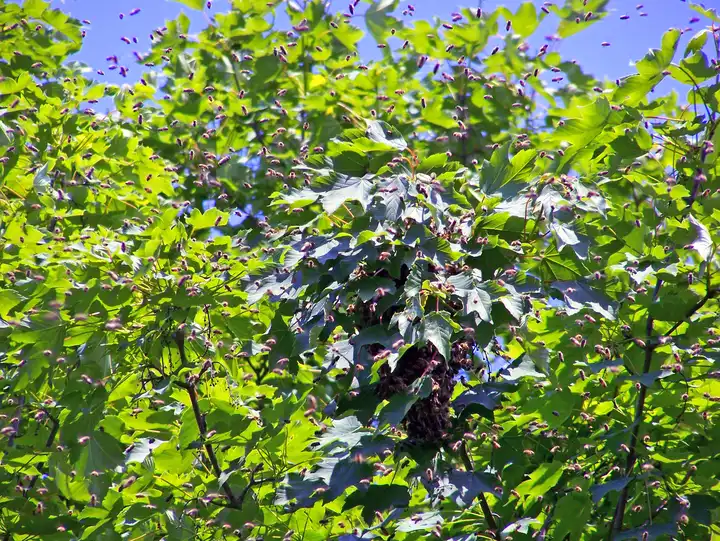
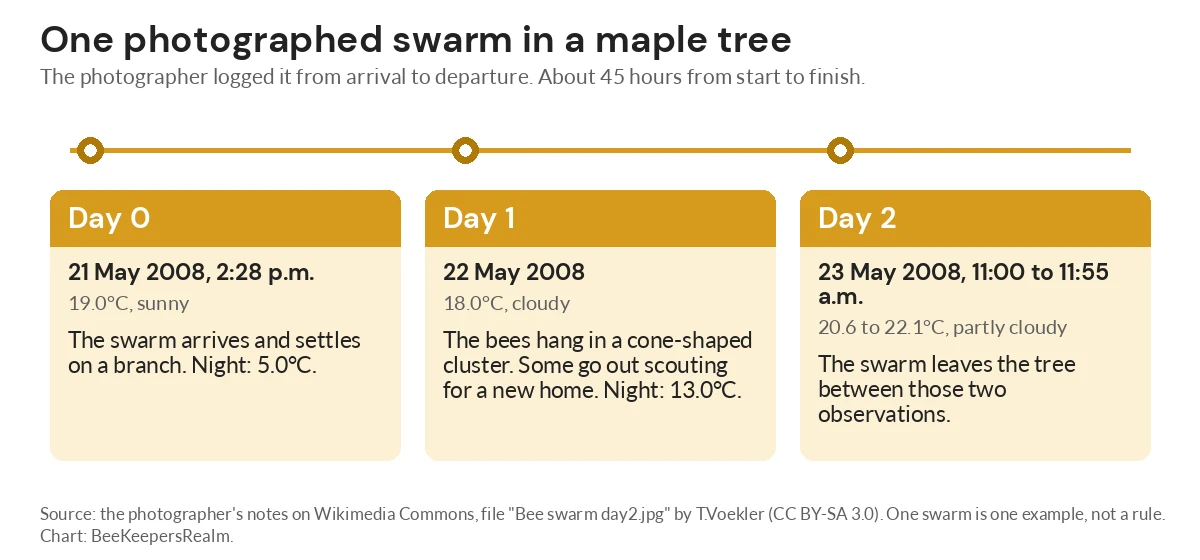
One photographer logged a swarm in a maple. It settled at 2:28 p.m. on 21 May 2008, hung in a cone-shaped cluster the next day while some bees scouted, and left between 11:00 and 11:55 a.m. on day 2: about 45 hours. The photo at the top of this page is from that swarm.
Rain stretches the wait. Rusty Burlew of Honey Bee Suite described a swarm that sat in a pear tree through a week of rain and wind, tried to leave on day eight, then returned and began building comb. UC IPM says such “exposed comb” colonies can last until fall, though robbing bees, hungry birds and bad weather usually end them. A bit of beeswax often stays after a swarm leaves, so another may land in the same spot.
Is It Still a Swarm? What to Look For
| What you see | What it likely is | What to do |
|---|---|---|
| Bees in a ball, no wax | A resting swarm | Keep back; call a collector if it is in the way |
| Fresh white comb at or under the cluster | Bees that found no home and began building (UC IPM) | Call a beekeeper; it may not leave |
| Steady traffic in and out of a hole or hollow | A colony in a cavity (FDACS) | Do not seal or spray |
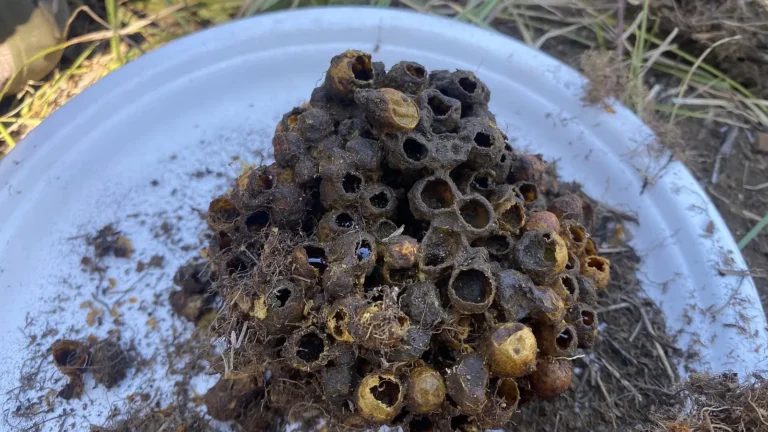
| Gray paper ball on a branch | A hornet or wasp nest (Cornell, Iowa Honey Producers) | Keep clear; see bee vs wasp |
| Insects entering a hole in the ground | Not honey bees (Cornell) | See our bumble bee nest guide |
Scouts like hollow trees. UC IPM says honey bees prefer a dark cavity of about 9 gallons with an easily defended entrance at least 9 feet off the ground, and that hollowed-out trees are ideal. A swarm that vanishes into a high knothole has found its home. A colony inside a tree needs a cutout, not a shake into a box.
Staying Safe Around the Tree
- Keep children and pets away, and do not stand or park under it. A swarm’s weight broke a branch onto a sidewalk in East Harlem in 2014, CBS New York reported.
- Do not spray, hose or knock it down. Mississippi State Extension says knocking it down only stirs up the bees.
- Hold off on mowing, trimming and tree work. Lakewood, California, tells residents not to run power equipment while bees swarm, because noise and vibration may provoke them.
- If anyone nearby is allergic, keep farther back.
Height and Access: Getting It Out of the Tree
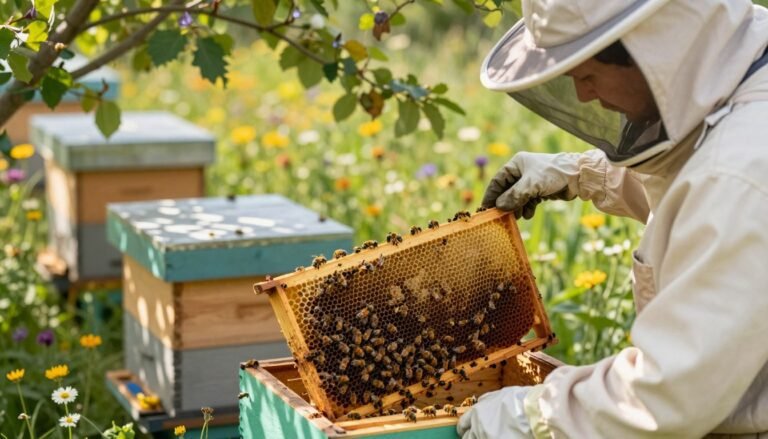
Height decides the job. Pollinator Partnership says a swarm in clear view or within ladder height can be collected quickly by an experienced beekeeper. UC IPM describes the usual method: brush or shake the bees into a cardboard box, keep it in shade until nightfall, then seal and remove it after dark. A cluster up a tall tree or tangled in branches is harder. Beekeepers can read how to catch a swarm safely.
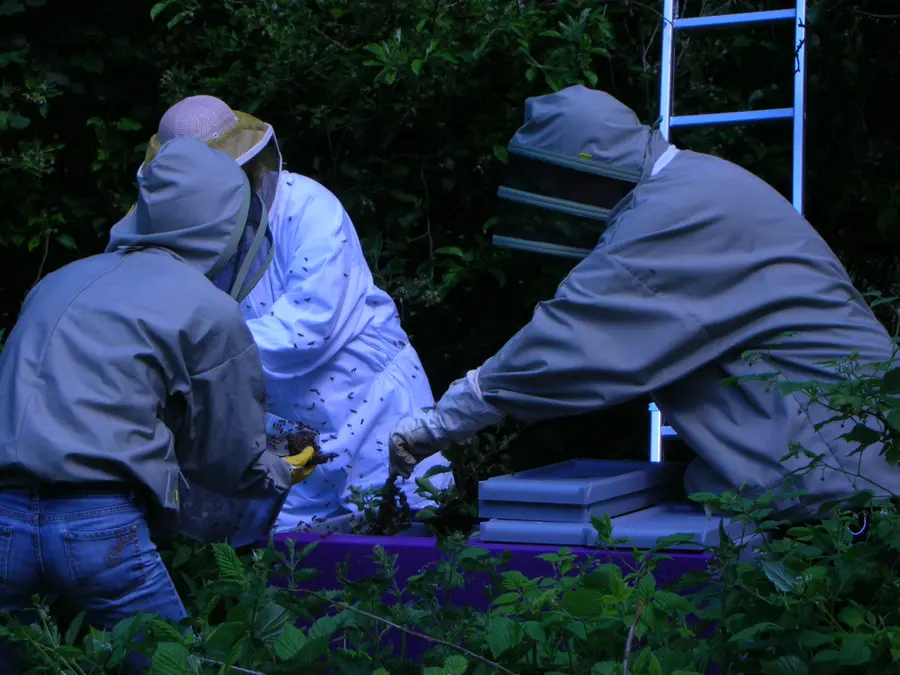
You can help the collector. Pollinator Partnership asks how high the bees are, what they hang on, how long they have been there, the cluster’s size (baseball, grapefruit or basketball), a phone photo if possible, who owns the property and whether access is easy. Do not climb up for the photo.
Beekeepers might collect a swarm free, UC IPM says, but ask about fees first; see our removal cost guide. Pest control is a last resort: Iowa State says spraying a swarm is risky and only for a serious health threat, such as a highly traveled public area.
Frequently Asked Questions
What should I do if there is a swarm of bees in my tree?
Stay back, keep children and pets away and leave it alone. If it hangs over a walkway or is still there after a few days, call a local beekeeper.
How long will a bee swarm stay in a tree?
An hour to a few days, Iowa State says. The maple swarm above stayed about 45 hours.
Is a bee swarm in a tree dangerous?
Not under most circumstances, Iowa State says, but it defends itself if hit, sprayed or hosed. Take extra care where Africanized bees live.
How do I get rid of a bee hive in a tree?
Bees using a hole or hollow are a colony, not a swarm. Call a beekeeper who does cutouts or a licensed pest control company; do not seal or spray it yourself.
Why do bees swarm around a tree?
The swarm is looking for a home. Scouts search for cavities such as hollow trees while the rest cluster around the queen.
Will a swarm of bees go away on its own?
Usually, once the scouts agree on a site. If wax comb appears, it may stay.
The Bottom Line
Watch from a distance and call a collector if the cluster stays or sits in the way. This guide is educational information, not professional advice; for stings, see how to treat a bee or wasp sting.
Image credits: Featured photo: “Bee swarm day2” by T.Voekler, licensed CC BY-SA 3.0, via Wikimedia Commons. Other photos credited in their captions.