Table of Contents
- Cutout vs. Swarm Capture: Why They’re Different
- Assessing the Situation First
- Tools and Equipment
- Method 1: The Direct Cutout
- Finding and Securing the Queen
- Method 2: The Trap-Out (When You Can’t Open the Wall)
- Sealing and Repairing the Structure Afterward
- When to Call a Professional Instead
- Common Mistakes
- FAQ
Cutout vs. Swarm Capture: Why They’re Different
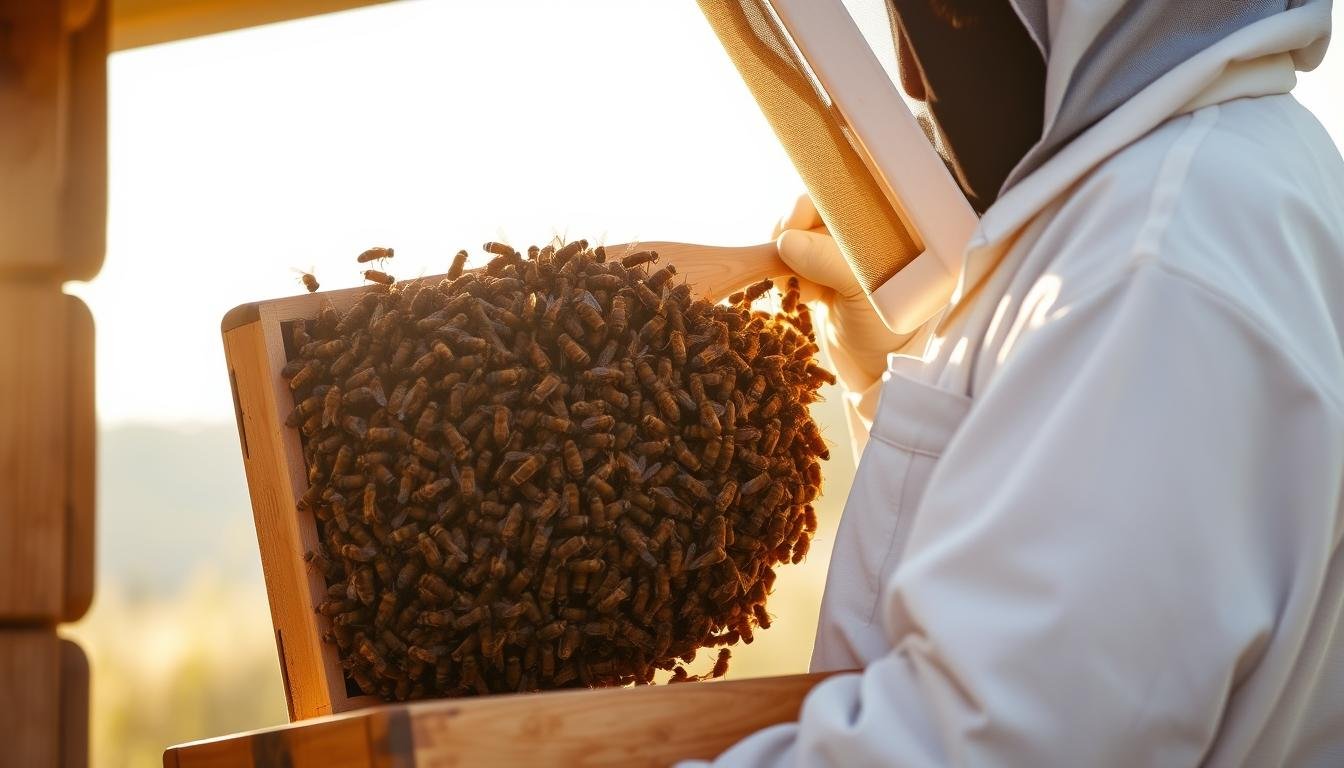
A “cutout” is the removal of an established honey bee colony, including its comb, brood, and stores, from a permanent cavity like a wall void, tree hollow, chimney, or shed — not the capture of a loose, temporary swarm cluster hanging in the open. Swarm capture is comparatively quick: a cluster of bees with no comb yet built can often be shaken or brushed into a box in minutes. A cutout is a different scale of job entirely, since the colony has already built comb, raised brood, and stored honey inside the cavity, and all of that has to be dealt with, not just the bees. If you’re dealing with a hanging cluster rather than bees living inside a structure, see bee rescue techniques for humane relocation instead, which covers that simpler scenario.
Assessing the Situation First
Before committing to a cutout, assess a few things:
- How long has the colony been established? A colony present for multiple seasons will have much more comb, brood, and honey than one that just moved in weeks ago — more material to remove, more disruption, more time required.
- How accessible is the cavity? A colony behind removable siding is a very different job than one deep inside a masonry chimney or a load-bearing wall you can’t safely open.
- Is it safe to work there? Electrical wiring, structural elements, roof height, and ladder work all factor into whether this is a reasonable DIY job or one that needs a professional.
- What’s the realistic outcome? Even a well-executed cutout doesn’t guarantee the colony survives the move intact — the queen can be lost or injured during the process, and a colony that loses its queen will need a replacement to survive. Set expectations accordingly rather than assuming a guaranteed clean transfer.
Tools and Equipment
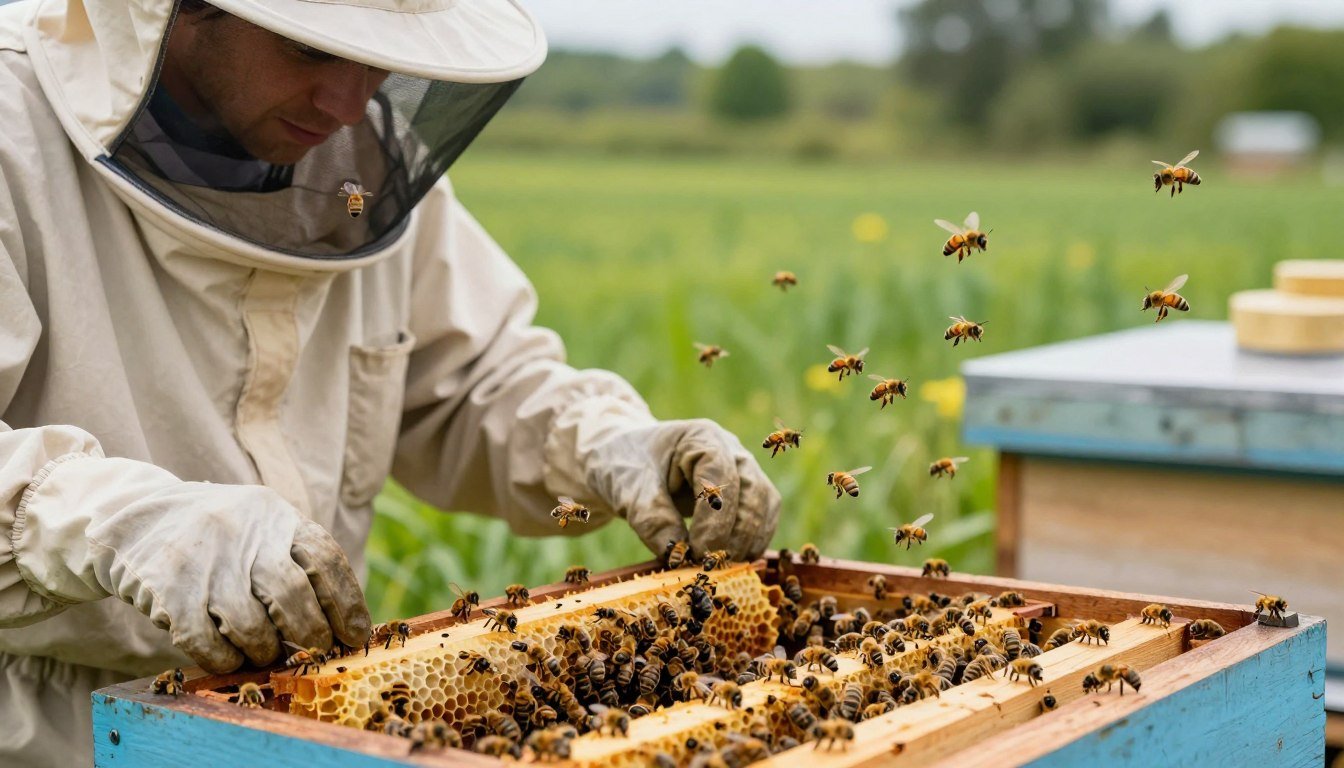
A cutout kit typically includes:
- Full protective suit, gloves, and boots — a partial setup is a much bigger risk here than a routine hive inspection, since you’ll be exposing an entire established colony to open air at once.
- A smoker to help keep bees calm throughout the process.
- A bee vacuum (a low-suction vacuum built specifically for collecting live bees without injuring them) — genuinely close to essential for a structure cutout, since you’re often collecting far more bees at once than you could brush or shake.
- Demolition tools matched to the structure — pry bar, hammer, reciprocating saw, or screw gun for removing siding, drywall, or paneling to expose the cavity.
- A sharp knife or hive tool for cutting comb free cleanly.
- Empty frames and rubber bands for securing cut comb into a hive box (covered below).
- A nuc box or hive body to transfer the colony into once comb is secured.
- A spray bottle of sugar water to help calm bees and encourage them into the vacuum or onto comb during handling.
Method 1: The Direct Cutout
This is the standard approach when the cavity is reasonably accessible:
- Open the cavity. Remove siding, paneling, or another exterior covering to fully expose the colony rather than working through a small hole — partial access makes every later step harder and messier.
- Vacuum the bees first. Before cutting any comb, use the bee vacuum to collect the bees clustered on the exposed comb and cavity walls, working calmly to avoid triggering a defensive response.
- Cut the comb out piece by piece, working from the top down, keeping brood comb and honey comb separated as you go.
- Rubber-band usable brood comb into empty frames, orienting it the same way it was in the cavity where possible, so bees can walk on it normally once it’s in the new hive box.
- Transfer secured frames into the hive box or nuc, then release the vacuumed bees into the same box so they can reorganize around the transferred comb.
- Leave the box at or near the original location briefly if practical, so foraging bees returning to the old entrance can find and join the relocated colony.
Finding and Securing the Queen
Spotting the queen during the chaos of a cutout is difficult, and most guidance on this is honest that completely guaranteeing you’ve captured her is not realistic. A few things improve the odds: work calmly and avoid excessive smoke, which can cause bees (including the queen) to run and hide rather than stay visible on comb; check brood comb carefully, since the queen is often near active brood; and once bees are settled into the new box, watch their behavior over the following day — a colony that’s calm and beginning to reorganize normally is a reasonably good sign the queen made it, while a colony that stays agitated and doesn’t settle may have lost her and could need a replacement queen introduced.
Method 2: The Trap-Out (When You Can’t Open the Wall)
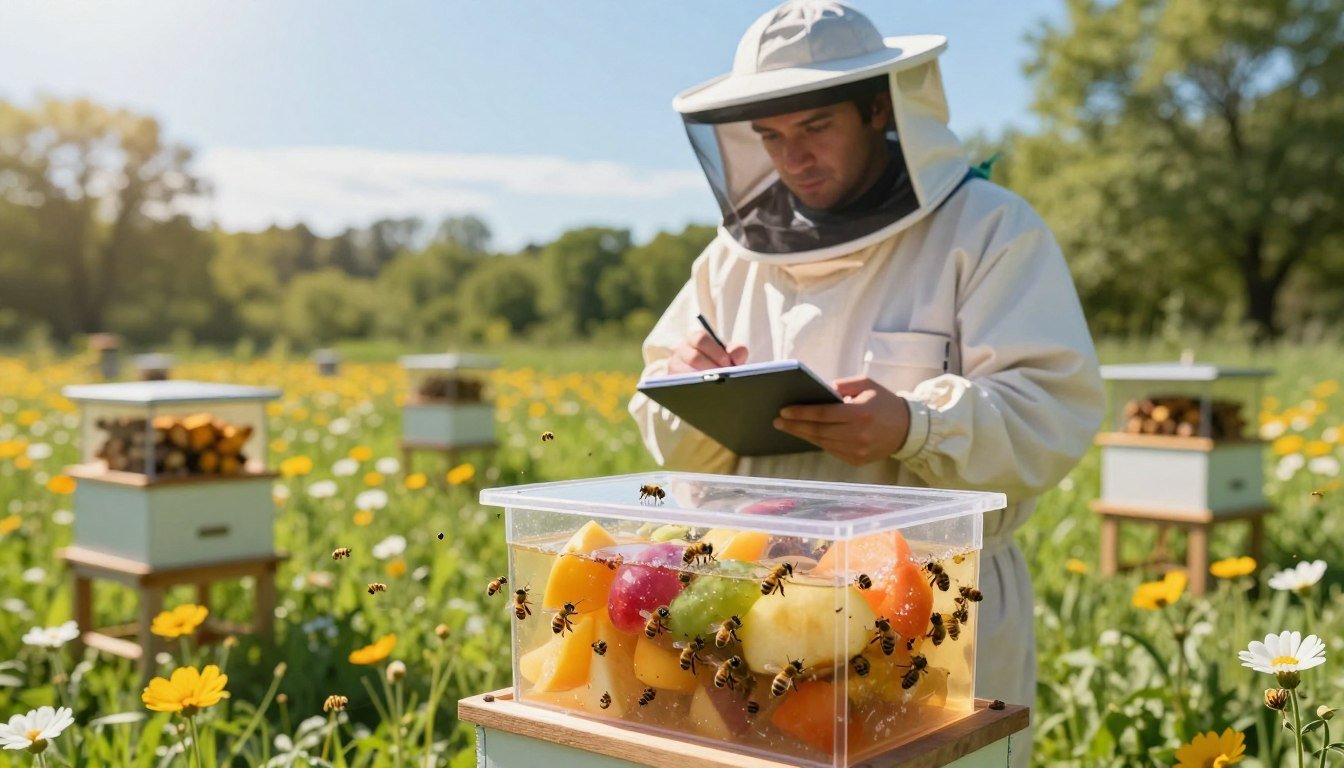
When the cavity genuinely can’t be opened safely (deep masonry, structural concerns, or a homeowner unwilling to have a wall opened), a trap-out is a slower but non-destructive alternative:
- Seal every entrance except one. Locate and close off all flight holes except a single opening the colony still uses.
- Fit a one-way cone over that entrance — a simple screened cone (roughly 6 inches long, sized so bees can exit through the wide end but can’t find their way back in through the narrow end) lets bees leave freely but blocks re-entry. This works on a similar entice-and-contain principle to a swarm trap box, just applied to bees exiting an existing colony rather than scouting for a new home.
- Position a receiving hive right next to the cone, stocked with a frame of open brood and, ideally, a queen, so bees exiting the old cavity join it rather than just clustering outside confused.
- Wait roughly a month. Over that time, foragers exit and can’t return, gradually depleting the old colony while the new hive builds up. This timeframe also allows any remaining brood in the old cavity to hatch out and leave too.
- Remove the cone once the old cavity appears empty, then let robbing bees clean out the abandoned comb and honey stores naturally.
- Seal the original entrance permanently once activity has stopped, to prevent a new colony from moving into the same cavity later.
The honest limitation of a trap-out, worth setting expectations around: it’s essentially impossible to guarantee you’ve captured 100% of the bees or the original queen this way — some of the old colony’s population and comb resources are simply lost in the process rather than transferred. It trades a cleaner, faster outcome for avoiding structural demolition.
Sealing and Repairing the Structure Afterward
Whichever method you use, leaving old comb and any residual honey inside the cavity afterward is a mistake — leftover comb scent is a strong attractant for a future swarm to move into the exact same spot, and unaddressed honey can seep, stain, or attract pests. After a direct cutout, clean out any comb fragments and residue you can reach before closing the wall back up. After a trap-out, allow robbing bees time to fully clean out the abandoned comb before sealing. In both cases, seal the original entrance point thoroughly enough that a future swarm scouting the area can’t rediscover it — caulk, mesh, or solid patching material matched to the structure, not just a loose cover.
When to Call a Professional Instead
Consider hiring an experienced cutout specialist rather than attempting this yourself when: the cavity is in a structurally sensitive location (load-bearing walls, near electrical service, high roof access), the colony has clearly been established for a long time (large comb mass, heavy honey stores), you don’t have a bee vacuum or full protective gear, or the homeowner needs the work done on a timeline that doesn’t allow for a slower trap-out. Many established beekeepers offer cutout removal as a paid service specifically because of the skill and equipment involved — there’s no shame in bringing one in rather than risking a bad outcome for you, the structure, or the bees. See also how to calm aggressive bees if a colony you’re assessing seems unusually defensive, which can be a sign to bring in extra help.
Common Mistakes
| Mistake | Why it matters |
|---|---|
| Opening only a small access hole instead of fully exposing the cavity | Makes every later step (vacuuming, comb removal, cleanup) far harder and more disruptive to the colony |
| Using excessive smoke | Can cause the queen and bees to run and hide rather than stay visible, making her much harder to find |
| Leaving comb and honey residue in the cavity after removal | Strongly attracts a future swarm to reoccupy the exact same spot |
| Assuming a trap-out or cutout guarantees the queen is saved | Neither method guarantees this — plan for the possibility of needing a replacement queen afterward |
| Skipping full protective gear because “it’s just a small colony” | An established colony is a much larger, more concentrated group than a routine hive inspection involves |
Sources
Trap-out method details (cone dimensions, receiving-hive setup, relocation distance) and general cutout technique guidance reflect published university apiculture extension resources, including Mid-Atlantic Apiculture Research and Extension Consortium (MAAREC) guidance on removing bees from trees and building walls. For further verification, see Clemson University Extension’s fact sheet on honey bee colony removal from structures.
FAQ
What’s the difference between a bee cutout and a swarm removal?
A swarm removal captures a loose, temporary cluster of bees with no comb built yet. A cutout removes an established colony, including its comb, brood, and honey stores, from inside a permanent cavity like a wall or tree.
Do I need a bee vacuum to do a cutout?
It’s not strictly required but is close to essential for anything beyond a very small colony — an established cutout typically involves far more bees than can be safely brushed or shaken by hand.
What is a trap-out and when should I use it?
A trap-out uses a one-way screen cone over the colony’s entrance to let bees leave gradually over about a month without opening the structure — useful when the cavity can’t be safely or practically opened for a direct cutout.
Will the colony definitely survive being removed in a cutout?
Not guaranteed. The queen can be lost or injured during the process with either method, and a colony that loses its queen will need a replacement introduced to survive long-term.