Last Updated September 16, 2026
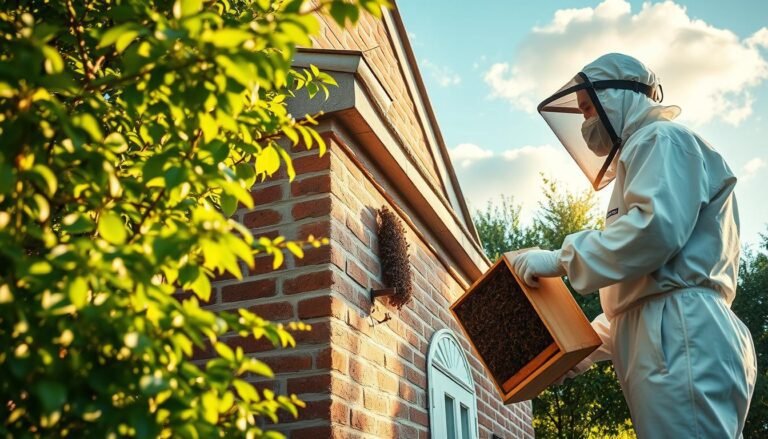
DIY bee removal genuinely makes sense in a narrow set of situations — a small, exposed swarm or comb you can reach without a ladder, with no wall cavity involved — and is a poor idea everywhere else, mainly because the honey and comb left behind by a failed attempt cause worse problems than the bees did. Most articles comparing DIY and professional bee removal are written by removal companies with an obvious incentive to steer you toward hiring one, which is worth knowing going in. This comparison tries to give you the real numbers instead — cost, safety data, and the legal side — so you can make the call yourself.
Key Takeaways
- Professional removal costs $150–$500 on average versus roughly $0–$50 in materials for DIY, but a failed DIY attempt on an established colony routinely costs more in repairs than hiring a professional would have upfront.
- CDC data shows hornet, wasp, and bee stings cause an average of 72 deaths per year in the U.S. (2011–2021) — a real number worth knowing, though it includes wasps and hornets, which are considerably more aggressive than honey bees.
- Using pesticide in a way inconsistent with its label — spraying a wall cavity with a product not labeled for that use, for instance — is a federal violation under FIFRA, with real penalties, regardless of whether it’s your own property.
- DIY genuinely makes sense for a small, low, exposed swarm or comb cluster you can reach from the ground. It’s a poor idea for anything inside a wall, attic, or chimney, or for any colony you can’t fully access.
- What separates a professional beyond equipment is experience reading colony behavior and completing a full removal — comb, honey, and all — in one visit, which is the single biggest factor in whether a removal actually solves the problem.
Table of Contents
- The Head-to-Head Comparison
- What DIY Removal Actually Involves
- What the Real Safety Data Says
- The Legal Side Most Articles Skip
- When DIY Genuinely Makes Sense
- If You Do Attempt It, Prepare This First
- When to Always Call a Professional
- What You’re Actually Paying a Professional For
- Frequently Asked Questions
The Head-to-Head Comparison
| Factor | DIY Removal | Professional Removal |
|---|---|---|
| Upfront cost | $0–$50 in materials (box, gloves, bee brush) | $150–$500 on average; up to $2,500+ for difficult structural jobs |
| Success rate on an established colony | Low without training — incomplete comb/honey removal is the most common failure | High; professionals are equipped to remove comb and honey fully, not just visible bees |
| Time investment | Hours to a full day, often spread over multiple attempts | Typically one visit, a few hours |
| What happens to the bees | Variable — often killed rather than relocated without live-removal training | Usually relocated alive by beekeepers; pest control companies may exterminate |
| Legal/liability exposure | Real risk if pesticide is misapplied inconsistent with its label (federal FIFRA violation) | Licensed operators carry insurance and follow label law as part of the job |
| Best suited for | Small, exposed, ground-level swarms or comb you can reach without a ladder | Anything inside a wall, attic, or chimney, or any colony you can’t fully access |
What DIY Removal Actually Involves
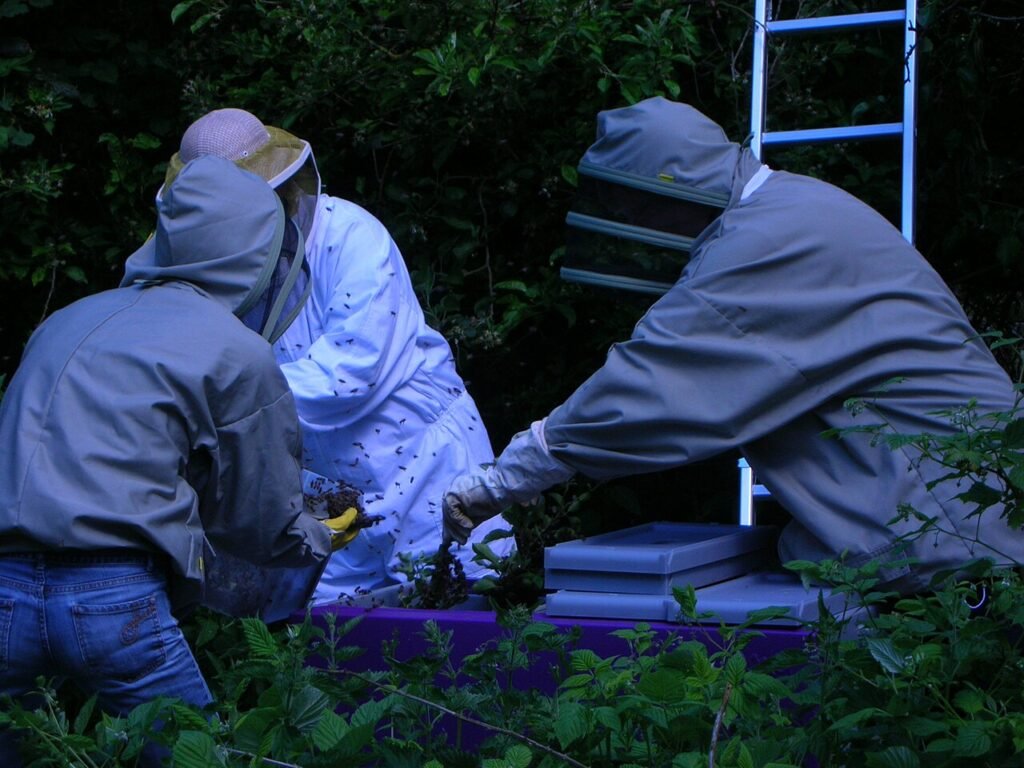
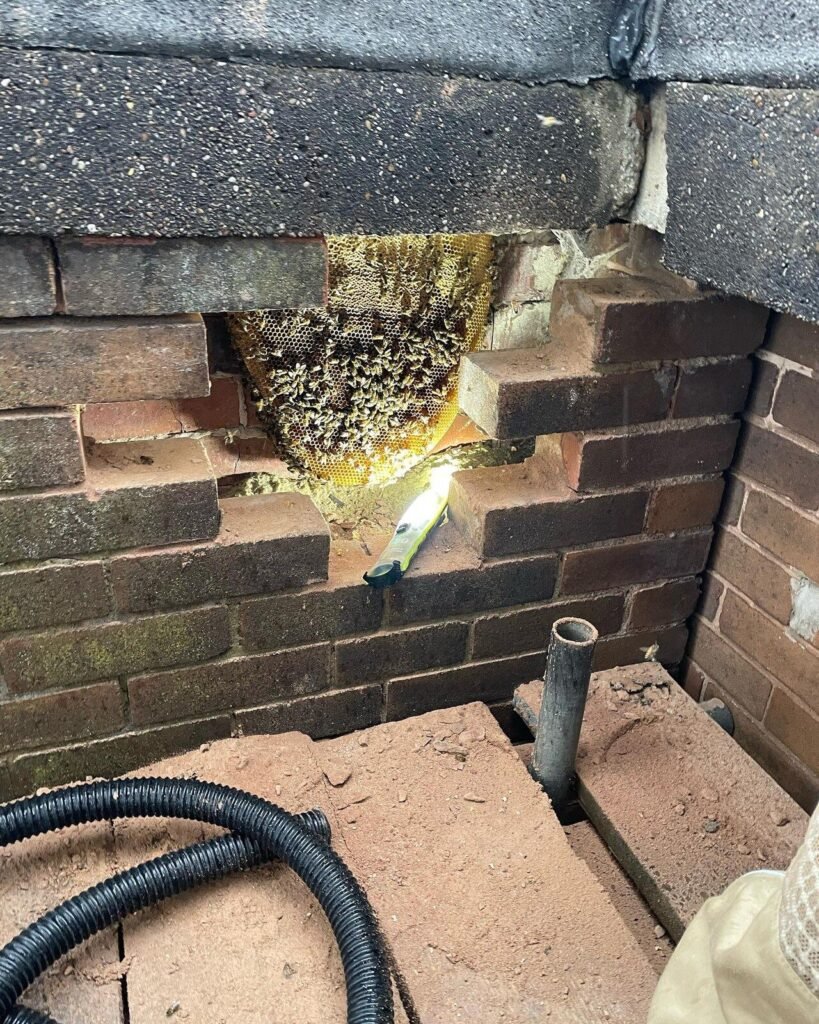
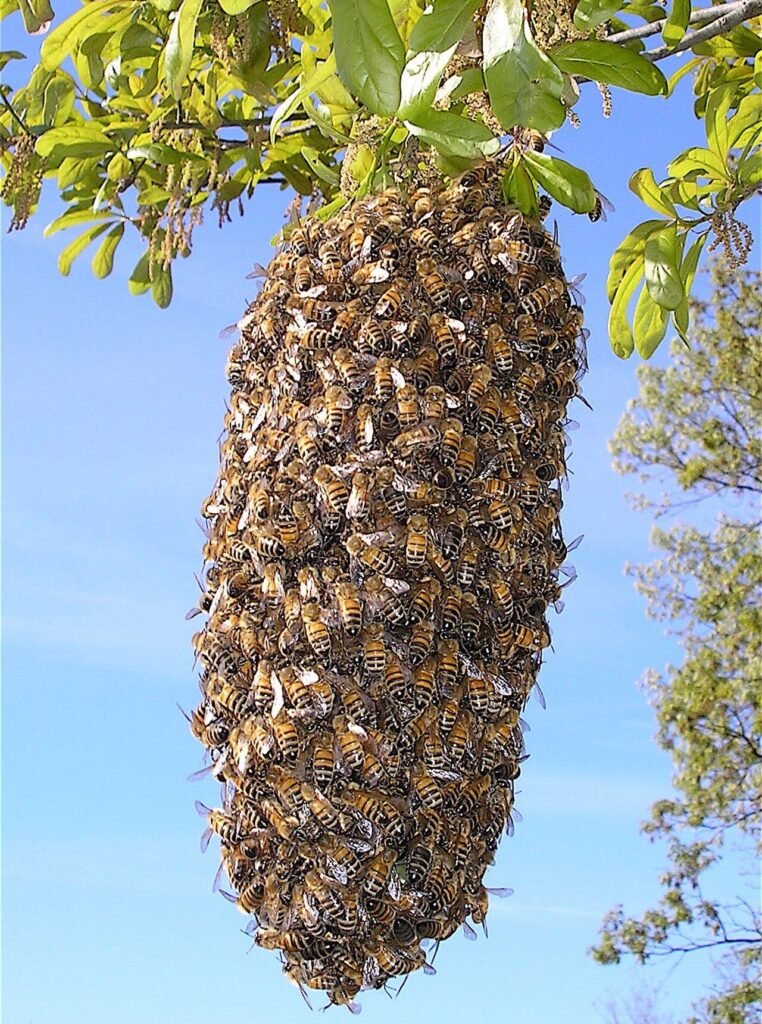
For a genuinely exposed situation — a swarm resting on a low branch, or a small comb built in an open, accessible spot like under a deck rail — DIY removal is really just careful, calm handling: a cardboard box or empty hive body placed underneath, a gentle brush or shake to encourage the cluster to drop in, and then relocating the box to a beekeeper or a spot well away from foot traffic. Basic protective gear (a veil at minimum) and patience matter more than any specialized tool here. This is meaningfully different from what “DIY removal” means once bees are established inside a structure, where the job actually requires opening up a wall or ceiling cavity, locating and physically removing wax comb (which can span multiple frames’ worth of material in a mature colony), containing the bees during the process, and sealing the structure back up afterward — a job that combines carpentry, entomology, and a fair amount of risk tolerance most homeowners don’t have reason to have built up.
What the Real Safety Data Says
According to CDC data published in its Morbidity and Mortality Weekly Report, hornet, wasp, and bee stings caused an average of 72 deaths per year in the United States between 2011 and 2021, with the annual count ranging from 59 to 89. That figure lumps honey bees in with hornets and wasps, which sting repeatedly and are generally more defensive, so it overstates the honey-bee-specific risk somewhat — but it’s a real, sourced number, unlike the vague “DIY removal statistics” you’ll find quoted without attribution on many bee-removal-company blogs. Cost estimates vary by source for a similar reason — UC ANR’s Integrated Pest Management Program notes that “beekeepers might be willing to collect swarms for free, but generally it isn’t worthwhile for them to remove established colonies without charge,” which is why swarm removal and structural cutouts get quoted so differently across sources. The practical safety takeaway isn’t that removal is uniquely dangerous; it’s that anyone with a known bee or wasp sting allergy, or anyone facing a large or defensive colony, should weight that real risk into the DIY-versus-professional decision rather than treating it as purely a cost question.
The Legal Side Most Articles Skip
The legal risk in DIY removal has almost nothing to do with the bees themselves and almost everything to do with how you try to kill or remove them. Under the federal Insecticide, Fungicide, and Rodenticide Act (FIFRA), it’s illegal to use any registered pesticide “in a manner inconsistent with its labeling” — and every registered pesticide sold in the U.S. carries that exact warning on its label. Spraying a general-purpose insecticide into a wall cavity, a use the label doesn’t specifically authorize, is a textbook example, and the EPA’s own guidance is blunt about it: the label is the law. Penalties range from up to $1,000 and 30 days in jail for a private individual, to as much as $25,000 and a year in jail for a commercial applicator who misuses a product this way. This applies regardless of whether the bees are on your own property. It’s a real reason to at minimum read the full label of anything you’d consider using, not just the front-panel instructions, before attempting DIY extermination rather than physical removal.
When DIY Genuinely Makes Sense
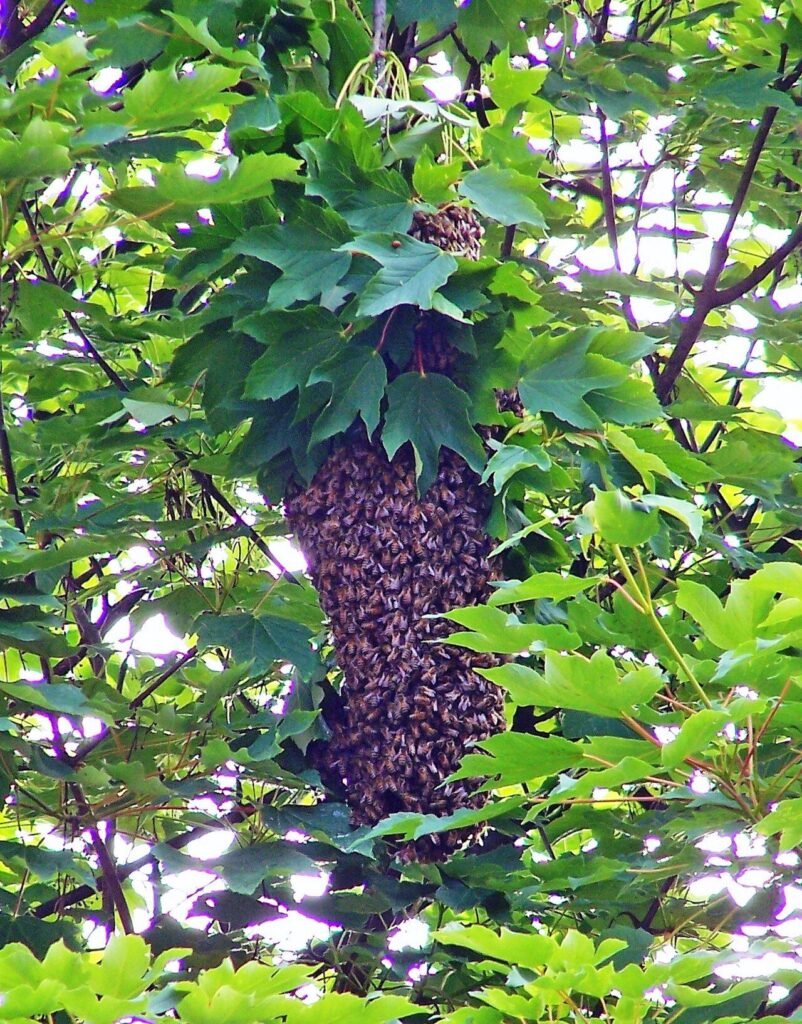
It’s worth saying plainly, since most sources comparing DIY and professional removal are written by companies selling the professional service: DIY is a reasonable choice in a specific, narrow set of circumstances. A swarm resting in the open — on a low branch, a fence post, an exterior wall surface with no cavity behind it — with no known allergy in the household and no aggressive behavior observed, is a genuinely manageable situation for a careful homeowner with basic gear, or better yet, a call to a local beekeeper who’ll often collect it for free rather than a DIY attempt at all. The line isn’t really “DIY versus professional” so much as “exposed versus enclosed” — anything you can see and reach without opening up part of your house is a fundamentally different, lower-risk job than anything you can’t.
When to Always Call a Professional
- The colony is inside a wall, attic, soffit, or chimney. This requires opening the structure and full comb removal — not a job for improvised tools.
- Anyone in the household has a known bee or wasp sting allergy. The real medical risk described above isn’t worth testing against a cost savings.
- You’re in a region with established Africanized honey bee populations (parts of the Southwest and Deep South, including all of Southern California per UC’s IPM program), where defensive behavior is less predictable.
- The colony is large or has clearly been established for a while (heavy, steady bee traffic over weeks, visible comb, or a history of activity from a prior season) — more comb and bees means a harder job and a higher failure consequence.
- You’re considering any pesticide application inside a structure. Given the FIFRA exposure above, this is one of the clearest “just call someone” situations on this list.
If You Do Attempt It, Prepare This First
For the narrow, exposed-swarm scenario where DIY genuinely fits, a short list of preparation makes the difference between a calm afternoon and an avoidable trip to urgent care. Work in the early morning or evening when bees are calmer and more of the colony is clustered rather than out foraging. Wear at minimum a proper veil and long sleeves tucked into gloves — a beekeeping suit isn’t strictly required for a docile resting swarm, but bare skin is a bad idea regardless of how calm the cluster looks. Have your container (a cardboard box or empty hive body) and a way to close it ready before you start, not mid-task. Move slowly and avoid sudden vibration to the branch or surface the bees are resting on. And have a plan for what happens if it doesn’t go smoothly — know the number for a local beekeeper or your county extension office before you begin, not after, so you’re not searching for help one-handed while wearing gloves.
What You’re Actually Paying a Professional For
“A live Honey bee removal specialist is an experienced beekeeper and is knowledgeable about how to safely, humanely remove bees from yards and structures. They will relocate bees to a registered apiary at least two miles away and will ensure bees do not return to your location.”
— California Master Beekeeper Program, UC Davis
Beyond tools and protective gear a homeowner could technically buy, the actual value in a professional removal is experience reading colony behavior — knowing when a colony is calm enough to work without excessive smoke, spotting the queen or confirming she’s been safely relocated, and, critically, finding and removing all of the comb and honey rather than just the visible bees. That last point is the most common way DIY and even inexperienced professional attempts fail: comb left behind inside a wall ferments and stains over the following weeks, and it draws in ants, roaches, and other pests looking for an easy meal, turning a bee problem into a worse secondary one. A good professional removal, done once, correctly, genuinely does end the problem; an incomplete DIY attempt frequently doesn’t, even when it looks successful on the day.
Frequently Asked Questions
Is DIY bee removal actually cheaper in the long run?
For a small, exposed swarm, yes — there’s very little to go wrong. For an established colony inside a structure, no: a failed attempt often means paying for professional removal anyway, plus repairing whatever damage occurred and any secondary pest problems from comb left behind.
Is it dangerous to remove bees yourself?
It carries real risk, particularly for anyone with a sting allergy or when dealing with a large or established colony. CDC data shows hornet, wasp, and bee stings cause roughly 72 deaths per year nationally, though that figure includes more aggressive stinging insects alongside honey bees.
Can I get in legal trouble for removing bees from my own property?
The main legal exposure is pesticide misuse — using a product in a way its label doesn’t authorize is a federal violation under FIFRA regardless of whose property it’s on. Physically relocating bees without chemicals carries essentially no legal risk of this kind.
What’s the biggest mistake people make with DIY removal?
Treating a job that looks done as actually done. Removing the visible bees while leaving comb and honey behind inside a wall is the most common failure, and it usually causes a worse problem within weeks.
How do I know if my situation is safe enough for DIY?
If it’s a small, exposed cluster you can reach from the ground with no wall cavity involved, no known allergy in the household, and you’re not in a region with established Africanized bee populations, it’s a reasonable candidate for DIY. Anything inside a structure isn’t.
For more background on this, see Michigan State University Extension.
Related Reading
Image credits: Photo: "Beekeeper with moveable comb hive" by Ich, licensed CC BY-SA 4.0, via Wikimedia Commons.