A pesticide-free lawn for pollinators doesn’t mean giving up on having a lawn — it means removing the specific chemicals and timing choices that actually hurt bees, while keeping the mowed grass most homeowners still want. That’s a different project than tearing out turf and replanting it as a native garden bed, which this site covers separately. This guide is for the more common situation: you want to keep a functional, walkable lawn for kids, pets, or plain curb appeal, but you don’t want it to be a hazard to every bee that lands on it.
Key Takeaways
- The bees-and-lawns problem is mostly about a specific chemical class — neonicotinoid insecticides (imidacloprid, clothianidin, thiamethoxam, dinotefuran) — not lawn care or mowed grass in general.
- A 2013 peer-reviewed study found bumblebee colonies foraging on clothianidin-treated turf had delayed weight gain and produced no new queens, while colonies on turf treated with chlorantraniliprole, a different chemical class, showed no such effect.
- The same study found mowing off blooming clover or dandelions before treatment, then waiting for regrowth, eliminated the measured harm — a simple, no-cost timing fix.
- EPA-mandated “bee advisory box” labels on neonicotinoid products already say not to apply while bees are foraging or before flowering is complete — the guidance already exists, it’s mostly a matter of reading and following it.
- Letting a little clover into the lawn, mowing higher, and switching grub treatments to chlorantraniliprole-based products (sold as Acelepryn or GrubEx) all reduce risk to bees without requiring you to give up a mowed lawn.
Table of Contents
- What “Pesticide-Free” Actually Means for a Lawn
- The Specific Chemicals That Actually Harm Bees
- The EPA’s Bee Advisory Box: Guidance That Already Exists
- The Study That Shows Timing Is Everything
- Grub Control Without the Bee Risk
- Mowing Height and Timing Bees Actually Care About
- Letting a Little Clover In
- Cultural Practices That Cut Chemical Use in the First Place
- If You Must Treat: A Bee-Safer Application Checklist
- When Pesticide-Free Isn’t Enough: Going Further
- Frequently Asked Questions
What “Pesticide-Free” Actually Means for a Lawn
“Pesticide-free” gets used loosely, and it’s worth being precise about what actually matters for bee health. A lawn doesn’t have to be chemical-free in some absolute sense to stop being a hazard — the risk to bees comes from a specific, identifiable combination: certain insecticide chemistries, applied while bees are actively foraging on blooming flowers in or near the turf. Remove either half of that combination — the chemical or the timing — and most of the measurable risk disappears. That’s a meaningfully easier target than “never use any lawn product again,” and it’s the actual guidance behind EPA’s own label requirements, covered below.
The Specific Chemicals That Actually Harm Bees
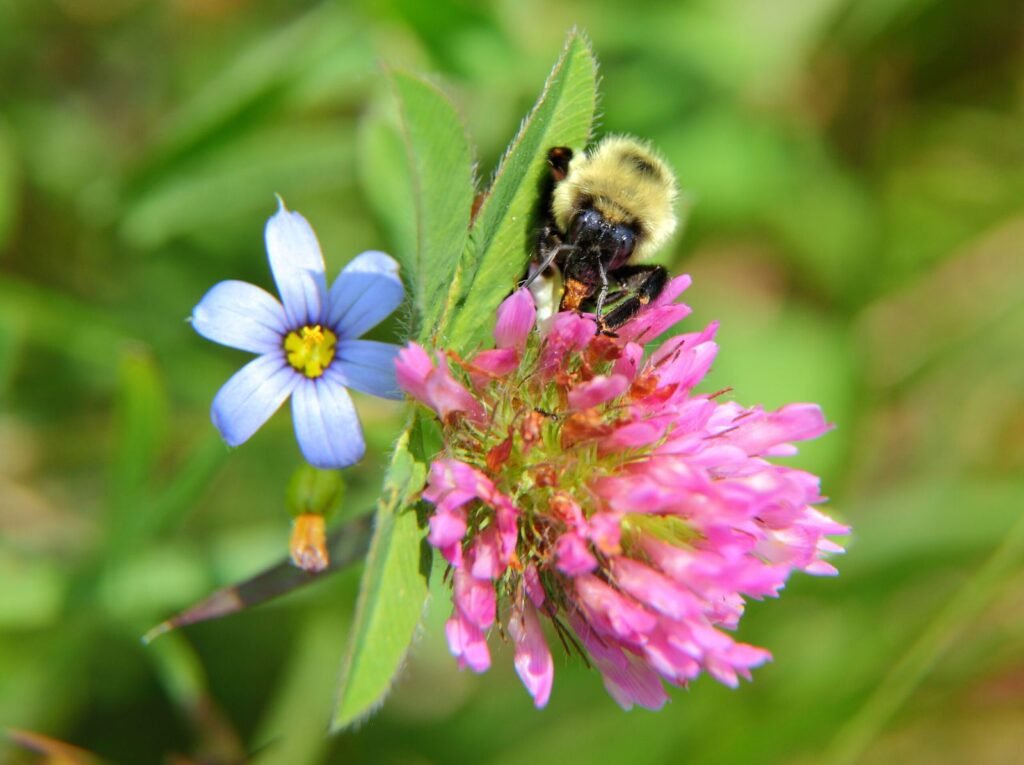
The chemical class most responsible for acute bee harm in lawn and landscape products is the neonicotinoids: imidacloprid, clothianidin, thiamethoxam, and dinotefuran are the four most common in homeowner and professional lawn products. These are systemic insecticides — the plant absorbs them and distributes them through its own tissue, including nectar and pollen in any flowers growing in the treated turf, whether that’s an intentional ornamental or a “weed” like clover or dandelion the lawn is full of. A bee foraging on those flowers is exposed directly, which is a different and more direct route of exposure than a bee simply flying over treated grass.
Broadleaf herbicides used for weed control (like 2,4-D-based products) are a separate issue: they aren’t associated with the same acute bee-lethal effects as neonicotinoid insecticides, but they remove the clover and dandelion blooms that would otherwise feed foraging bees in the first place — an indirect harm through habitat loss rather than direct poisoning. Both are worth understanding, but the acute, measurable, and best-studied risk is the insecticide side. For a broader look at how honeybees interact with pesticides beyond just the lawn-care context, see this site’s dedicated overview.
The EPA’s Bee Advisory Box: Guidance That Already Exists
Since 2013, the EPA has required a “bee advisory box” on neonicotinoid product labels — a visible icon and block of text with pollinator protection instructions. The standard language includes a direct instruction: do not apply the product while bees are foraging, and do not apply until flowering is complete and all petals have fallen. That instruction already covers the single highest-risk scenario for a home lawn: spraying a neonicotinoid insecticide over turf where clover, dandelion, or any other flower is currently blooming and bees are actively visiting it. In practice, this label requirement is easy to miss, since most lawn-product buyers are focused on the pest-control instructions rather than the smaller pollinator-protection text — but it’s already there, and following it is most of what “bee-safe” lawn treatment actually requires.
The Study That Shows Timing Is Everything
The clearest evidence for exactly how much timing matters comes from a 2013 study (Larson et al., PLoS One) that put Bombus impatiens (common eastern bumblebee) colonies directly onto residential turf plots treated with either clothianidin (a neonicotinoid) or chlorantraniliprole (an anthranilic diamide, a different chemical class entirely). The results were sharply different by chemical: colonies foraging on clothianidin-treated turf had delayed weight gain and produced no new queens — a direct hit to the colony’s ability to reproduce — while colonies on chlorantraniliprole-treated turf showed no adverse effects at all. The researchers also measured what was actually in the nectar: clover blooms on clothianidin-treated turf contained an average of 171±44 parts per billion of the chemical, a concentration well above levels known to affect bees.
The most practically useful finding, though, was the mitigation test: when turf was mowed to remove the flowers present at the time of treatment, then left to rebloom about three weeks later, neither insecticide caused measurable harm to colonies introduced at that point. In other words, the danger wasn’t the chemical existing on the lawn at all — it was bees having direct access to contaminated blooms. Removing the blooms at treatment time and letting fresh, uncontaminated flowers regrow was enough to eliminate the effect the study was measuring. That’s a genuinely actionable, no-cost step available to any homeowner, and it’s the single most concrete piece of advice in this guide.
Grub Control Without the Bee Risk
Grub control is where most homeowner lawn-pesticide use happens, and it’s also where the Larson et al. study offers a direct swap: chlorantraniliprole, sold under consumer and professional brand names including Acelepryn and GrubEx, controls the same white grub larvae neonicotinoids target, without the measured bumblebee colony harm found with clothianidin. It’s worth pairing any grub product switch with actual need-based timing rather than blanket “preventive” applications every season regardless of grub counts — a simple soil sample check (a square foot of turf, checked for grub density) before treating avoids applying anything at all in years when grub pressure is low.
Mowing Height and Timing Bees Actually Care About
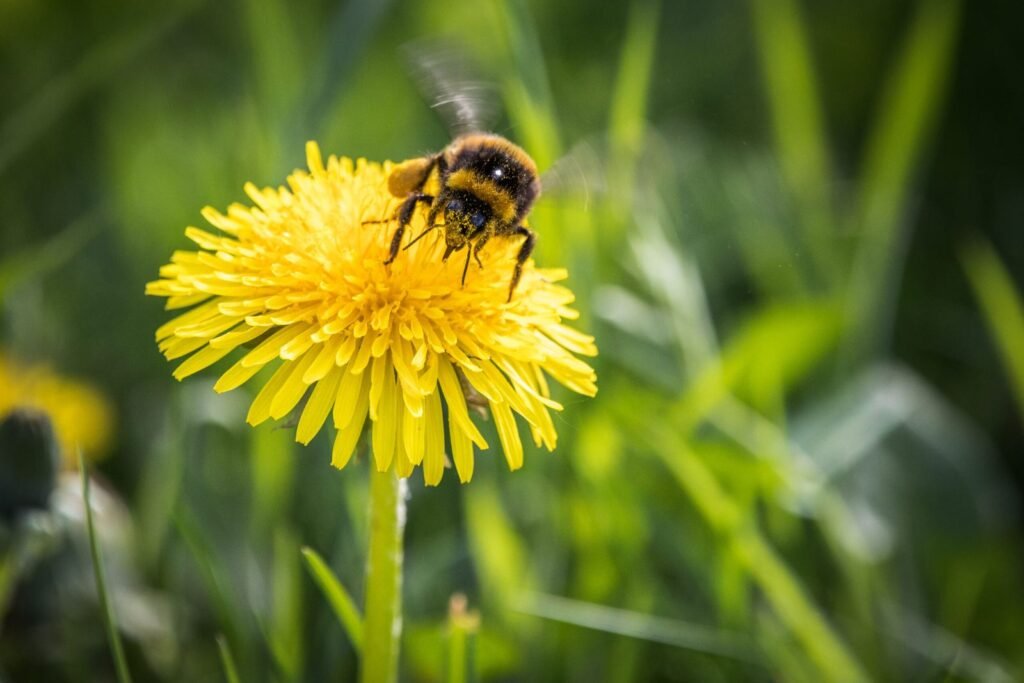
Beyond insecticide timing, mowing itself is a lever most homeowners already have without buying anything. A higher mower deck setting (commonly 3 to 4 inches for most cool-season turf types) shades out weed seedlings and reduces the bare, thin turf that broadleaf weeds and grubs both favor, which cuts down how often chemical intervention feels necessary at all. Some homeowners participate in “No Mow May” or similar reduced-mowing periods in early spring specifically because it lets any clover, dandelion, or other lawn flowers bloom uninterrupted during the exact weeks newly emerged native bees — including the solitary, ground-nesting species covered in this site’s guide to the solitary bee life cycle — have the least other forage available. A full month of no mowing isn’t required to get most of the benefit; simply raising the deck height and skipping a mow or two during peak spring bloom accomplishes much of the same thing with a less dramatic change to how the yard looks.
Letting a Little Clover In
White or Dutch clover (Trifolium repens) and its low-growing “microclover” variety are worth deliberately keeping, or overseeding into an existing lawn, rather than treating as a weed to eliminate. Clover flowers are a genuinely valuable nectar and pollen source, especially for bumblebees, and as a legume, clover fixes atmospheric nitrogen in the soil through its root nodules — meaning a lawn with a meaningful clover component typically needs less synthetic nitrogen fertilizer to stay green, which is itself one less input to apply. Microclover in particular stays low enough to blend into a mowed lawn’s appearance and tolerates foot traffic reasonably well, so this doesn’t have to mean an obviously “unkempt” look if that’s a concern — it can look like an ordinary lawn that simply happens to also feed bees.
Cultural Practices That Cut Chemical Use in the First Place
A lot of routine lawn pesticide use is really addressing a symptom of a lawn under stress, rather than a pest problem that would exist regardless. Deep, infrequent watering (encouraging roots to grow down rather than staying shallow) produces turf that’s naturally more resistant to both drought stress and insect damage. Dethatching when the thatch layer builds up beyond about half an inch improves water and air penetration to the root zone, and topdressing with compost feeds soil biology that keeps grass genuinely healthy rather than merely green. None of this eliminates every possible pest or disease issue, but a lawn maintained this way generally needs less frequent chemical intervention of any kind, which by itself reduces how often the bee-exposure question comes up at all.
If You Must Treat: A Bee-Safer Application Checklist
- Confirm the product’s active ingredient before buying — avoid neonicotinoids (imidacloprid, clothianidin, thiamethoxam, dinotefuran) where a non-neonicotinoid option like chlorantraniliprole controls the same target pest.
- Mow off any blooming clover, dandelion, or other flowers in the treatment area before applying anything, per the mitigation approach the Larson et al. study tested directly.
- Never apply while bees are actively visible foraging on the lawn, and don’t apply until flowering is complete — this is the EPA label instruction itself, not an extra precaution beyond it.
- Treat based on confirmed pest presence (a grub count, a visible pest population) rather than a blanket seasonal “just in case” schedule.
- Spot-treat the specific affected area rather than blanket-spraying the entire lawn when the problem is localized.
- Apply in the early morning or evening when fewer pollinators are actively foraging, and avoid spraying on windy days that increase drift onto blooming plants nearby.
When Pesticide-Free Isn’t Enough: Going Further
Everything above works within the constraint of keeping an actual mowed lawn. If that constraint doesn’t matter to you — if you’d rather replace some or all of the lawn with a genuine pollinator garden — this site has a separate, dedicated guide to turning a lawn into a pollinator habitat that covers removing turf entirely and replanting with native flowering plants, and a broader guide to building a pollinator garden from scratch. Both go considerably further than lawn care alone and are worth reading if a mowed lawn isn’t actually a requirement for your yard.
Frequently Asked Questions
What lawn chemicals are actually harmful to bees?
The main concern is the neonicotinoid insecticide class — imidacloprid, clothianidin, thiamethoxam, and dinotefuran — since these systemic chemicals are absorbed into a plant’s own tissue, including the nectar and pollen of any blooming clover or dandelions growing in treated turf.
Does mowing before applying pesticide actually protect bees?
Yes. A 2013 peer-reviewed study (Larson et al., PLoS One) found that mowing off blooming clover or dandelions before treatment, then letting the turf rebloom about three weeks later, eliminated the measured harm to bumblebee colonies from both a neonicotinoid and a non-neonicotinoid treatment.
What can I use for grub control instead of neonicotinoids?
Chlorantraniliprole, sold under brand names including Acelepryn and GrubEx, controls the same white grub larvae as neonicotinoid products without the bumblebee colony harm documented for clothianidin in the Larson et al. study.
Is it required by law to avoid spraying while bees are foraging?
The EPA has required a “bee advisory box” on neonicotinoid product labels since 2013, instructing users not to apply the product while bees are foraging or before flowering is complete — it is a label requirement, not just a suggestion.
Does letting clover grow in a lawn actually help bees?
Yes. White or Dutch clover is a valuable nectar and pollen source, especially for bumblebees, and because it is a nitrogen-fixing legume, a lawn with clover typically needs less synthetic fertilizer as well.
Last updated: September 11, 2026.
Sources
- Larson, J.L. et al., “Effects of Neonicotinoid Insecticides on Bumble Bee Colonies,” PLoS One (2013), via PubMed Central
- U.S. EPA, New Labeling for Neonicotinoid Pesticides
- Michigan State University Extension, Protecting Pollinators During Home Lawn Grub Control
- Xerces Society, Wild Bee Conservation
Related Reading
Image credits: Photo: ForestWander Nature Photography, via Wikimedia Commons, CC BY-SA 3.0 US.