Reviewed by Sofia T. · How we review
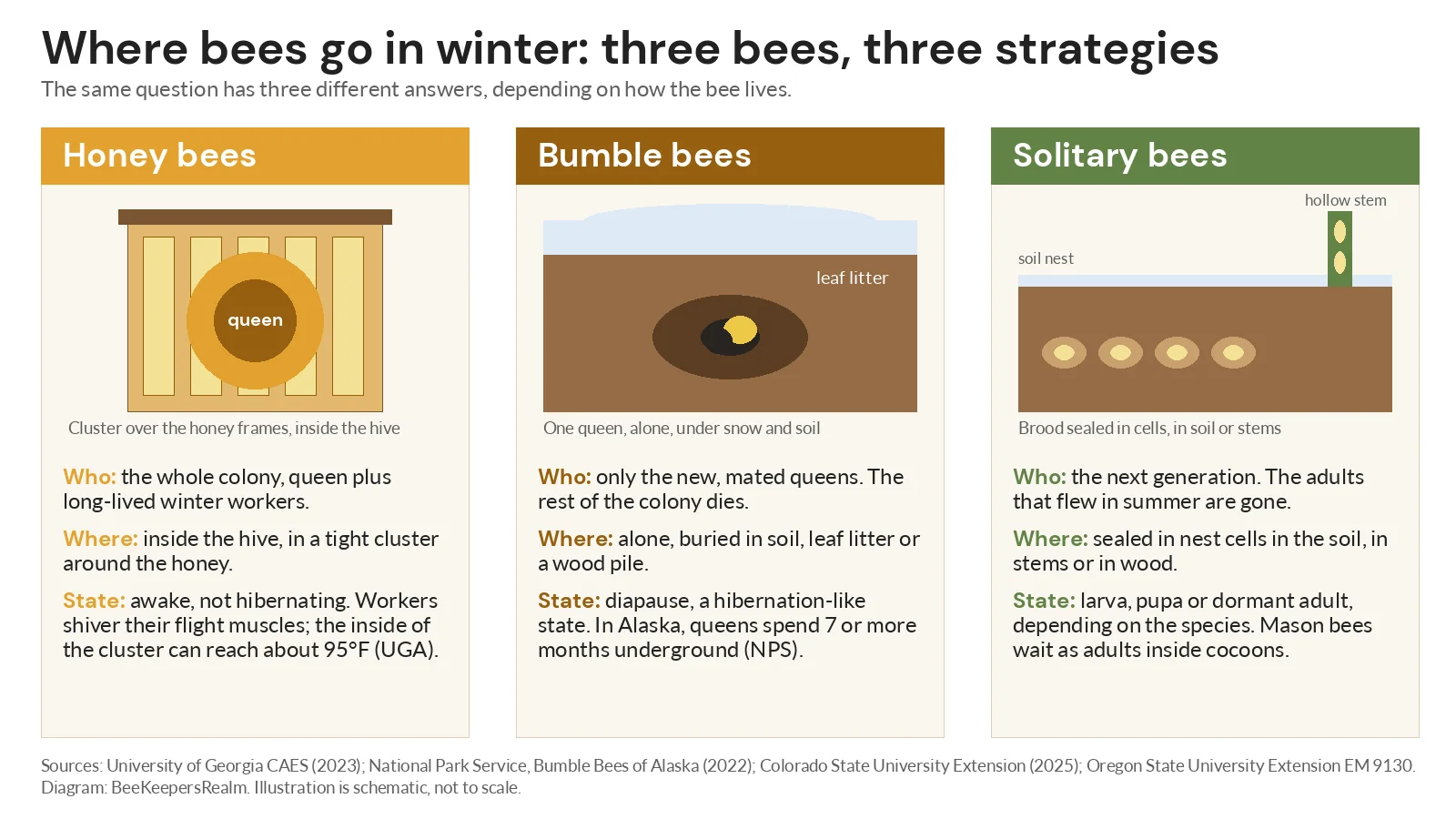
Bees do not go anywhere in winter; each kind stays put in a different form. Honey bees remain in the hive as an awake, clustered colony, bumble bees survive only as mated queens buried alone in soil or leaf litter, and most solitary bees are already sealed inside their nests as young or dormant adults. Whether that counts as hibernation depends on the bee.
One table below answers the question for all three groups, with cold-climate figures from federal and university sources and a 2024 and 2026 finding that sleeping bumble bee queens survive a week underwater. For the hive itself, see what honey bees do inside the hive in winter.
Key Takeaways
- Honey bees do not hibernate. The colony stays awake in a cluster, shivering to make heat, and the inside of the cluster can reach about 95°F, according to University of Georgia entomologists.
- A bumble bee colony dies each fall. Only new, mated queens survive, alone in soil or leaf litter; in Alaska they spend 7 or more months underground, says the National Park Service.
- In lab tests, most hibernating bumble bee queens survived a full week submerged, which matters because snowmelt can flood their underground chambers.
- Most native bees are solitary, and USDA entomologist James Cane puts ground nesters at three-fourths or more of species. Their young winter in sealed cells; mason bees and eastern carpenter bees winter as adults.
- The most useful thing a yard owner can do is leave leaves, stems and bare soil alone until spring.
Table of Contents
- The Short Answer: Three Bees, Three Winters
- Honey Bees: Awake in the Cluster
- Bumble Bees: Only the New Queens Survive
- Solitary Bees: Winter Inside the Nest
- What a Hard Winter Changes
- What to Leave Alone in Your Yard
- Frequently Asked Questions
- The Bottom Line
The Short Answer: Three Bees, Three Winters
| Bee | Alive in winter | Where | State | What ends it |
|---|---|---|---|---|
| Honey bees | The whole colony: queen and long-lived winter workers | In the hive, around the honey | Awake; shivering to make heat | Short flights above 55°F (CSU) |
| Bumble bees | New mated queens only | Alone, in soil, leaf litter or wood piles | Diapause, a hibernation-like state | Mid-April to mid-May in Colorado (CSU) |
| Mason bees | The next generation, as adults in cocoons | Mud-sealed nest tunnels | Dormant adults | Air at 50 to 55°F (OSU) |
| Eastern carpenter bees | Young adults | Old tunnels in wood | Hibernating adults | Early spring (Maryland Extension) |
| Other solitary bees | Offspring in sealed cells; the stage varies by species | Soil, or hollow and pithy stems | Diapause in the cell | Species-specific |
Sources: University of Georgia, Colorado State, Oregon State and University of Maryland Extension, checked October 22, 2026.
Honey Bees: Awake in the Cluster
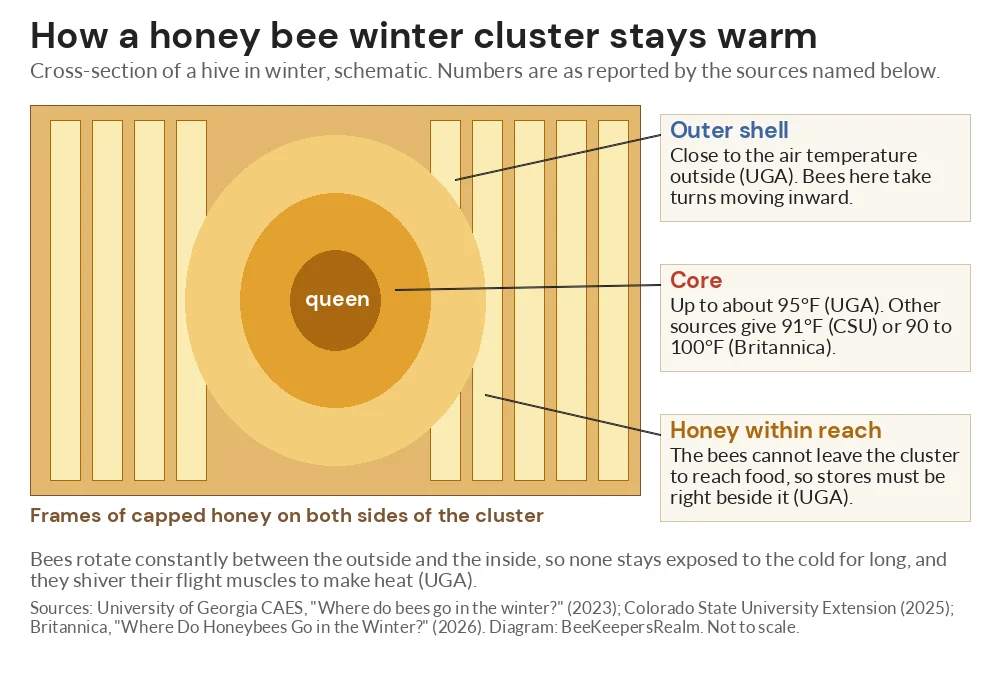
Honey bees do not scatter. Below roughly 40 to 50°F, University of Georgia entomologists say, they return to the hive, huddle around the queen and keep shivering the muscles that power their wings. The outside of the cluster stays about as cold as the air; the inside can reach 95°F, and the bees rotate between the two so none stays exposed.
They cannot leave the cluster to forage, so the honey must be right beside them. Britannica adds that winter bees live 4 to 6 months, against a few weeks for a summer worker, and Colorado State says cleansing flights happen above about 55°F.
Bumble Bees: Only the New Queens Survive
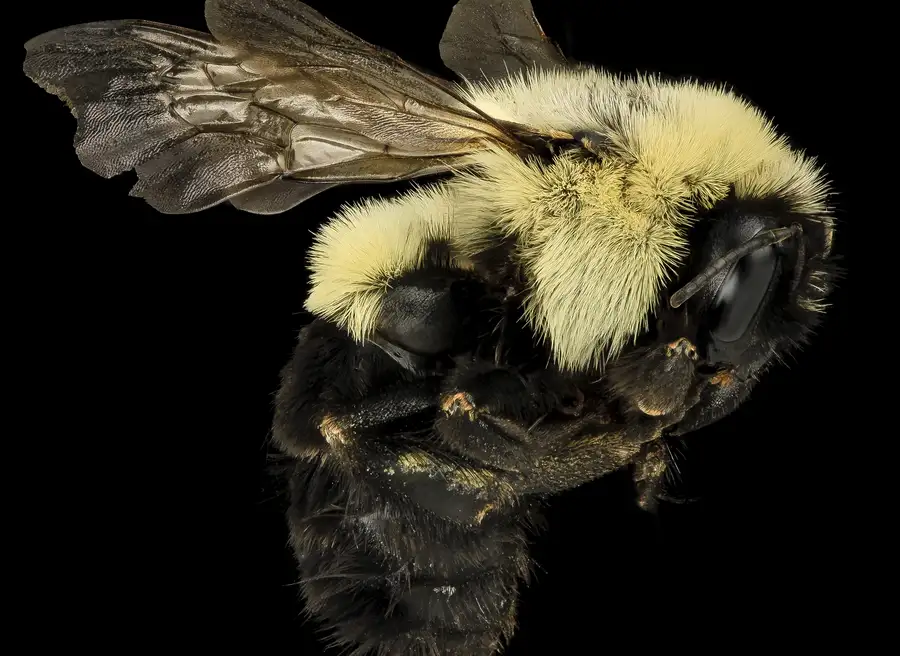
A bumble bee colony lasts one season. Late in summer it produces new queens and males; the queens mate and leave, and when cold sets in most of the colony dies. Only the newly mated queens overwinter, says the National Park Service’s guide to Alaska’s bumble bees. Each winters alone, in leaf litter, a wood pile or underground, according to Colorado State. See our bumblebee guide for the full cycle.
Can a hibernating queen survive a flood?
Snowmelt and spring rain can fill underground chambers, and researchers long assumed sleeping queens drowned. A 2024 Biology Letters study by Sabrina Rondeau and Nigel Raine tested 143 common eastern bumble bee queens in soil-filled vials, chilled to induce hibernation. Of 21 queens held under water for a full week, 17 were alive eight weeks later, close to the 15 of 17 that were never submerged. A 2026 follow-up in Proceedings of the Royal Society B (DOI 10.1098/rspb.2025.3141), led by Charles-Antoine Darveau at the University of Ottawa, found the queens keep exchanging gases underwater while also making energy without oxygen.
“Their metabolism is already extremely low during diapause. That low energy demand makes survival possible.”
The limits matter: one species, in a lab, and when the first study came out it was unknown whether a week under water affects a queen’s ability to found a colony.
Solitary Bees: Winter Inside the Nest
Most bee species are solitary: each female builds her own nest and never meets her young. In a Utah State Extension fact sheet, USDA entomologist James Cane writes that at least three-fourths of “our native bee species nest in the ground”; most others use pithy stems or beetle burrows in dead wood. By winter the adults that built the nests are gone, and the brood sits sealed in its cells in the soil or a cavity, Colorado State says. For the full sequence, see the solitary bee life cycle.
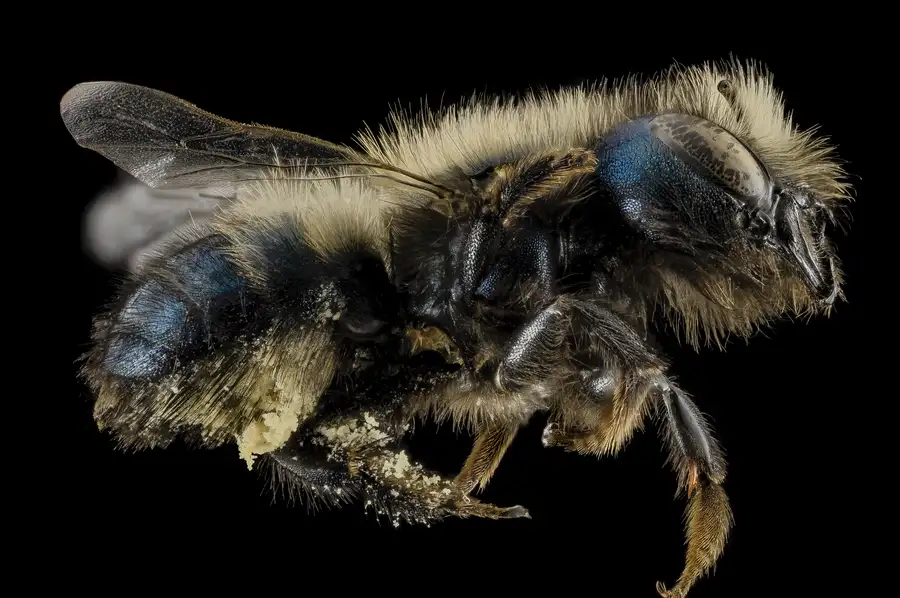
Which stage waits out the cold depends on the species. Mason bees finish their transformation by fall and winter as adults inside cocoons, then chew out when the air reaches 50 to 55°F, Oregon State Extension says; the mason bee house guide covers storing cocoons. Young eastern carpenter bees hibernate as adults in the tunnels, per Penn State; see carpenter bees and home damage. University of Georgia entomologists add that small carpenter bees and leafcutter bees are often found nesting in leftover flower stems.
What a Hard Winter Changes
Cold changes the dates more than the strategy. Honey bees can winter far north, as University of Georgia researcher Jennifer Berry notes.
“If the hive is stable and the colony is healthy, we can see honey bees that survive the winter as far north as Canada.”
| Place | What the source reports |
|---|---|
| Alaska | 22 bumble bee species; emerging queens have spent 7 or more months underground (National Park Service) |
| Colorado | Bumble bee queens emerge mid-April to mid-May, depending on weather and elevation (Colorado State) |
| Western Oregon | Mason bees chew out when air reaches 50 to 55°F, February through March (Oregon State) |
| Where it rarely drops below 50°F | Honey bee colonies keep working all year (Britannica) |
The reverse risk is a warm spell too early. A Bavarian study of nearly 15,000 hibernating bees and wasps found earlier emergence cost body mass; see how climate change shifts when bees wake up. For hive management, see beekeeping in cold-winter climates.
What to Leave Alone in Your Yard
You cannot move a hibernating queen, but you can stop disturbing her.
“People can leave the leaves in their yards, for example. That helps a lot of the bumblebees and similar species that nest in the leaf litter.”
- Leaves and brush. Colorado State warns that disturbing leaf litter before bumble bees emerge can harm them.
- Stems. Leave a foot-long stub when pruning pithy canes, Cane advises; Colorado State says to leave plugged hollow stems until the bees emerge.
- Bare soil. Skip tilling a squash patch, which Colorado State notes squash bees nest in.
For nest sites and planting, see wild bee habitats.
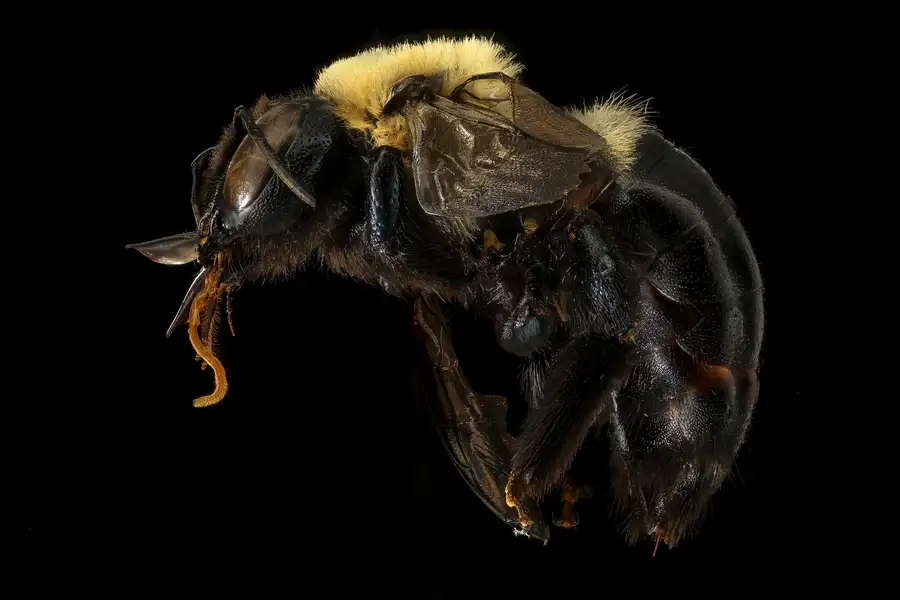
In spring, bumble bee queens overwinter underground and start new nests.
Frequently Asked Questions
Do bees hibernate in winter?
Honey bees do not; they stay awake in the hive. Bumble bee queens enter diapause, a hibernation-like state, and many solitary bees wait dormant in their nests.
Where do honey bees go in winter?
Nowhere. They cluster inside the hive around the queen and their honey stores.
Where do bumble bees go in winter?
Only the new queens survive, alone in soil, leaf litter or wood piles. The workers, males and old queen die.
Do bees live underground in winter?
Some do. Bumble queens and the young of ground-nesting solitary bees spend winter underground; honey bees never do.
Do bees return to the same nest every year?
Honey bee colonies stay in their hive if they survive. Bumble bee queens start a new nest each spring, and solitary bees emerge from nests their mothers built.
Where do carpenter bees go in winter?
Large eastern carpenter bees hibernate as adults in old tunnels in wood. Small carpenter bees nest in plant stems, so leave stems standing.
What month do bees go dormant?
Temperature decides, not the calendar. Honey bees cluster below about 40 to 50°F; other bees vary by region.
The Bottom Line
Winter bees are not missing; they are in a different stage and place. To help, leave the leaves and stems until spring.