Reviewed by Thomas B. · How we review
Buy a full bee suit if you are new, working defensive colonies or doing long jobs inside the hive. Buy a jacket with a veil if you are experienced, checking calm colonies in hot weather, or want something you can pull on in a minute. A suit leaves only your hands and feet exposed; a jacket covers the torso, arms and head, so it needs sturdy long pants and ankle-covering boots to match. At three US sellers, the suit cost only $10 to $30 more than the same-fabric jacket.
Educational information only, not medical advice. No garment makes you sting-proof. If you have ever had a whole-body reaction to a sting, see an allergist before you keep bees, and read our guide to the sting first aid kit every beekeeper should carry.
Key Takeaways
- Texas A&M AgriLife Extension says a suit covers everything except hands and feet; a jacket protects the torso and head and needs proper pants.
- Its advice for new beekeepers is to start with a full suit, then consider lesser options once you know your sting tolerance.
- In seven same-fabric pairs checked on 22 October 2026, the suit cost $10 to $30 more than the jacket. Moving from cotton to ventilated fabric added $30 to $75.
- Neither is sting-proof. UF/IFAS says an occasional bee may sting through a suit, and yellow jackets do it more often, so fit loosely and seal the gaps.
- Vented fabric runs cooler according to extension guidance, but we found no independent heat test.
Table of Contents
- What a Suit, a Jacket and a Hooded Jacket Cover
- Which Protects Better: a Sealed Suit or a Jacket With Pants
- Heat, Fit and Mobility
- What They Cost: Same Fabric, Suit vs Jacket
- Which Jobs Call for the Suit
- How to Choose
- Frequently Asked Questions
- The Bottom Line
What a Suit, a Jacket and a Hooded Jacket Cover
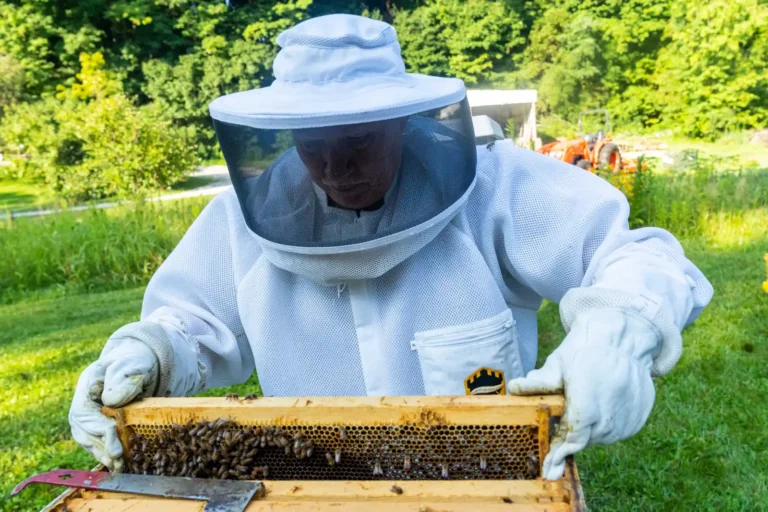
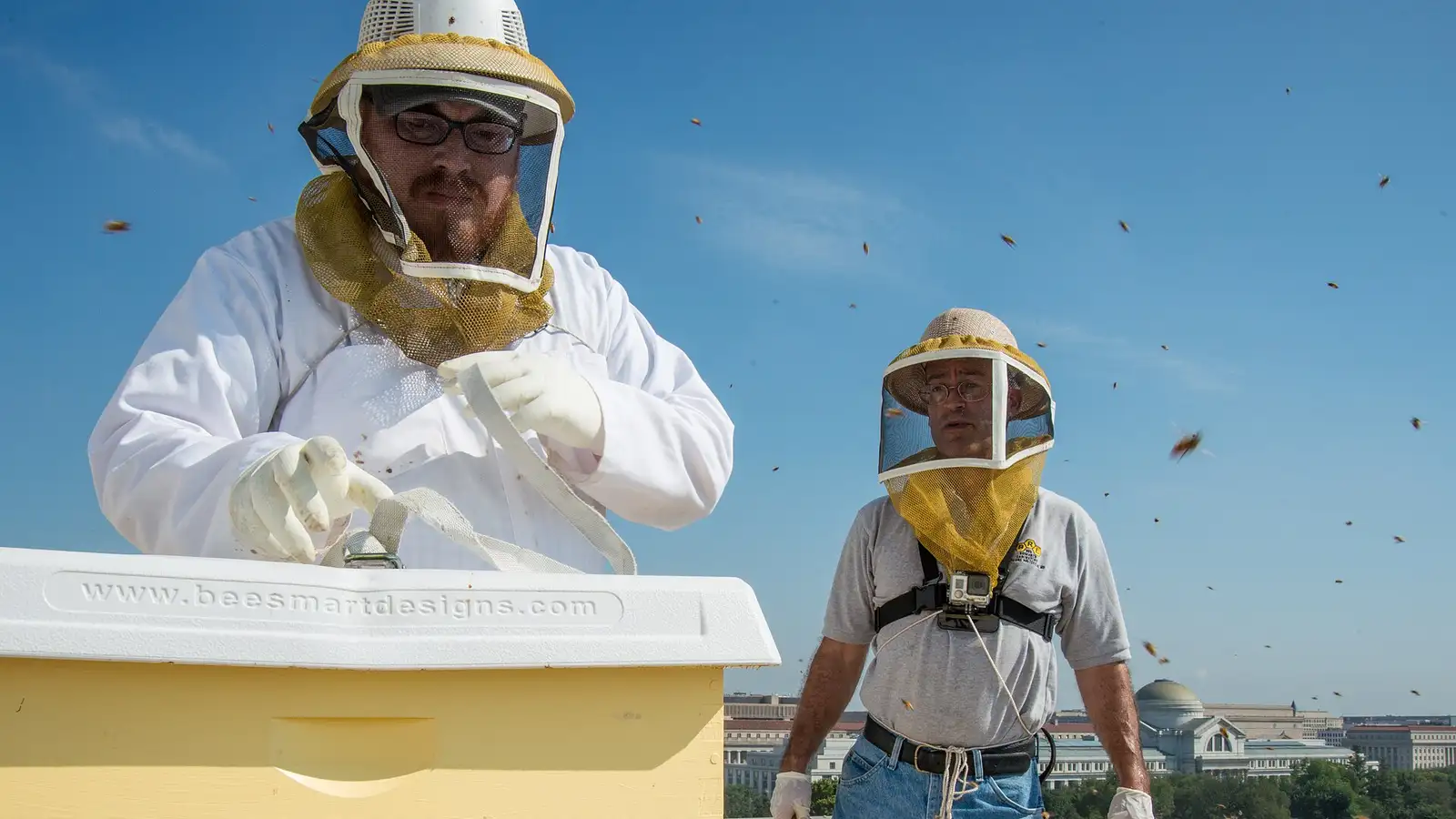
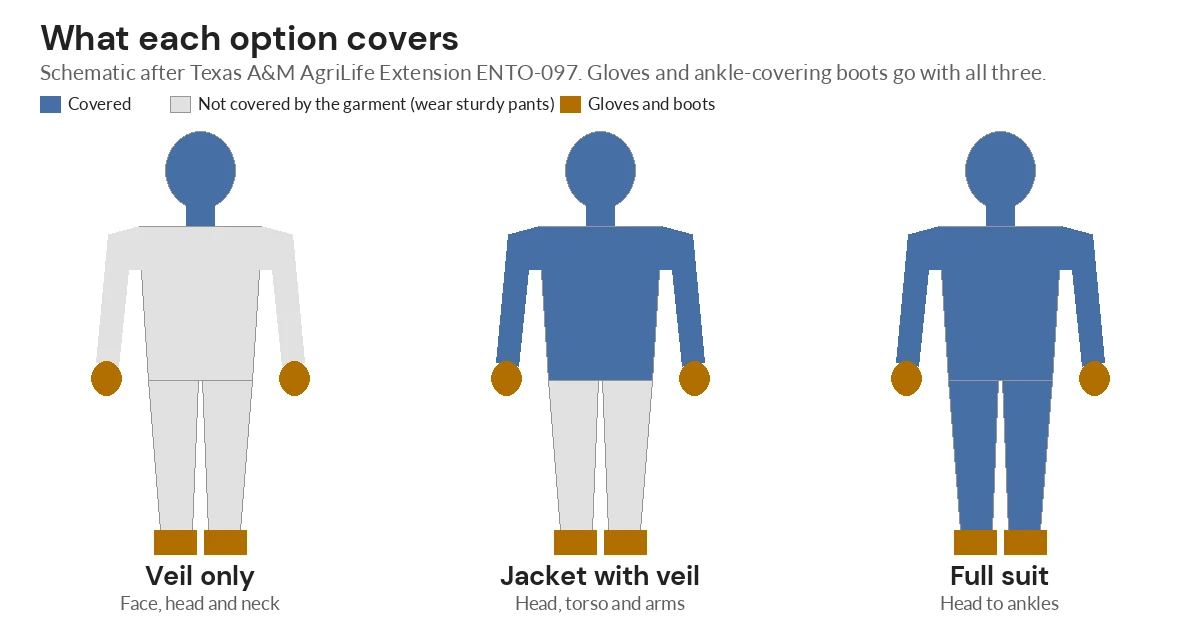
Texas A&M AgriLife Extension describes the choice plainly. A suit covers the entire body and leaves only the feet and hands exposed; it may be hooded or have a hat and veil that attaches by a zipper. A jacket protects only the torso and head, but paired with proper pants it can provide adequate protection.
| Full suit | Jacket with veil | |
|---|---|---|
| What it covers | Head, torso, arms and legs; hands and feet stay exposed | Head, torso and arms; waist and legs depend on your pants |
| Weak spots | Zippers, cuffs and ankles if they are not sealed | A gap at the waist when you bend; pant cuffs |
| Putting it on | Slower, though leg zips help over boots | Easier to slide on and off |
| Heat | More fabric to hold heat | Less fabric, usually cooler |
| Price gap in our seven pairs | $10 to $30 more | The cheaper half of the pair |
| Best suited to | New keepers, defensive colonies, long jobs | Experienced keepers, calm colonies, quick checks |
Sources: Texas A&M AgriLife Extension, Beekeeping Equipment: Protective Clothing (ENTO-097), 2021; the Bee Professor suit-versus-jacket guide (2024) for the waist gap, speed and heat points; seller prices are in the cost section below.
Hooded Jackets
Jackets also come in hooded forms, where the veil is built into a hood. Texas A&M advises wearing a cap under a hooded jacket or suit, which keeps the front of the garment off your face and protects your chin and nose. Mann Lake’s economy hooded jacket is one example: it ships with a hooded veil and lists at $89.99.
This 7-minute-46-second episode from the University of Florida Honey Bee Lab, published in June 2024, has Dr. Ellis show how to wear a suit or jacket properly. Its chapters cover why suits matter (0:00), full suits versus jackets (1:34), putting on a suit (2:05), suit features and pockets (5:31), what to wear under the suit (6:08) and wearing a jacket (6:44).
Which Protects Better: a Sealed Suit or a Jacket With Pants
A sealed suit does, because nothing depends on a waistband or a pant cuff. Texas A&M says that when a suit is zipped and sealed properly, along with proper shoes and bee gloves, the beekeeper is “completely protected.” The same bulletin recommends beginners begin there.
“it would be prudent to start with a full suit and then consider lesser options as a new beekeeper learns their allergy level and tolerance to bee stings and comfort around beehives.”
With a jacket, the weak point is where it meets your pants. Bee Professor lists a gap at the waist among the jacket’s drawbacks. For non-gentle hives, Texas A&M says many beekeepers tape over accidental openings around zippers with 1-inch tape, because honey bees can fit through small holes, even some that look smaller than their body. Suit legs should go over boots, not tucked in.
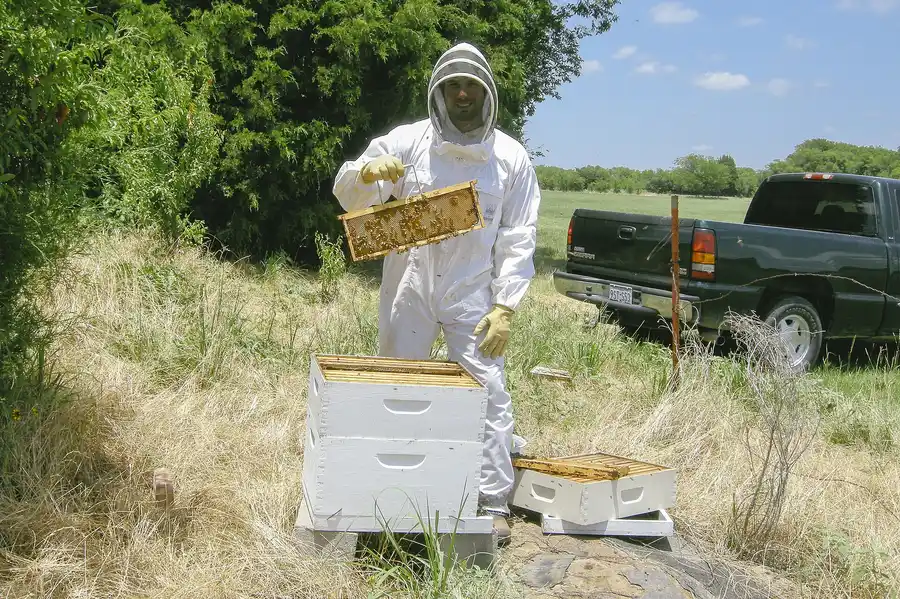
Even a suit can be stung through. A University of Florida (UF/IFAS) guide for pest control operators, who remove bee colonies for a living, says an occasional bee may sting through the suit and that some stinging insects, including yellow jackets, “have been known to sting through PPE more often” than the occasional bee. It also gives a fit tip that applies to any beekeeper:
“It may be helpful to order bee suits one or two sizes larger than would be usual in order to increase the distance between the skin and the bee suit; this precaution may protect a PCO from being stung through the bee suit.”
“PCO” there means a pest control operator. For late-summer yellow jackets, no garment settles the question; read how to protect beehives from yellow jackets and defend the hive itself.
Heat, Fit and Mobility
Heat depends on fabric as well as cut. Texas A&M names polycotton (or cotton) and vented as the two most common fabrics. Vented fabric is layers of netting that lets air flow, which the bulletin calls a good option in Texas because cotton canvas suits can be very hot. Mann Lake describes its vented suits and jackets as a layer of rubberized netting sandwiched between two layers of finely woven netting. A jacket adds a second cooling lever, since it has less fabric to start with. Our guide to bee suits for hot weather goes deeper on mesh types.
We searched for an independent test of how much cooler a jacket or a vented fabric runs, or how much sting protection netting gives up, and found none. The evidence is extension guidance and seller descriptions, so treat the comparison as guidance, not measurement.
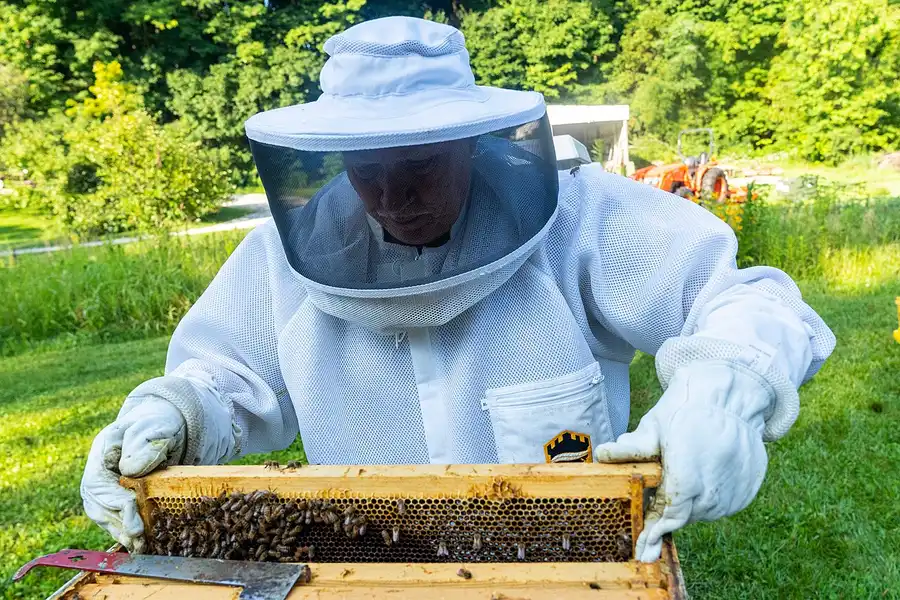
Fit matters as much. Texas A&M’s test: a suit or jacket should not fit tightly, and you should be able to touch your toes without it pulling tight along your back or pulling the veil against your face. Jackets have one extra fit problem, riding up when you bend over a box. Blythewood Bee Company says its triple-layer mesh jacket has “an extra-long torso that won’t ride up when you bend over a box,” and names the hem creeping up as one of the two things that frustrate people about mesh jackets, along with gaps at the neck. That is a seller’s claim, but it names the failure to look for.
What They Cost: Same Fabric, Suit vs Jacket
To compare price fairly, we matched each seller’s jacket to its suit in the same fabric and read the list prices on 22 October 2026. We found seven pairs at three US sellers. The suit cost $10 to $30 more each time, a median of $20, or 7% to 18% of the suit’s price.
| Seller and line | Fabric | Jacket | Suit | Suit costs more by |
|---|---|---|---|---|
| Blythewood, Swarm Commander regular cloth | Cotton cloth | $65.00 | $75.00 | $10.00 |
| Mann Lake, economy hooded | 60% cotton, 40% polyester | $89.99 | $109.99 | $20.00 |
| Blythewood, Swarm Commander triple layer | Ventilated mesh | $95.00 | $110.00 | $15.00 |
| Mann Lake, economy with Clear Vue veil | 60% cotton, 40% polyester | $99.99 | $119.99 | $20.00 |
| Blythewood, Swarm Commander ultra-mesh | Ventilated mesh | $129.95 | $139.95 | $10.00 |
| Foxhound, Sting Stopper professional | Ventilated | $159.99 | $181.99 | $22.00 |
| Mann Lake, vented | Netting layers | $154.99 | $184.99 | $30.00 |
Prices read on 22 October 2026 at Mann Lake (suits, jackets), Blythewood Bee Company and Foxhound Bee Company, US store view; every price includes a veil. Blythewood’s cloth suit also lists a $49.95 extra-small that is out of stock; the table uses the $75 price for the other sizes. Betterbee and Dadant pages would not load for our research tools, so they are not included. Prices change.
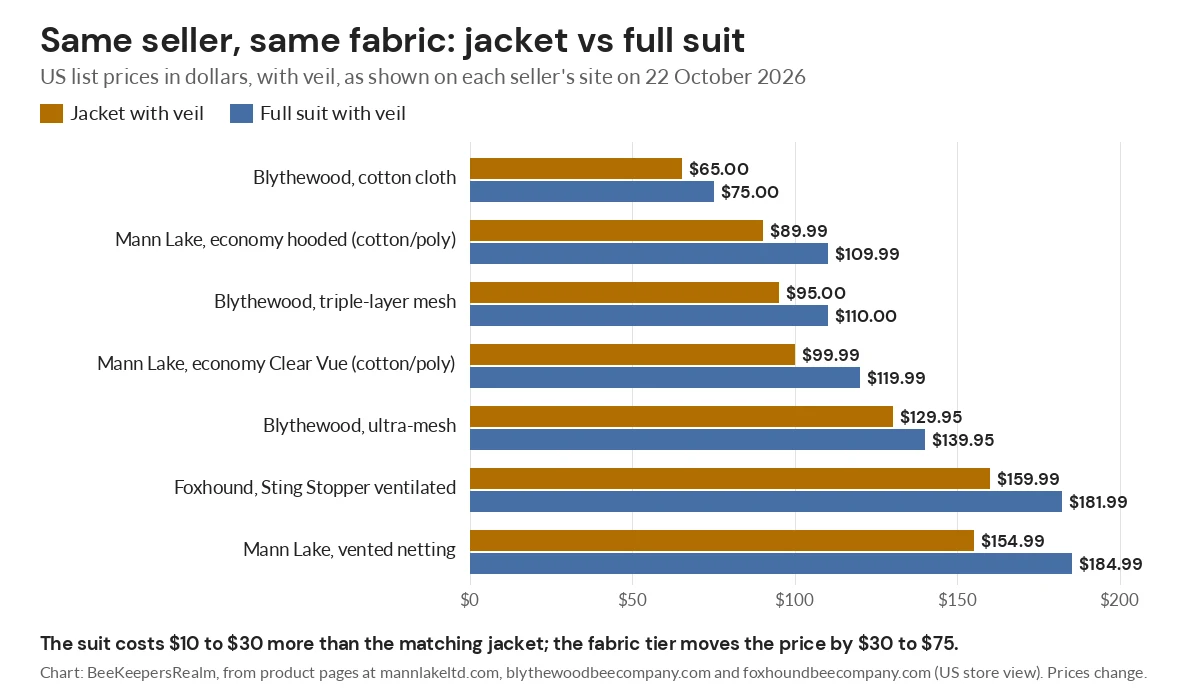
The bigger price lever is fabric. At the same sellers, moving from cotton to ventilated fabric added $30 to $75, whether you bought the jacket or the suit. A jacket also assumes you own the pants and boots it needs, so add those in if you do not. Starter kits often leave protective gear out, as our starter kit comparison shows, and our beekeeping equipment cost guide prices the rest of the setup.
Which Jobs Call for the Suit
This is our reading of the sources above, not a test.
| Job | Better choice | Why |
|---|---|---|
| Your first season | Suit | Texas A&M advises starting with a full suit while you learn your sting tolerance. |
| Quick check of calm colonies in hot weather | Ventilated jacket, sturdy pants, boots over the ankle | Less fabric to hold heat; with proper pants, Texas A&M says a jacket can give adequate protection. |
| Long inspections, or a colony that has turned defensive | Suit, with zippers taped | You are in the colony longer, and Texas A&M notes taping openings around non-gentle hives. See how to calm aggressive bees. |
| Cutouts and colony removals | Suit, sized up, gloves and boots taped on | UF/IFAS tells pest control operators to wear a suit covering the full length of arms and legs and to tape gloves and boots to it. See our bee cutout guide. |
| Yellow jacket season | Loose suit, plus a hive that defends itself | UF/IFAS says yellow jackets have been known to sting through protective gear more often than the occasional bee. |
How to Choose
- Pick the suit if you are new, keep defensive bees, or do long jobs. Our suggestion: add a ventilated jacket later, once you can read your colonies well enough to know when a check really is quick.
- Pick the jacket if you are experienced, work calm colonies in heat, and already own sturdy pants and boots that cover the ankle.
- Spend on fabric and fit before legs. Order a size up for loose fit and run the toe-touch test from the bulletin above.
- Choose a zip-on veil. UF/IFAS recommends veils that attach to the suit by zipper because they keep bees from getting in.
- Care for it. Texas A&M says to hang a suit up to dry and vent, and to use a mild, unscented detergent if you wash it; see washing bee suits after diseased hive inspections. Kids need their own fit, covered in our kids’ bee suit guide.
Frequently Asked Questions
Is a bee suit or a jacket better for a beginner?
A suit. Texas A&M AgriLife Extension advises starting with a full suit and moving to lesser options once you know your sting tolerance.
Can bees sting through a bee suit?
Occasionally, yes. UF/IFAS says an occasional bee may sting through the suit, and advises ordering one or two sizes larger so the fabric sits away from your skin.
Can wasps or yellow jackets sting through a bee suit?
They can. UF/IFAS says yellow jackets and some other stinging insects have been known to sting through protective gear more often than bees. We found no test of any suit against yellow jackets.
Do I need pants with a bee jacket?
Yes. Texas A&M says a jacket protects only the torso and head, so it needs proper pants, and shoes that cover the ankle. UF/IFAS adds that pants should not have wide cuffs bees can crawl into; it recommends taping pants to boots.
Is a ventilated suit cooler than a cotton one?
Extension guidance says so: Texas A&M calls vented fabric a good option in hot Texas and notes cotton canvas suits can be very hot. We found no independent measurement of the difference.
How much does a bee suit cost compared with a jacket?
In our seven pairs, jackets ran $65 to $159.99 and suits $75 to $184.99, with the suit $10 to $30 higher than the matching jacket.
Are bee suits and jackets flammable?
Most are. Texas A&M warns that most materials used in suits and gloves are flammable and will melt or smolder if the smoker is too close or embers fly out of it.
The Bottom Line
Start in a suit and add a ventilated jacket when you have the experience to use it. The price gap between the two is small; loose fit, ventilated fabric and a sealed zip-on veil matter more.