Reviewed by Elena P. · How we review
Every beekeeper who lights a smoker has to decide what to burn in it. Two of the most popular choices are free pine needles (pine straw) raked from the ground and commercial smoker pellets sold by bee suppliers. Both can give you the cool, white smoke that keeps a colony calm during an inspection. They differ in cost, convenience and how much attention they need. This guide compares them, covers the other natural fuels that work, and walks through lighting a bee smoker and keeping it lit.
A quick note on terms: this article is about fuel for a beekeeping smoker, the small bellows canister used at the hive. Pellets sold for barbecue grills and pellet smokers are a different product made for cooking.
Key Takeaways
- Both work. Pine needles are free and make dense smoke. Smoker pellets are compact, consistent and easy to carry and store.
- The goal is cool, white smoke. Hot smoke or flame from the nozzle can burn bees’ wings, body hairs and antennae.
- Burn only natural, untreated material. Avoid anything with grease, oil, pesticides, preservatives, paint or synthetic fibers.
- Technique matters more than fuel. Build a bed of burning fuel at the bottom, then pack the rest of the canister tightly so smoke is cooled as it passes through.
- Many beekeepers combine the two: pellets or burlap as a long-burning base with pine needles packed on top.
Table of Contents
- What You Want From Any Smoker Fuel
- Pine Needles (Pine Straw)
- Commercial Smoker Pellets
- Pine Needles vs Smoker Pellets: Side by Side
- Other Natural Fuels That Work
- How to Light a Bee Smoker and Keep It Lit
- Putting the Smoker Out Safely
- Conclusion
- FAQ
What You Want From Any Smoker Fuel
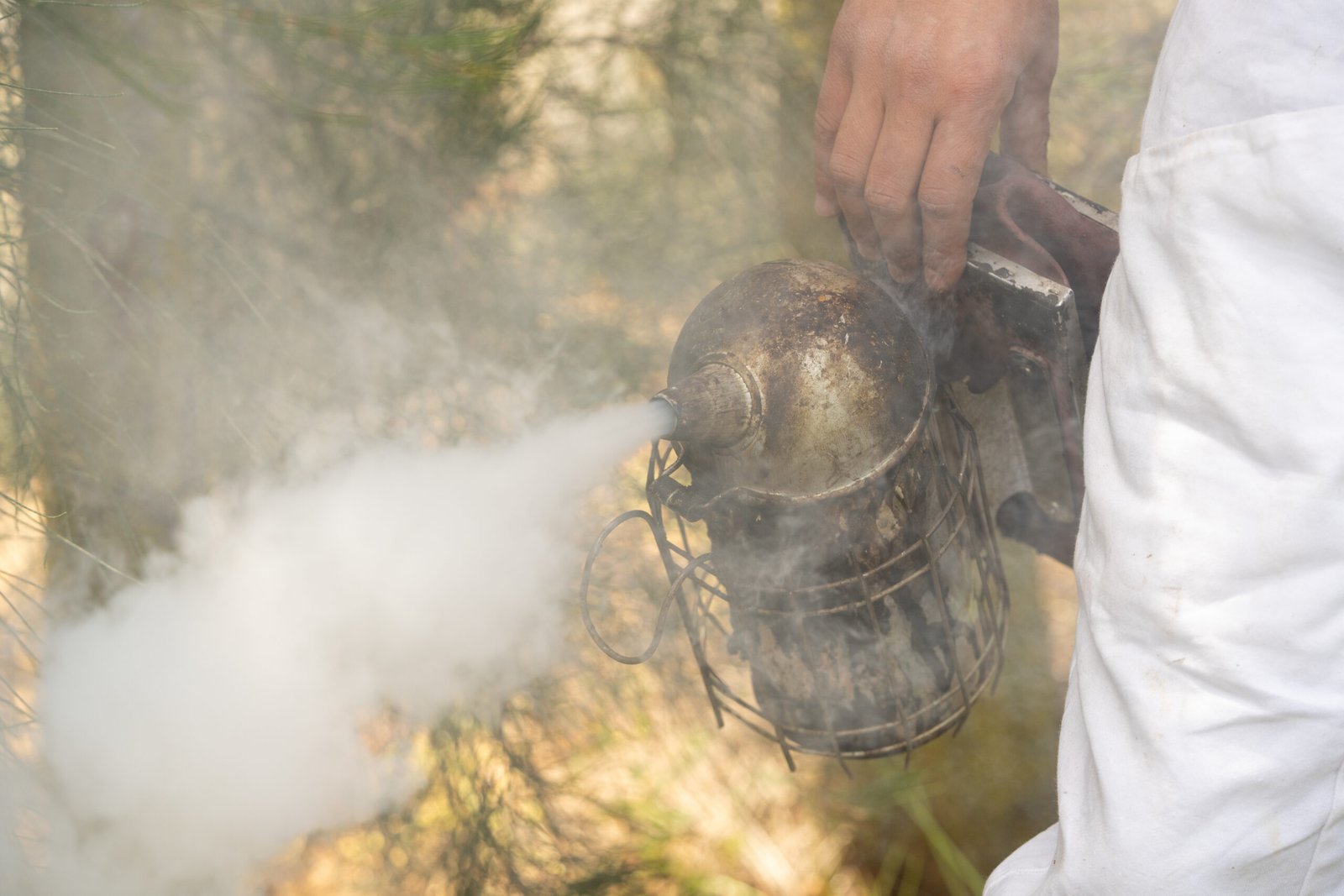
Smoke works by masking the alarm pheromone guard bees release when a hive is opened, which makes the colony less likely to mount a defensive response. For that, you need a steady supply of dense, cool smoke, not heat. In Bee Culture’s article on smokers and smoker fuel, David MacFawn writes that you want cool, white smoke from the smoker. He warns that a hot blast will burn the bees’ wings, hair and antennae. He also recommends using something all-natural, without grease or oil, pesticides or preservatives.
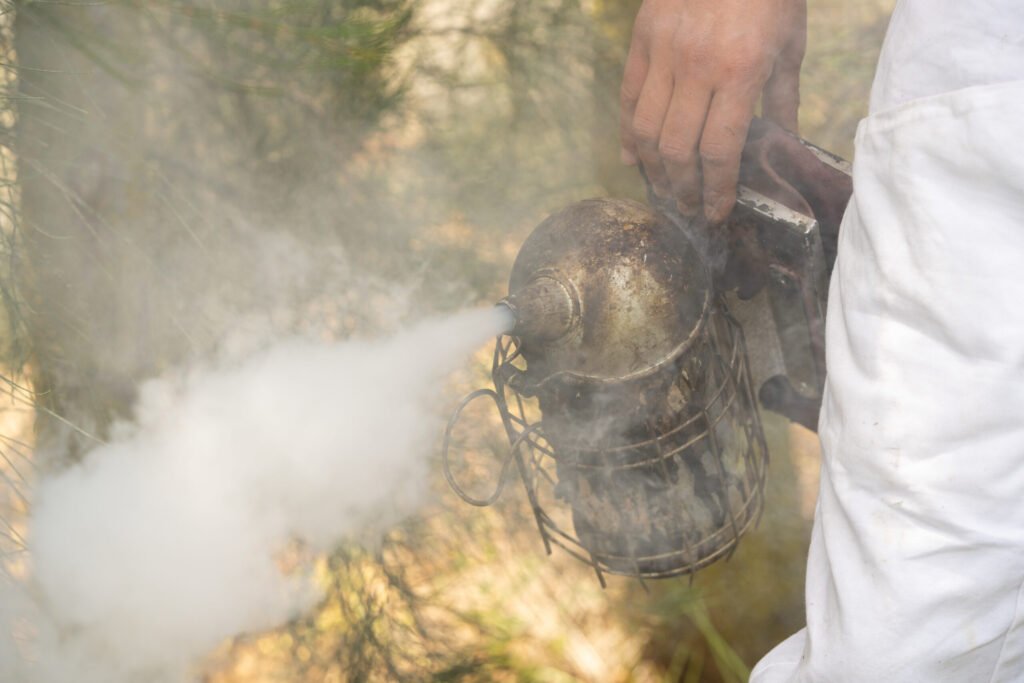
A good fuel therefore:
- lights easily and then smolders rather than flaming;
- produces thick, pale smoke without a harsh or chemical smell;
- lasts through a full inspection without constant refilling;
- is dry, and free of paint, treatments and synthetic content.
Pine Needles (Pine Straw)
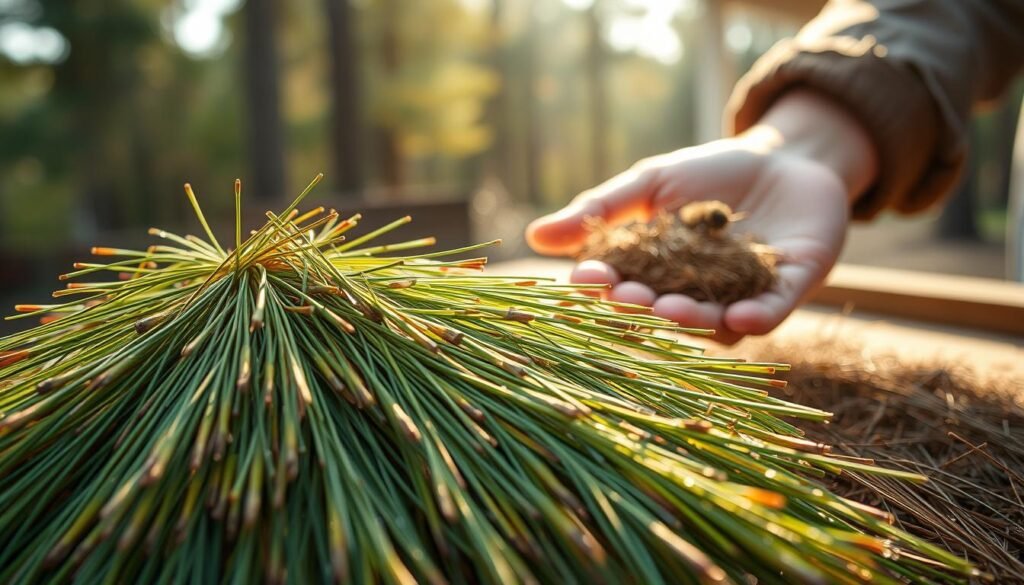
Pine needles are the classic smoker fuel in much of North America. The University of Georgia Bee Program’s guide on how to light a smoker calls pine straw ideal smoker fuel in Georgia because it is readily available, burns easily, and makes a good dense smoke.
Strengths:
- Free wherever pines grow.
- Lights easily; dry needles can start the smoker on their own.
- Packed tightly, they make a thick, cool smoke.
Weaknesses:
- They must be completely dry. Damp needles are hard to light and smoke poorly.
- They burn through faster if packed loosely, so you may need to top up during a long inspection.
- Bulky to store and carry in quantity, and not available in every region.
- Like most plant fuels, they leave sticky residue inside the smoker lid over time.
Gather needles on a dry day, and keep a supply in a bag or bin so you are not scraping up damp needles on inspection day.
Commercial Smoker Pellets
Bee suppliers sell pellets made specifically as smoker fuel. Depending on the brand, they may be compressed wood or other plant fibers, so read the label and choose a product that lists natural, untreated contents. The appeal is consistency: every handful behaves the same way, and a bag stays dry and compact in the truck or tool kit. Harvest Lane Honey, for example, directs users to light its smoker pellets with a torch lighter and says a small palm full is enough for one smoker session.
Strengths:
- Uniform and predictable from one inspection to the next.
- Compact, clean and easy to store. They do not blow around or pick up moisture as easily as loose fuel if kept sealed.
- Available anywhere you can order bee supplies.
- Work well as a long-burning base under looser fuels.
Weaknesses:
- They cost money, where pine needles are free.
- Some need a torch lighter or a starter such as a twist of paper to get going.
- Pellets on their own can pack densely at the bottom of the canister; pump the bellows as they catch so enough air gets through.
What about barbecue pellets?
Pellets sold for barbecue pellet grills and smokers are made to be fed into a cooking appliance and burned for heat. Some beekeepers do burn plain hardwood grill pellets in a bee smoker, but if you try it, use only pellets you can confirm are plain wood. Skip any with flavorings, oils or additives, in line with the “all-natural” rule above. Pellets sold specifically as bee-smoker fuel remove the guesswork.
Pine Needles vs Smoker Pellets: Side by Side
| Factor | Pine needles | Smoker pellets |
|---|---|---|
| Cost | Free if you have pines nearby | Purchased by the bag |
| Availability | Regional; must be gathered and dried | Anywhere bee supplies are sold |
| Lighting | Easy when dry | Often easiest with a torch lighter or starter |
| Smoke | Dense and cool when packed tightly | Consistent from batch to batch |
| Burn time | Good when packed tightly; may need topping up | A small handful lasts a session, depending on product and smoker size |
| Storage | Bulky; must be kept dry | Compact; keeps well in a sealed bag |
| Best for | Beekeepers with a free local supply | Out-yards, travel, and anyone who wants predictable fuel |
Which is better? If you have dry pine needles on hand, they are hard to beat: free, easy to light, and they make excellent smoke. Pellets are the better choice when you need something you can keep in the truck, when pine straw is not available, or when you want the same result every time. Many experienced beekeepers use both: a base of pellets or burlap for long-lasting embers, with pine needles packed on top to cool and thicken the smoke.
Other Natural Fuels That Work
In the same Bee Culture article, MacFawn lists pine needles, punk wood (rotten hardwood such as cherry or hickory), wood shavings and burlap as fuels that work well, and notes that some beekeepers use dried grass or hay. Other common options include:
- Untreated burlap: smolders slowly and lights without a separate starter. Make sure it has not been treated with chemicals.
- Untreated wood shavings: easy to light, but they burn quickly unless packed well.
- Natural cotton: undyed, untreated cotton fabric or rope.
- Plain corrugated cardboard: useful as a starter. Use only plain, unprinted cardboard with no wax coating.
Do not burn: treated, painted or stained lumber; plywood or particleboard; synthetic fabrics or rope; oily rags; lawn clippings or yard waste that may have been sprayed; or anything that gives off a chemical smell.
How to Light a Bee Smoker and Keep It Lit
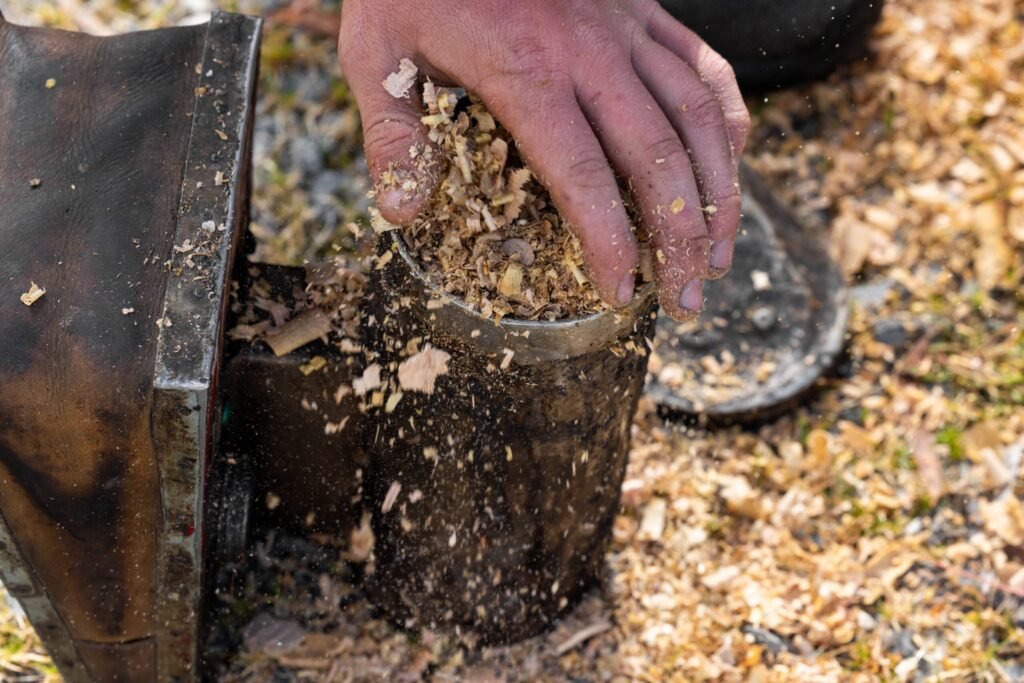
A bee smoker pushes air in at the bottom, through the burning fuel, and out the nozzle at the top. As the UGA guide puts it, the flame should be below the fuel, not above it. The steps below combine UGA’s method with MacFawn’s advice in Bee Culture:
- Light a small handful of starter fuel (dry pine needles, a twist of paper, or a few pellets with a torch lighter) and drop it into the bottom of the canister.
- Puff the bellows several times to get a brisk flame going.
- Add more fuel on top once the first layer is burning well, and keep puffing. The aim is a good bed of glowing coals at the bottom.
- Pack the rest of the canister tightly with fuel, such as pine needles, burlap or more pellets. Loose fuel at the bottom and tight fuel at the top makes the smoke pass through unburned material, which cools it.
- Close the lid and check the smoke. It should be thick and white, with no flame or sparks from the nozzle. If you see flame, add more fuel on top.
- Keep it going. Give the bellows a few puffs every few minutes during the inspection, even when you do not need smoke, so the fuel keeps burning.
Packed well, a smoker holds its fire for a long time. MacFawn notes that a 4 x 10 smoker will last two to three hours if packed correctly. Set the smoker upright on a hive lid or other nonflammable surface, away from dry grass, whenever you put it down.
Putting the Smoker Out Safely
When you finish, block the nozzle with a cork, a rag or a wad of grass so the fire runs out of air, as Bee Culture recommends. Leave the smoker on a nonflammable surface, or put it in a metal container such as a lidded can, until it is completely cold. Never put a warm smoker in a vehicle or near anything that can burn, and keep water or an extinguisher on hand in dry weather. Scrape the tar out of the lid and nozzle from time to time; our guide to sanitizing smoker and hive tools covers cleaning.
Conclusion
Pine needles and commercial smoker pellets both make good bee smoker fuel. Pine needles are free, easy to light and produce dense smoke if you keep them dry and pack them tightly. Pellets cost money but are consistent, compact and easy to carry. Whichever you choose, burn only natural, untreated material, build a bed of coals before packing the canister, and aim for cool, white smoke. For a wider look at fuels, see our guide to the best smoker fuels for calm bees, and if your smoker itself is the problem, our bee smoker buying guide compares designs.
FAQ
Are pine needles or pellets better for a bee smoker?
Neither is better in every case. Dry pine needles are free and make dense, cool smoke when packed tightly. Smoker pellets cost money but are more consistent and easier to store and carry. Many beekeepers use pellets as a base with pine needles on top.
Can I use barbecue grill pellets in my bee smoker?
Grill pellets are made for cooking appliances. Some beekeepers burn plain hardwood grill pellets, but avoid any with flavorings, oils or additives. Pellets sold specifically as bee-smoker fuel are the simpler choice.
Why does my smoker produce hot smoke or flames?
There is usually too little fuel on top of the fire, or the fuel is packed too loosely. Add more fuel and pack it tightly so the smoke passes through unburned material and cools before it leaves the nozzle.
What should I never burn in a bee smoker?
Avoid anything that is not natural and untreated, including treated or painted wood, plywood, synthetic fabric, oily rags, and yard waste that may have been sprayed with pesticides. Bee Culture advises using fuel without grease, oil, pesticides or preservatives.
How long does a smoker stay lit?
It depends on the fuel and how it is packed. With a good bed of coals and fuel packed tightly on top, a standard 4 x 10 smoker can keep going for two to three hours, according to Bee Culture. Puff the bellows every few minutes to keep it from going out.
How do I put out a bee smoker?
Plug the nozzle with a cork, rag or grass to cut off the air, and leave the smoker on a nonflammable surface or in a metal container until it is completely cool.