The best beekeeping suit for hot climates is a ventilated three-layer mesh design, not a traditional single-layer cotton coverall — the layered mesh construction lets air move across the skin while still stopping a sting, which is the single biggest factor in staying safe without overheating during a long summer inspection.
Finding the right hot-weather suit matters most if you spend real time near hives during peak summer heat, when heat stress becomes as real a safety concern as the bees themselves. A well-chosen suit gives full protection without forcing a choice between comfort and safety.
Good gear—a proper veil, sturdy gloves, and the right jacket or full suit—turns a sweaty chore into a manageable task. Choosing the right product can make your day productive instead of miserable.
For shopping tips and sizing guides, see recommended beekeeping clothing to build a reliable kit and pick ventilated options that suit your routine.
Key Takeaways
- Ventilated designs improve airflow without losing sting protection.
- Proper gloves and a compatible veil close gaps and keep you safe.
- Investing in the right product saves time and enhances comfort.
- Choose full suits for heavy work and jackets for quick checks.
- Consult size guides and stock indicators before you buy.
Table of Contents
- Why Specialized Gear Matters for Summer Beekeeping
- Understanding the Best Bee Suit for Hot Weather
- The Science of Ventilated Mesh Technology
- Comparing Full Suits Against Jackets and Veils
- Evaluating Fabric Density and Sting Protection
- Essential Features for Maximum Comfort
- The Role of Zipper Quality and Placement
- Selecting the Right Veil Design
- Why Hive Tool Pockets Are Non-Negotiable
- Proper Fit and Mobility Requirements
- Navigating Color Choices for Apiary Work
- Identifying Red Flags in Low-Quality Gear
- The Importance of American-Made Manufacturing
- Tips for Maintaining Your Protective Equipment
- Assessing Your Personal Protection Needs
- What to Actually Buy for Hot-Climate Beekeeping
- Conclusion
- Frequently Asked Questions
Why Specialized Gear Matters for Summer Beekeeping
When temperatures climb, protective gear must do double duty: shield and ventilate. A properly designed bee suit keeps beekeepers safe from painful stings while allowing airflow during long afternoon inspections.
Foxhound Bee Company lists a quality beekeeping garment among the top five safety items every keeper needs. Low price often signals compromises in material and construction, so evaluate product quality before you buy.
- Protection: Specialized suits shield you from guard bees and sudden swarms.
- Durability: Better fabrics resist wear and reduce the risk of pinprick stings.
- Health: Proper gear lowers heat-illness risk and keeps focus on the task.
Professional beekeepers view good suits as an investment in safety and efficiency. For a concise shopping and maintenance guide, see our page on protective gear essentials.
Understanding the Best Bee Suit for Hot Weather
Ventilated designs now rely on layered mesh to keep skin separated from sharp stingers while moving air across the body.
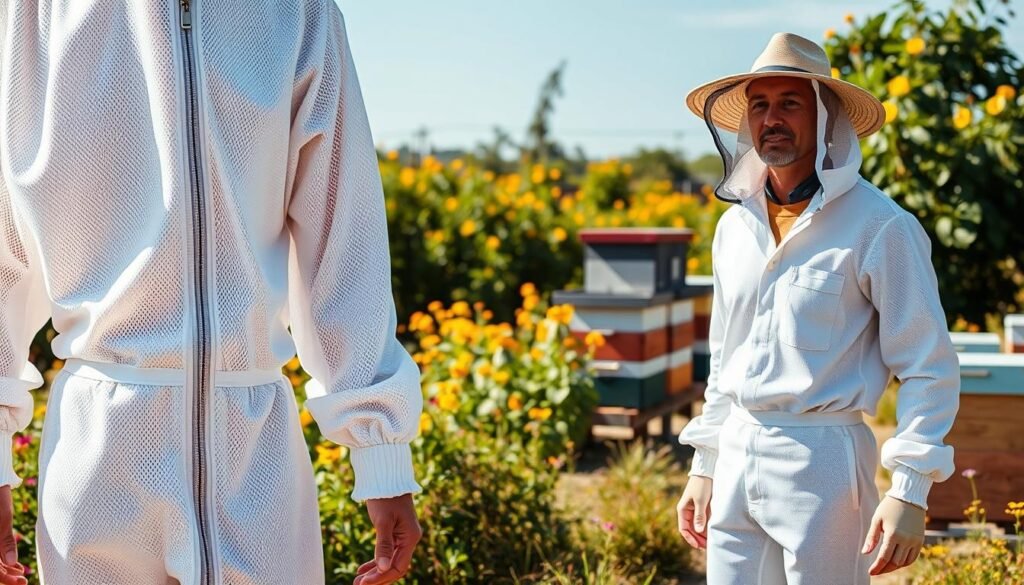
BeBees, among other manufacturers, uses advanced mesh that creates a breathable barrier. That design offers high levels of protection without the sweat penalty of thicker fabrics.
Traditional cotton garments stand up well to wear but trap heat during long inspections. For many in beekeeping, ventilated models are the preferred option when afternoon temps rise.
A ventilated bee suit often keeps the keeper cooler while maintaining sting resistance.
- Review material specs to confirm puncture resistance.
- Compare ventilated and cotton options for mobility and cooling.
- Expect the product price to reflect engineering and fabric quality.
| Feature | Ventilated Mesh | Cotton |
|---|---|---|
| Airflow | High | Low |
| Sting Protection | High (layered mesh) | Medium (thicker weave) |
| Durability | High (engineered fabrics) | High (resists wear) |
| Typical Price Range | Mid–High | Low–Mid |
The Science of Ventilated Mesh Technology
Engineered fabric constructions let air pass without sacrificing puncture resistance. Modern ventilated designs use targeted layers to balance cooling and protection during long inspections.
Three-Layer Mesh
The standard three-layer mesh uses roughly 5mm thickness per layer to stop a sting while allowing strong air flow. Each layer works together: the outer layer sheds debris, the middle provides structural resistance, and the inner layer keeps skin away from potential contact.
The result is a product that feels lighter than cotton yet maintains reliable protection. This design reduces heat stress and extends safe working time in summer apiaries.
Foam Air Mesh
Foam air mesh is a lighter option that increases breathability. It often moves more air but trades some long-term durability compared with three-layer mesh.
- Protection: Three-layer mesh blocks stingers while allowing airflow.
- Comfort: Ventilated suits reduce sweat and lower heat exhaustion risk.
- Options: Foam air mesh is good for short sessions; three-layer is ideal for heavy use.
For guidance on selecting the right kit and additional beekeeping equipment, see our guide to choosing beekeeping equipment.
Comparing Full Suits Against Jackets and Veils
Deciding between a full coverall and a jacket-plus-veil affects safety and comfort during active inspections.
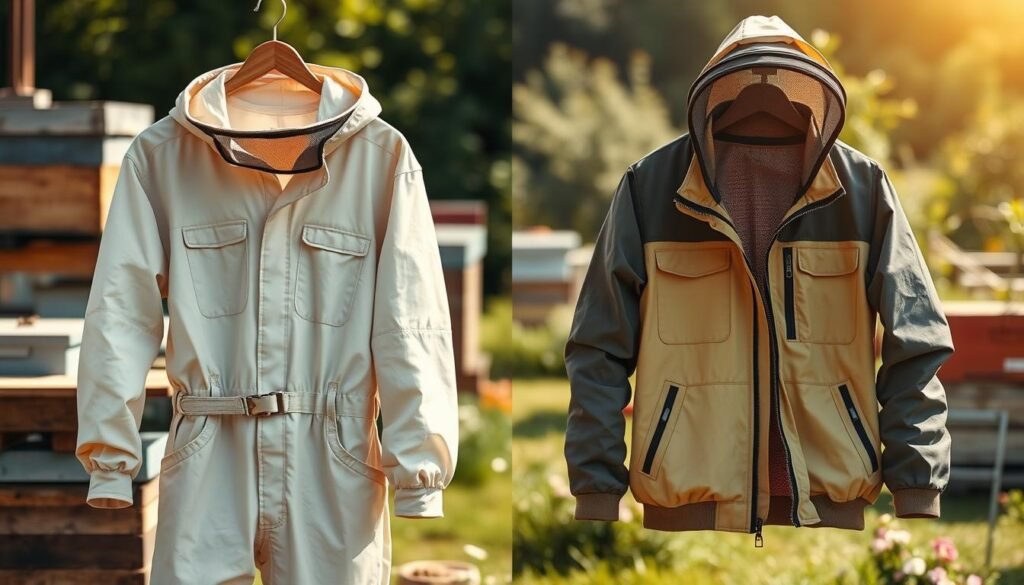
Full bee coverage delivers head-to-toe protection and reduces the chance of bees climbing up the legs or back. This is important when colonies are defensive or during prolonged work.
Jackets and veils remain popular with casual beekeepers because they are lighter and easier to move in. However, they leave the lower body exposed and need careful pant and boot choices to close gaps.
- Protection: A full suit limits contact and entry points.
- Flexibility: Jackets and veils suit quick checks and warm afternoons.
- Inventory: Many beekeepers keep both suits jackets to match hive temperament and weather.
Choose the right product based on how long you work and how active your bees are. Comfort and the level of protection you require will guide a practical selection.
Evaluating Fabric Density and Sting Protection
Fabric density is a measurable defense that often decides whether a sting reaches skin during close inspections.
Understanding GSM Ratings
GSM (grams per square meter) shows how dense a material is. High-quality suits commonly sit at 160 GSM or more. That weight creates a reliable barrier against a sharp stinger.
Lower GSM garments may feel lighter, but they give less puncture resistance. A low-cost product with thin cotton can allow stings through during routine work.
Choose a cotton option only if the weave and weight meet protection needs. Durability matters; a thick cotton suit lasts through years of use.
- GSM indicates density: higher numbers mean stronger barriers.
- Protection vs. price: invest in quality to avoid painful interruptions from stings.
- Practical choice: compare product specs before you buy.
| Feature | Low GSM | 160+ GSM |
|---|---|---|
| Airflow | Higher | Moderate |
| Stinger resistance | Low | High |
| Durability | Low–Medium | High |
For climate‑specific gear recommendations and other suit options, see our guide to beekeeping gear for U.S. climates.
Essential Features for Maximum Comfort
Comfort in the apiary starts with features that keep garments stable and tools within reach.
Secure closures like elastic thumb loops and adjustable heel straps stop sleeves and legs from riding up. That reduces gaps and keeps you safer during active handling.
Practical pockets make a big difference. Deep chest and hip pockets let you carry hive tools, markers, and a small smoker without setting anything down.
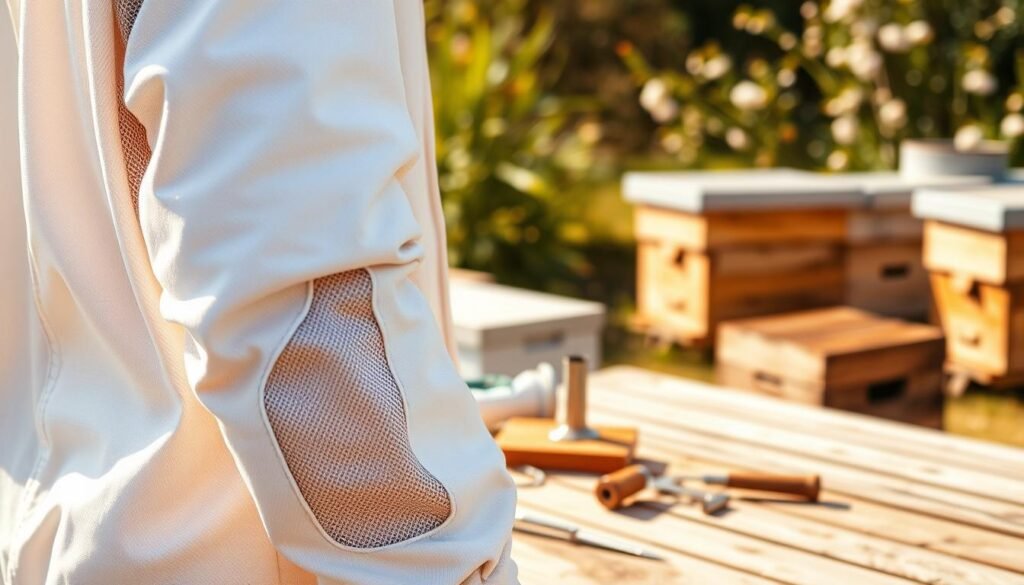
- Stability: Elastic loops and straps lock the garment in place.
- Storage: Generous pockets keep essential tools close.
- User-focused design: Thoughtful seams, flexible panels, and easy closures improve mobility.
- Fit: A proper fit lowers sting risk and prevents restricted movement.
Choose products and jackets that place features where you need them. That way, you can concentrate on beekeeping tasks rather than adjusting gear.
For another perspective on ventilated options, Blythewood Bee Company has published a ventilated bee suit guide worth comparing.
The Role of Zipper Quality and Placement
A reliable zipper can make the difference between a quick exit and a tense scramble at the hive.
High-quality zippers are a critical part of any good bee suit. They let you don and remove gear fast while keeping gaps closed. Choose products with heavy-duty teeth and a smooth pull to avoid snags during routine checks.
Overlapping zipper designs add an extra layer of protection. A flap that covers the fastener keeps insects from finding entry points. This layout matters most on jackets and full suits when bees are active.
Check the zipper often. A beekeeper should confirm the slider runs smoothly and the stops hold tight. Broken hardware can compromise an otherwise solid product and leave you exposed.
Practical details matter in the field. Large pull rings let you adjust the zipper while wearing gloves. Sturdy pulls and reinforced tape are where low-cost suits usually fail first.
- Test zippers before workdays.
- Prefer overlapping flaps that shield teeth.
- Pick pulls large enough to use with gloves.
Selecting the Right Veil Design
Choosing the right veil changes how clearly you see frames and how safe you feel while working the hive. The veil is the main barrier between your face and flying insects, so design matters when you wear a suit during routine checks.
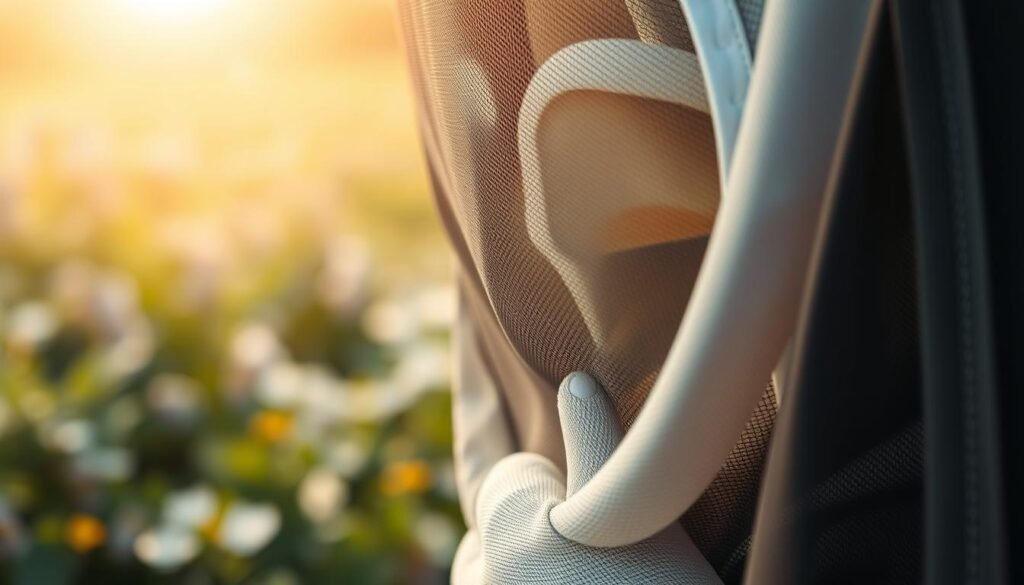
Fencing Veil Benefits
Fencing veils hold mesh away from the face. That gap improves breathability and lowers the chance a stinger reaches skin.
The fencing veil is easy to open for a quick drink and gives excellent sightlines. Many beekeepers choose this style when they want clear forward visibility and easy access without removing their jackets.
Round Veil Visibility
Round veils provide a full 360‑degree view. Some keepers prefer that peripheral vision when moving among hives.
Round veil designs often work best with a hat underneath to keep mesh off the face. Modern suits let you swap veils so you can test both options and pick the one that fits your workflow.
| Feature | Fencing Veil | Round Veil |
|---|---|---|
| Visibility | High forward | 360° |
| Mesh distance from face | Built-in gap | Depends on hat |
| Ease to open | Easy (drink access) | Moderate |
| Compatibility | Most jackets and suits | Best with hat + jackets |
Tip: Invest in a high-quality veil; it is the most critical part of any protective set. Swarm Commander has a veil and jacket comparison if you want a second source on this before buying.
Why Hive Tool Pockets Are Non-Negotiable
A well-placed tool pocket changes how smoothly you work in the apiary.
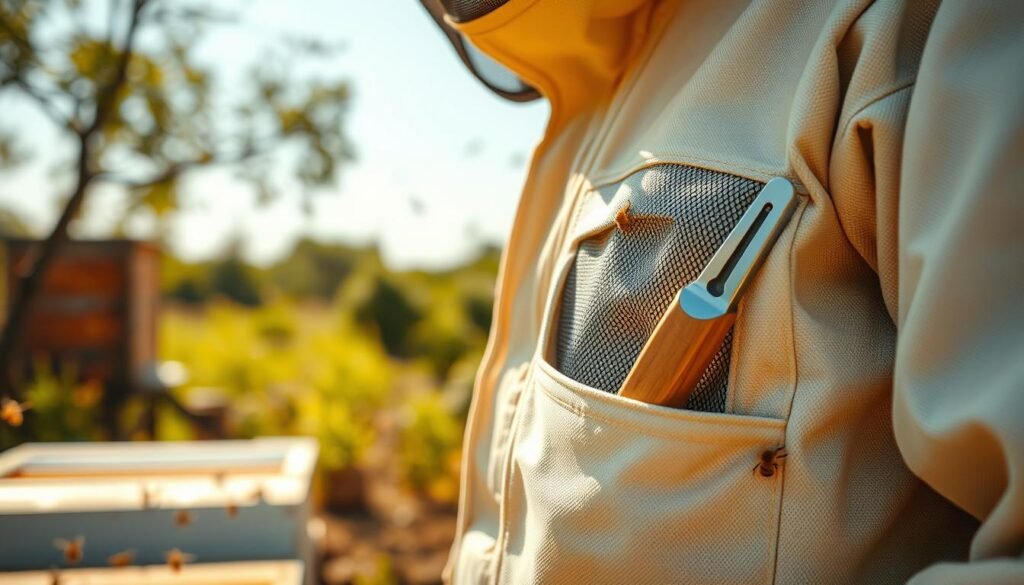
A dedicated hive tool pocket is a must on any full bee suit. It keeps your hive tool within easy reach so you don’t set it down near the hives.
Many professional beekeepers prefer suits with multiple pockets on legs and sleeves. Those pockets help organize tools, markers, and small gear while you work.
Losing a metal tool in grass is a common frustration. A secure pocket line prevents drops when you bend, lift, or move frames.
When comparing products and jackets, look for reinforced seams and heavy stitching. Reinforced pockets handle the weight of metal tools and hold up over seasons.
| Feature | Single Chest Pocket | Leg & Arm Pockets | Reinforced Line |
|---|---|---|---|
| Tool Access | Moderate | High | High |
| Drop Risk | Medium | Low | Very Low |
| Durability | Standard | High | Highest |
Proper Fit and Mobility Requirements
Fit affects how freely you move while lifting frames and closing hives. A well-cut bee suit lets you bend, reach, and lift without fabric binding or catching on equipment.
If a suit is tight in the shoulders or crotch, it will restrict motion and can increase the chance of bee stings during a quick turn or reach. Many keepers order one size larger to allow a base layer and full range of motion.
A 5’5″, 120 lb beekeeper often finds a medium unisex size gives room without excess bulk. Try movements like squatting and reaching while wearing the jacket or full suit before you commit.
Mobility is protection: when you can move freely, you avoid accidental contact.
| Body Height | Suggested Size | Fit Note |
|---|---|---|
| Under 5’6″ | Small–Medium | Allow room for base layer |
| 5’6″–6’0″ | Medium–Large | Check shoulder and crotch ease |
| Over 6’0″ | Large–XL | Test lift and squat motions |
Final tip: when wearing a full suit, move through typical tasks to confirm nothing pulls tight. Proper size and mobility deliver both comfort and reliable protection in everyday beekeeping.
Navigating Color Choices for Apiary Work
Color choices do more than look good; they influence cleaning and field practicality.
White remains traditional because it shows movement less and is easy to keep reflective. Many beekeepers now pick olive green or tan to hide stains and extend time between washes.
While color matters, material and ventilation drive temperature control. A cotton option may feel different than a synthetic blend, but layered mesh and fabric weight usually affect comfort more than hue.
There is a belief that dark tones become hotter in full sun. In practice, that rise is often small compared with differences caused by weave, lining, and airflow.
When choosing a jacket or full cover, focus on strong seams, zipper placement, and panel construction. Those build details make the biggest difference in safety and longevity.
Most products now offer multiple color options so you can match personal style without sacrificing function.

- Practical tip: prioritize construction and material over color.
- Pick a color that fits your routine and makes maintenance easier.
Identifying Red Flags in Low-Quality Gear
A quick visual check can reveal features that lower protection and raise risk.
Non-removable veils are a major warning sign. If a veil cannot be removed for cleaning or replacement, damage will shorten the product life and raise the chance of contamination or tears.
Watch product photos closely. Sellers who use heavily photoshopped models often lack real-world beekeeping experience. That can signal poor after‑sale support and misleading claims about fit and function.
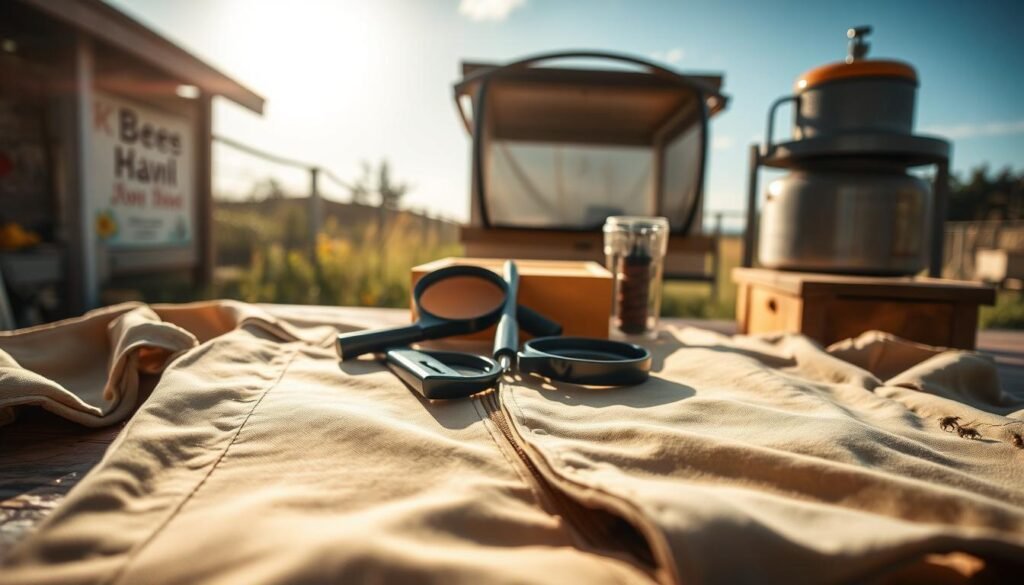
Bundled kits with cheap tools and one low-priced suit usually hide corners cut in material and construction. Thin cotton or light synthetics may feel fine at first but can allow bee stings through and put your skin at risk.
- Check company reviews and business history before buying.
- Avoid vague warranty or no contact details.
- Compare zipper, seam, and pocket construction in person when possible.
| Red Flag | Why It Matters | Action |
|---|---|---|
| Permanent veil | Can’t replace or deep clean | Choose removable veils |
| Over-edited photos | May mask real fit | Seek user images and reviews |
| Cheap kits | Low-quality material and hardware | Buy gear separately from trusted brands |
The Importance of American-Made Manufacturing
Made in the U.S., locally manufactured protective gear often reflects regional needs and hands-on quality control.

ComfortPro Suits, a family-owned beekeeping suit maker based in Kentucky, is one example of a smaller U.S. manufacturer building ventilated gear domestically with American-sourced airmesh and YKK zippers rather than importing pre-made suits. Buying from a maker like this is one way to support domestic manufacturing, though it’s worth comparing fit, warranty, and price against larger established brands rather than assuming smaller automatically means better.
- Support local manufacturing: investing in American-made bee suits backs skilled workers and tighter quality control.
- Advanced air-mesh: ComfortPro’s line uses unique mesh to create a full bee protective garment that is breathable and lighter.
- Durability and service: domestic production often means faster repairs and clearer warranties.
Foxhound Bee Company also publishes a suit buying guide with additional sizing tips worth cross-checking before you purchase.
Tips for Maintaining Your Protective Equipment
Simple cleaning and inspection steps preserve protection and comfort over time.
Wash your bee suit on a gentle cycle with mild detergent. Air-dry it to protect zippers and layered material. If you own a cotton option, avoid high heat that can shrink and weaken fabric.
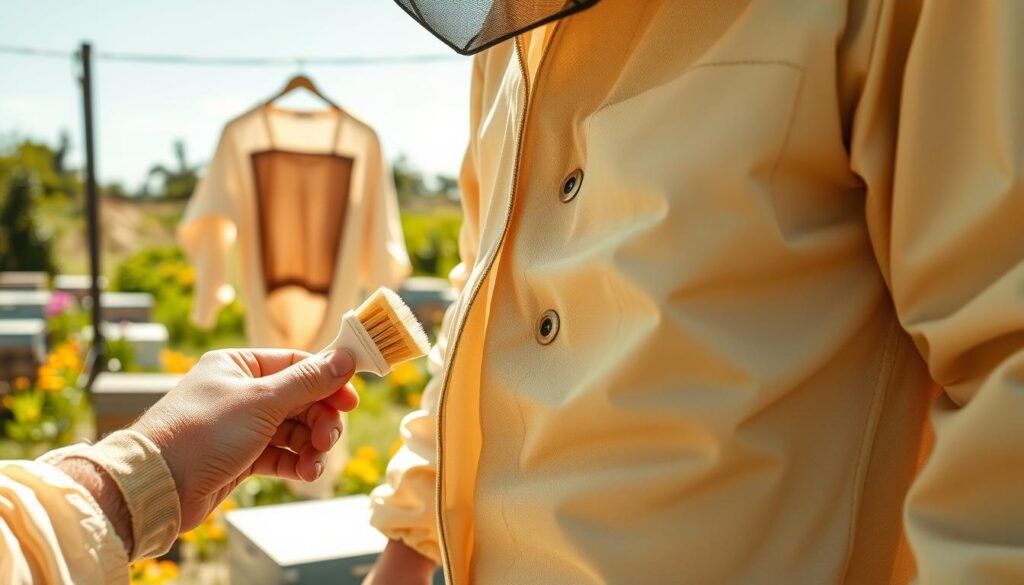
Inspect the veil before every visit. Look for tiny holes or stretched mesh and replace it if you find damage. A well-kept veil keeps your face safe and sightlines clear.
- Gloves: Clean leather or synthetic beekeeping gloves and dry them fully to stop stiffness and cracking.
- Jackets and jackets line: Check seams and zippers; lubricate heavy-duty pulls to keep them smooth.
- Kids’ gear: Store beekeeping suits for kids in a cool, dry place away from sunlight and pests.
Take the time to care for every product after use. Routine checks and basic cleaning extend quality and save money over the long run.
For a step-by-step hive check where you’ll actually be wearing this gear, see our guide to how to inspect a beehive.
Assessing Your Personal Protection Needs
Match your protective gear to how often you handle hives and how your body reacts to stings. If you spend weekends only checking a few frames, lighter gear can work. Regular, long inspections call for more coverage.
Beginners should favor a full bee suit with a secure veil to reduce surprises. More experienced keepers often use a jacket and a fencing veil to stay mobile during quick checks.
No garment is 100% sting-proof. Stay calm and move slowly; sudden motions invite trouble. Remember that a single stinger can penetrate thin material, so check seams and closures before each session.
Match gear to the task. Harvesting honey or heavy frame work needs greater coverage than a brief visual inspection. Choose products that balance protection with ventilation and pocket access.
When buying gear for kids, prioritize comfort and fit. Soft seams, easy zippers, and a removable veil help them learn with confidence and keep apiary visits positive.
What to Actually Buy for Hot-Climate Beekeeping
Narrowing all of the above into an actual buying decision: for genuinely hot climates (regular summer heat above 90°F during inspection hours), prioritize a full three-layer ventilated mesh suit over a jacket-and-veil combination unless your colonies are consistently calm, since full ventilated coverage solves the heat problem without giving up the protection a jacket-only setup sacrifices on the lower body. Within ventilated suits, a fencing veil is generally the better hot-weather choice over a round veil, since its built-in stand-off gap moves more air across the face specifically, which is where heat and fogging are most noticeable during long work. If you want a specific, previously-reviewed option rather than just criteria, our Ultra Breeze Suit review covers one of the more established dedicated ventilated-mesh brands in detail, including fit and sizing specifics this general buying-criteria guide doesn’t get into.
Conclusion
Wrap up your gear choices with a focus on ventilation, fit, and reliable closures. Quality materials and correct sizing cut heat stress and keep you safer during long inspections.
Inspect your veil and all hardware before each session. Small tears, sticky zippers, or loose seams are easy to fix but can lead to big problems if ignored.
Choose reputable brands that emphasize durability and airflow. With the right protective gear in place, you can concentrate on colony health and seasonal success rather than equipment worries.
Frequently Asked Questions
What should I look for in protective gear when working in high temperatures?
Choose lightweight, breathable materials with good ventilation, durable zippers, and secure closures. Look for garments that balance ventilation and sting resistance—mesh panels or three-layer mesh systems work well. Prioritize mobility and proper fit so you can move easily while handling frames and tools.
How does ventilated mesh technology reduce heat buildup?
Ventilated mesh increases air circulation across the skin, allowing sweat to evaporate and cooling the body. Three-layer mesh provides structure and protection while maintaining airflow. Foam-air mesh offers softer padding with channels that let air pass through without sacrificing sting resistance.
Are jackets with integrated veils as protective as full outfits?
A high-quality jacket with a secure veil can offer similar protection for basic hive work, especially on hot days. Full garments add coverage to legs and lower torso, which is important for extended inspections or when working with defensive colonies. Choose based on task duration and colony temperament.
How do GSM ratings relate to sting protection and breathability?
GSM (grams per square meter) measures fabric density. Higher GSM often means better sting resistance but less breathability. For hot conditions, aim for a mid-range GSM combined with ventilated panels or mesh zones to keep cool without compromising safety.
What veil style gives the best visibility and protection in summer?
Fencing veils provide a rigid barrier that keeps fabric away from the face, improving airflow and vision. Round veils offer wide peripheral sight but may sit closer to the face. Pick a veil with fine, durable mesh that resists bee probing while letting air circulate.