Last Updated September 14, 2026
What do you actually need to move hives from one location to another without losing bees, breaking equipment, or ending up with a citation on the highway? The honest answer scales with volume: a hobbyist moving eight hives across town has almost nothing in common, equipment-wise, with a sideline beekeeper hauling sixty colonies to an out-of-state pollination contract, and neither operation resembles the 53-foot flatbeds that roll into California every February for almond bloom. This guide walks through the real hardware — trailer types, how many hives realistically fit on each, the loading equipment that turns a two-hour ordeal into a twenty-minute job, and the permits and timing rules that apply once a load crosses a state line.
Key Takeaways
- Trailer choice is really a question of “how many colonies, how often” — a single-axle utility trailer and a commercial gooseneck solve completely different problems.
- Commercial operators commonly cite 400–450 double-deep hives on a full 53-foot flatbed, loaded in well under an hour with the right equipment.
- Above roughly 20 hives, a pallet jack, skid-steer, or forklift attachment stops being a convenience and becomes the thing that makes loading practical at all.
- Some states require an apiary movement permit and a current inspection certificate before out-of-state colonies can enter — verify current rules with the destination state before moving, not from memory.
- Weight swings dramatically between an empty spring trailer and one loaded with full honey supers — that swing, not just hive count, is what most first-time haulers underestimate.
Table of Contents
- How Many Hives Actually Fit on a Given Trailer
- Trailer Types Compared
- Securing the Load
- Loading Equipment: Forklifts, Pallet Jacks, and Skid Steers
- Crossing State Lines: Permits and Timing
- New, Used, or Rented?
- Frequently Asked Questions
How Many Hives Actually Fit on a Given Trailer
Hive count on any given trailer depends on deck length, whether colonies are stacked as single hives or moved as palletized units, and how much clearance is left for strapping and netting. A single-axle utility trailer with a 10-to-12-foot deck realistically holds 8 to 16 single hives standing upright with individual tie-down straps — that’s the range most backyard and sideline beekeepers actually work within, and it’s a very different math problem from commercial-scale hauling.
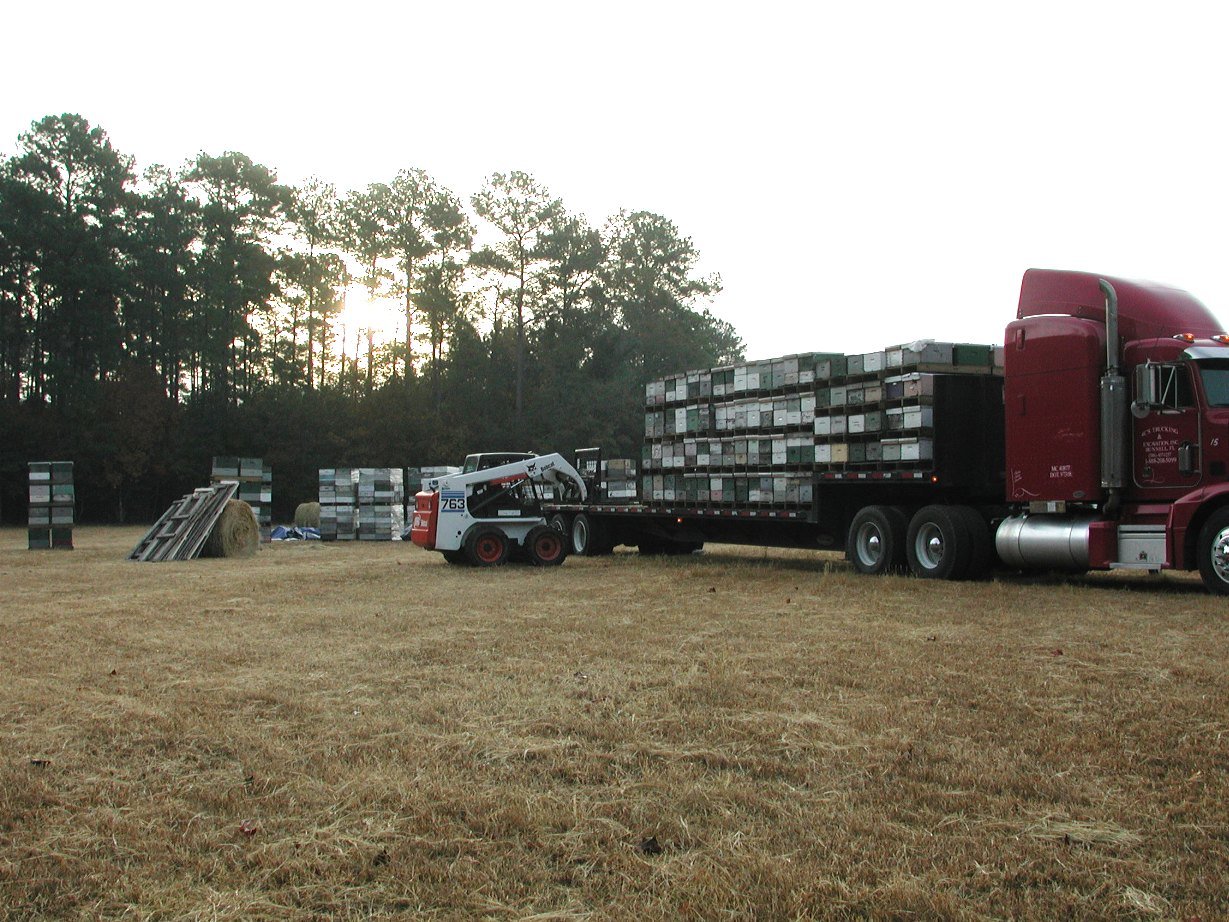
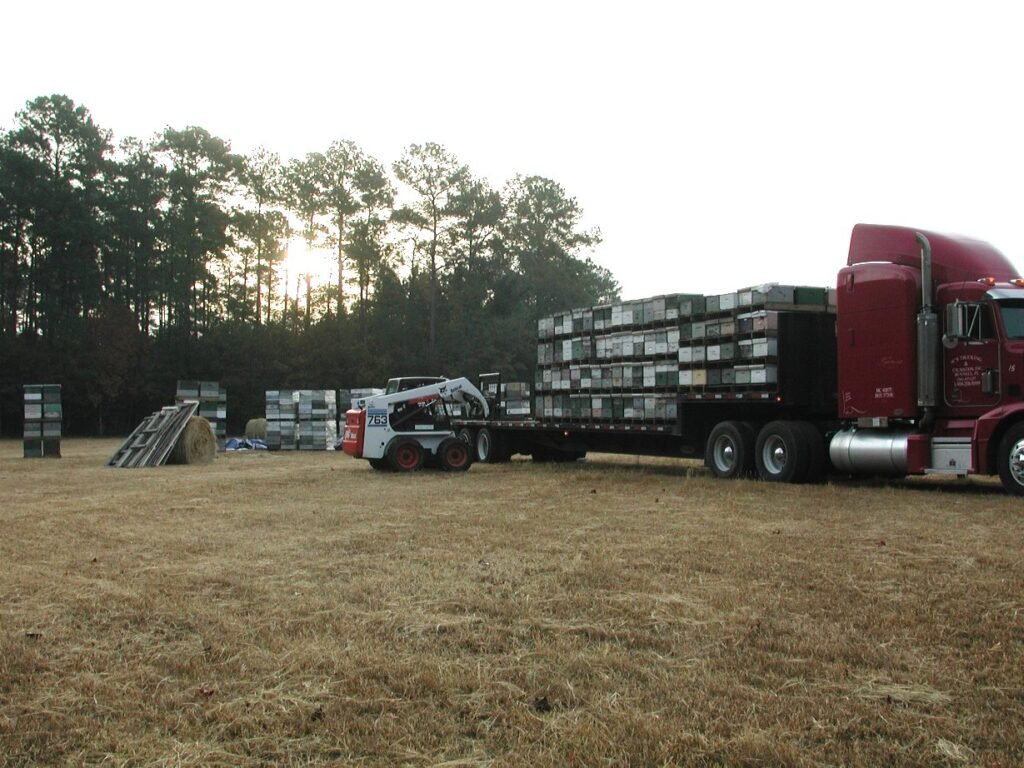
Once an operation moves to palletized loads — typically four hives strapped to one pallet, the standard commercial arrangement — deck length becomes the real limiting factor rather than raw weight for most trailers under 20 feet. Commercial migratory beekeepers moving to California for almond pollination each February load full pallets, often two layers high, onto 48-to-53-foot flatbed trailers. Industry sources and beekeeping forums commonly cite figures in the range of 400 to 450 double-deep Langstroth hives on a full 53-foot flat deck, and crews experienced at the process can load that volume in well under an hour using mechanized equipment. That scale of operation is a different world from anything a sideline beekeeper needs to plan for, but it’s useful context: it shows why trailer selection is fundamentally a question of “how many colonies, how often, how far” rather than a single universal answer.
A useful rule of thumb for anyone scaling up: figure out your realistic five-year hive count first, then size the trailer for that number rather than for what you’re running today. Beekeepers who buy a trailer sized exactly to their current operation frequently find themselves trading up within two or three seasons once the apiary grows.
Trailer Types Compared
Not every trailer marketed for landscaping equipment or ATVs is a good fit for hives — deck height, tie-down point placement, and axle rating all matter more here than they do for hauling inert cargo, because a stacked load of hives is both top-heavy and, unlike a pallet of bricks, alive.
| Trailer Type | Typical Capacity | Best Fit | Tow Vehicle Needed |
|---|---|---|---|
| Single-axle utility (5×10 to 6×12 ft) | 8–16 hives | Hobbyist, local moves under an hour | Mid-size SUV or half-ton truck |
| Tandem-axle flatbed/equipment (16–20 ft) | ~40–80 hives (palletized) | Sideline operations, in-state moves | 3/4-ton or 1-ton pickup |
| Gooseneck flatbed (24–30+ ft) | ~100–200 hives | Small commercial, regional pollination | One-ton dually; GVWR may require a CDL |
| Full semi flatbed (48–53 ft) | ~400+ hives | Large commercial migratory operations | Class A CDL, DOT number, interstate permits |
A gooseneck sits lower and tracks more stably at highway speed than a bumper-pull trailer of comparable length, which matters more with a top-heavy load of stacked hive boxes than it does hauling equipment or livestock of similar weight. If you’re genuinely outgrowing a bumper-pull utility trailer, a gooseneck is usually the sensible next step rather than simply buying a longer bumper-pull trailer — most manufacturers don’t rate bumper-pull trailers for stable highway towing much past 20 feet loaded, and the sway becomes noticeable well before that limit with a tall, unevenly distributed hive load.
Deck material is worth a second look too: wood decking is common, cheaper to repair section-by-section, and provides slightly more grip for pallet jack wheels than bare steel, which can get slick when wet with morning dew — a real consideration given how much migratory loading happens before sunrise.
Securing the Load
Whatever the trailer, the securing method matters as much as the trailer itself. Ratchet straps sized for hive equipment — commonly 1 inch wide and long enough to wrap a fully stacked pallet — keep telescoping covers from lifting in highway wind and stop boxes from shifting under hard braking; this site’s own guide to hive ratchet straps covers sizing, attachment points, and material choice in more depth. Entrances are closed or screened before the load moves — an open entrance at highway speed either bleeds foragers the whole trip or, worse, lets bees escape directly into the cab. Netting draped and clipped over an entire pallet load is standard practice on commercial loads specifically to catch any bees that slip out during loading, well before the truck ever pulls onto the road.
Weight is the part that catches first-time haulers off guard. A pallet of four full honey supers ready for extraction is dramatically heavier than the same pallet in early spring carrying mostly drawn comb and a modest brood nest, and that swing genuinely affects both trailer payload rating and how the load rides at speed. This site’s guide to truck weight planning for migrating hives walks through payload math and axle-weight distribution in more detail if you’re operating close to a trailer or tow vehicle’s rated limit — which, for anyone hauling more than a handful of hives, is worth checking before the season a scale or a state trooper checks it for you.
Loading Equipment: Forklifts, Pallet Jacks, and Skid Steers
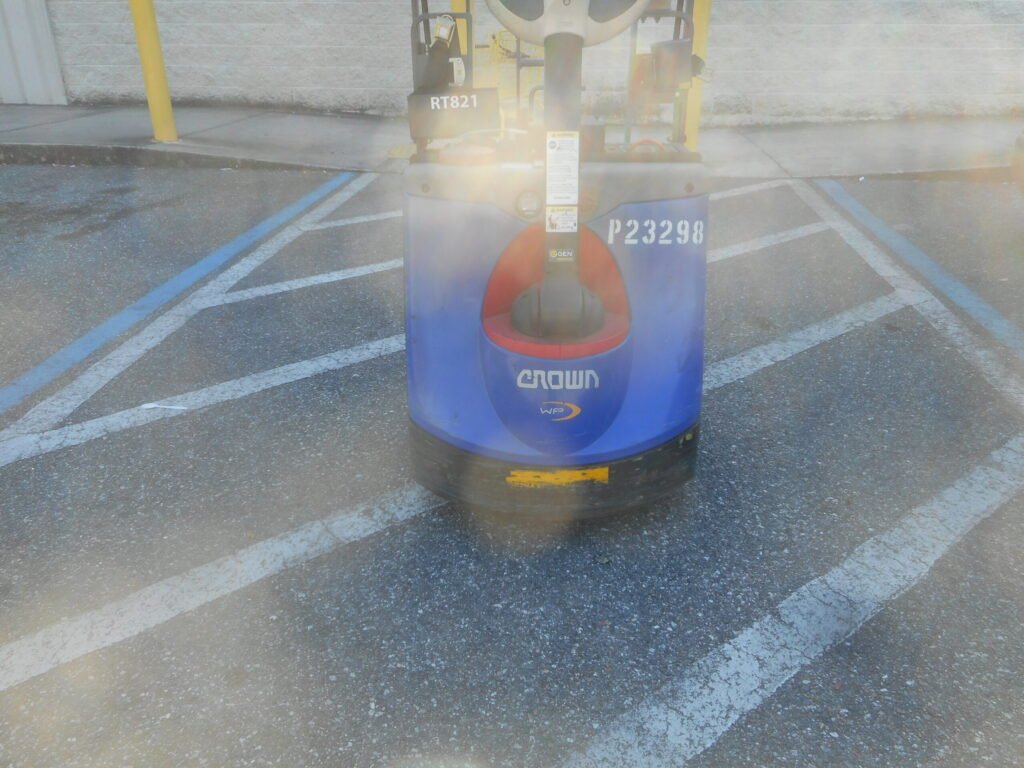
Above roughly 20 hives, lifting boxes onto a trailer by hand stops being a reasonable plan. Backs give out, loading takes long enough that bees warm up and get defensive, and slow work in daylight means more agitated colonies by the time the last box goes on. A pallet jack — manual for smaller operations, or at real commercial scale a small forklift or a skid-steer fitted with pallet forks — is what actually makes palletized loading fast and repeatable. This site compares the tradeoffs directly in forklift vs. hand-loading for pollination operations, and looks specifically at the equipment itself in a dedicated guide to the commercial hive pallet jack.
For a sideline operation running one or two trailer loads a season, a used manual or electric pallet jack is often the higher-value purchase over a forklift — it does most of the same job at a fraction of the price, needs no dedicated attachment, and doesn’t require a truck bed or trailer of its own just to be transported to the yard. A skid-steer with forks makes more sense once an operation is running multiple yards and needs to move pallets around a permanent loading area repeatedly, not just once or twice a season.
Whether hives ride on individual stands or stay palletized for the whole season also changes what loading equipment makes sense from the outset — this site’s comparison of hive pallets versus individual stands is worth reading before committing to a system, since retrofitting an established yard from stands to pallets mid-season is considerably more work than building palletized from day one.
Crossing State Lines: Permits and Timing
Interstate migratory beekeeping isn’t just a trailer-and-equipment question. Multiple states — California among them, given the sheer scale of almond pollination each spring — require an apiary or hive movement permit and a recent inspection certificate before out-of-state colonies can enter, and some require advance notice to the state apiarist before arrival. California’s own requirements, including border inspection and its voluntary ant-free certification program, are documented directly by the California Department of Food and Agriculture’s Apiary Protection Program. These requirements genuinely change from year to year and state to state, so verify current entry requirements directly with the destination state’s department of agriculture or state apiarist before a move rather than assuming last year’s paperwork still applies.
Timing the move itself is a separate consideration from the paperwork, and it’s remarkably consistent across the industry: virtually all migratory operators load and travel at night, when foragers are inside the hive and ambient temperatures are cooler. This single practice does more to reduce both forager loss and heat stress on the colony during transit than any piece of equipment does. The University of Georgia’s bee program has a practical overview of the logistics behind commercial pollination moves, useful background whether or not Georgia is part of your route.
New, Used, or Rented?
A basic single-axle utility trailer suitable for a handful of hives can often be found used for a modest sum, and it’s genuinely dual-purpose equipment most rural properties already find uses for outside of beekeeping season. A dedicated flatbed or gooseneck built around hive pallets is a considerably bigger outlay, and buying used from another beekeeper exiting the trade, or from a farm-equipment auction, is common practice — inspect axles, brake lines, and deck boards carefully, since a trailer that’s sat outdoors through several winters is a very different proposition from a dealer-fresh one regardless of the asking price.
For a one-time or occasional need — moving into a new property, helping a mentor relocate an entire yard, a single out-of-state pollination trial run — renting an equipment trailer from a local rental company is frequently the more sensible option than buying one that then spends fifty weeks a year parked. Run the actual numbers before committing either way: a few rental fees a year is often cheaper than trailer insurance, storage, and depreciation on equipment that gets used twice a season.
Frequently Asked Questions
Can I haul bees on a regular landscaping utility trailer?
For a small number of hives over a short distance, yes — as long as the deck is long enough, tie-down points are solid, and the trailer’s rated payload isn’t exceeded once you account for full honey supers rather than empty spring equipment. It’s not the right tool past roughly 15–20 hives or long highway distances, where a purpose-built flatbed does a meaningfully better job.
Do I need a commercial driver’s license to move bees?
Only if the combined weight of your tow vehicle and loaded trailer crosses the federal or state gross vehicle weight rating threshold that triggers CDL requirements — the same rule that applies to any other heavy trailer, not something specific to hauling bees. Separately, federal rules give agricultural haulers of livestock and bees specific relief from standard Hours-of-Service limits within a 150-air-mile radius of the source, detailed directly on the FMCSA’s own agricultural exceptions and exemptions page, which explicitly names bees alongside livestock. Check your state’s exact CDL weight threshold before assuming either way, since it varies by jurisdiction and by whether the move stays in-state or crosses a border.
How many hives fit on a 20-foot trailer?
Roughly 40 to 80 hives when palletized four-to-a-pallet, depending on whether pallets are single- or double-stacked and how much clearance is left for straps and netting. Actual capacity also depends on the trailer’s rated payload once full honey supers are factored in, not just available deck space.
What’s the biggest mistake first-time haulers make?
Underestimating how much heavier a loaded trailer is with full honey supers versus empty spring equipment, and not accounting for that swing in either the tow vehicle’s weight rating or how the load is distributed and secured across the deck.
Is it better to buy a used commercial trailer or build up from a utility trailer?
It depends entirely on projected hive count over the next few seasons. Beekeepers planning to stay under roughly 20 colonies rarely outgrow a well-chosen utility trailer; anyone realistically expecting to scale toward sideline or small commercial numbers is usually better off buying one size larger than current needs rather than trading up repeatedly.