Last Updated September 16, 2026
HiveTracks is a beekeeping record-keeping app founded by James Wilkes in 2010 that logs hive inspections, weather-aware prompts, and treatment history — the free mobile app covers basic logging, while the $6.99/month Pro tier adds cross-apiary yield reporting and multi-user access for larger operations.
Key Takeaways
- HiveTracks was founded by James Wilkes — a beekeeper with a math/computer-science Ph.D. from Duke University — and launched in August 2010 at the EAS conference in Boone, North Carolina.
- The company reports it’s been used by more than 40,000 beekeepers across 150+ countries since launch.
- Current official pricing (per HiveTracks’ own site): the mobile app is free; HiveTracks Pro — deeper analytics, cross-apiary yield reporting, multi-user access, exportable reports — runs $6.99/month or $69.99/year.
- Some third-party roundups cite older or inconsistent prices for HiveTracks ($50/year, $24.99/year) — go by the figures on hivetracks.com itself, which is what’s reflected here.
- Best fit: beekeepers who’ve outgrown a paper notebook and want searchable inspection history and, on Pro, trend reporting across multiple apiaries.
Table of Contents
- What HiveTracks Is
- Core Features: Inspections, Treatments, and Colony History
- HiveTracks vs. Paper Records
- Record-Keeping vs. Hardware Sensor Monitoring
- Setting Up Your Apiary in the App
- Using It During Actual Inspections
- Why Historical Data Matters More Than It Seems
- Multi-User and Commercial Operation Features
- Who Gets the Most Value From It
- Working Without Reliable Internet Access
- Data Export and Backup Considerations
- Logging Mite Counts and Treatments Specifically
- Tracking Queen Lineage and Requeening History
- Tracking Honey Yield Per Colony
- Regulatory and Inspection Documentation
- Cost and Pricing Model
- Adding Photos to Inspection Records
- Building a Consistent Logging Habit
- Data Privacy and Ownership Considerations
- Learning Curve for New Users
- Common Mistakes
What HiveTracks Is
HiveTracks is a digital record-keeping platform built specifically for beekeepers, letting you log inspections, treatments, colony strength, and other management data per hive through a smartphone or web app rather than paper notebooks or general-purpose spreadsheet tools. Our broader record-keeping app guide covers the category generally; this guide looks specifically at this named platform’s actual feature set and practical use.
Core Features: Inspections, Treatments, and Colony History
Core functionality centers on per-hive inspection logs (queen status, brood pattern, temperament, stores), treatment records (what was applied, when, and any relevant withdrawal period tracking), and a searchable history you can review across a full season or multiple years per colony — the kind of longitudinal record that’s genuinely difficult to maintain reliably with paper notes, which tend to get lost, damaged, or simply not referenced back to once written.
HiveTracks vs. Paper Records
| Factor | HiveTracks | Paper Notebook |
|---|---|---|
| Searchability | Instant, filterable | Manual flipping through pages |
| Durability | Cloud-backed, survives loss of physical notebook | Vulnerable to weather, loss, damage |
| Multi-year trend visibility | Easy to review across seasons | Requires manually cross-referencing multiple notebooks |
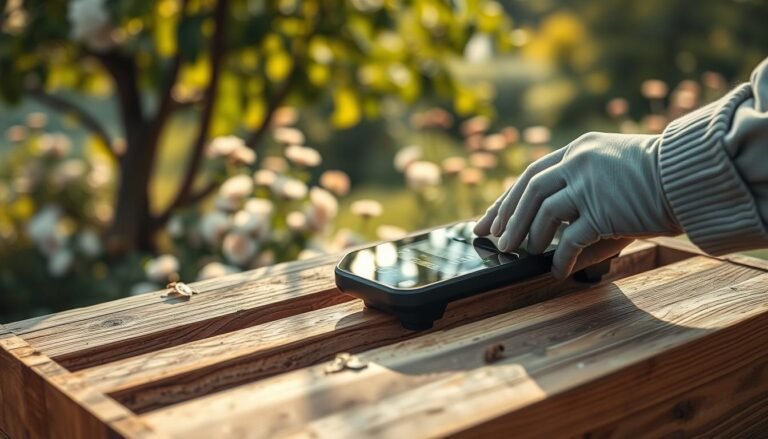
| Field usability | Requires phone, occasionally awkward with gloves on | Works anywhere, no charging needed |
Paper’s real advantage is simplicity and zero dependency on a device or charge — some beekeepers genuinely prefer jotting quick notes by hand during an inspection and transferring to digital later, or simply find paper faster for quick field notes despite the digital platform’s superior long-term organization and searchability.
Record-Keeping vs. Hardware Sensor Monitoring
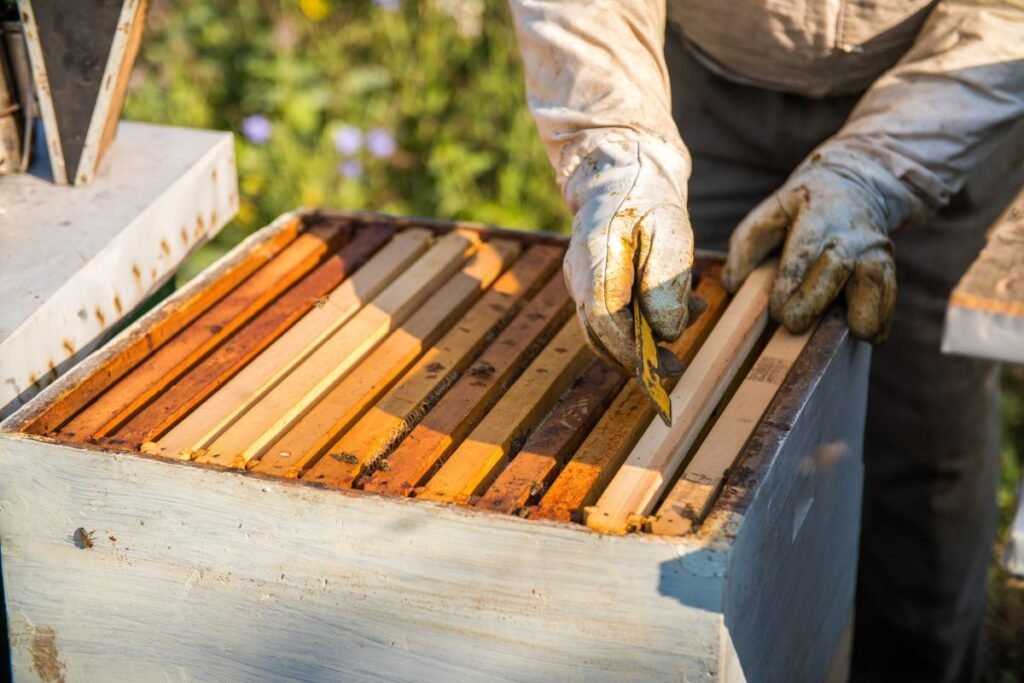
HiveTracks is fundamentally different from hardware monitoring products like Broodminder or Arnia — those products passively collect sensor data (temperature, weight, acoustic signals) without you doing anything, while HiveTracks depends entirely on you actively entering data during and after your own inspections. The two approaches are genuinely complementary rather than competing: sensor data tells you what’s happening between visits, while a record-keeping app organizes what you observe and do during actual hands-on inspections — some beekeepers use both together for a genuinely complete management picture.
Setting Up Your Apiary in the App
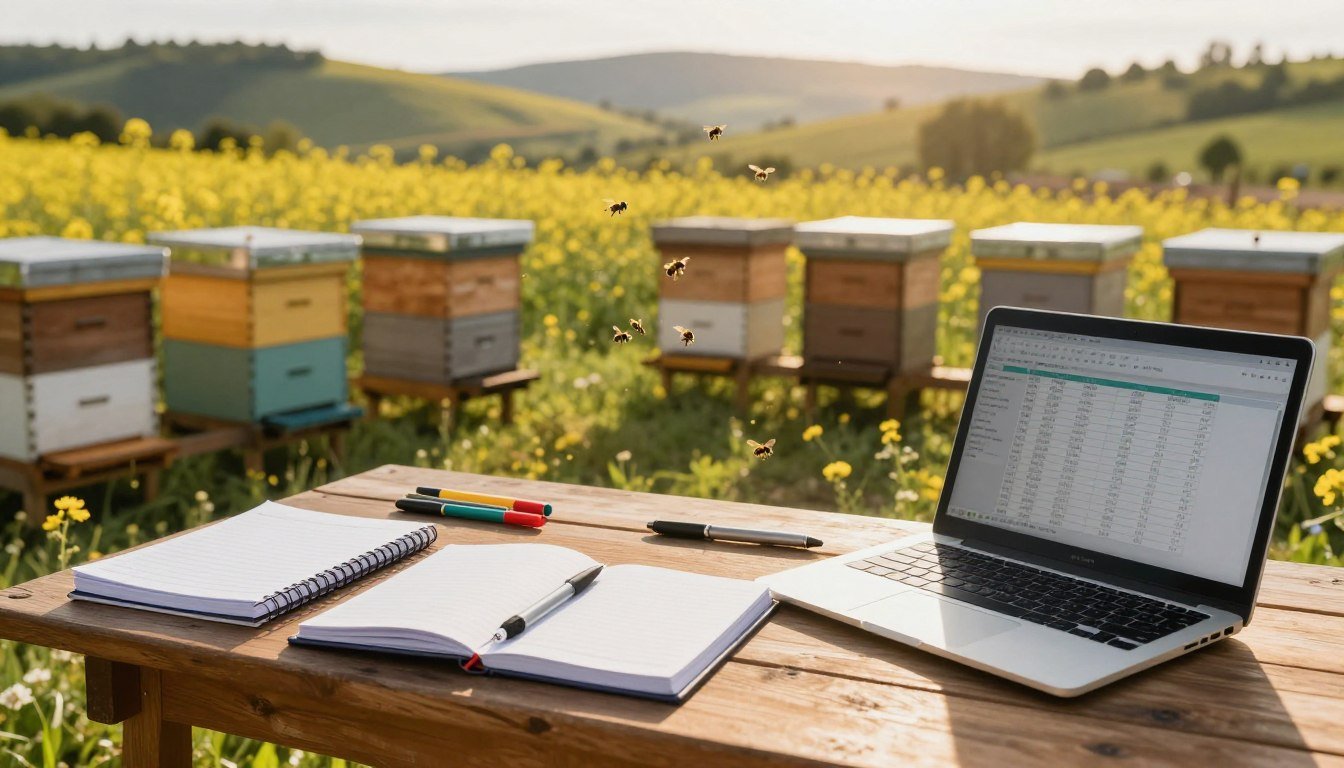
Initial setup involves creating individual hive entries with identifying details (location, equipment configuration, queen source/genetics if known), then beginning to log inspections going forward — don’t feel obligated to reconstruct extensive historical data from memory when starting; begin fresh from your first digital entry and let the value accumulate over subsequent seasons rather than trying to backfill years of paper records perfectly.
Using It During Actual Inspections
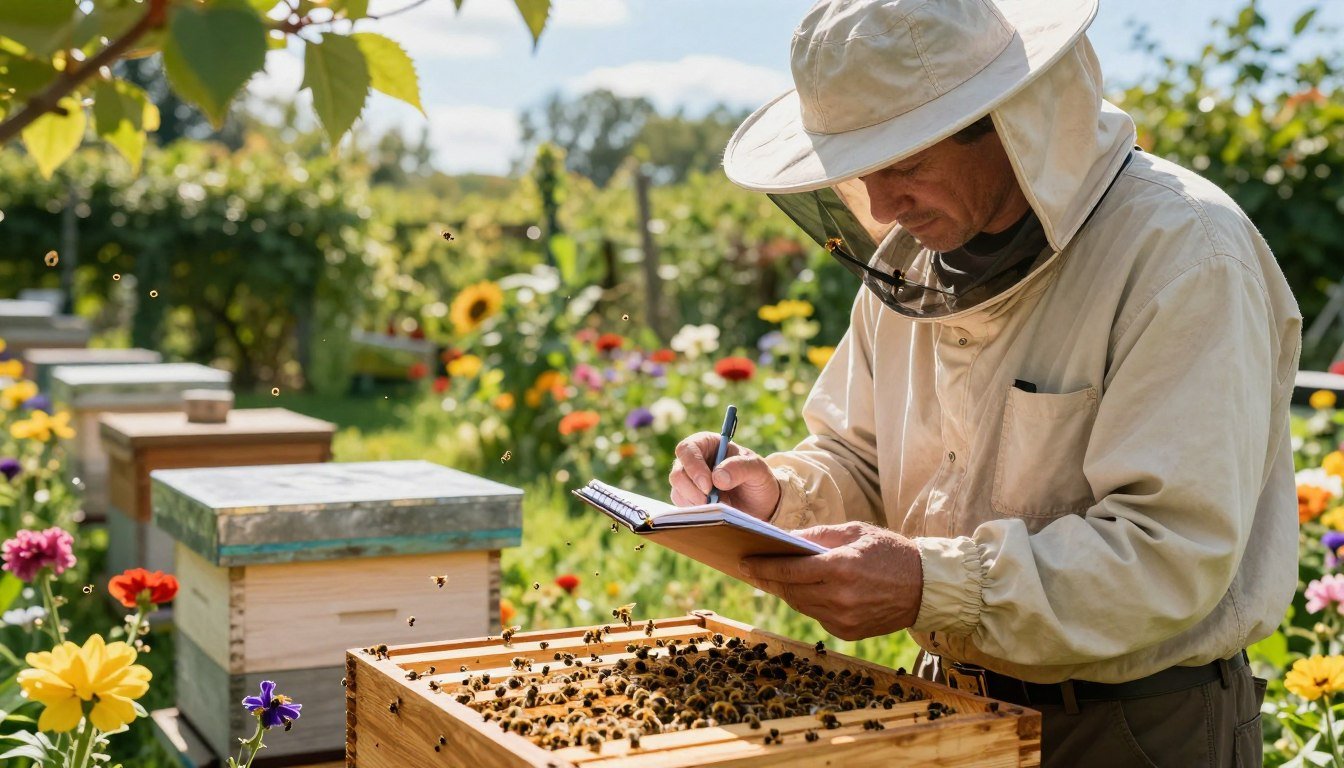
Many beekeepers find logging entries immediately after closing up a hive, while details are still fresh, works better than trying to type on a phone mid-inspection with gloves on — a quick mental note or a few words jotted on a pocket notepad during the inspection itself, then a fuller digital entry once you’re done with that hive or your whole apiary round, is a common practical workflow that balances field usability with digital record quality.
Why Historical Data Matters More Than It Seems
The real value of consistent record-keeping compounds over time — being able to look back and see exactly when a colony’s queen was replaced, what treatment was used last season and how the colony responded, or how a specific hive’s brood pattern trended across several inspections, turns vague memory into concrete, checkable data that genuinely improves management decisions. This value is easy to underestimate in year one but becomes clearly apparent by year two or three, once you have real historical data to actually reference.
Multi-User and Commercial Operation Features
For operations with multiple people managing colonies, shared access lets everyone log and view the same records rather than each person keeping separate, inconsistent notes — a genuine advantage for a family operation, business partnership, or any setup with more than one person doing inspections. This shared-record capability becomes increasingly valuable as an operation scales beyond what one person can manage entirely alone.
Who Gets the Most Value From It
Beekeepers managing enough colonies that mental tracking genuinely becomes unreliable, anyone wanting to make more data-driven management decisions over time, and operations with multiple people needing shared access to consistent records are the clearest beneficiaries. A beekeeper with a single backyard hive, inspected occasionally and easily remembered without formal tracking, may find a simple paper notebook or even memory alone perfectly adequate, without needing a dedicated digital platform.
Working Without Reliable Internet Access
Many apiaries, especially rural or remote out-yards, don’t have reliable cell signal or WiFi during an inspection — check whether your specific app version supports offline data entry with later syncing, since this matters significantly for practical field use if your apiary locations don’t have consistent connectivity. An app that requires live connectivity to function at all is a real limitation for beekeepers managing colonies in genuinely remote locations.
Data Export and Backup Considerations
Confirm whether your record-keeping app allows exporting your data to a standard format (CSV, spreadsheet) rather than locking your records entirely inside the platform, since this matters for long-term data portability if you ever want to switch platforms, analyze data in other tools, or simply maintain your own independent backup outside the app’s own cloud storage. A platform without reasonable export options creates a real dependency risk if the service ever changes pricing, features, or shuts down entirely.
Logging Mite Counts and Treatments Specifically
Beyond general inspection notes, consistently logging mite counts and treatment dates per colony creates exactly the kind of longitudinal record that makes rotating treatments (as covered in our varroa treatment guides) genuinely manageable across a season and across years, rather than trying to remember which colony got which product when. This specific record type is arguably one of the highest-value uses of a digital platform, since treatment timing and rotation planning benefit enormously from accurate historical data rather than memory.
Tracking Queen Lineage and Requeening History
Recording queen source, introduction date, and any requeening events per colony builds a genuinely useful genetic and performance history over time, letting you correlate colony behavior or productivity with specific queen lines or breeders across multiple seasons — data that’s nearly impossible to reconstruct accurately from memory once more than a season or two has passed, but straightforward to reference instantly if consistently logged from the start.
Tracking Honey Yield Per Colony
Logging harvest weight or jar count per colony over multiple seasons builds a genuinely useful productivity record, letting you identify consistently strong or consistently underperforming colonies rather than relying on a vague general impression of “good” and “bad” hives — this kind of data-backed comparison is valuable both for deciding which colonies to requeen from for genetics and which might need closer management attention or replacement.
Regulatory and Inspection Documentation
Some states require documented apiary registration and disease-inspection records, and having this information organized and easily retrievable in a digital platform can genuinely simplify compliance compared to searching through paper files when a state apiary inspector visits or when documentation is needed for a specific regulatory purpose. Check your specific state’s current record-keeping requirements and confirm your chosen platform captures the fields you actually need for compliance, not just general management notes.
Cost and Pricing Model
Check current pricing directly, since subscription-based apps commonly offer a free tier with basic functionality alongside paid tiers unlocking additional colonies, users, or advanced features — evaluate whether the free tier realistically covers your apiary size before assuming you need a paid plan, and compare the paid tier’s actual added value against your specific operation’s needs rather than upgrading by default.
Adding Photos to Inspection Records
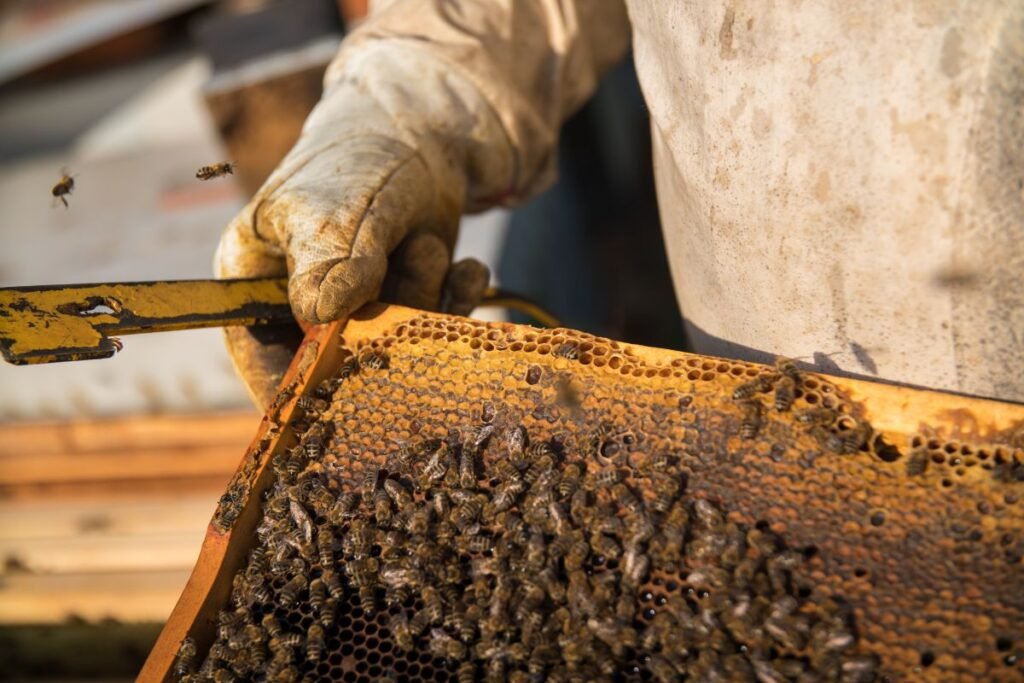
Many digital record-keeping platforms let you attach photos directly to an inspection entry — a queen cell, a suspicious brood pattern, or general colony condition — which adds a visual record that plain text notes can’t fully capture and is genuinely useful when comparing a colony’s condition against an earlier photo weeks or months later, or when seeking a second opinion from an experienced beekeeper or extension agent on something you photographed but weren’t certain how to interpret in the moment.
Building a Consistent Logging Habit
The single biggest factor in getting real value from any record-keeping system, digital or paper, is consistency — set a simple personal rule, such as never leaving an apiary without logging that day’s inspections, even briefly, rather than planning to “catch up later,” which rarely happens reliably in practice. A brief, consistent entry every time beats an occasional detailed one, since the compounding value of historical data depends entirely on genuinely regular logging over time.
Data Privacy and Ownership Considerations
Review the platform’s privacy policy regarding who owns and can access your apiary location and management data, particularly if your operation includes sensitive commercial information (client pollination contracts, proprietary genetics work) you wouldn’t want broadly shared or sold to third parties. Most reputable platforms are straightforward about this, but it’s worth a direct check before entering years of detailed operational data into any third-party service.
Learning Curve for New Users
Expect a modest learning curve when first adopting any structured record-keeping platform, since deciding what level of detail to log and building the habit of doing so consistently both take a few weeks to settle into a comfortable routine. Start with a simpler subset of fields (inspection date, queen status, basic notes) rather than trying to use every available field from day one, and expand what you track as the habit becomes more natural rather than risking early abandonment from an overly ambitious initial setup.
Common Mistakes
Starting strong with detailed logging then abandoning the habit after a few weeks is the most common failure mode with any record-keeping system, digital or paper — the value only compounds with genuine consistency over time. Trying to reconstruct extensive historical records from memory when first starting wastes effort better spent building consistent habits going forward. Treating record-keeping and sensor monitoring as redundant or competing, rather than recognizing they answer genuinely different questions, means missing out on the more complete picture combining both provides.
Who Built HiveTracks
HiveTracks was founded by James Wilkes, a beekeeper with a B.S. from Appalachian State University and an M.S. and Ph.D. from Duke University in mathematics and computer science. He launched the app in August 2010 alongside the Eastern Apicultural Society (EAS) conference in Boone, North Carolina, and the company reports it’s since been used by more than 40,000 beekeepers in over 150 countries.
Sources
Platform features and functionality reflect publicly available information for the HiveTracks record-keeping application, alongside general guidance on beekeeping record-keeping best practices. For current, authoritative detail, see a peer-reviewed study on IoT-based remote hive monitoring.
FAQ
Is HiveTracks better than paper record-keeping?
It offers real advantages in searchability and multi-year trend visibility, but paper has its own advantage in simplicity and zero device dependency — some beekeepers combine both, jotting quick field notes on paper and transferring to digital later.
Does HiveTracks replace hardware monitors like Broodminder?
No — they’re complementary, not competing: sensor hardware passively collects data between your visits, while HiveTracks organizes what you actively observe and do during hands-on inspections.
Should I try to enter years of past records when I start?
No — start fresh from your first digital entry going forward rather than trying to reconstruct extensive historical data from memory, and let the value accumulate over subsequent seasons.
Is a record-keeping app worth it for a single backyard hive?
Not necessarily — a beekeeper with one hive inspected occasionally may find a simple paper notebook or memory alone adequate; the real value shows up more clearly once managing enough colonies that mental tracking becomes unreliable.
Can I export my data if I switch platforms later?
Check for standard export formats like CSV before committing long-term, since a platform without reasonable export options creates a real dependency risk if the service changes pricing, features, or shuts down.
Can I attach photos to inspection records?
Many platforms support this, adding a visual record that’s genuinely useful for comparing colony condition over time or seeking a second opinion from an experienced beekeeper on something you photographed but weren’t certain how to interpret.