Last Updated September 16, 2026
Buying honey in bulk for a bakery, café, or restaurant means choosing between pails, drums, and totes sized well beyond a retail jar — a food-grade 5-gallon pail holds roughly 60 lbs of honey, a 55-gallon drum around 600–660 lbs, and a 275-gallon tote several thousand pounds — and the right size depends entirely on your actual weekly usage, not on getting the best per-pound price. This is a buyer’s guide for the business doing the purchasing, not a guide to selling your own honey wholesale — if you’re the beekeeper deciding which sales channel is most profitable, this site’s wholesale vs. retail profitability guide covers that side instead.
Key Takeaways
- Bulk honey ships in three common container sizes for food-service buyers: 5-gallon pails (~60 lbs), 55-gallon drums (~600–660 lbs), and 275-gallon totes (several thousand pounds) — match the size to your actual weekly usage, since honey doesn’t spoil but does slowly darken and lose aroma over long storage.
- The USDA officially grades extracted honey on a 100-point scale covering flavor, absence of defects, clarity, and moisture content: U.S. Grade A requires a minimum score of 90, Grade B requires 80, and Grade C requires 70 — a real, checkable standard, not marketing language.
- “Raw,” “filtered,” and “USDA Organic” are three separate, non-overlapping claims — a honey can be filtered without being adulterated, and organic certification is about how the bees were managed, not about filtration or rawness.
- Bakers use honey for more than sweetness: it’s a humectant that extends shelf life in breads and baked goods by slowing staling, which is a real, food-science reason to choose it over sugar in some formulations, not just a marketing claim.
- Ask any wholesale supplier for a Certificate of Analysis and country-of-origin documentation before a large order — honey is one of the most frequently adulterated food commodities globally, and a legitimate commercial supplier will have this paperwork ready.
Table of Contents
- Container Sizes and How Much You Actually Need
- USDA Grades: What They Actually Measure
- Raw vs. Filtered vs. Organic: Three Separate Questions
- Where Food Businesses Actually Source Bulk Honey
- A Buyer’s Checklist Before You Order
- Frequently Asked Questions
Container Sizes and How Much You Actually Need
Wholesale honey suppliers that serve restaurants, bakeries, and food manufacturers typically offer three standard container sizes, and matching the right one to your volume matters more than chasing the lowest advertised per-pound price on a container too large for how fast you’ll use it:
- 5-gallon pails — roughly 60 lbs of honey. The realistic entry point for a single café, small bakery, or a restaurant using honey as a recurring ingredient (glazes, dressings, cocktail syrups) rather than a headline product.
- 55-gallon drums — roughly 600–660 lbs, typically shipped on a pallet. This is the standard mid-volume unit for a bakery producing honey-sweetened breads or cereals at real scale, or a restaurant group buying centrally for multiple locations.
- 275-gallon totes — several thousand pounds, intended for large-scale manufacturers and high-volume commercial kitchens, usually requiring a forklift and dedicated dry storage space to handle.
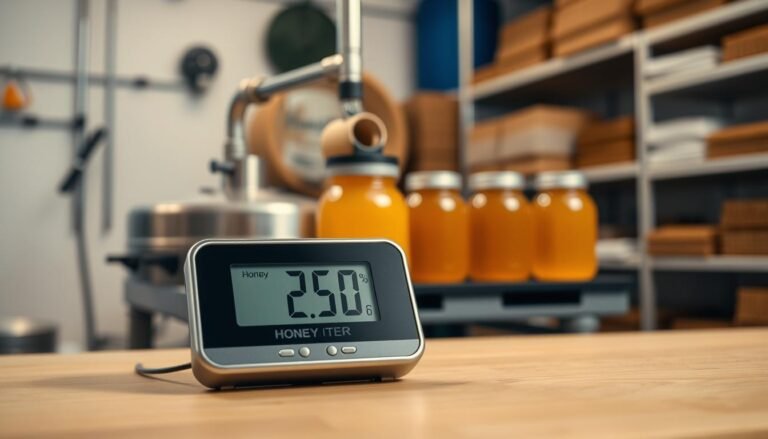
Honey doesn’t spoil in the way perishable ingredients do, but it does slowly darken and lose some of its original floral aroma the longer it sits, especially if stored somewhere warm. Buying more than a 6–12 month supply to chase a marginal bulk discount is usually a false economy for a small operation — the drop in flavor freshness outweighs the per-pound savings for anything beyond what you’ll realistically use in that window.
USDA Grades: What They Actually Measure
Extracted honey sold in the U.S. can be officially graded under the USDA Agricultural Marketing Service’s United States Standards for Grades of Extracted Honey, using a 100-point scoring system that scores flavor and aroma, absence of defects (like foam, foreign material, or crystals affecting clarity), clarity, and moisture content. The resulting grades are straightforward: U.S. Grade A requires a total score of at least 90 points, U.S. Grade B requires at least 80, and U.S. Grade C requires at least 70. Honey scoring below that is classified Substandard.
This grading is voluntary and USDA-administered on request, not a mandatory stamp every honey container carries, so absence of a grade on a supplier’s listing doesn’t automatically mean lower quality — but a supplier who can produce or reference an actual USDA grade for a given lot is giving you a checkable, government-standardized data point instead of a marketing adjective. For a food-service buyer purchasing by the drum, that’s worth asking about directly rather than assuming from packaging language alone.
| USDA Grade | Minimum Score (of 100) | What It Signals to a Buyer |
|---|---|---|
| U.S. Grade A | 90 | Top tier for flavor/aroma, clarity, and moisture — the grade most food-service buyers should ask for by name |
| U.S. Grade B | 80 | Acceptable commercial quality with more minor defects than Grade A |
| U.S. Grade C | 70 | Lowest official grade; usable for cooking/baking blends where visual clarity matters less |
| Substandard | Below 70 | Fails the official USDA scoring criteria |
Raw vs. Filtered vs. Organic: Three Separate Questions
These three terms get blended together in casual conversation, but they answer different questions and none of them implies the others:
- Raw means the honey hasn’t been heated above roughly hive temperature and hasn’t been ultra-filtered — it typically still contains fine particles of pollen, wax, and propolis, and it crystallizes faster and more predictably as a result.
- Filtered means fine particulates have been removed for visual clarity and to slow crystallization — a legitimate, common commercial process, not inherently a sign of adulteration. Filtered honey can still be 100% pure honey with nothing added.
- USDA Organic certification is about how the bees were managed (forage sources, treatment methods, colony siting relative to conventional agriculture and other contamination sources) — it says nothing on its own about whether the honey is raw or filtered.
For most food-service applications — glazes, dressings, baking, cocktail programs — filtered honey is the practical default because it flows consistently through equipment and doesn’t granulate mid-service. Raw honey is worth the extra handling only when its texture, cloudiness, or “raw” positioning is itself part of what you’re selling to the customer (a raw-honey drizzle called out on a menu, for example).
Where Food Businesses Actually Source Bulk Honey
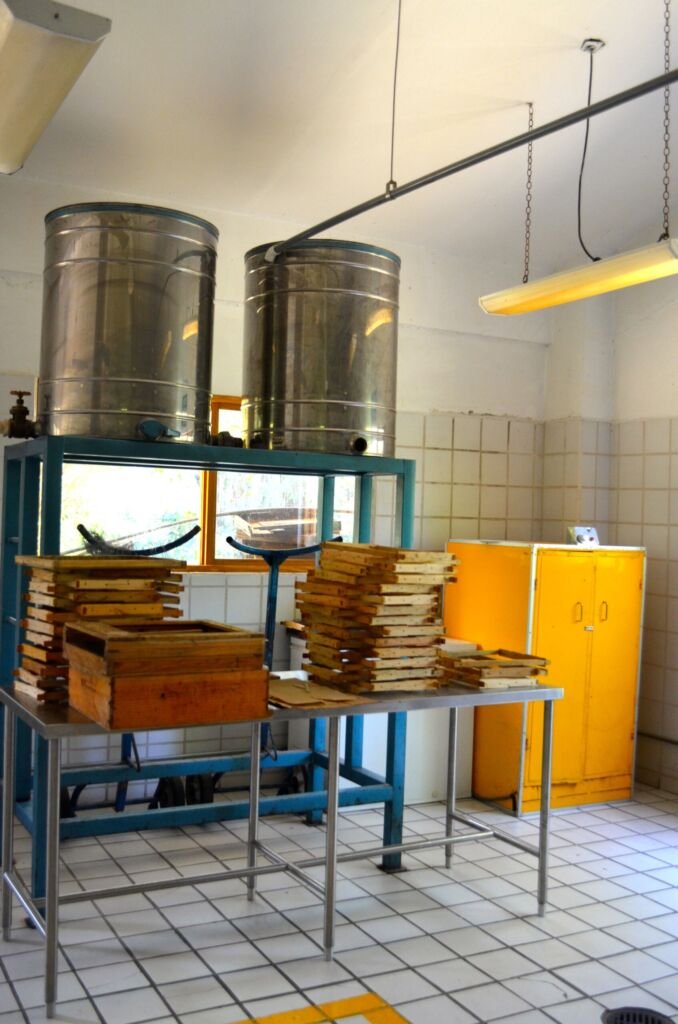
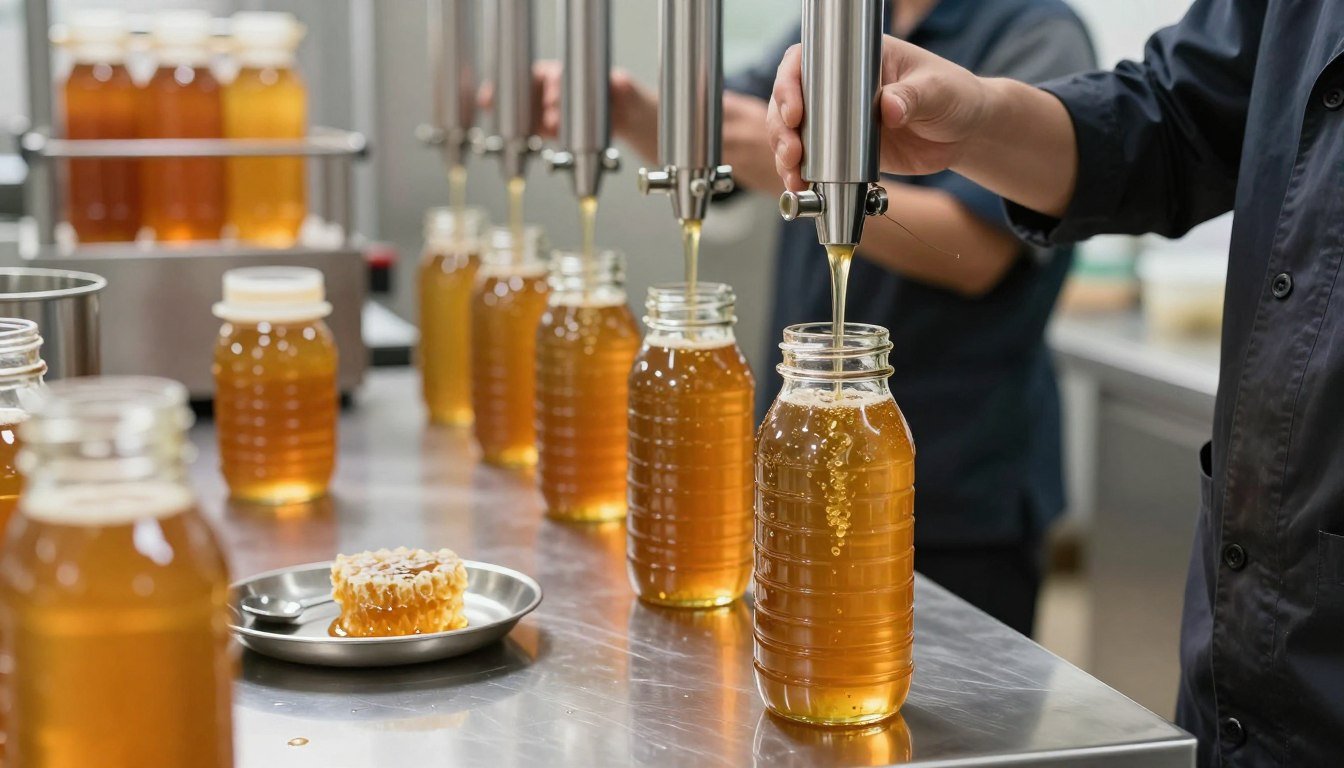
Beyond a direct relationship with a large regional beekeeping operation, most food-service buyers source bulk honey through established commercial honey packers and ingredient suppliers who carry pail, drum, and tote sizes specifically for restaurant, bakery, and manufacturing accounts, alongside broader foodservice distributors that carry honey as one ingredient category among many. When comparing suppliers, the real differentiators are consistent lot-to-lot flavor and viscosity (important if honey is a formulated-recipe ingredient rather than a finished retail product), documented country of origin, and responsiveness to a Certificate of Analysis request — not the lowest headline price alone.
A Buyer’s Checklist Before You Order
- Match container size to a realistic 6–12 month usage estimate, not the best per-pound bulk-discount tier.
- Ask for a Certificate of Analysis covering moisture content and, ideally, a recent adulteration screen — honey is one of the most frequently adulterated commodities in global food trade, and a legitimate wholesale supplier should have this on hand.
- Confirm country of origin in writing, not just “packed in the USA,” which can describe honey that was only bottled domestically after being sourced elsewhere.
- Decide raw vs. filtered based on your actual use case (see above), not on which sounds more premium on paper.
- Check storage requirements — honey should be kept in a cool, dry space away from direct sun; a drum stored near an oven or dish-pit steam will crystallize and degrade faster than the same drum in dry ambient storage.
Frequently Asked Questions
How much does a 55-gallon drum of honey weigh?
Roughly 600–660 lbs, depending on the honey’s specific density, which varies slightly by floral source and moisture content.
What’s the difference between USDA Grade A and Grade B honey?
Both are official USDA extracted-honey grades based on a 100-point score covering flavor, defects, clarity, and moisture. Grade A requires a minimum score of 90, Grade B a minimum of 80, and Grade C a minimum of 70 — lower scores are classified Substandard.
Is raw honey better for baking than filtered honey?
Not automatically. Filtered honey flows more consistently through commercial equipment and doesn’t granulate mid-batch, which is usually the more practical choice unless “raw” is specifically part of what you’re marketing to customers.
Does USDA Organic honey mean it’s also raw and unfiltered?
No — organic certification addresses how the bees were kept and where they forage, not whether the honey was heated or filtered afterward. A honey can be organic and filtered, or raw and non-organic; check both claims separately.
How should a restaurant or bakery store a bulk honey drum?
In a cool, dry space away from direct heat sources like ovens, dish machines, or direct sunlight. Honey doesn’t spoil under normal storage, but heat and time will darken it and speed up crystallization and aroma loss.
What paperwork should I ask a bulk honey supplier for?
A Certificate of Analysis (moisture content, and ideally adulteration screening results) and clear, written country-of-origin documentation — not just a “packed in the USA” label, which doesn’t guarantee where the honey itself was originally produced.
For background on honey composition and industry-standard terminology, see the National Honey Board; for the specific USDA grading criteria cited above, see the official USDA AMS honey grading standard (PDF).
Related Reading
Image credits: Photo: Celinebj, CC BY-SA 4.0, via Wikimedia Commons; Photo: Hanlu Cao, licensed CC BY-SA 3.0, via Wikimedia Commons.