Last Updated September 16, 2026
A corporate honey gift box works because it clears a bar almost no other client gift does: useful to almost anyone, easy to ship or hand-deliver in bulk, and inexpensive enough per unit to fit under the IRS’s $25-per-recipient business gift deduction limit — a real, specific tax rule, not marketing language, that has stayed unchanged since 1962. This is a different buying occasion from a wedding favor or a gift for a beekeeper hobbyist: the recipient is a client, vendor, or employee who doesn’t keep bees and isn’t necessarily a honey enthusiast, so the presentation and packaging carry more of the weight than the specific varietal inside.
Key Takeaways
- The IRS caps the deductible cost of a business gift at $25 per recipient per year under Publication 463 — a rule set in 1962 and never adjusted for inflation — which is why so many corporate honey gift sets are priced in the $15–$25 range per unit.
- Incidental costs like packaging, a ribbon, or engraving generally don’t count toward that $25 limit as long as they don’t add substantial standalone value, per the same IRS rule.
- Branded mini jars, small multi-jar sets, and honey-stick packs are the three formats real honey companies actually offer for corporate orders, each suited to a different volume and budget.
- A discreet branded sleeve or a small tasteful sticker reads as more premium than packaging that looks like an advertisement — the goal is a genuine gift, not a mailer with your logo on it.
- This is a different gift occasion from wedding favors (a large one-time order for a single event) or gifts for beekeepers (equipment and hobbyist-focused) — corporate gifting is a recurring, relationship-driven purchase, often repeated annually around a holiday season.
Table of Contents
- The $25 Rule and Why It Shapes This Whole Category
- What Companies Actually Offer for Corporate Orders
- Branding Without Looking Like an Ad
- Choosing the Right Format for Your Situation
- Frequently Asked Questions
The $25 Rule and Why It Shapes This Whole Category
Under IRS Publication 463, a business can deduct no more than $25 for a gift given directly or indirectly to any one person in a tax year — not per gift, per recipient, so ten small gifts to the same client in one year still cap out at a combined $25 deduction for that person. This limit was set in 1962 and has never been raised for inflation, which is a genuinely interesting, verifiable fact most gift guides never mention, and it’s a large part of why so much of the honey-gifting industry clusters its per-unit corporate pricing in the $15–$25 range: that’s the sweet spot where a company can send a real, nicely presented gift to an entire client list and still deduct the full cost.
One practical wrinkle: incidental costs like gift wrapping, a ribbon, or a small engraved tag generally aren’t counted toward the $25 limit as long as they don’t meaningfully add to the gift’s own value — packaging that makes a $20 honey set feel special doesn’t push it over the line the way upgrading to a $40 jar would.
What Companies Actually Offer for Corporate Orders
Real honey and gift companies that serve business clients generally organize their corporate offerings into a few recurring formats:
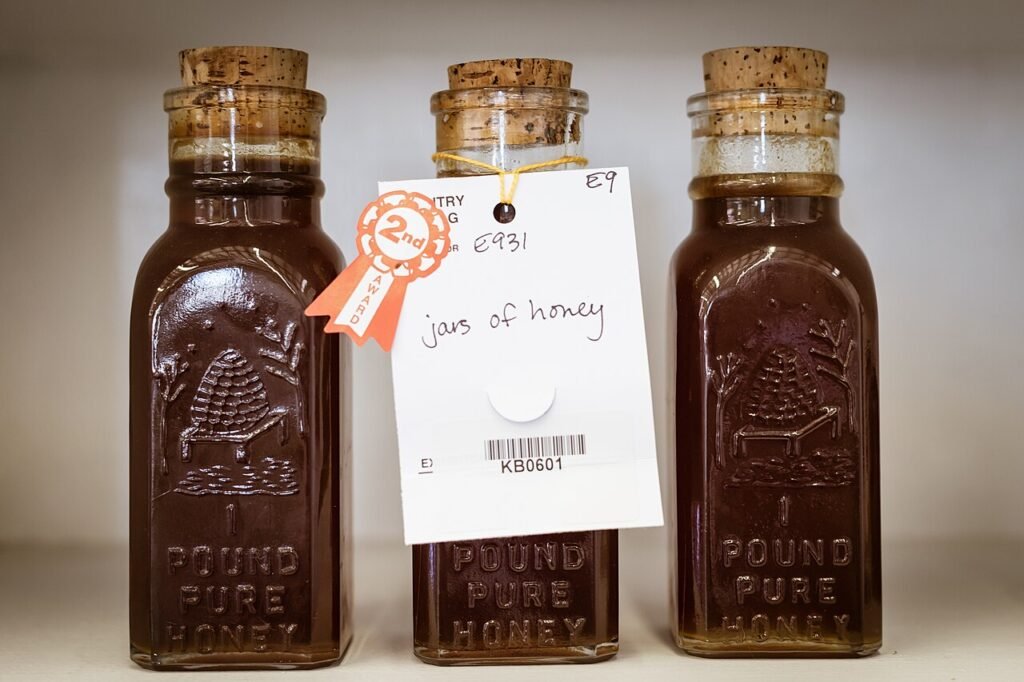
- Branded mini jars — small (1–2 oz) individual jars, often with a custom label or sticker, suited to mailers or as an add-on to a larger package rather than a standalone gift.
- Multi-jar gift sets — two to four full-size or mid-size jars in a presentation box, the closest equivalent to a traditional gift basket, generally reserved for higher-value relationships rather than a mass client list because of the higher per-unit cost.
- Honey stick packs — bundles of individually wrapped honey sticks, a practical choice for events, trade-show booths, or conference giveaways where volume matters more than a premium unboxing experience. For background on the product itself, see this site’s honey sticks buying guide.
Volume discounts are standard once an order crosses roughly 20 units, which matters if you’re gifting an entire client list or sales team rather than a handful of key accounts.
Branding Without Looking Like an Ad
The honey-gifting companies that do the most repeat corporate business tend to agree on one point: a gift that reads as an advertisement undercuts the goodwill it’s supposed to build. A large printed logo across the front of the jar, or a company slogan competing for space with the product itself, tends to read as marketing collateral rather than a genuine thank-you. A small, tasteful branded sticker on the lid, a discreet sleeve around the jar, or simply a personal handwritten note tucked inside the box tends to land better — the gift should feel like it was chosen for the person, with your company as a quiet, secondary signature rather than the headline.
Choosing the Right Format for Your Situation
| Situation | Best Format | Typical Per-Unit Cost |
|---|---|---|
| Entire client list, holiday season | Branded mini jars or single-jar sets | $15–$25 |
| Top 10–20 key accounts | Multi-jar gift set | $25–$60+ (above the deductible cap, but often worth it for high-value relationships) |
| Trade show, conference, or large event | Honey stick packs | Under $2 per stick at volume |
| Internal team or employee appreciation | Single-jar sets with a personal note | $15–$25 |
Whichever format you choose, order early enough to allow for a branding proof and shipping time — most companies that do custom labels or sleeves need a lead time of at least two to three weeks ahead of a holiday deadline, longer during the peak November–December gifting season when order volume across the whole industry spikes.
Frequently Asked Questions
Is a $30 honey gift set still tax-deductible as a business gift?
Only $25 of it is deductible per recipient per year under IRS Publication 463 — the remaining $5 simply isn’t deductible, though the gift itself is of course still fine to give. This is a general summary, not tax advice; check with a licensed tax professional for your specific situation.
Do gift wrapping and ribbons count toward the $25 gift limit?
Generally no — incidental costs like wrapping, ribbon, or a small engraved tag are typically excluded from the $25 limit as long as they don’t add substantial value on their own, per IRS guidance.
What’s the difference between a corporate honey gift and a wedding favor?
Volume and audience: wedding favors are a single large one-time order for guests at one event, while corporate gifting is typically a recurring purchase (often annual) for clients, vendors, or employees who aren’t attending a shared occasion. See this site’s honey wedding favors guide for that specific occasion.
Should I put my company logo directly on the honey jar?
A small, discreet sticker or sleeve tends to be received better than a large printed logo, which can make the gift feel like an advertisement rather than a genuine thank-you.
How far in advance should I order corporate honey gifts for the holidays?
At least two to three weeks ahead for standard branding, and earlier if possible — order volume across the gifting industry spikes in November and December, which extends production and shipping timelines.
Is honey a safe gift for clients with dietary restrictions?
Honey is not vegan (it’s an animal-derived product) and isn’t appropriate for infants under 12 months due to infant botulism risk, but it’s otherwise a widely safe, allergen-light gift for most adult recipients. When in doubt for a specific client, a brief note asking about dietary preferences is reasonable for a higher-value gift.
More detail on this is available from National Honey Board.