Honey isn’t just a baking substitute for sugar — used right, it’s a savory-cooking ingredient in its own right, and the biggest reason home cooks get it wrong is applying it exactly like sugar syrup instead of understanding why it burns, sets, and balances flavor differently. Glazes, marinades, and hot honey all lean on the same handful of real techniques, and almost none of the popular “honey recipes” content online actually explains the cooking science behind why they work.
Key Takeaways
- Honey caramelizes and can scorch at a noticeably lower temperature than table sugar, which is why glazes and marinades containing honey need to go on near the end of cooking, not the whole way through.
- Hot honey is simply honey infused with chili heat (fresh or dried chiles, chili flakes, or hot sauce) plus a small amount of acid — there’s no fixed recipe, just a ratio worth understanding.
- A basic savory honey marinade is built from three parts: honey for sweetness and browning, an acid (vinegar, citrus) for tenderizing and balance, and oil or a savory liquid (soy sauce, mustard) to carry flavor and help it cling to food.
- Honey’s antimicrobial water activity makes it a poor stand-alone marinade base for raw meat left out too long — food-safety basics for marinating still apply regardless of what sweetener is used.
- A little honey goes further in savory cooking than in baking — most savory honey applications use it as an accent (a drizzle, a glaze, a finishing touch) rather than a bulk ingredient.
Table of Contents
- Why Honey Behaves Differently From Sugar in Savory Cooking
- How to Make Hot Honey (and Use It Right)
- Building a Real Honey Glaze
- Honey Marinades That Actually Work
- Where Honey Belongs in Savory Cooking
- Mistakes That Ruin Savory Honey Dishes
- Frequently Asked Questions
Why Honey Behaves Differently From Sugar in Savory Cooking
Most savory-cooking advice about honey treats it as interchangeable with any other sweetener, but honey’s chemistry sets real limits on how it should be used. Honey is mostly a mix of fructose and glucose rather than the sucrose in table sugar, and fructose starts caramelizing around 105°C (220°F), compared to roughly 170°C (340°F) for sucrose — a real, measurable gap of about 65°C, not a minor difference. The same basic chemistry is why our honey-for-sugar substitution guide recommends adjusting oven temperatures down when substituting honey in baking. In practical stovetop and oven terms, that means a honey-based glaze or marinade coating can go from perfectly caramelized to burnt in the space of a couple of minutes, especially under a broiler or on a hot grill grate.
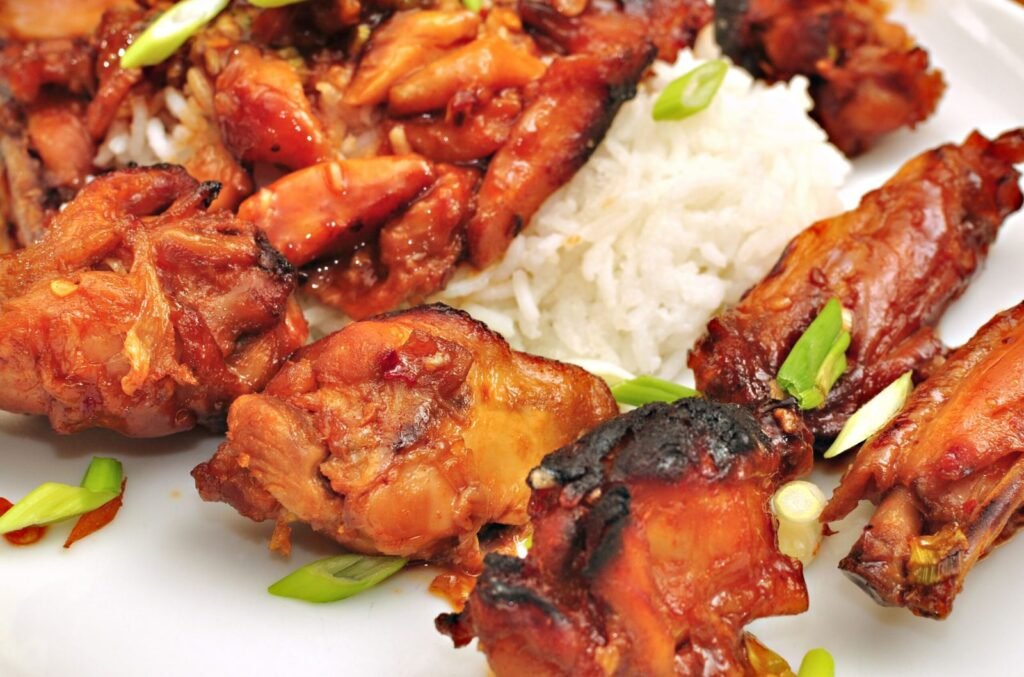
That’s the real reason behind a piece of advice that shows up constantly in honey-glazed recipes without much explanation: brush honey glazes on during the last several minutes of cooking, not at the start. A honey-soy glaze brushed onto chicken thighs at the beginning of a 45-minute roast will scorch and turn bitter well before the chicken finishes cooking; the same glaze brushed on for the final 5–10 minutes caramelizes into the glossy, slightly charred finish the dish is supposed to have. Honey’s higher viscosity compared to a thin sugar syrup also means it clings to food’s surface rather than running off, which is exactly what makes it effective as a glaze — but it also means a too-thick coat burns unevenly, so thinning honey with a little acid, oil, or stock before brushing usually gives a more even result than brushing it on straight from the jar.
Featured photo: hot honey drizzled over pan-fried halloumi, mushrooms, and a poached egg on pitta — the technique this guide covers, not just a sweet drizzle. Photo: Andy Li, CC0/public domain, via Wikimedia Commons.
How to Make Hot Honey (and Use It Right)
Hot honey isn’t a specific branded product or a fixed recipe — it’s a technique: honey infused with chili heat, almost always cut with a small amount of acid to keep the sweetness from tasting flat. The most common home method is a gentle stovetop infusion: warm honey with dried chili flakes (or a few sliced fresh chilies) over low heat for 10–15 minutes without letting it boil, then strain out the solids if a smooth texture is wanted, or leave them in for a chunkier, spicier result. A splash of vinegar — apple cider vinegar and hot sauce are both common choices — added at the end brightens the whole thing and keeps it from tasting like straight chili-infused syrup.
The heat level is entirely adjustable by how long the chili sits in the warm honey and how much is used, which is worth treating as a real variable rather than following one fixed ratio: starting with about a tablespoon of red pepper flakes per cup of honey and tasting as it steeps gives more control than committing to a specific “hot honey recipe” number upfront. Once made, hot honey holds at room temperature in a sealed jar for weeks the same way plain honey does, since honey’s own low water activity resists spoilage — though a vinegar or fresh-chili addition changes that shelf-stability slightly and is worth using within a few weeks for best flavor rather than treating it as indefinitely shelf-stable.
Building a Real Honey Glaze
A workable honey glaze almost always has three functional parts, even though recipes rarely spell this out: honey for sweetness, browning, and cling; a savory or salty liquid to keep it from tasting one-dimensionally sweet (soy sauce, mustard, tamari, miso, or a reduced stock); and something acidic to cut the sweetness and add brightness (rice vinegar, citrus juice, balsamic vinegar). A simple, genuinely reliable starting ratio is 2 parts honey to 1 part soy sauce to 1 part vinegar or citrus, adjusted to taste — from there, garlic, ginger, chili, or mustard are additions rather than requirements.
Reducing a glaze slightly on the stovetop before applying it — simmering it for a few minutes until it thickens and coats the back of a spoon — concentrates the flavor and makes it cling better than applying it thin straight from mixing. This matters more for honey glazes than for glazes based on granulated sugar syrup, since honey already starts thicker and more flavorful; over-reducing a honey glaze can quickly tip it from balanced to cloying, so reducing gently and tasting as it goes works better than following a fixed simmering time.
Honey Marinades That Actually Work
A honey marinade follows the same three-part logic as a glaze, but with more liquid and generally more acid, since a marinade needs to actually penetrate and tenderize the food’s surface over time rather than just coat it right before serving. Honey, olive oil, and an acid like lemon juice or vinegar make a genuinely simple, adaptable base for chicken, pork, or firm vegetables — from there, mustard, garlic, soy sauce, or fresh herbs shift the flavor direction without changing the underlying structure.
Because honey has real antimicrobial properties at full strength but a diluted honey marinade does not carry that same protection, ordinary food-safety practices for marinating still apply in full: the USDA Food Safety and Inspection Service’s guidance on basting, brining, and marinating is explicit that meat and poultry should marinate in the refrigerator, not on the counter, and that a marinade which touched raw meat or poultry must be brought to a full boil before it can safely be reused as a sauce. Honey’s natural sugars also mean a marinated piece of meat browns and can scorch faster on a hot grill than an unmarinated one would, which is the same caramelization effect described above playing out over a longer, hotter cooking method — moving marinated food to indirect heat partway through, or watching it more closely than usual, avoids a blackened exterior on an undercooked interior.
Where Honey Belongs in Savory Cooking
Beyond glazes and marinades, honey shows up as a smaller, deliberate accent across a wide range of savory dishes rather than as a bulk ingredient. A drizzle of hot honey over pizza, fried chicken, or a cheese board plays sweet against salty and fatty in a way plain sugar can’t replicate, since honey brings its own floral or earthy variety-specific flavor along with the sweetness — a stronger varietal like buckwheat honey reads very differently in this role than a mild clover honey does. Roasted vegetables — carrots, Brussels sprouts, sweet potatoes, root vegetables generally — take well to a honey drizzle added in the final few minutes of roasting, since the same caramelization that makes glazes work also deepens the vegetables’ own natural sugars.
Honey mustard is one of the most established savory honey applications and works on the same basic logic as a glaze: honey balances mustard’s sharpness rather than the reverse, in a roughly equal-parts starting ratio that can be adjusted toward more mustard for a sharper dressing or more honey for a milder dip. A honey-miso or honey-soy glaze on salmon leans on the same three-part structure (sweet, salty/umami, and usually a little acid or ginger) that works across nearly every savory honey application in this guide, once the underlying pattern is understood rather than memorized recipe by recipe.
Mistakes That Ruin Savory Honey Dishes
- Applying a honey glaze from the start of cooking. Honey’s lower caramelization point means an early-applied glaze is likely to scorch and taste bitter well before the food finishes cooking — apply in the final 5–10 minutes instead.
- Treating honey as a 1:1 swap for sugar in a savory recipe. Honey is sweeter by volume than granulated sugar and brings its own moisture and flavor, so recipes built around sugar usually need less honey, not an equal amount.
- Skipping the acid. A honey-only glaze, marinade, or hot honey tastes flat and one-dimensionally sweet; a small amount of vinegar or citrus is what makes these dishes taste balanced rather than syrupy.
- Reusing a raw-meat marinade as a finishing sauce without boiling it. This is a basic food-safety rule that applies regardless of what sweetener the marinade contains, and honey’s antimicrobial properties don’t change it.
- Using an expensive varietal honey where its flavor gets lost. A high-heat glaze or a strongly spiced hot honey masks the delicate character of a premium single-source honey — save those for applications where the honey’s own flavor is the point, like a cheese pairing or a light dressing.
Frequently Asked Questions
Why does my honey glaze always burn?
Honey’s fructose caramelizes at a noticeably lower temperature than the sucrose in table sugar, so a glaze applied at the start of a long cook time will scorch before the food is done. Brush honey-based glazes on during the last 5–10 minutes of cooking instead of at the beginning.
What exactly is hot honey?
Hot honey is honey infused with chili heat — dried flakes, fresh chilies, or hot sauce — usually with a splash of vinegar added for balance. It’s a technique rather than one fixed recipe, and the heat level is fully adjustable by how much chili is used and how long it steeps.
See our related guide on non-alcoholic honey drinks like switchel and honey lemonade for other ways honey’s flavor works outside of straight table use.
Can I use any honey for cooking, or does the variety matter?
Any honey works functionally, but the flavor result differs: a mild honey like clover stays in the background in a glaze or marinade, while a bold varietal like buckwheat or chestnut brings its own strong character forward. For high-heat applications where the honey mostly disappears into caramelization anyway, a basic, less expensive honey is usually the more practical choice.
Is it safe to marinate meat in a honey-based marinade overnight?
Yes, as long as normal marinating food-safety rules are followed: marinate in the refrigerator, not at room temperature, and never reuse a marinade that raw meat sat in as a serving sauce without boiling it first. Honey doesn’t change these basic rules despite its own natural antimicrobial properties at full strength.
How long does homemade hot honey or a honey glaze last?
Plain infused hot honey keeps for several weeks at room temperature in a sealed jar, similar to plain honey, though a fresh-chili or vinegar addition is best used within a few weeks rather than treated as indefinitely shelf-stable. A mixed glaze containing soy sauce, mustard, or other perishable ingredients should be refrigerated and used within about a week.
What’s a simple honey glaze ratio I can start from?
Two parts honey to one part soy sauce to one part vinegar or citrus juice is a reliable, adjustable starting point for a savory glaze — from there, garlic, ginger, mustard, or chili are flavor additions rather than structural requirements.