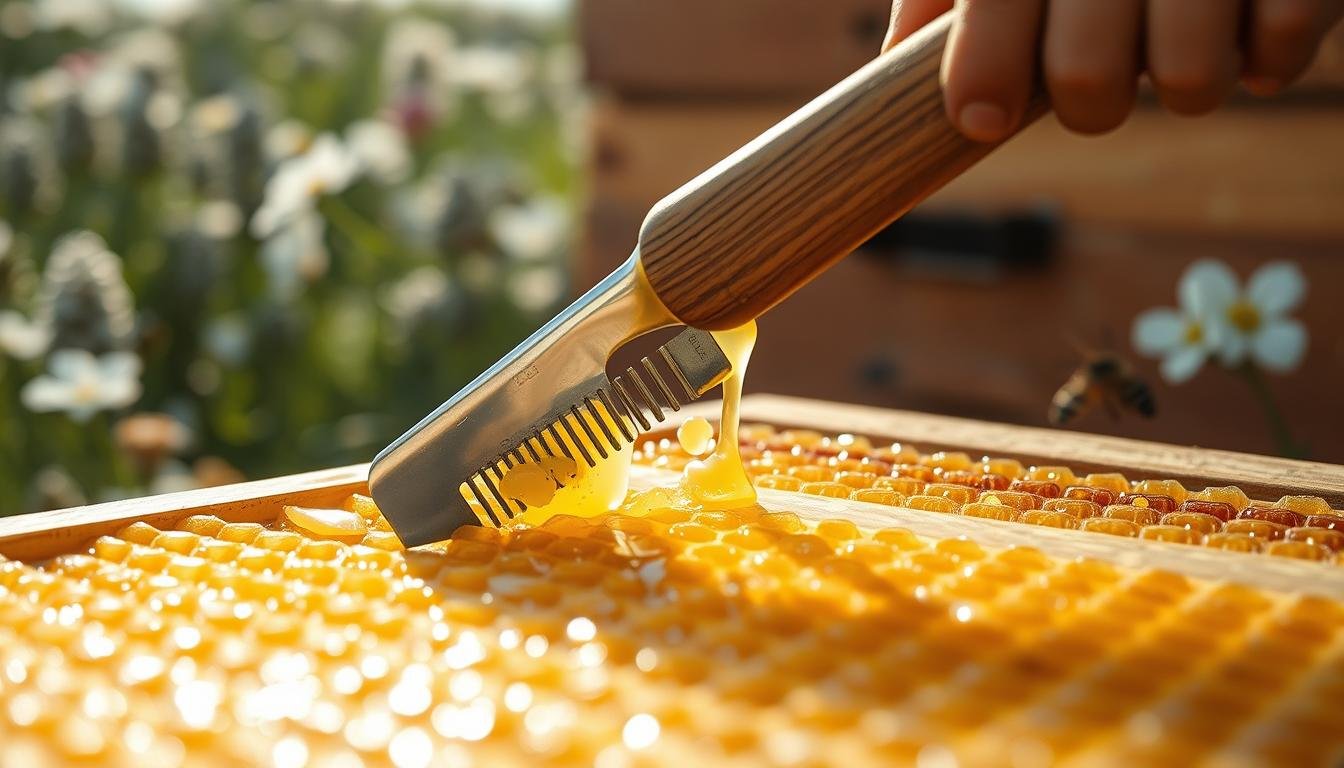
A capping scratcher brings a simple fix to a common task in the hive. This inexpensive plastic tool helps clear wax that a standard uncapping knife can miss, especially along the frame edges and around wire supports where a blade tends to skip.
Frames often need a second pass after a quick slice with an uncapping knife, since even a sharp blade rarely opens every sealed cell in one pass. This scratcher is light, easy to hold, and made to reach tight corners without damaging comb.
Pairing this tool with a heated or cold uncapping knife speeds harvest work and improves yield, since the two tools cover each other’s weak points. Learn more methods and tool choices at recommended uncapping methods and compare equipment at beekeeping equipment.
Key Takeaways
Here is a quick summary before diving into the full picture below.
- Affordable plastic tool that speeds up frame processing without requiring any special training to use.
- Works well alongside an uncapping knife to remove remaining wax the blade leaves behind on a first pass.
- Choose stainless steel for heavy commercial use, or plastic for lighter hobbyist workloads, depending on how many hives are being processed each season.
- Designed to reach corners without harming comb structure, so drawn foundation stays intact for reuse next season.
- Complements heated, cold, and manual uncapping workflows, regardless of which primary knife style a beekeeper prefers.
Table of Contents
- Understanding the Role of the Best Cappings Scratcher for Uncapping Honey
- Key Features and Design Considerations for Your Hive Tools
- Beyond Honey Extraction: Managing Hive Health
- Conclusion
- FAQ
Understanding the Role of the Best Cappings Scratcher for Uncapping Honey
Most beekeepers discover the need for a scratcher the hard way, after finding capped cells still sealed on frames that were supposedly already uncapped and ready for the extractor.
A tidy frame finish often depends on a small handheld tool that reaches where a blade cannot. Compared to a full uncapping knife setup, a capping scratcher is a modest investment that improves extraction efficiency without adding much to a beekeeper’s equipment budget.
This device works with your uncapping knife to clean corners and side cells on each frame. Use it after a primary pass to open stubborn caps and avoid leaving sealed cells behind, since any cell left capped simply will not spin out in the extractor. A well-cleared frame means a higher yield when you run the extractor.
This video demonstrates a scratcher in use, clearing wax a knife pass alone left behind.
A small touch-up tool can make the difference between a good harvest and a full one.
That difference is easy to underestimate until a missed cap costs a jar or two of honey that never made it into the extractor.
- Pairs with an uncapping knife to remove remaining wax left along frame edges and around foundation wires.
- Saves time on frames and protects comb, since the tines lift wax without gouging into the drawn cells beneath.
- A sharp edge on the tines keeps the scratcher gliding through wax instead of tearing comb.
Compare extraction gear at bee wax equipment.
Key Features and Design Considerations for Your Hive Tools
Not every scratcher on the market is built the same way, and small differences in tine spacing, material, and handle shape add up over a full season of use.
Durable construction and a comfortable grip make seasonal harvests faster and cleaner, since a tool that flexes or slips under load slows down every frame it touches.
Material Durability
Wax and propolis are naturally corrosive over time, so a tool that resists staining and pitting will keep its edge and stay easy to sanitize between hive visits.
Professional-grade plastic keeps the tool light yet resilient. Most models run under 8 inches long and weigh only a couple of ounces, so a scratcher won’t tire your hand during long shifts.
Heavy-duty solid plastic resists cracking and stands up to repeated cleaning with soap and water, even when wax and propolis build up after a long extraction session. This makes maintenance quick and lowers replacement costs over time.

Ergonomic Handle Design
A handle that is too thin or too smooth forces a tighter grip than necessary, which is one of the more common causes of hand fatigue during a long uncapping session.
The molded handle fits most hands and reduces strain when processing many frames, which matters most during a large harvest with dozens of frames waiting in line. A good grip helps maintain control when you follow an uncapping knife pass.
- Comfort: Molded contours reduce slippage and hand fatigue, even with wax-slicked gloves on a busy extraction day.
- Cleaning: Smooth plastic cleans easily after extraction, with most residue rinsing off under warm water alone.
- Efficiency: Light weight speeds repeated motions on each frame, which adds up noticeably across a full box of ten or more.
A sturdy tool and a smart grip save time at the extractor.
Small ergonomic choices rarely feel important in the moment, but they compound noticeably across dozens of frames in a single sitting.
For a closer look at technique, read about preventing heat damage during extraction, a common mistake with heated knives, at extraction best practices.
Beyond Honey Extraction: Managing Hive Health
A tool bought for the extracting room can quietly earn its keep the rest of the season once it becomes part of a regular inspection routine.
Hands-on checks of drone brood are a practical way to monitor colony health. Regularly inspecting targeted areas helps you spot varroa pressure early and act fast, before mite numbers climb high enough to weaken the whole colony.
Inspecting for Varroa Mites
Since drone brood takes longer to develop than worker brood, Varroa mites preferentially reproduce inside drone cells, making them a reliable early-warning target for infestation checks.
Use the tool after a knife pass to open drone cells and lift white larvae. This reveals visible mites and gives a quick snapshot of infestation levels without needing a separate sampling tool.
- Beyond extraction, the tool makes it simple to check drone brood cells to monitor mite numbers in the hive without needing a dedicated sampling tool for the job.
- By using it to uncap drone cells you can interrupt the mites’ reproductive cycle as part of a broader integrated pest management plan.
- Value: one tool assists both harvest and essential health inspections, doubling its usefulness beyond a single task.
- Because the tool is inexpensive, many beekeepers keep a spare on hand to outfit more boxes or hand to a helper during a large harvest.
- Working a single frame lets you spot mites quickly and decide if broader action, such as a full mite wash or treatment, is needed.
| Use | Benefit | Cost Note |
|---|---|---|
| Inspect drone brood | Detects mites early and guides treatment | Low price; useful year-round |
| Assist knife work | Clears side cells after a quick knife pass | Pairs well with heated or cold knife |
| Frame spot checks | Fast visual of infestation level | Affordable year-round |
| Brood management | Helps remove affected cells to reduce mite load | Cost-effective hive maintenance |
Early detection in drone cells can significantly reduce overwinter losses.
The table below summarizes how one tool supports several distinct tasks across a season.
Complement manual checks with additional resources on apiary management like apiary essentials, explore ultrasonic varroa detection tech, or read about minimalist hive setups to scale inspections efficiently.
Conclusion
Skipping this small tool is one of the more common oversights among newer beekeepers setting up their first extraction kit.
A low-cost plastic tool often delivers big gains in extraction speed and care. A well-made uncapping scratcher pairs neatly with an uncapping knife to clear side cells and speed work at the extractor, and it earns its place in a toolkit well beyond a single harvest season.
This simple device helps you access every frame and supports hive inspections, improving overall harvest quality and colony health across an entire season of beekeeping.
For broader equipment setup tips beyond the scratcher itself, see a practical guide to a beginner extractor setup, or browse a range of additional beekeeping topics to expand your tools and refine your seasonal routine over time.
FAQ
The questions below cover the details that come up most often once beekeepers start comparing scratchers, knives, and full uncapping tool sets.
What is a honey uncapping scratcher and why do beekeepers use it?
An uncapping scratcher is a narrow, comb-like tool used to remove wax caps from honeycomb frames before extraction. Beekeepers use it to access liquid honey while keeping comb intact, which helps preserve brood patterns and reduces damage to frames during processing, extending the useful life of drawn comb across many future harvests.
How does an uncapping knife differ from a scratcher?
An uncapping knife is a flat, heated blade that slices through wax caps quickly. A scratcher uses tines or scrapers to lift and break the wax without heat. Knives speed processing; scratchers give more control and reduce risk of melting wax or injuring bees when used near brood frames, which is why most beekeepers keep both tools on hand rather than relying on just one.
What materials should I look for in a durable hive tool set?
Choose stainless steel or food-grade aluminum for corrosion resistance and easy cleaning. Handles made of hardwood, reinforced plastic, or rubber offer longevity. Avoid low-grade metal that bends; quality materials maintain blade edge and alignment for years, saving money on replacements over a beekeeping career.
Are ergonomic handles important when selecting uncapping tools?
Yes. Ergonomic handles reduce wrist strain during long extraction sessions. Look for contoured grips, non-slip textures, and balanced weight so you can work precisely without fatigue, especially when uncapping dozens of frames back to back. Comfortable tools speed processing and improve safety.
Can I use plastic uncapping tools, and are they effective?
Plastic tools can be useful for light-duty work and hobbyists. High-density plastics resist breakage and are gentle on combs. For commercial operations or heavy use, metal tools remain superior for durability and consistent performance, since plastic tines can wear down faster under near-daily use during a long honey flow.
How do I inspect frames for Varroa mites while uncapping?
During frame inspection, look for irregular brood patterns, deformed pupae, and mites on drone cells. Use a sticky board, powdered sugar roll, or alcohol wash to quantify mite levels alongside the visual check. Regular checks during extraction help time treatments and protect colony health.
Should an uncapping tool be paired with other hive tools in a set?
Yes. A well-rounded set includes a hive tool, frame lifter, uncapping knife or scratcher, and a bee brush. These tools streamline inspections, frame handling, and extraction while minimizing harm to bees and comb, and having them all on hand avoids scrambling mid-inspection for something left in storage.
How do I clean and maintain an uncapping knife or scratcher?
Rinse off wax with warm water, then use mild detergent to remove residues. For heated knives, follow manufacturer cleaning instructions to avoid damage. Dry thoroughly to prevent corrosion and periodically oil wooden handles to extend life, since trapped moisture is one of the more common causes of premature handle cracking.
Can tools help reduce the spread of disease and cross-contamination?
Yes. Sanitizing tools between hives with diluted bleach or food-grade disinfectants lowers the risk of spreading pathogens such as American foulbrood. Disposable gloves, separate tool sets for sick hives, and proper storage further limit cross-contamination.
What price range should I expect for quality uncapping tools and sets?
Hobby-grade plastic scratchers and basic knives start at lower prices, while stainless steel professional kits cost more. Expect mid-range durable sets with ergonomic handles and multiple tools to offer the best value for serious beekeepers who plan to keep bees for years rather than a single season.