Last Updated September 15, 2026
Small, dark, mostly hairless, and easy to mistake for a wasp at a glance — yellow-faced bees in the genus Hylaeus break several of the visual rules most people use to recognize a bee. They also break a genuinely fundamental biological rule shared by nearly every other bee covered on this site: rather than carrying pollen externally on specialized body hairs the way almost all their relatives do, they swallow it and carry it internally instead.
Key Takeaways
- What they are: Small, sparsely-haired solitary bees in the genus Hylaeus (family Colletidae), sometimes called “masked bees,” found across mainland North America.
- Signature trait: Females lack external pollen-carrying hairs entirely and instead ingest pollen and nectar, carrying it internally in the crop and regurgitating it to provision the nest.
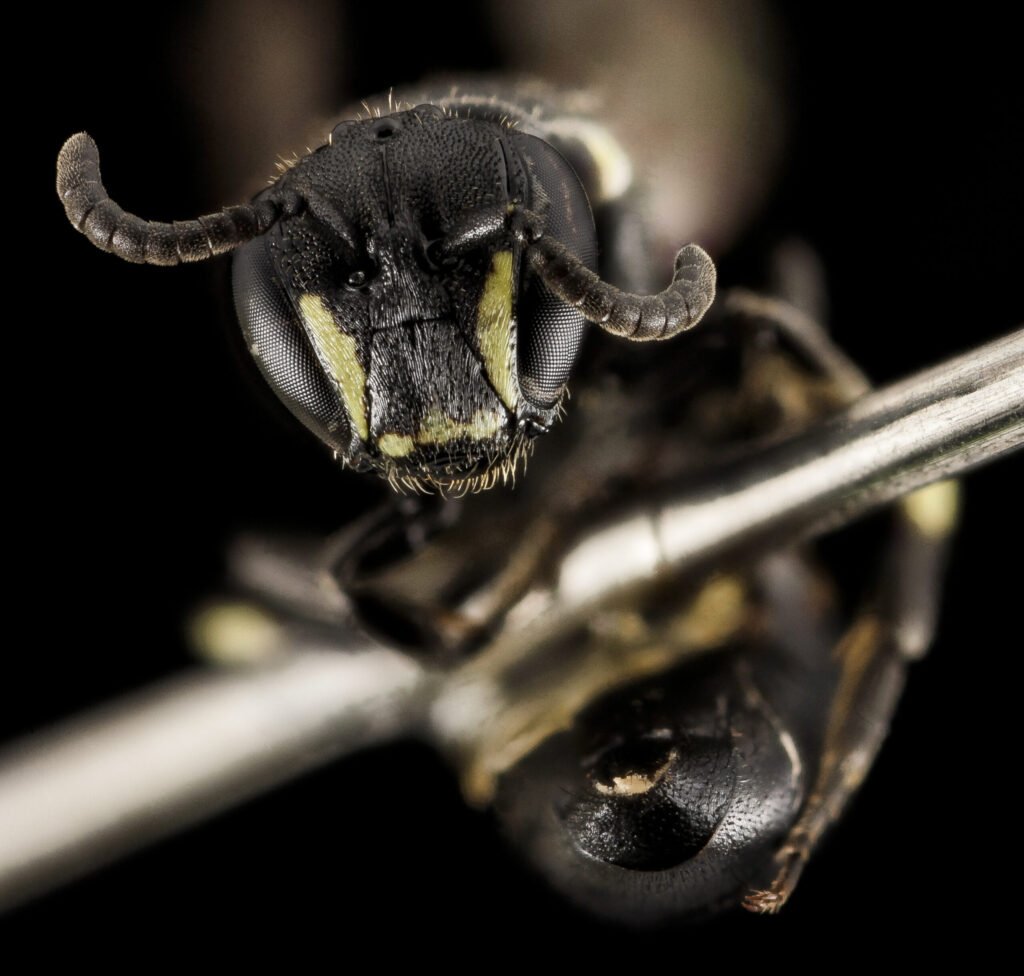
- Easiest ID mark: Pale yellow-to-whitish facial markings, especially on males, against an otherwise smooth, dark, mostly hairless body.
- Conservation note: Seven endemic Hawaiian relatives, including Hylaeus anthracinus, became the first bee species ever placed on the US Endangered Species List, listed by USFWS on September 30, 2016 — mainland species aren’t currently listed.
- No sting risk: Solitary with no colony to defend; unprovoked stings toward people are extremely uncommon.
Table of Contents
- What Are Yellow-Faced Bees?
- Identification: The Pale Facial Markings
- Why They Carry Pollen Inside Their Body Instead of On It
- Same Family as Plasterer Bees
- A Genuinely Diverse Genus
- Cavity Nesting in Hollow Stems and Twigs
- Why They’re So Often Mistaken for Wasps
- A Related Species Made US History
- Any Relevance for Honeybee Beekeepers?
- Sting Risk to People and Pets
- Yellow-Faced Bees vs. Mason Bees vs. Small Wasps
- Common Identification Mistakes
- Frequently Asked Questions
What Are Yellow-Faced Bees?
Hylaeus is a genus of small native bees found across North America, sometimes called “masked bees” in addition to yellow-faced bees. They are solitary bees, with each female building and provisioning her own nest independently rather than participating in a shared colony structure.
Identification: The Pale Facial Markings
The common name comes from a genuinely reliable field mark: many Hylaeus species show pale yellow or whitish facial markings, particularly on males, standing out against an otherwise mostly black or dark body. Unlike many of the fuzzy, colorful native bees covered elsewhere on this site, yellow-faced bees are notably sparse on body hair, giving them a smooth, almost wasp-like overall appearance that plays a genuinely major role in how often they end up misidentified by casual observers.
Why They Carry Pollen Inside Their Body Instead of On It
Most bees covered on this site, including honeybees and the great majority of native species, carry pollen externally using specialized hairs — on the hind legs in most bees, or on the underside of the abdomen in leafcutter bees. Yellow-faced bees do something genuinely different: females lack these external pollen-carrying structures almost entirely, and instead ingest pollen and nectar, carrying the mixture internally in their crop and later regurgitating it at the nest to provision brood cells. This internal-transport strategy is a real, documented point of biological distinction rather than a minor cosmetic difference, and it’s part of why yellow-faced bees don’t show the visibly pollen-dusted look so many other foraging bees display.

Same Family as Plasterer Bees
Hylaeus belongs to the family Colletidae, the same family as the plasterer bees already covered on this site. Like plasterer bees, yellow-faced bees line their nest cells with a cellophane-like glandular secretion that dries into a thin, waterproof membrane, protecting developing larvae and stored provisions from moisture — a shared family trait that connects two otherwise quite different-looking native bees through the same underlying nest-construction chemistry.
A Genuinely Diverse Genus
Hylaeus includes a considerable number of species across North America, occupying a wide range of habitats from gardens and meadows to more disturbed urban and suburban landscapes. Despite this diversity, individual species can be difficult to distinguish from one another without close examination, since the genus as a whole shares the same general small size, sparse hair, and pale facial marking pattern, making genus-level identification considerably more practical for most readers than attempting species-level identification in the field.
Cavity Nesting in Hollow Stems and Twigs
Yellow-faced bees nest in narrow, pre-existing cavities such as hollow or pithy plant stems, old beetle tunnels in dead wood, and occasionally abandoned nest tunnels left behind by other cavity-nesting bees. This cavity-nesting strategy places them in the same general behavioral category as mason bees, though the two differ meaningfully in nest-lining material and overall body size and appearance.

Why They’re So Often Mistaken for Wasps
Between their sparse body hair, small size, and often slender build, yellow-faced bees are among the native bees most commonly mistaken for small wasps rather than correctly identified as bees at all. As covered in the bee vs. wasp identification guide on this site, body hair density is one of the more reliable general clues for separating bees from wasps, but yellow-faced bees are a genuine exception worth calling out directly, since they break that general rule more than almost any other native bee covered here.
A Related Species Made US History
Worth noting for context: seven endemic Hawaiian species in this same genus — Hylaeus anthracinus, H. assimulans, H. facilis, H. hilaris, H. kuakea, H. longiceps, and H. mana — became the first bee species ever placed on the US Endangered Species List, listed by the U.S. Fish and Wildlife Service in the Federal Register on September 30, 2016. These are geographically and ecologically distinct Hawaiian species, known locally as nalo meli maoli, rather than the mainland North American Hylaeus species most readers of this site are likely to encounter, but the listing remains a genuinely notable milestone in US pollinator conservation history worth being aware of when discussing this genus.
Hawaii’s Division of Forestry and Wildlife notes that these native yellow-faced bees face threats including “habitat loss or degradation, nonnative predators, invasive plants, fire, and habitat destruction from ungulates.”
That threat profile, documented by the Hawaii Department of Land and Natural Resources, is a useful reminder that even a genus with hundreds of widespread, unremarkable-seeming mainland species can include members facing genuine extinction risk in a geographically isolated part of their range.
Any Relevance for Honeybee Beekeepers?
Yellow-faced bees aren’t a concern for managed honeybee colonies. They are solitary, unrelated to hive structure, and there’s no documented pattern of competition or interaction with honeybees significant enough to matter for apiary management. Beekeepers who notice small, dark, sparsely-haired bees around cavity-rich areas of their property are simply observing an unrelated native pollinator going about its own business.
Sting Risk to People and Pets
Yellow-faced bees pose essentially no meaningful sting risk to people. As solitary bees with no colony to defend, they are not aggressive, and their small size and generally mild temperament make unprovoked stings extremely uncommon, consistent with the broader pattern seen across most solitary native bees covered on this site.
Yellow-Faced Bees vs. Mason Bees vs. Small Wasps
| Feature | Yellow-Faced Bee | Mason Bee | Small Solitary Wasp |
|---|---|---|---|
| Body hair | Sparse | Dense | Sparse |
| Pollen transport | Internal (swallowed) | External (hairs) | N/A (predator) |
| Nest type | Hollow stems/cavities | Hollow stems/cavities | Varies by species |
| Diet | Nectar and pollen | Nectar and pollen | Other insects |
Common Identification Mistakes
The most common mistake is assuming a small, dark, sparsely-haired flying insect visiting flowers must be a wasp rather than a bee, when yellow-faced bees are a genuine, if easily overlooked, exception to the usual hairiness rule of thumb. A second common mistake is expecting to see visible pollen dusted on the body or legs the way it appears on most foraging bees, when yellow-faced bees carry their pollen load internally and simply won’t show this visual cue at all.
Frequently Asked Questions
Are yellow-faced bees dangerous to people?
No. Like most solitary native bees, they are not aggressive and pose essentially no meaningful sting risk under normal circumstances.
How can I attract yellow-faced bees to my garden?
Leaving dead or hollow plant stems standing over winter, rather than cutting them back completely, provides the kind of cavity-nesting habitat this genus depends on, similar to the general guidance for supporting mason bees and other cavity-nesting native bees.
Is it true that yellow-faced bees don’t collect pollen at all?
No, they do collect and use pollen as food for their offspring — they simply transport it internally in their crop rather than externally on body hairs, which is a difference in transport method rather than a difference in diet.
Why are yellow-faced bees considered important for conservation?
While mainland North American species aren’t currently listed as endangered, the genus gained national attention when seven Hawaiian relatives became the first bee species protected under the US Endangered Species Act in 2016, highlighting that even common-seeming native bee genera can include genuinely vulnerable species.
Do male and female yellow-faced bees look noticeably different from each other?
Yes, males typically show more extensive and brighter pale facial markings than females, which often have more limited or subtler markings, making sex-based identification within the genus somewhat more approachable than distinguishing between individual species.
Do yellow-faced bees compete with mason bees for the same nesting cavities?
Some overlap in preferred nesting cavity type is possible given both are cavity-nesters, though the two aren’t generally documented as significant direct competitors, and providing a range of cavity sizes in a garden or bee house can realistically support both species alongside other cavity-nesting bees without one crowding out the other.
Is there anything homeowners should avoid doing that might harm yellow-faced bees without realizing it?
The most common unintentional harm comes from aggressively cutting back and disposing of all dead or hollow plant stems every fall, since this removes exactly the kind of nesting cavities this genus and several other cavity-nesting native bees rely on; leaving some standing stems through winter is a simple, low-effort way to avoid this.
Further Reading
For more on the endangered Hawaiian species specifically, see the USFWS species profile for the anthricinan yellow-faced bee and the Minnesota Bee Atlas species guide to Hylaeus annulatus.