Reviewed by Michael R. · Last Updated October 15, 2026 · How we review
A pollination syndrome is a recurring bundle of flower traits (color, shape, scent, nectar and bloom time) that tends to match one kind of pollinator, such as bees, hummingbirds or moths. It is a useful first guess about who visits a flower, not a rule. In a six-community test on three continents, the closest syndrome named a plant’s most common pollinator only about 30% of the time.
This guide gives you the trait table, explains what bees really see (it is not quite what most guides say), shows how often each syndrome gets it right, and covers where honey bees fit in.
Key Takeaways
- A syndrome is a set of flower traits that travel together because one type of pollinator favors them. The USDA Forest Service lists traits for bats, bees, beetles, birds, butterflies, flies, moths and wind.
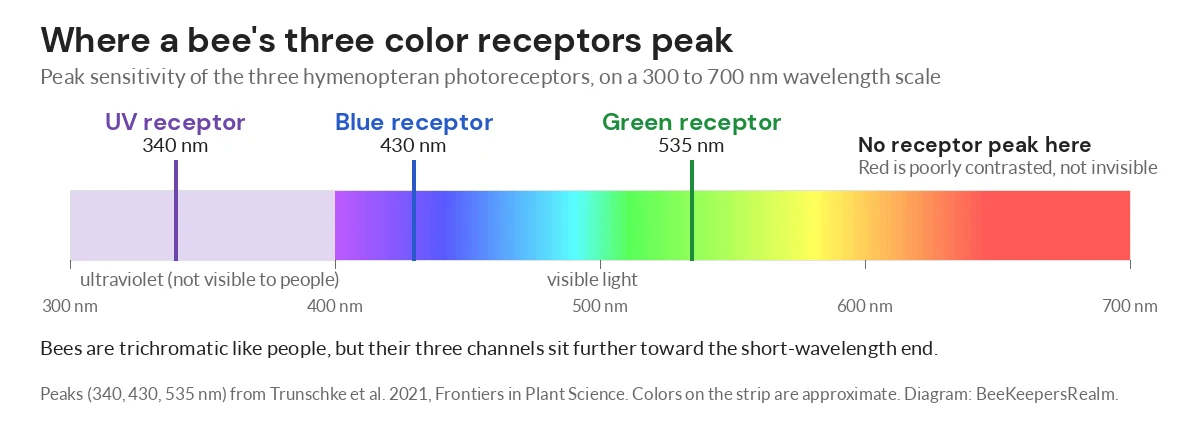
- Bee flowers are typically bright white, yellow, blue or UV-reflecting, with nectar guides and a shallow shape or landing platform. Bee color receptors peak at 340, 430 and 535 nm, so red is poorly contrasted for them, not invisible.
- Hummingbird flowers are typically scarlet, orange or red, tubular and nearly scentless. Hummingbirds can see red but have an underdeveloped sense of smell, per the National Wildlife Federation.
- Accuracy is mixed. Ollerton and colleagues found the closest syndrome predicted the main pollinator for a mean of 29.7% of plants (35.0% allowing a second-closest match), while a review of 417 species found traits do predict the most effective pollinator group.
- Honey bees made an average 13% of flower visits across 80 natural-habitat networks and were never seen on 49% of the plant species studied, so a “bee flower” is not automatically a honey bee flower.
Table of Contents
- What Counts as a Pollination Syndrome
- The Syndromes Side by Side
- Bee Flowers and What Bees Actually See
- Hummingbird Flowers: Red Tubes, No Scent
- Moth and Bat Flowers: Built for Night Shifts
- Fly and Beetle Flowers: Rot, Bowls and Pollen
- How Often Syndromes Predict the Pollinator
- Where Honey Bees Fit In
- Using Syndromes in Your Own Yard
- Frequently Asked Questions
- The Bottom Line
What Counts as a Pollination Syndrome
Plants cannot walk to a mate, so many rely on an animal courier to carry pollen between flowers of the same species. Over evolutionary time, unrelated plants that depend on the same kind of courier have often ended up with similar flowers. Botanists call each recurring package a pollination syndrome. The USDA Forest Service notes that flower type, shape, color, odor, nectar and structure vary with the kind of pollinator that visits, and that these patterns can be used to predict which pollinator will help the flower reproduce.
“‘Pollination syndromes’ are suites of phenotypic traits hypothesized to reflect convergent adaptations of flowers for pollination by specific types of animals.”
The word “hypothesized” matters. The same paper says the syndromes were first developed in the 1870s and refined in the mid-20th century, yet had rarely been put to a real test. We get to those tests below. First, here is what each syndrome is supposed to look like.
The Syndromes Side by Side
This table condenses the USDA Forest Service trait chart and adds native U.S. examples from the National Wildlife Federation. Treat each row as a typical profile, not a guarantee.
| Pollinator | Color | Scent | Shape and access | Reward | U.S. examples |
|---|---|---|---|---|---|
| Bees | Bright white, yellow, blue or UV; nectar guides present | Fresh, mild, pleasant | Shallow, with a landing platform, or a short tube | Nectar usually; limited, often sticky pollen | Penstemon, goldenrod, sunflower, baby blue eyes |
| Butterflies | Bright, including red and purple | Faint but fresh | Narrow tube with a spur; wide landing pad | Ample nectar, deeply hidden | Joe-pye weed, butterfly weed, coneflower, blazing star |
| Moths | Pale and dull red, purple, pink or white | Strong, sweet, released at night | Regular, tubular, no lip | Ample nectar, deeply hidden | Phlox, yucca, wild tobacco, evening primrose |
| Birds | Scarlet, orange, red or white | None | Large, funnel-like, with strong perch support | Ample nectar, deeply hidden | Cardinal flower, trumpet vine, trumpet honeysuckle, wax currant |
| Bats | Dull white, green or purple | Strong, musty, released at night | Regular, bowl-shaped, closed by day | Abundant nectar and ample pollen | Agave, saguaro, organ pipe cactus, desert willow |
| Beetles | Dull white or green | None to strongly fruity or fetid | Large and bowl-like | Ample pollen; nectar sometimes, not hidden | Magnolia |
| Flies | Pale and dull to dark brown or purple, often flecked | Putrid | Shallow, funnel-like, or trap-like | Nectar usually absent | Pawpaw, skunk cabbage, wild ginger, red trillium |
| Wind | Dull green, brown or colorless; petals absent or reduced | None | Small, with stigmas held out | No nectar; abundant small, smooth pollen | Not listed by USDA |
Sources: trait columns from the USDA Forest Service pollinator syndromes page; examples from the National Wildlife Federation’s guide to gardening with pollination syndromes.
Bee Flowers and What Bees Actually See
Bee flowers advertise in the part of the spectrum bees see best. A 2021 review of flower color evolution in Frontiers in Plant Science puts it plainly:
“Hymenopteran vision is shifted towards shorter wavelengths compared to human vision with peak sensitivities occurring at 340, 430, and 535 nm enabling most bee species to perceive UV”
Three practical consequences follow.
- Red is not invisible to bees. The popular claim that bees “can’t see red” is too strong. No bee receptor peaks in red, and the same review notes the “poor capacities of most bees to contrast red against their surroundings,” citing a 1997 paper by Chittka and Waser whose title says it all: “Why red flowers are not invisible to bees.” Red flowers are simply a weak signal to a bee, which is one reason red tubes belong to hummingbirds more often than to bees.
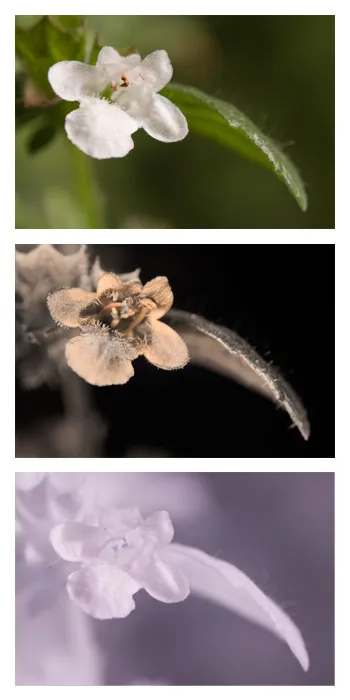
- Ultraviolet patterns act as landing guides. The review also describes the UV-absorbing “bull’s eye” in the center of many yellow flowers. People see one flat color; a bee sees a target.
- Shape matters as much as color. The USDA lists bee flowers as shallow, with a landing platform, or tubular, and with a fresh, mild scent. Penstemon is a good example: tubular, but the National Wildlife Federation counts it among the flowers built for bees.
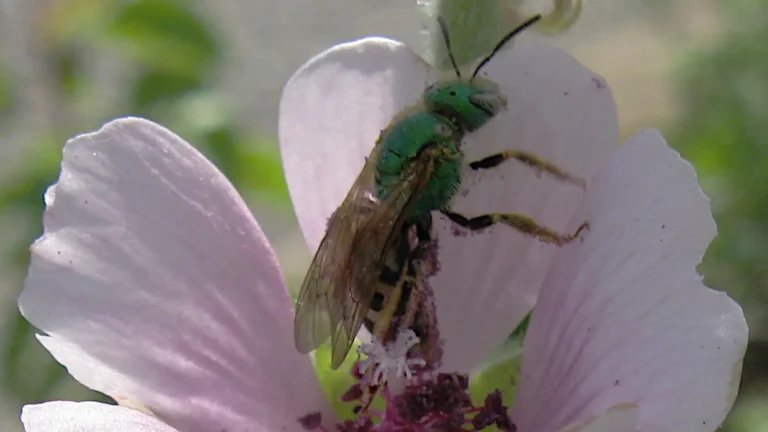
“Bee syndrome” is also a blunt label, because bees are not one pollinator. Bumblebees can vibrate flowers to shake pollen loose, a trick honey bees lack; our explainer on buzz pollination covers it. Some native bees collect floral oils, as in oil-collecting bees, and orchid bees gather perfume, as described in our orchid bee profile. The extreme case is the bee orchid, which impersonates a female bee instead of offering a reward. For a field guide to the bees themselves, see native bee species in the United States.
Hummingbird Flowers: Red Tubes, No Scent
Hummingbird flowers read like the opposite of bee flowers. The USDA lists bird flowers as scarlet, orange, red or white, with no scent, no nectar guides, large funnel-like shapes with strong perch support, and ample nectar that is deeply hidden. The National Wildlife Federation adds the logic: hummingbirds, like many birds, have an underdeveloped sense of smell but can see red, which most insect competitors cannot, and they burn fuel fast, so their flowers are bright and sugar-rich. Tubes tilted down or outward exclude most insects.
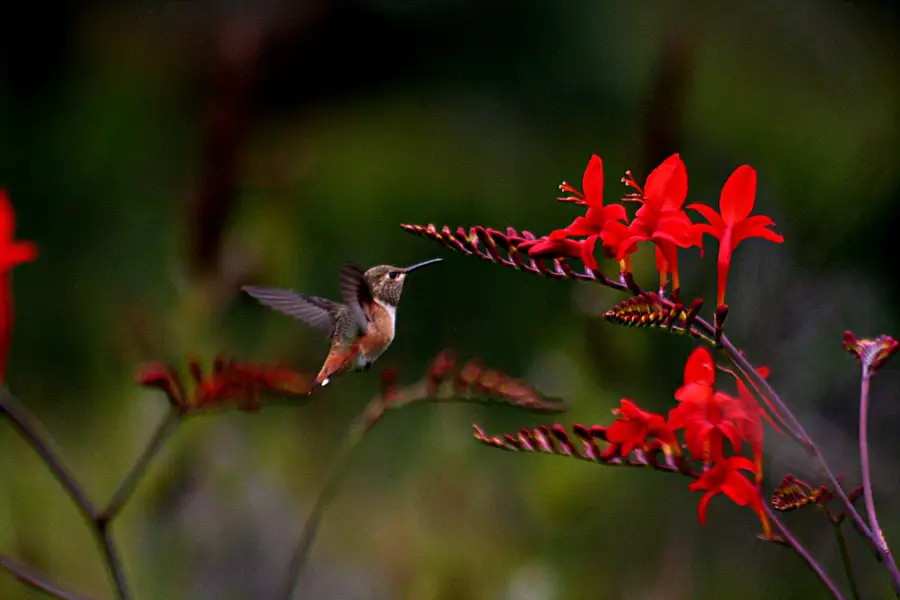
Good native examples in the National Wildlife Federation’s list are cardinal flower, wax currant, trumpet vine and trumpet honeysuckle.
Moth and Bat Flowers: Built for Night Shifts
Color is a weak signal in the dark, so night flowers lean on pale color and scent. The USDA describes moth flowers as pale and dull red, purple, pink or white, with a strong sweet scent emitted at night and ample, deeply hidden nectar in a regular tube with no lip. The National Wildlife Federation distinguishes long narrow tubes for hovering hawkmoths from open dishes for smaller moths that settle.
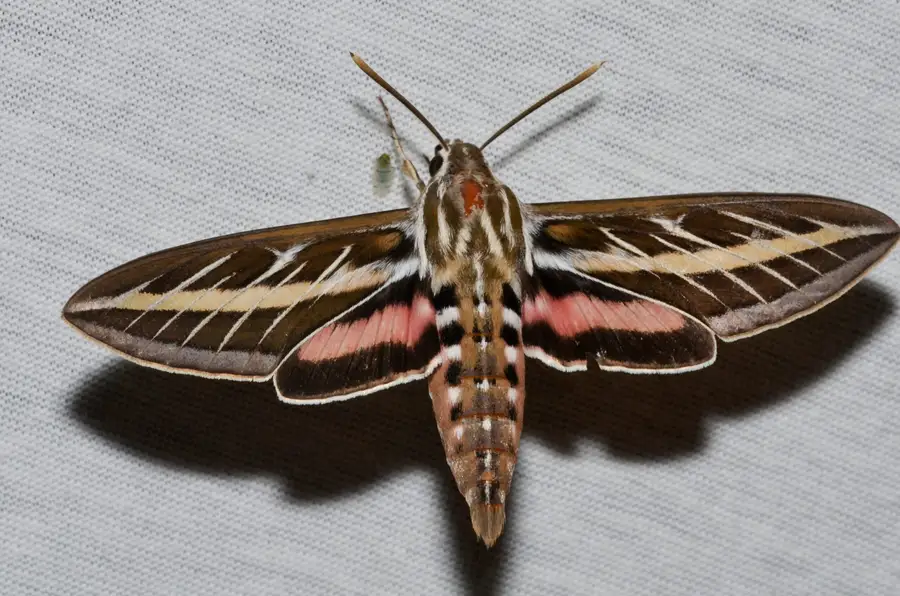
Native moth flowers include phlox, yucca, wild tobacco and evening primrose. To plant for them on purpose, see our guide to a moon garden for moths.
Bat flowers follow the same night logic at a bigger scale. In the American Southwest and the tropics, nectar-feeding bats pollinate agave, saguaro, organ pipe cactus and desert willow. The National Wildlife Federation notes that bats are much larger than other pollinators, so their flowers must provide a large amount of dilute nectar; the USDA adds pale white, green or purple color, a strong musty odor at night, and abundant nectar and pollen. Because bats navigate by echolocation rather than sight, color barely matters.
Fly and Beetle Flowers: Rot, Bowls and Pollen
Not every pollinator wants sweetness. Fly flowers, per the USDA, run from pale and dull to dark brown or purple, often flecked with translucent patches, with a putrid odor and shapes that are shallow, funnel-like or trap-like. The National Wildlife Federation says some of them impersonate rot, shaped and colored like carrion or dung, and produce no nectar at all. Native examples are pawpaw, skunk cabbage, wild ginger and red trillium.
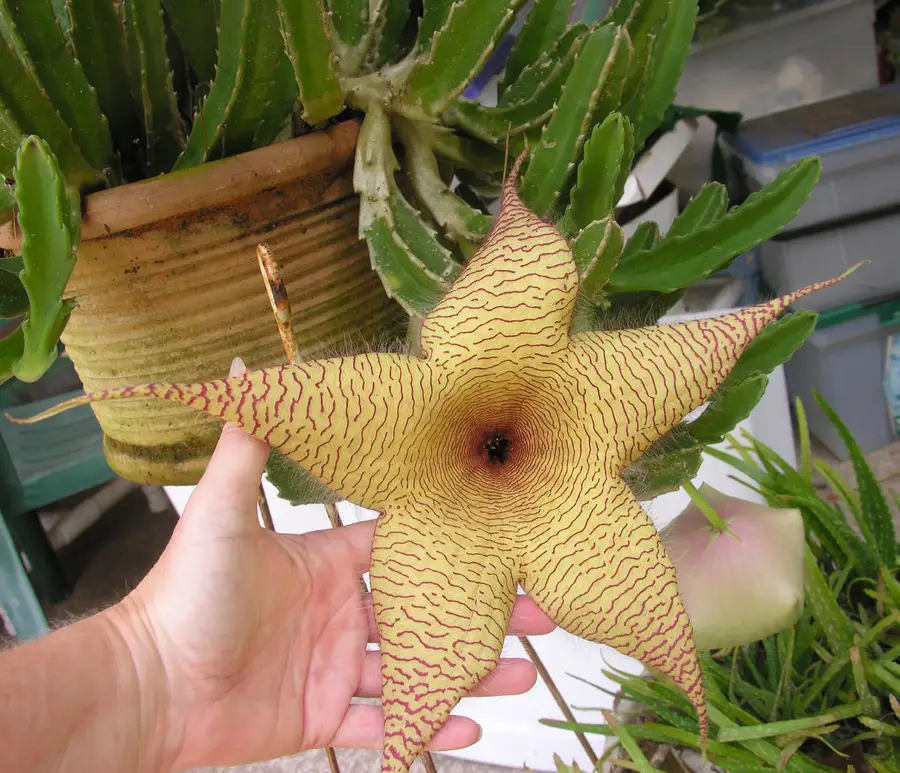
Beetle flowers are plainer. The USDA describes them as dull white or green, large and bowl-like (magnolia is its example), with ample pollen and a scent that ranges from none to strongly fruity or fetid. As the next section shows, though, beetle flowers are also where the syndrome idea scores worst.
How Often Syndromes Predict the Pollinator
Most pollination syndrome guides give the traits and a one-line caution. The more useful question for a gardener or beekeeper is how reliable the guess is, and two large studies answer it from opposite directions.
In the 2009 Ollerton test, researchers scored flowers in six communities (Guyana, Venezuela, South Africa, Colorado, California and Peru) for syndrome traits and recorded who actually pollinated as many species as possible. Almost no plant species fell inside the discrete syndrome clusters, and for about two-thirds of species the most common pollinator could not be predicted from the closest syndrome. The mean share of correct predictions across the six communities was 29.7% for the closest syndrome and 35.0% when the second-closest also counted. The result swung widely by place, from 7.1% in the Venezuela community to 50.0% in South Africa.
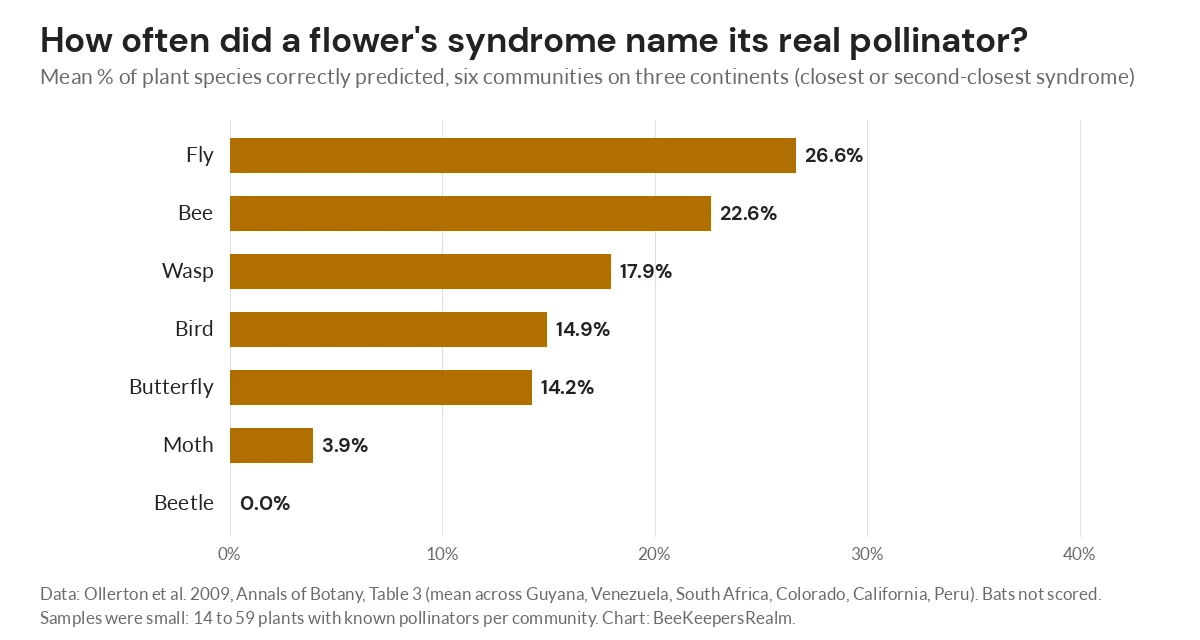
Broken out by syndrome, the paper found bee- and fly-pollinated plants were predicted more often than the rest, while beetle and moth pollination were predicted least often. The bee syndrome averaged 22.6%. Samples were small, 14 to 59 plants with known pollinators per community, so treat the individual bars as rough.
The other side comes from a 2014 systematic review of 417 plant species in Ecology Letters, which asked whether floral traits predict the most effective pollinator group, not just the most common visitor.
“Our results support the syndrome concept, indicating that convergent floral evolution is driven by adaptation to the most effective pollinator group.”
That review also found predictability was greater in pollinator-dependent species and in tropical plants, and that many species have secondary pollinators.
| Study | Sample | Question asked | Headline result |
|---|---|---|---|
| Ollerton et al. 2009, Annals of Botany | Six communities, three continents | Do plants cluster into the classic syndromes, and does the closest syndrome name the most common pollinator? | Almost no plants fit discrete clusters; about two-thirds of species were mispredicted; mean 29.7% correct |
| Rosas-Guerrero et al. 2014, Ecology Letters | 417 plant species | Can the most effective pollinator group be inferred from suites of floral traits? | Yes, supporting the syndrome concept; stronger in pollinator-dependent and tropical species |
The two results are less contradictory than they look. The studies asked different questions: one tested rigid classic categories against everyday visitors, the other tested whether traits point to the best pollinator group. Our reading is that syndromes work best as a hypothesis to check against what actually lands on the flower. That is also the practical lesson for any gardener tempted to treat the table above as a promise.
Where Honey Bees Fit In
For beekeepers the awkward question is how honey bees relate to the “bee” row. A 2018 analysis in Proceedings of the Royal Society B pooled 80 plant-pollinator networks from natural habitats worldwide and found that Apis mellifera was the most frequent floral visitor, averaging 13% of floral visits across networks, with a range from 0% to 85%. Yet in 33% of networks and for 49% of plant species the honey bee was never observed, and only 5% of plant species were visited exclusively by honey bees.
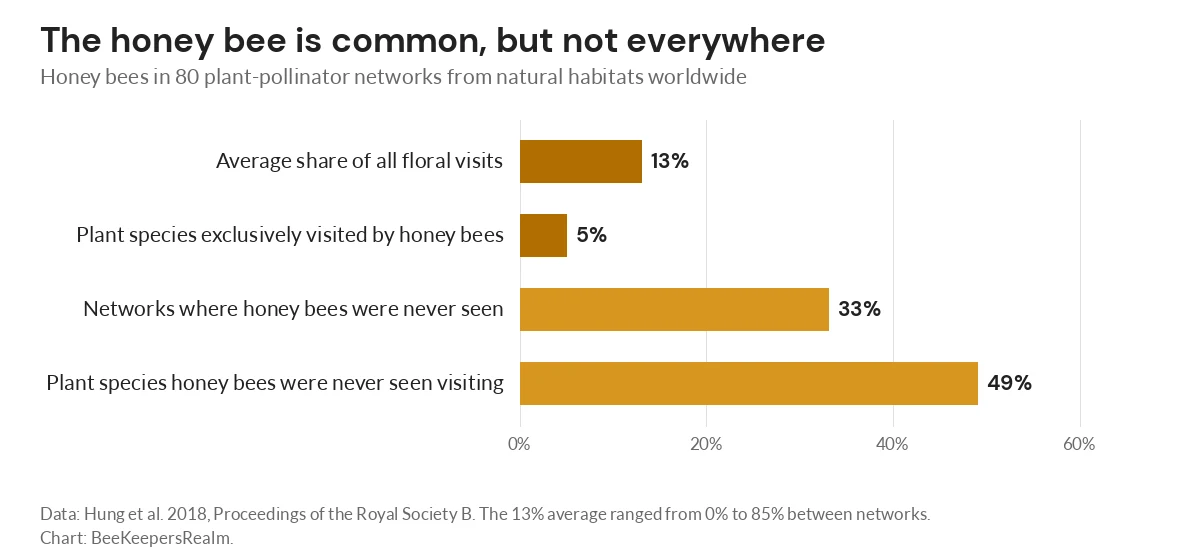
The same study compared effectiveness per visit. A single honey bee visit did not differ from the average non-honey-bee visitor, though honey bees were generally less effective than the most effective non-honey-bee visitor. Our reading for the yard: a flower that fits the bee syndrome is probably built for some bee, not necessarily for your hives. Wild bees such as bumblebees and squash bees may be doing the work, and many plants depend on visitors other than honey bees.
Honey bees remain valuable foragers and crop pollinators, covered in our look at how honey bees interact with flowers. For late-season forage, see fall-blooming flowers for bees.
Using Syndromes in Your Own Yard
Syndromes make a handy checklist for choosing and reading plants. The National Wildlife Federation’s advice is to plant with intention: choose natives that match the pollinators already in your region, and aim for a range of colors, shapes and bloom times so something is always advertising. A simple way to test a flower yourself:
- Note the shape: open bowl, landing pad, or narrow tube.
- Note the color, and remember bees see UV patterns you cannot.
- Smell it at midday and again at dusk; night flowers often release scent only after dark.
- Watch for ten minutes and write down every visitor, then compare with the prediction.
If you record what you see, programs listed in citizen science for pollinators can use it. For plant lists, see the best U.S. native plants for pollinators and pollinator-friendly gardening tips for the USA.
Frequently Asked Questions
What is a pollination syndrome in simple terms?
It is a set of flower traits, such as color, shape, scent and nectar type, that tends to appear together because one kind of pollinator favors it. The traits are a pattern for guessing who visits, not a guarantee.
What are the main pollination syndromes?
The USDA Forest Service table covers bats, bees, beetles, birds, butterflies, flies, moths and wind. Each has a typical color, scent, nectar and shape profile, laid out in the table above.
Can bees see red flowers?
Poorly. Bee receptors peak in ultraviolet, blue and green, so red has weak contrast against foliage for most bees, but it is not invisible.
Why do hummingbird flowers have little or no scent?
Hummingbirds have an underdeveloped sense of smell and find flowers mainly by sight, per the National Wildlife Federation, so scent adds little. Red color and a tubular shape do the advertising.
Are pollination syndromes accurate?
Partly. A six-community test found the closest syndrome predicted the main pollinator for a mean of 29.7% of plants, while a 417-species review concluded that floral traits do point to the most effective pollinator group, more strongly in tropical and pollinator-dependent plants.
Do honey bees only visit flowers that fit the bee syndrome?
No source we found says so, and the syndrome does not promise it. Honey bees averaged 13% of flower visits in 80 natural-habitat networks and were never seen on 49% of the plant species studied.
Which flowers do moths pollinate?
Typically pale, strongly and sweetly scented flowers that open at dusk or night. The National Wildlife Federation lists phlox, yucca, wild tobacco and evening primrose as native examples.
Which flowers do bats pollinate in the United States?
In the Southwest, nectar-feeding bats pollinate agave, saguaro, organ pipe cactus and desert willow, according to the National Wildlife Federation. The flowers are large, pale, musty-smelling and open at night.
The Bottom Line
Use the syndrome table to make an educated guess about who a flower is courting, then check by watching it. For pollinator-friendly planting, mix bowls, tubes and night bloomers, as outlined in our zone-by-zone property guide.
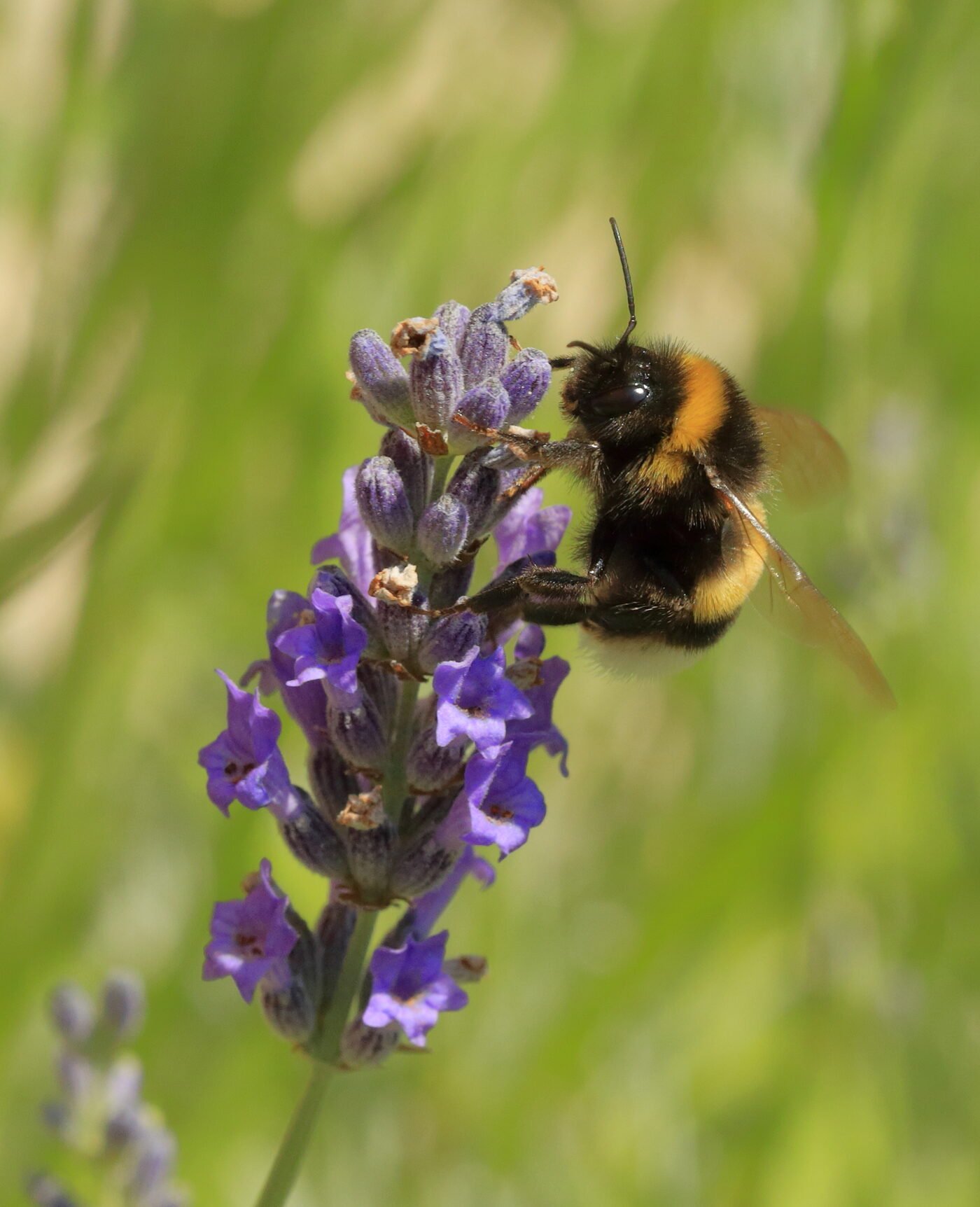
Image credits: Photo: Martin Falbisoner, CC BY-SA 4.0, via Wikimedia Commons.