Table of Contents
What the Mountain Camp Method Is
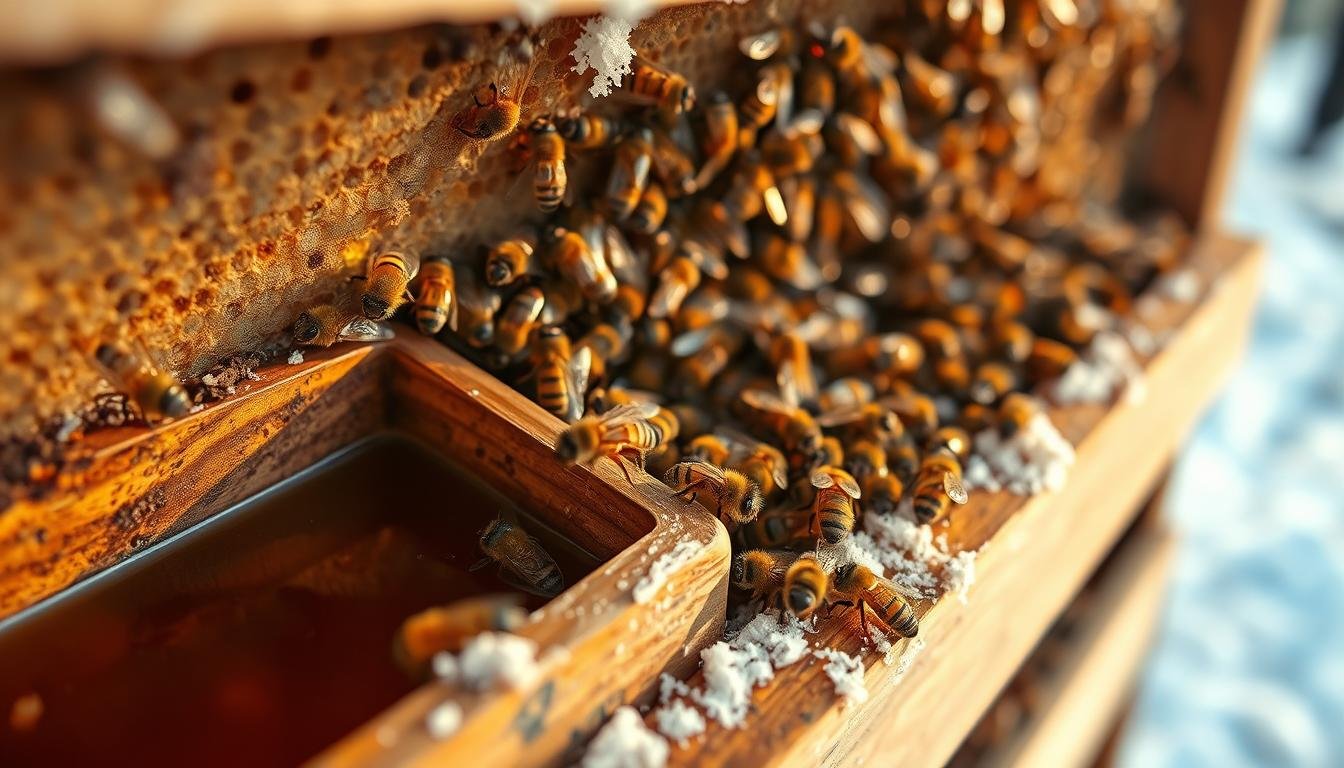
The Mountain Camp method is a way of feeding bees plain, dry, granulated white sugar poured directly onto a sheet of newspaper laid across the top bars of the hive, with the inner cover and outer cover placed back on top. It’s named after a beekeeper who posted the technique under the username “Mountain Camp” on the Beesource beekeeping forum — not after any particular mountain or region. The appeal is simplicity: no cooking sugar into candy, no molding it into bricks, no mixing syrup. You pour dry sugar on paper and close the hive.
How It Actually Works
Bees can’t easily eat completely dry sugar crystals — they need some moisture to dissolve it into something they can consume. That moisture comes from the colony itself: condensation naturally forms inside a hive during cold weather as warm, humid air from the cluster rises and meets the cooler inner cover. That condensation drips down and slowly dampens the underside of the sugar layer, dissolving just enough of it at a time for bees to feed on. As they consume the dampened sugar, more moisture continues to reach fresh sugar above it, so the process continues gradually over the following weeks. This is also why the method tends to work better in hives that have at least some normal winter condensation — a genuinely bone-dry hive may leave the sugar too hard for bees to access at all.
Mountain Camp vs. Candy Boards vs. Sugar Bricks
All three are dry-sugar-family winter feeding options, but they’re not the same thing. For a full side-by-side comparison of candy boards and sugar bricks specifically — including build time, cost, and moisture-management tradeoffs — see candy board vs. sugar bricks for winter. The short version of how Mountain Camp fits alongside them:
| Method | Prep required | Form |
|---|---|---|
| Mountain Camp | None — pour loose sugar on newspaper | Loose granulated sugar |
| Candy board | Cooking sugar syrup to about 240°F, pouring into a frame, cooling | Solid poured slab in a dedicated frame/box |
| Sugar bricks | Mixing sugar with a small amount of water or vinegar, molding, drying | Pre-formed solid blocks |
Mountain Camp is the lowest-effort, lowest-cost option of the three since it requires no cooking or molding and no dedicated equipment beyond a sheet of newspaper — the tradeoff is that it can be slightly messier to manage and depends more directly on the hive’s own condensation to work well.
Materials Needed
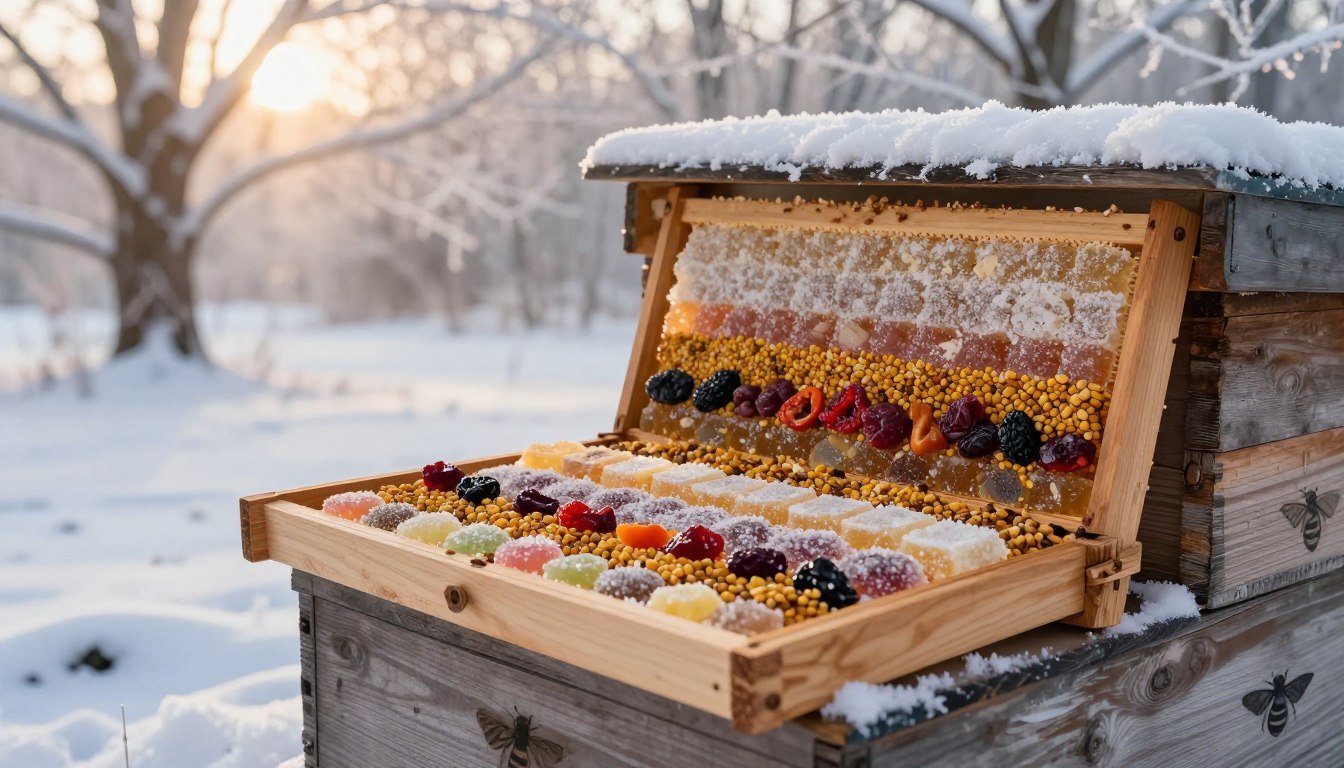
- Plain white granulated table sugar — not powdered sugar, not brown sugar, and not any sugar substitute; plain sucrose is what bees can process safely.
- A sheet or two of plain newspaper (no glossy or heavily inked pages) to lay across the top bars, keeping sugar from falling directly between frames.
- An empty super, shim, or spacer placed above the brood box to create room for the sugar layer before the inner cover goes back on — without this extra space, there often isn’t enough clearance for a meaningful amount of sugar.
- A spray bottle with a small amount of water (optional) to lightly dampen the top layer of sugar just enough to help it hold together and resist sliding off when the hive is moved or opened.
Step-by-Step Instructions
- Choose a mild, calm day to minimize how long the hive stays open and how much heat escapes the cluster.
- Remove the outer and inner covers, and place an empty shim, super, or spacer directly on top of the brood box.
- Lay a sheet of newspaper across the top bars, covering the full top of the box (some beekeepers cut a small opening in the center for bees to access the sugar more directly, though it isn’t strictly required).
- Pour plain granulated sugar in an even layer over the newspaper, roughly an inch or more deep depending on the space available in the shim.
- Lightly mist the top of the sugar with water if using the spray-bottle option, just enough to firm up the surface without soaking it through.
- Replace the inner cover and outer cover and close up the hive.
When to Use It
Mountain Camp feeding is typically used as emergency or supplemental winter carbohydrate feeding — for colonies that are light on stores heading into or during winter, when it’s too cold for liquid syrup (bees have trouble processing syrup and evaporating its water content in cold temperatures, and excess liquid can even harm a cold cluster). It pairs naturally with the same seasonal window covered in how to feed bees during a nectar dearth, though that article covers syrup feeding during warmer dearth periods rather than the cold-weather dry-sugar case this method is built for. As a rough guide, once outdoor temperatures are consistently too cold for bees to process syrup effectively, dry sugar options like this one become the more appropriate choice.
Checking and Refilling
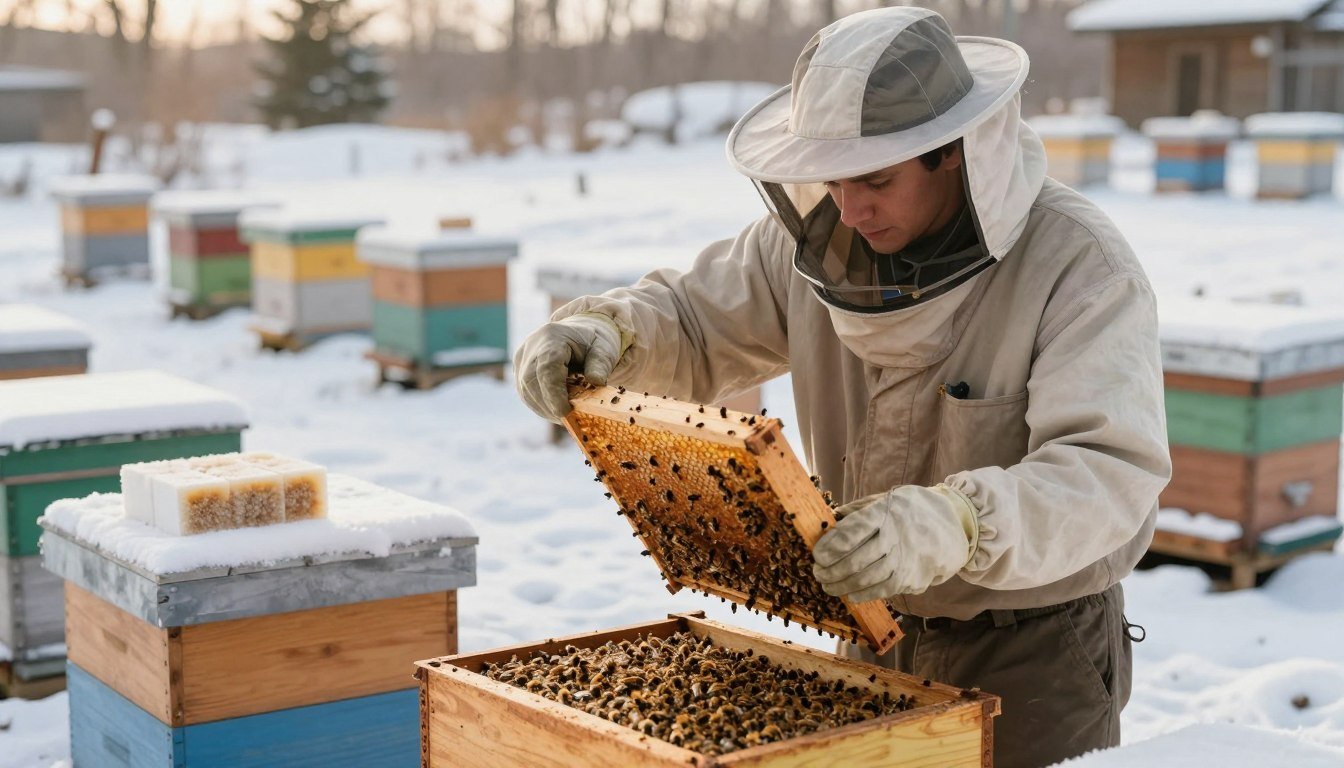
Check periodically through winter on mild days when it’s safe to briefly open the hive without excessively chilling the cluster. Signs the sugar needs refilling include a mostly hollowed-out or heavily consumed layer, or sugar that’s turned into a hard, dry cake the bees can no longer access effectively (a sign the hive’s condensation cycle isn’t reaching it, which can happen in an especially dry hive). Top up with a fresh layer of sugar as needed rather than waiting until it’s completely gone, since colonies can run out of stores quickly in a cold snap.
Does It Attract Pests or Cause Problems?
A layer of sugar sitting inside the hive for weeks does raise reasonable questions about pests and moisture, worth addressing directly rather than glossing over:
- Ants and small hive beetles can be drawn to exposed sugar, though this risk applies to essentially every solid winter feeding method, not just Mountain Camp specifically. Keeping the sugar layer reasonably contained under the inner cover, rather than spilling out around the hive exterior, limits outside attraction.
- Excess moisture buildup is a more relevant concern for colony health generally in winter (it’s linked to fatal chilling and mold issues), but the Mountain Camp method actually works WITH the hive’s existing condensation rather than adding meaningfully more of it — it’s putting existing moisture to use dissolving sugar instead of just dripping onto the cluster. If a hive already has a ventilation or moisture problem, that’s worth addressing on its own regardless of feeding method (a moisture quilt or added upper ventilation, for instance), not something Mountain Camp feeding itself typically causes.
- Robbing risk is low with this method compared to open syrup feeding, since the sugar is enclosed under the inner cover rather than exposed at an open feeder where other colonies can detect and target it.
Climate and Regional Considerations
How well Mountain Camp feeding performs varies somewhat by climate. In consistently cold, humid winter climates, hives tend to generate more condensation, which keeps the sugar layer working as intended throughout the season. In very dry winter climates, or well-ventilated hives with minimal internal condensation, the sugar can stay too hard for bees to break down effectively — in that case, a light misting with water when first applying it, and periodic checks to mist again if the surface looks visibly dry and untouched, helps keep it accessible. Some beekeepers in drier regions prefer candy boards or sugar bricks specifically because the moisture is mixed in during preparation rather than depending on the hive’s own humidity, which is one of the practical tradeoffs to weigh between the three dry-sugar approaches covered earlier in this guide.
Common Mistakes
| Mistake | Why it matters |
|---|---|
| Using powdered sugar instead of plain granulated sugar | Powdered sugar often contains anti-caking agents like cornstarch that aren’t good for bees to consume in quantity |
| Not leaving enough space above the brood box | Without a shim or spacer, there’s often no room for a meaningful sugar layer before the inner cover goes back on |
| Opening the hive on a very cold day to check or refill | Unnecessarily chills the cluster; save checks for milder days whenever possible |
| Assuming it works the same in every hive | Effectiveness depends partly on the hive’s own condensation moistening the sugar — an unusually dry hive may leave sugar too hard to access |
| Treating it as a substitute for adequate fall stores | It’s an emergency/supplemental measure, not a replacement for making sure the colony went into winter with enough honey reserves in the first place |
Working winter feeding into your broader seasonal routine (see a beekeeper’s seasonal checklist) helps catch a light colony before it becomes an emergency.
If you prefer fondant to dry sugar, see fondant for bees.
Dry sugar is one winter option among several; see our complete guide to feeding bees.
Sources
Mountain Camp method mechanics and winter solid-feed comparisons reflect established beekeeping supplier and beekeeping-association guidance, consistent with widely published winter feeding practices. See the Honey Bee Health Coalition’s Tools for Varroa Management guide for additional authoritative detail.
FAQ
What is the Mountain Camp method?
A winter feeding technique where plain granulated sugar is poured onto a sheet of newspaper laid over the top bars of a hive, with no cooking, molding, or mixing required. Hive condensation gradually dampens the sugar so bees can consume it.
Can I use powdered sugar instead of granulated sugar?
No — powdered sugar typically contains anti-caking agents like cornstarch that aren’t good for bees to consume in quantity. Plain white granulated table sugar is the standard choice.
How is Mountain Camp different from a candy board?
Mountain Camp uses loose dry sugar poured directly on newspaper with no prep. A candy board requires cooking sugar syrup to about 240°F and pouring it into a dedicated frame — more effort and equipment, but a more solid, less messy result.
When should I start Mountain Camp feeding?
Once it’s too cold for bees to process liquid syrup effectively and a colony is light on stores — it’s meant as emergency or supplemental winter feeding, not a replacement for going into winter with adequate honey reserves.