Reviewed by Daniel M. · Last Updated November 14, 2026 · How we review
A beekeeping calendar by month runs like this: in winter you check food by hefting the hive and leave the cluster alone; in spring you inspect, feed light colonies and stop swarms; in summer you add honey supers, harvest and test for mites; in fall you treat mites, feed and shrink the hive for winter. The dates move with climate. UF/IFAS advice for north Florida puts the first honey supers on in March, while Maine’s state apiarist says the first flows start at the very end of May, so the same job can sit two to three months apart.
Why do beekeepers need a calendar? Because most jobs only work in a narrow window. A super added after queen cells are started, or a mite treatment that begins after the winter bees are reared, comes too late. A calendar keeps each job ahead of the bees, and your local bloom tells you when to slide it.
Key Takeaways
- Winter (Dec to Feb): heft for stores, keep entrances clear, order bees and fix equipment. Do not pull frames in cold weather.
- Spring (Mar to May): first full inspection on a calm, mild day, feed light colonies, split strong ones, and check for queen cells every 7 to 14 days.
- Summer (Jun to Aug): super ahead of the main flow, harvest capped honey, guard against robbing in the dearth, and test for mites every month.
- Fall (Sep to Nov): treat mites before winter bees are reared, feed 2:1 syrup to colonies short of stores, then reduce entrances and wrap where winters are hard.
- Shift by region: the North runs about two to three months behind north Florida in spring. Use your own first blooms, not the date, to slide each job.
Table of Contents
- Beekeeping Calendar at a Glance: Four US Regions
- How to Shift the Calendar to Your Area
- Beekeeping by Month: January to December
- Mite Monitoring and Treatment Windows
- Seasonal Checklist: Spring, Summer, Fall and Winter
- Frequently Asked Questions
- The Bottom Line
Beekeeping Calendar at a Glance: Four US Regions
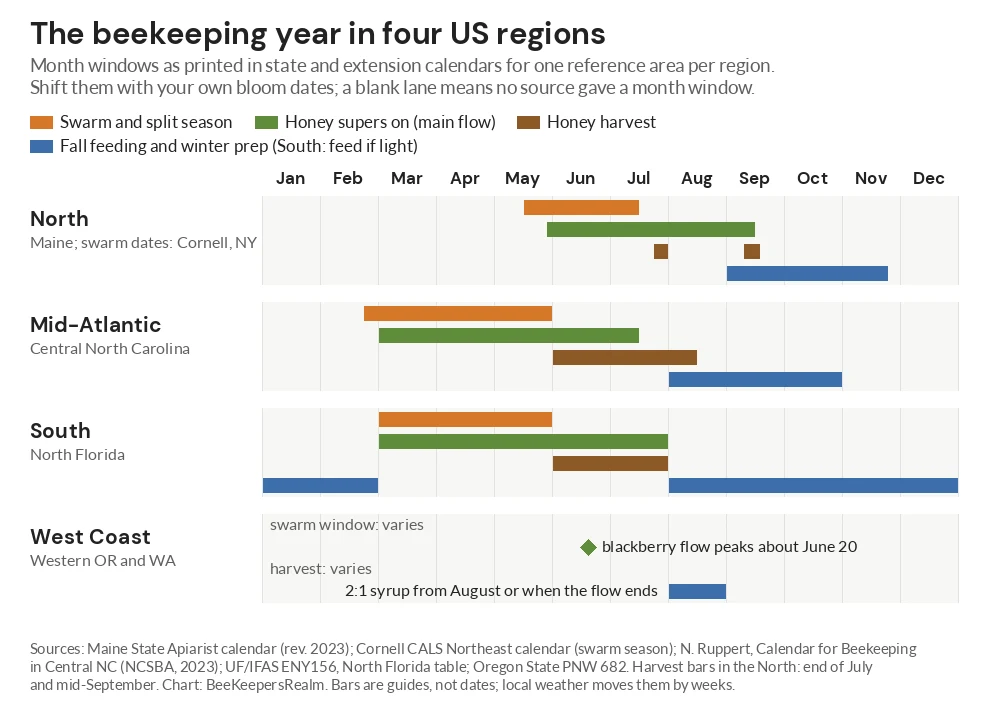
Each window below comes from the state, extension or association calendar named in the cell. Where no source gave a month window, the cell says “varies”. We found no Midwest-specific month calendar, so Midwest beekeepers should read between the North and Mid-Atlantic columns.
| Task | North (e.g. MN/NY) | Mid-Atlantic/Midwest | South (e.g. FL/TX) | West Coast |
|---|---|---|---|---|
| First full inspection | April, on a calm day above 50°F (Maine); above 55°F for frame pulls (Minnesota) | February to March brood checks; reverse boxes in March (central NC) | Late December to early January colony check (East Texas club); not below 60°F (Texas A&M) | Varies |
| Swarm season | Mid-May to mid-July, smaller wave August to September (Cornell, NY) | Can begin late February; heavy in April and May (central NC) | March to May (north Florida) | Varies |
| First honey supers | End of May or early June (Maine) | March (central NC) | March; main flow begins in April (north Florida) | Varies; blackberry flow peaks about June 20 in western OR and WA (Oregon State) |
| Main harvest | End of July, plus fall honey in mid-September (Maine) | June to mid-August (central NC) | June to July (north Florida); end of June to July (East Texas club) | Varies |
| Fall feeding | 2:1 syrup in September, finished by mid-October (Maine) | 1:1 in August, 2:1 from the second half of September (central NC) | Feed if light, August to February (north Florida) | 2:1 syrup from August or when the flow ends (Oregon State) |
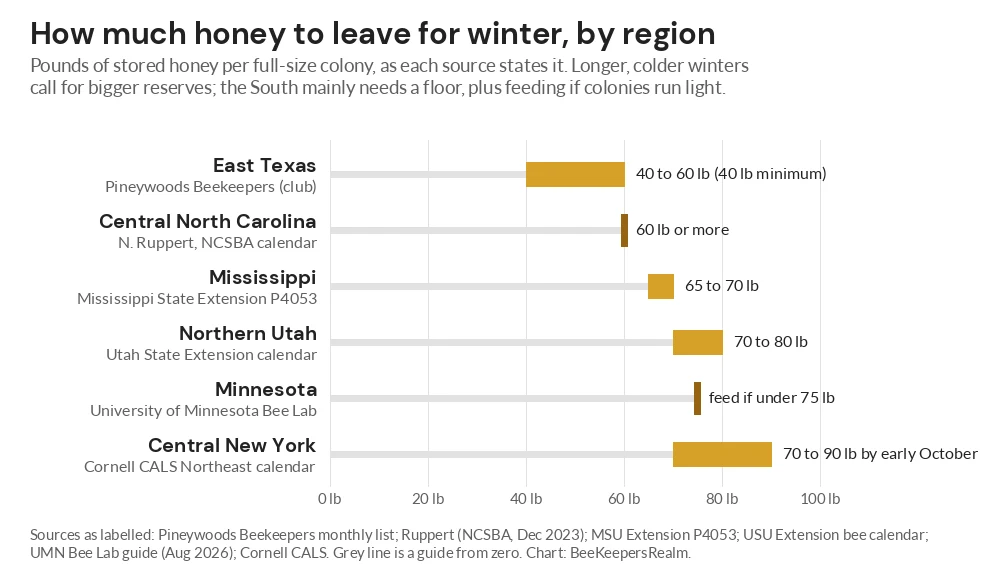
| Winter stores | 70 to 90 lb (Cornell, NY); feed if under 75 lb (Minnesota) | 60 lb or more (central NC) | 40 lb minimum (East Texas club); 65 to 70 lb (Mississippi State) | Varies |
| Winter prep | Upper ventilation and wrap by Thanksgiving (Maine) | Entrance reducers or mouse guards by end of October (central NC) | Varies; keep feeding light colonies | Varies |
Sources: Maine State Apiarist A Beekeeper’s Calendar: Maine; Cornell’s Northeast beekeeping calendar; University of Minnesota Bee Lab; Nancy Ruppert’s central North Carolina calendar; UF/IFAS Florida Beekeeping Management Calendar; Pineywoods Beekeepers; Texas A&M AgriLife; Mississippi State Extension; Oregon State PNW 682.
How to Shift the Calendar to Your Area
No printed calendar fits every hive, and its authors say so. Maine’s calendar asks you to adjust for your bees, your microclimate and the weather. Oregon State builds its nuc dates around a blackberry flow that peaks about June 20, then tells readers whose flow peaks at another time to move the dates to match.
“Weather is the ultimate driver in beekeeping.”
- Follow bloom, not the date. Maine divides colonies at fruit tree bloom, and the University of Minnesota Bee Lab ties splits to fruit tree and dandelion bloom rather than the calendar.
- Use temperature cues. Penn State notes bees forage above 61°F; Maine and Minnesota use 50°F and 55°F floors for checks and frame pulls. See how cold is too cold to open a beehive.
- Borrow a club calendar. Local clubs publish the closest match to your forage. Years differ too: the USA National Phenology Network reported spring 2026 arriving 2 to 5 weeks early across the Central and Western US.
For regional detail, see beekeeping in cold-winter, short-summer climates, beekeeping in the Pacific Northwest and winterizing beehives in northern states.
Beekeeping by Month: January to December
This beekeeping calendar by month follows a northern and Mid-Atlantic hive, with southern differences noted where the sources give them.
“Remember: honey bees often follow a different calendar than humans do, and you need not waste time trying to change the bees’ instincts!!”
January
Keep the hive closed. In Maine, bees shift to new honey and take cleansing flights above 40°F, your chance to peek through the inner cover hole. Central NC suggests feeding colonies with under 40 lb left and one oxalic acid treatment in early January to clean up mites.
- Heft each hive to judge stores.
- Clear dead bees and snow from entrances.
- Order packages or nucs; repair equipment.
February
Queens restart laying, at mid-February in the Northeast according to Penn State, so stores drop faster. Central NC warns fast-growing colonies can starve this month, and swarming can begin there by late February. The north Florida and central NC calendars both suggest pollen supplements in winter where needed.
- Feed fondant or dry sugar to light colonies.
- Check brood on a warm, still day where your climate allows.
- Plan swarm control, such as checkerboarding.
March
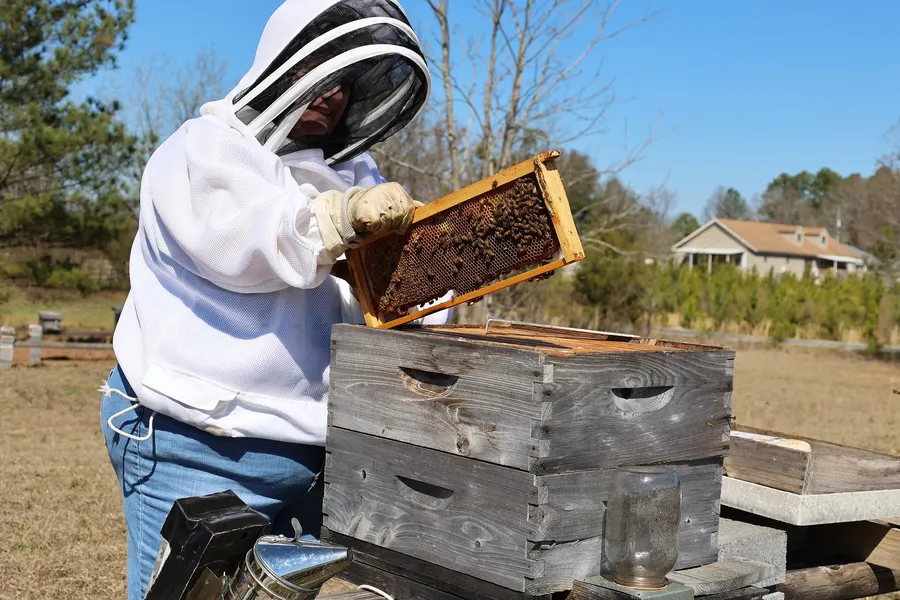
Maine warns that colonies which survive winter can still starve in March or April. Central NC is already moving: reverse boxes if the bottom one has no brood, make splits, add at least one super, and finish in-hive chemical mite treatments by early April. North Florida adds supers and starts swarm control.
- Feed light colonies; watch stores weekly.
- South and Mid-Atlantic: splits and first supers.
- North: set up gear for package bees.
April
Ruppert calls April the busiest month for most NC beekeepers: heavy nectar, some colonies filling three or more supers, heavy swarming. Maine makes its first quick brood check on a calm day above 50°F and takes the first alcohol-roll mite sample. Packages arrive in late April to June in Maine and in April or early May in Minnesota. New beekeepers can check the best time of year to start beekeeping.
- Inspect every 7 to 14 days while swarming is possible.
- Add space before the brood boxes fill.
- Take a spring mite sample.
May
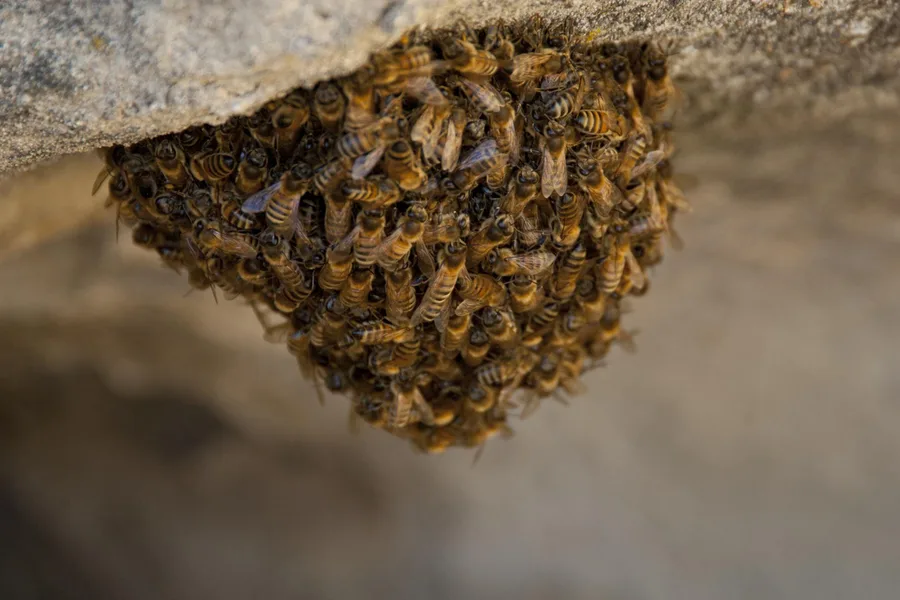
Maine spends May on swarm prevention and splits, and Cornell marks mid-May as the start of swarm season in New York. Penn State advises checking at least every two weeks, since a queen takes about 16 days from egg to adult. See our season-by-season swarm prevention playbook and how often to inspect a beehive.
- Look for queen cells on every visit.
- Split or equalize crowded colonies.
- Keep water near the apiary.
June
Maine’s first flows start at the very end of May or in early June, so supers go on. Add the first when bees cover about 7 to 8 of 10 frames; see when to add a honey super. North Florida pulls honey in June, and UF/IFAS notes varroa populations begin to grow.
- North: super ahead of the flow.
- South: harvest and start monthly mite checks.
- Check small hive beetle traps.
July
Maine colonies peak and many beekeepers harvest when the flow slows, usually at the end of July. Cornell says the main swarm season winds down in mid-July. In central NC the flow ends by mid-July and a dearth sets in, so robbing becomes the risk; see nectar dearth solutions.
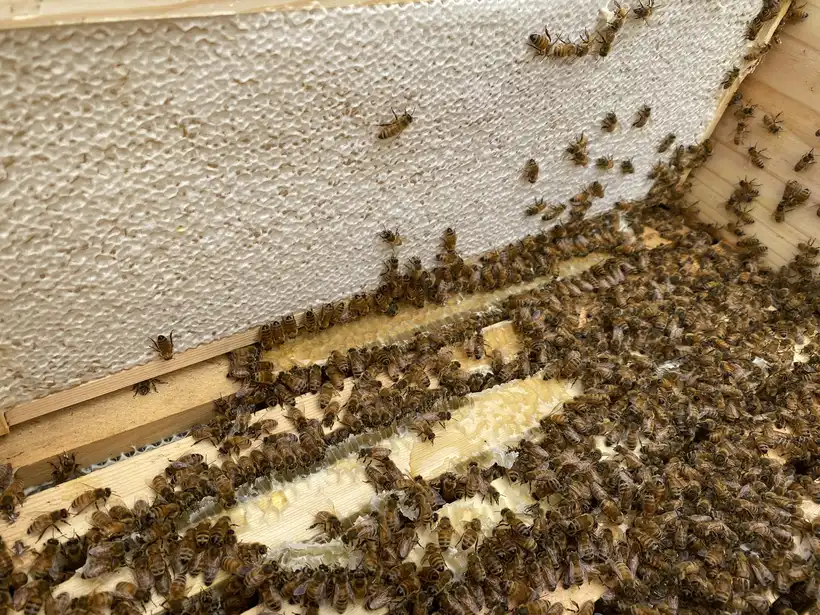
- Harvest capped frames; see honey harvesting methods.
- Reduce entrances on small colonies.
- Sample mites before the late-summer rise.
August
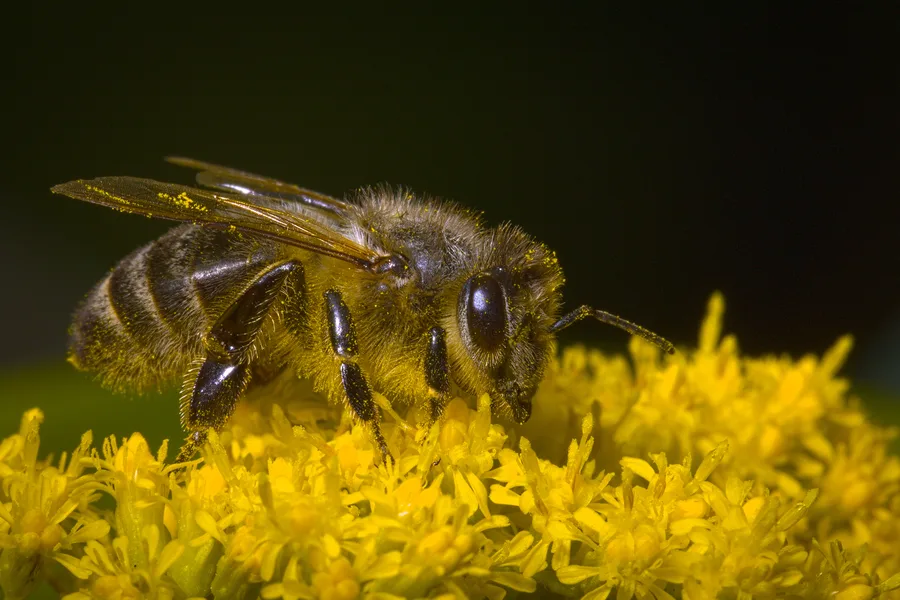
This month decides winter. Penn State says Northeast colonies rear winter bees in August and September, and those long-lived bees need low mite loads. Maine calls for a mite sample and notes the goldenrod flow usually starts in August. Central NC harvests surplus by mid-month, feeds 1:1 syrup and warns that heat, dearth and pests make bees more defensive.
- Mite test and treat if over threshold.
- Replace failing queens; see the best time to requeen.
- North: super for the fall flow.
September
Maine warns of a September mite spike as collapsing colonies nearby release mites, the mite bomb effect. Supers come off by mid-September and colonies short of honey get 2:1 syrup. Central NC switches to 2:1 in the second half of the month, with winter bees developing by late September.
- Remove supers, then treat mites if needed.
- Feed 2:1 syrup to light colonies.
- Combine weak but healthy colonies.
October
Maine finishes feeding by mid-October. Central NC removes queen excluders by mid-month and fits entrance reducers or mouse guards by month’s end. Cornell wants a full-size colony to hold 70 to 90 lb of honey by early October. See how much honey bees need for winter and feeding bees.
- Heft and weigh; feed before it turns cold.
- Fit mouse guards and entrance reducers.
- Remove queen excluders.
November and December
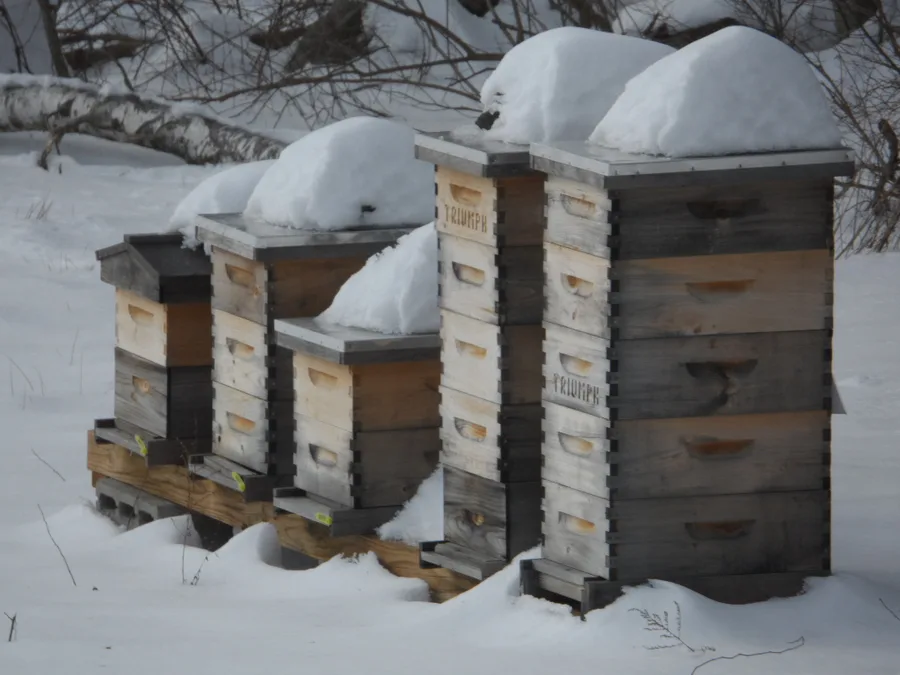
Maine adds upper ventilation, removes mite strips and wraps colonies by Thanksgiving. Central NC aims for 60 lb or more of honey and few inspections. Many calendars use broodless weeks for an oxalic acid clean-up, such as late December in central NC. Cornell notes cold is less of a problem for bees than condensation, so manage moisture. Our guide to preparing bees for winter sets out the order by climate.
- Wrap or insulate where winters are hard.
- Add a moisture quilt, candy board or top vent.
- Review records and order bees.
Mite Monitoring and Treatment Windows
The Honey Bee Health Coalition’s Tools for Varroa Management, 9th edition, ties thresholds to the colony’s phase rather than the month, because phases fall at different times in different regions:
| Colony phase | Typical timing | Treat at or above |
|---|---|---|
| Dormant | Winter cluster, little or no brood | 1 mite per 100 bees |
| Population increase | Spring buildup, before supers | 1 per 100 |
| Population peak | Main flow, supers on | 2 per 100 |
| Population decrease | After harvest, winter bees reared | 2 per 100 |
“Sample monthly beginning with the Population Increase phase, or at least 4 times from Population Peak to Population Decline.”
Older calendars, including UF/IFAS and Cornell’s fall figure, still print 3 per 100, and the coalition says thresholds can vary by region. Check product labels for use with supers on, and see our seasonal varroa treatment calendar.
Seasonal Checklist: Spring, Summer, Fall and Winter
| Season | What to do in your hives |
|---|---|
| Spring | First full inspection on a mild day, feed light colonies, add boxes, split strong colonies, check for queen cells, first mite sample. |
| Summer | Super ahead of the flow, harvest capped honey, provide water, prevent robbing, sample mites monthly. |
| Fall | Treat mites after supers come off, feed 2:1 syrup to your store target, combine weak colonies, fit mouse guards. |
| Winter | Heft for stores, add fondant if light, keep entrances clear, manage moisture, order bees and fix gear. |
Frequently Asked Questions
Why do beekeepers need a calendar?
Because colony jobs have short windows. Swarm control must start before queen cells are capped, supers must go on before the flow, and mite treatment must finish before winter bees are reared.
What month is best to start a beehive?
Spring, so the colony arrives ahead of the main flow. Maine plans for late April to June arrival and Minnesota for April or early May; the South starts earlier. See the best time to start beekeeping by region.
What is the 7/10 rule for bees?
Beginner shorthand used two ways. Most often it means adding the next box or super when bees cover about 7 of 10 frames. Some use it for inspecting every 7 to 10 days in swarm season.
What time of year are honey bees most aggressive?
Usually late summer and fall. Central NC’s calendar says heat, dearth and pests in August can make bees more defensive, and Cornell notes spring bees are likely to be less defensive than in fall.
What do people do with their beehives in the winter?
Mostly leave them closed: heft for stores, add fondant if light, clear entrances, manage moisture and wrap in cold regions. If a hive goes quiet, see how to tell if a beehive is dead in winter.
What months do bees swarm?
It depends on region: late February to May in central NC, March to May in north Florida, and mid-May to mid-July in New York, with a smaller wave in August and September.
When should I harvest honey?
When the flow slows and frames are capped: June to July in north Florida, June to mid-August in central NC, and the end of July plus mid-September in Maine.
The Bottom Line
Use a beekeeping calendar by month as an order of jobs, not a set of dates. Start from the reference calendar closest to your climate, then move each job with your own blooms and temperatures. Keep three deadlines: swarm checks before queen cells, supers before the flow, and mite control before winter bees.
Image credits: Featured photo: beekeeper holding a frame of honeycomb, Bruce Dupree, Alabama Cooperative Extension System, CC0, via Wikimedia Commons, cropped. Charts: BeeKeepersRealm, from the calendars named in each caption.