Reviewed by Elena P. · How we review
Inspect a beehive about every 7 to 9 days in swarm season, every 10 days to 3 weeks for the rest of the active season, and not at all in cold winter weather. A new package gets a short check on day 3 or 4 and an egg check at days 7 to 10. Open the hive sooner when something looks wrong, and later when the only reason is curiosity.
Key Takeaways
- Published intervals range from weekly to every three weeks because they track different clocks: a queen cell is capped about 8 days after the egg, and an adult queen takes about 16.
- By our arithmetic, a 7-day interval always finds a new queen cell still open. At 10 days a cell can be capped for 2 days before you look; at 14 days, 6 days.
- Over-inspecting can kill bees or a queen, slow nectar storage and start robbing, according to bee expert Rusty Burlew. We found no controlled study that measures those costs.
- Match the visit to the job: a quick egg check or a full inspection, never both by default.
- In cold winter weather, skip frame inspections and check the entrance and hive weight instead.
Inspection Schedule by Season and Colony Stage
This table collects what three university extension services recommend. Their numbers come from Utah, Florida and Pennsylvania, so treat them as a range to adjust, not a fixed rule.
| Stage or season | How often | Purpose | Source |
|---|---|---|---|
| New package | Day 3 or 4, then day 7 to 10 | Queen out of her cage, then eggs | Utah State |
| Queen laying, hive doing well | Every 10 days to 3 weeks | Brood, food, space, pests | Utah State |
| Swarm season, cutting queen cells | Every 7 to 9 days, starting about 4 weeks before the main flow | Find queen cells before capping | UF/IFAS |
| Spring swarm watch | At least every 2 weeks | Egg to adult queen takes about 16 days | Penn State |
| Nectar dearth | Fewer than usual | Limiting inspections reduces robbing | Penn State |
| Late fall | One last warm-weather check | Food, brood, disease, winter setup | Utah State |
| Cold winter | No routine full checks | Watch the entrance, clear snow, check weight | Utah State |
| Any season | Sooner than planned | A warning sign (below) | Utah State |
Count back from your first main nectar flow rather than the calendar. UF/IFAS starts its 7-to-9-day checks about four weeks before it. For a first check on a new colony, see our guides to installing package bees and installing a nuc.
Why the Numbers Disagree: Two Queen Clocks
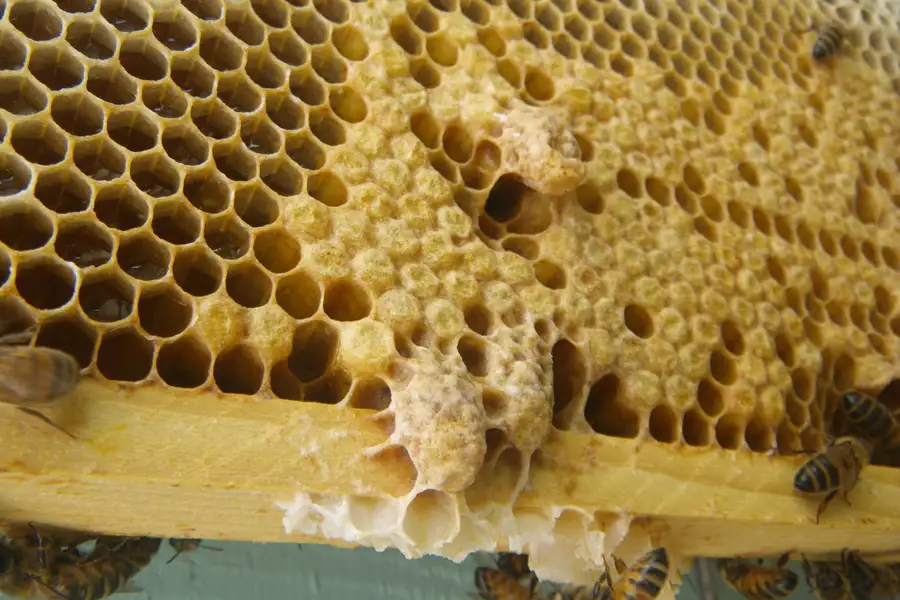
UF/IFAS says workers cap a queen cell after about eight days, and the capping signals the colony to swarm. Penn State counts about 16 days from egg to adult queen. The first clock supports weekly checks; the second supports every two weeks.
“Once queen cells are capped, it is nearly impossible to stop the bees from trying to swarm.”
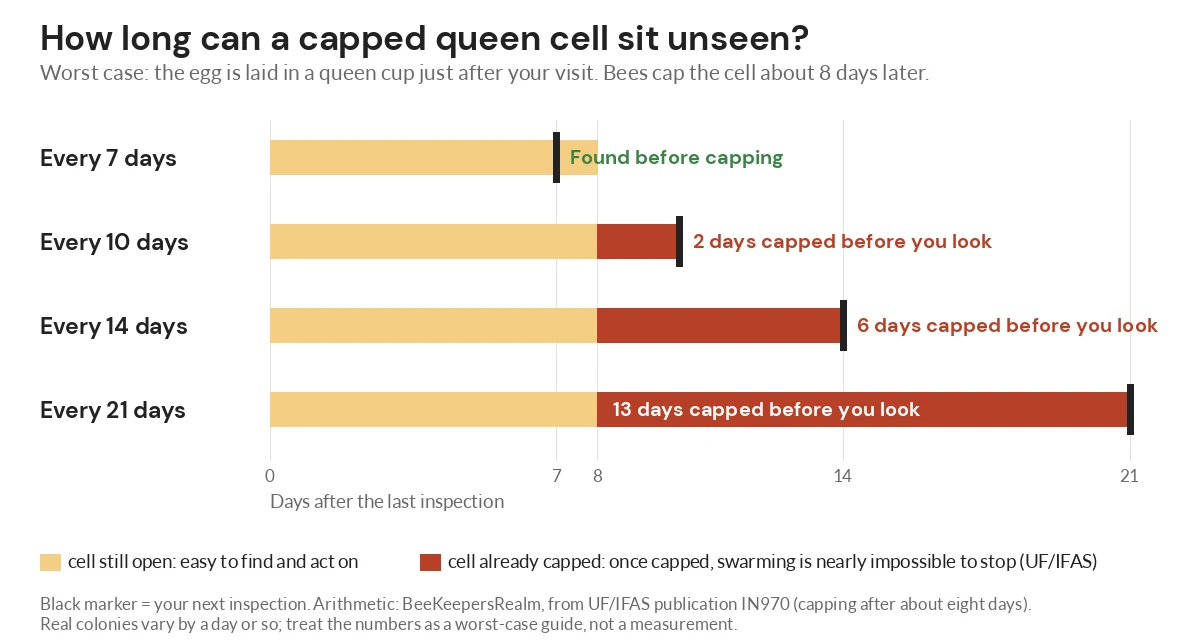
That makes weekly visits the safer choice wherever swarming is common, and two weeks the floor elsewhere. Our swarm prevention playbook covers what to do once you find cells.
What Over-Inspecting Costs
Rusty Burlew of Honey Bee Suite advises inspecting as often as necessary but as seldom as possible. She lists the damage:
“You can kill bees. You can kill your queen. You can slow down nectar accumulation. You can start a robbing frenzy.”
Utah State Extension adds that cold or windy weather can chill or kill bees. Penn State says limiting inspections during a dearth reduces robbing; our guide to spotting robbing early shows the signs. We searched for a controlled study measuring honey lost per inspection and found none, so these costs rest on expert judgment, not measurement.
Quick Check vs. Full Inspection
Bee Culture contributor David Burns, an EAS Certified Master Beekeeper, inspects every two weeks and alternates two kinds of visit. The first is an egg check that he says takes under twelve minutes. The second adds pests, three brood stages and food stores, and he says fifteen minutes is plenty.
“Experienced beekeepers have learned to make every inspection count and only accomplish what is necessary.”
Utah State’s checklist for every visit is brood, queen activity, food, space, pests and disease, and hive condition. It adds that you do not need to find the queen every time; eggs show she is laying. Before opening, Burlew suggests finishing the sentence “The purpose of this inspection is…” and stopping when it is answered. For technique, see inspecting without disturbing brood.
When to Open Early, and When to Stay Out
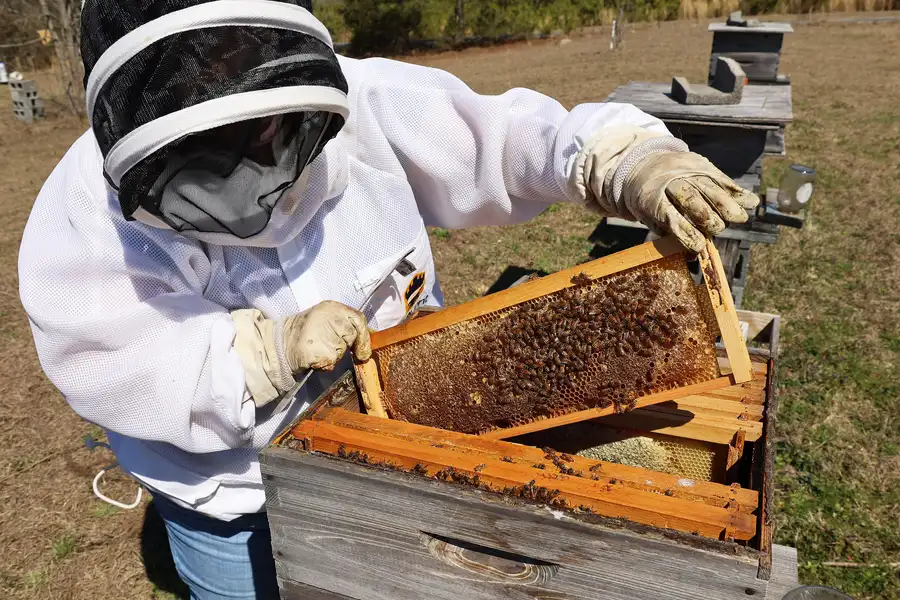
Utah State says not to wait for the next planned visit if you notice a fast drop in bee activity in warm weather, a swarm or many queen cells, very light food stores, damaged or spotty brood, signs of mites or disease, or damage from wind, animals or water. For a full spring inspection it recommends a calm day above 55°F. Below that, see how cold is too cold to open a beehive.
Frequently Asked Questions
What is the 7/10 rule for bees?
Beekeepers use it as shorthand for inspecting every 7 to 10 days in swarm season. The extension figure is slightly tighter: UF/IFAS says every 7 to 9 days.
How often should you inspect a new hive?
Utah State suggests days 3 or 4 and days 7 to 10 after installing a package, then every 10 days to 3 weeks once the queen is laying.
How often should you inspect a beehive in winter?
Not for routine checks. Utah State says to watch the entrance, clear snow and check weight, and to lift the lid only on a calm day above 55°F.
Can you inspect a hive too often?
Yes. Burlew warns of killed bees, queen loss, slower nectar storage and robbing, though no controlled study measures how much.
How long should a hive inspection take?
Burns says an egg check takes under twelve minutes and a thorough inspection about fifteen.
How can you tell if a beehive is healthy?
Utah State’s checklist: eggs, young bees and capped brood, a steady laying pattern, food and room to grow, and no signs of mites or disease.
The Bottom Line
Weekly in swarm weeks, every two to three weeks after that, hands off in the cold. Write down the purpose before you lift the lid, and close up when it is answered.
Image credits: Photos: Alabama Extension, CC0, via Wikimedia Commons (File:Beekeeper Inspecting the Hive.jpg, cropped and resized; File:Beekeeper Inspecting the Hive – 51014819065.jpg, resized). Shawn Caza, CC BY-SA 3.0, via Wikimedia Commons (File:Capped emergency supercedure queen cells of the honey bee.JPG, cropped and resized).