Reviewed by Sofia T. · How we review
Often, yes, once an allergist knows which reaction you have had. Swelling at the sting is not an allergy; hives elsewhere, breathing trouble or dizziness are. Venom immunotherapy, carried epinephrine and never working alone keep allergic beekeepers going.
Educational, not medical advice: talk to an allergist and see the American College of Allergy, Asthma and Immunology’s sting guidance. Our reviewer checked the beekeeping practices; medical facts come from the linked sources, not from a medical credential of ours.
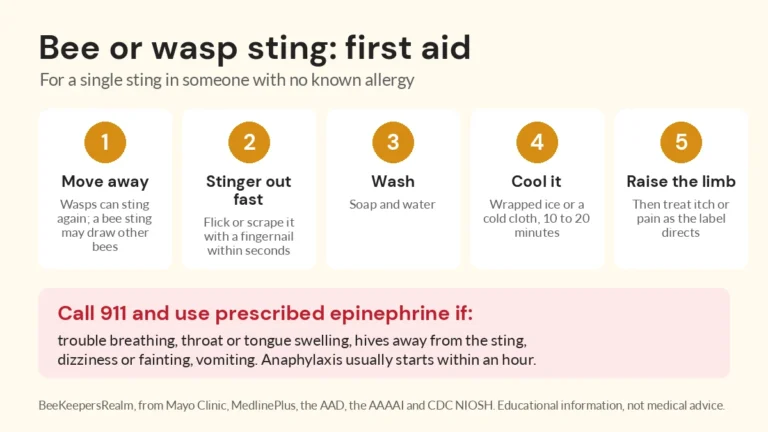
Emergency: breathing trouble, throat swelling, hives away from the sting, dizziness or fainting after a sting: use prescribed epinephrine and call 911.
Key Takeaways
- US allergy guidelines advise against venom testing if you have never reacted to a sting.
- Up to 10% of people with large local reactions may later have a systemic reaction.
- After an untreated systemic reaction, the chance of another is up to 60%; venom immunotherapy cuts it to as low as 5%.
- Among 1,080 Slovenian beekeepers, 76.2% of self-reported first systemic reactions came in the first five years.
- If severely allergic, carry two epinephrine devices and never work hives alone.
Which Reaction Have You Had?
This follows the 2016 practice parameter of the US allergy societies, the AAAAI and ACAAI.
| Reaction so far | What the guideline says | For keeping bees |
|---|---|---|
| Pain and swelling at the sting only | No testing or immunotherapy without a history of reaction | Start with gear and a mentor |
| Large local: swelling spreading from the sting, sometimes a whole limb | Rarely dangerous; immunotherapy might be considered with frequent unavoidable exposure | A hive is frequent exposure; ask an allergist first |
| Hives or itching away from the sting only | Immunotherapy generally not required; a shared decision if exposure is frequent | Get evaluated before buying bees |
| Breathing trouble, throat swelling, dizziness, fainting | Immunotherapy recommended; honeybee allergy is a higher-risk factor | No hive work until an allergist has a plan |
Source: Golden et al., “Stinging insect hypersensitivity: a practice parameter update 2016,” Annals of Allergy, Asthma & Immunology, 2017.
Should You Get Tested Before Your First Hive?
Not if you have never reacted. Venom antibodies turn up in more than 20% of adults who have never reacted, so a positive test predicts poorly.
“Testing for venom IgE is not recommended in children or adults with no history of reaction to stings (except in patients with mastocytosis).”
If you have reacted, the ACAAI notes that test strength does not predict how severe your next reaction will be. See bee venom allergy testing.
Venom Immunotherapy for Beekeepers
In a Swiss clinic, the shots worked as well in 62 allergic beekeepers as in other bee venom-allergic patients, and beekeepers tolerated them better.
“The majority of allergic beekeepers continued bee-keeping successfully under the protection of venom immunotherapy.”
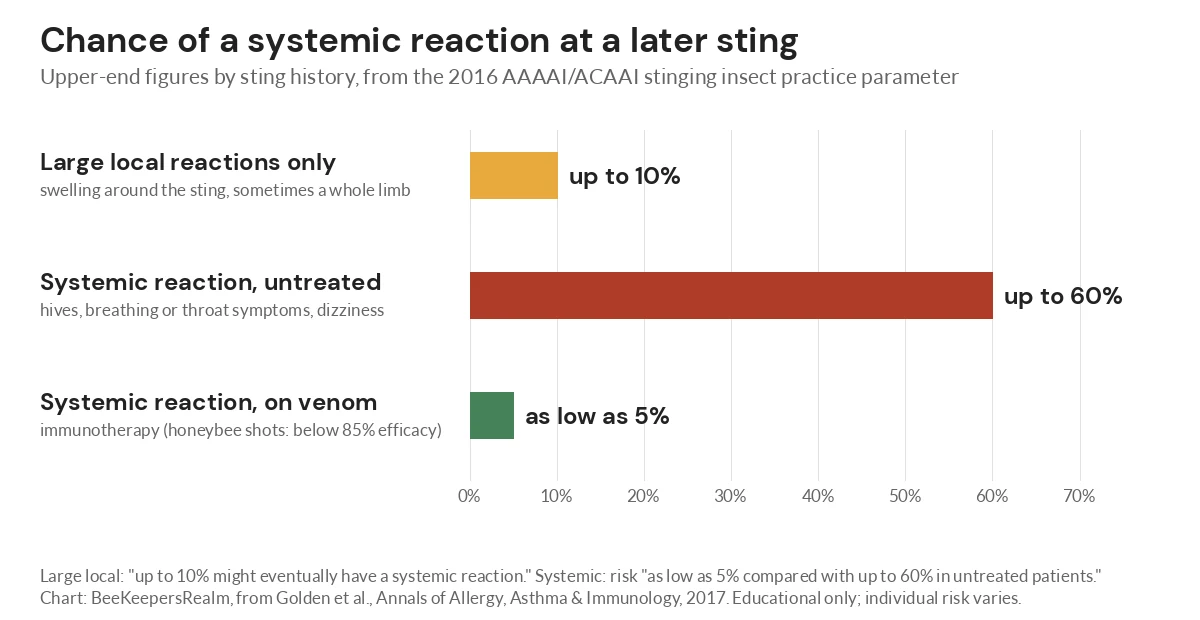
One caveat: the parameter puts honeybee immunotherapy’s efficacy below 85%, against over 95% for wasp venoms, and encourages extended or indefinite treatment for honeybee allergy. See how venom immunotherapy works.
Epinephrine at the Apiary
“Two epinephrine delivery devices should be carried as 1/3 of the time a second dose is needed.”
It is a rescue medication only, the AAAAI adds; you still need an emergency room. In August 2024 the FDA approved neffy, the first epinephrine product not given by injection. Carry it on you; our EpiPen guide for beekeepers covers heat and storage.
Never Work Your Bees Alone
In Bee Culture, entomologist Becky Masterman and former University of Minnesota Bee Squad leader Bridget Mendel advise new and allergic beekeepers never to work bees completely solo, especially at remote apiaries. Slovenian researchers add that family and colleagues may need to give first aid, so train them too.
- Your helper, often a beekeeping mentor, knows where the epinephrine is.
- Keep the yard’s address or GPS pin in the kit; check phone signal.
- No helper, no inspection.
Gear and Habits That Cut Stings
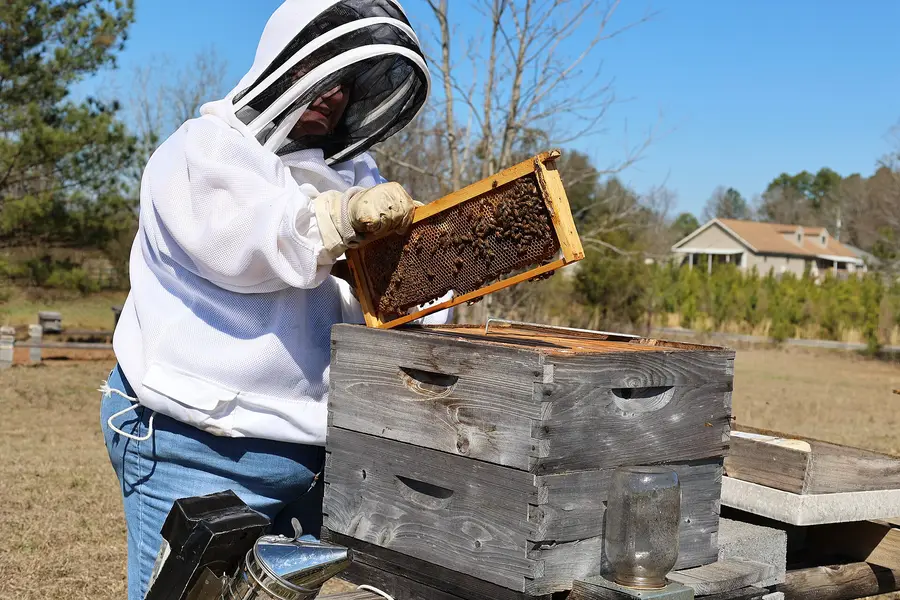
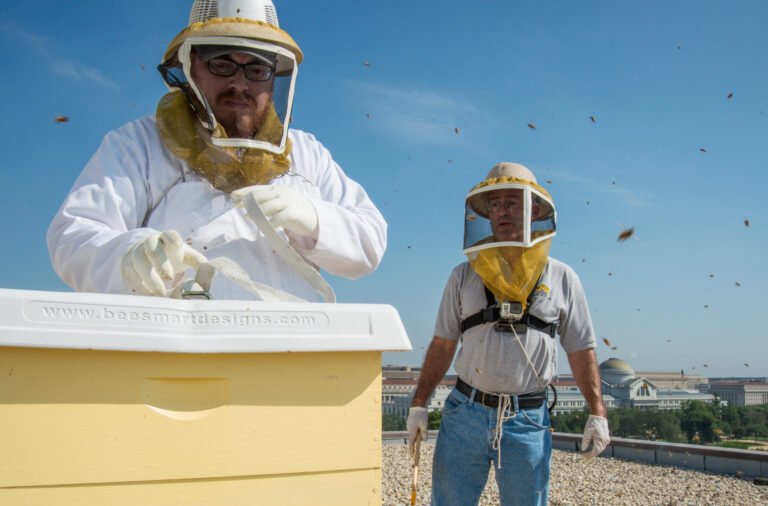
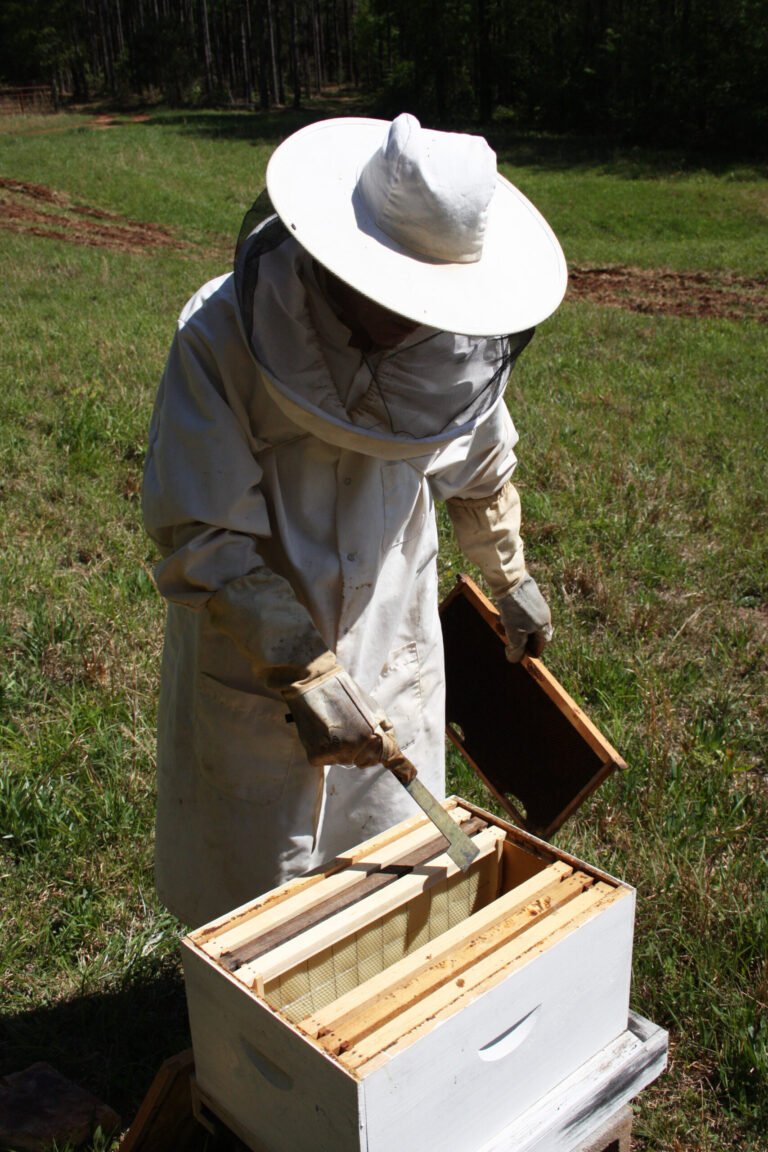
When New York beekeeper Jennifer Ford developed a honeybee allergy, her allergist’s first condition was more gear: coverall pants, a jacket and gloves. Even so, the Slovenian researchers note, stings cannot be completely avoided with protective equipment. A ventilated bee suit makes full coverage bearable in a Southern summer; requeen any hot hive.
When to Step Back From the Hives
A survey of 1,080 beekeepers (Carli et al., 2025) linked first systemic reactions to few stings per season, past large local reactions and nasal symptoms at the hive. Pause and call your allergist if:
- a sting causes any symptom away from the sting site;
- your nose runs or eyes itch at the hive;
- you react during immunotherapy;
- you cannot carry epinephrine or bring a helper.
For the first minutes, read what to do right after a sting.
Frequently Asked Questions
How rare is being allergic to bees?
The practice parameter says life-threatening systemic sting reactions occur in 0.4% to 0.8% of children and 3% of adults.
Can you survive a bee sting if you are allergic?
Usually, with fast treatment: USDA’s Agricultural Research Service says anaphylaxis treated in time usually can be reversed by epinephrine.
Do you become more allergic the more you are stung?
Not simply. A 2005 review named fewer than 10 stings a year as a major risk factor in beekeepers. Never seek stings to build immunity.
Can I eat honey if I’m allergic to bee stings?
Sting allergy is a reaction to venom; ask your allergist about honey, and see can you be allergic to honey.
What is beekeeper’s wife syndrome?
An informal name for venom allergy in beekeepers’ families. At the Swiss clinic, 44 of 459 bee venom-allergic patients (10%) were beekeepers’ relatives.
The Bottom Line
Reacted beyond the sting site? See an allergist before buying bees. If not, start with full gear and a helper.
Image credits: featured photo by Alabama Extension, via Wikimedia Commons, CC0, cropped.