Last Updated September 15, 2026
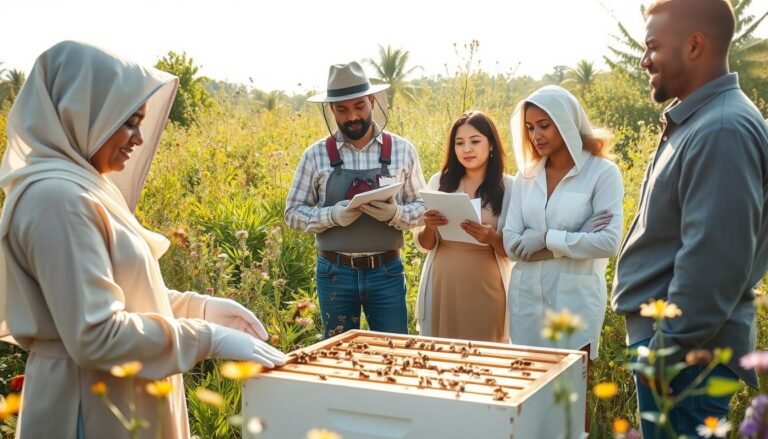
A good beekeeping mentor is worth more than any book, and given how local beekeeping actually is — climate, forage, pests, and even legal rules all vary meaningfully by region — a mentor a few miles away often beats the best general advice found online. This is a different question from our guide to mentoring new beekeepers effectively, which is written for the experienced beekeeper doing the teaching — this one is for the person looking for a mentor in the first place.
This guide covers where to actually find a mentor, how to prepare before you meet one, the specific questions worth asking upfront, and what to do if a mentor genuinely isn’t available in your area.
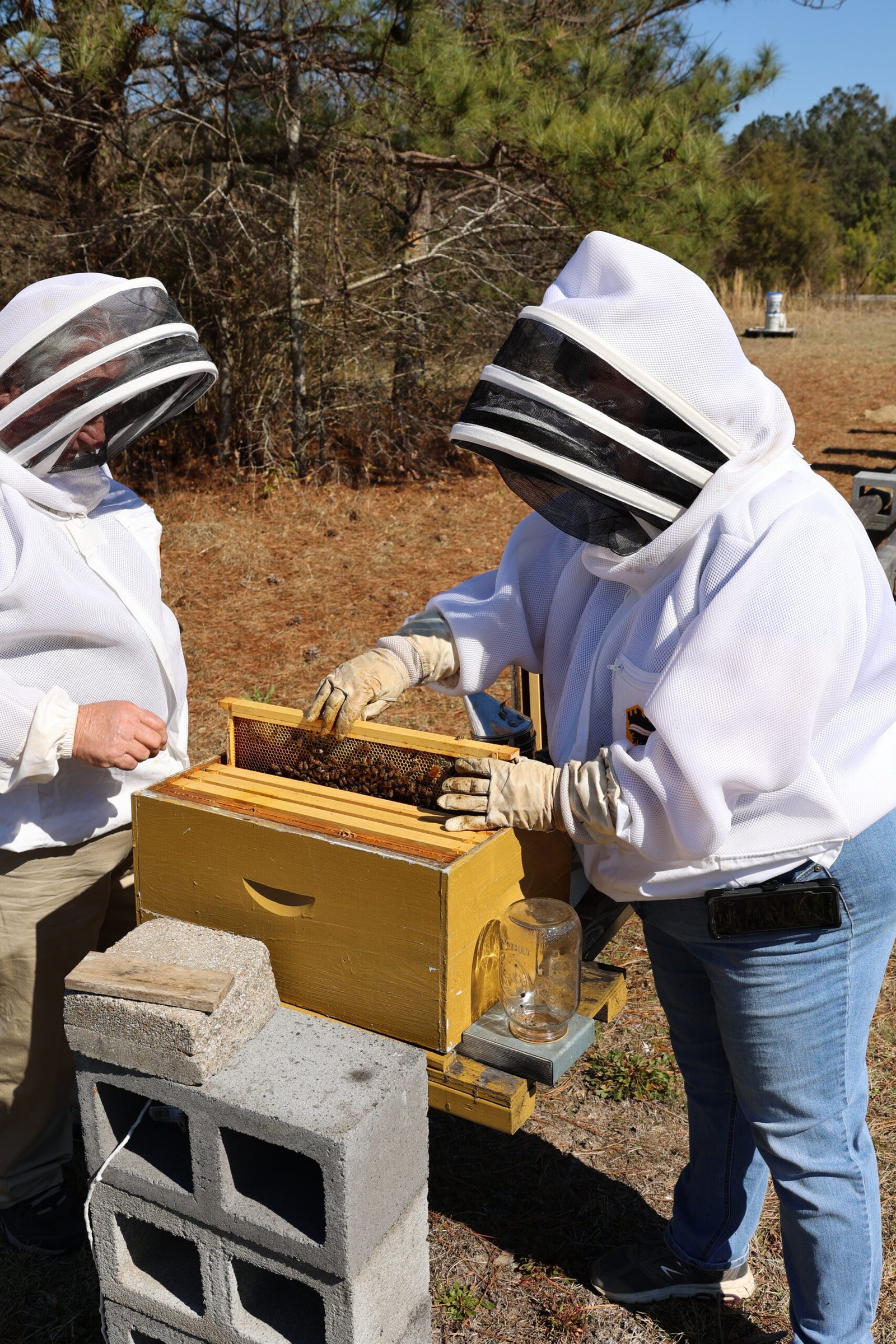
A good mentor relationship typically pays for itself many times over in avoided mistakes alone – a queenless colony caught two weeks earlier because someone experienced looked at your frames with you, or a swarm prevented because a mentor recognized the early signs you didn’t yet know to look for. This is why finding one is worth real, deliberate effort rather than treating it as a nice-to-have that will simply happen on its own.
Key Takeaways
- Local beekeeping associations are the single best starting point — search “[your town/county] beekeepers association” or check your state association’s club directory.
- Show up already having read a book or taken an introductory class — arriving with basic knowledge and genuine questions makes you a far more attractive mentee than arriving with none.
- Ask concrete questions upfront about the arrangement: how often you’ll meet, whether texting questions is okay, and whether any fee, trade, or informal exchange is expected.
- Some universities run formal, structured mentoring programs (Minnesota’s Bee Squad, Oregon’s Master Beekeeper Program, Texas A&M’s program) worth checking before assuming you’re limited to informal club connections.
- Late winter or early spring, before the season’s first inspections begin, is generally the best time to start looking — mentors have more free time before their own apiary work ramps up.
- If no mentor is available locally, workshops, club meetings, and active online discussion groups are a genuine fallback — not as good as one-on-one mentorship, but real learning nonetheless.
Table of Contents
- Start With Your Local Beekeeping Association
- Formal University Mentoring Programs
- Prepare Before You Look for a Mentor
- Questions Worth Asking Upfront
- What to Do If No Mentor Is Available
- Best Time of Year to Start Looking
- One Mentor’s Advice Isn’t the Whole Picture
- Mentorship as a Path Toward Certification
- What You Can Offer a Mentor in Return
- Youth and Family Mentorship Programs
- A Realistic Timeline for the Relationship
- Keeping Notes From Your Mentor Sessions
- Common Mistakes to Avoid
- Frequently Asked Questions
Start With Your Local Beekeeping Association
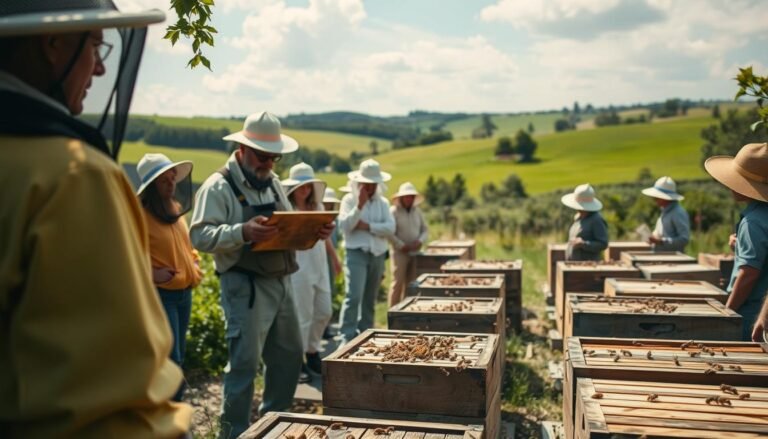
The most reliable first step is finding your local beekeeping club — search “[your town or county] beekeepers association” or check your state beekeeping association’s website for a directory of local chapters. Most beekeeping clubs offer some form of organized mentoring for newcomers, whether that’s a structured program, a workshop series, or simply a social hub where you’ll meet the people most likely to become an actual mentor over time. If your immediate area doesn’t have its own club, a regional or state-level association is the next best starting point, and many maintain active online forums or social media groups where informal mentorship connections happen even without in-person meetings.
County or university extension offices are a second, often-overlooked path to the same result – many run master gardener programs with a beekeeping component, or can point you directly to local experts even if the extension office itself doesn’t run a formal club. A quick call or email to your local extension office asking specifically about beekeeping resources is a low-effort step worth taking alongside the more obvious club search, particularly in areas where a dedicated beekeeping club doesn’t exist but broader agricultural extension services do.
Farm supply stores and local feed stores are a third, less obvious source worth checking – beekeepers frequently pass through these businesses for equipment and supplies, and staff often know the local beekeeping community well enough to point you toward an active club or a specific individual open to mentoring. Asking directly at a store that sells beekeeping supplies costs nothing and occasionally produces a connection that a purely online search wouldn’t surface.
Formal University Mentoring Programs
A genuinely underused resource: several universities run real, structured mentoring programs rather than leaving new beekeepers to find informal connections on their own. The University of Minnesota Bee Squad’s Mentoring Apiary Program provides organized, in-person learning opportunities for beekeepers at every experience level, and similar formal programs exist through Oregon State University’s Master Beekeeper Program (a cooperative effort with the Oregon State Beekeepers Association) and Texas A&M’s Honey Bee Extension Team. Checking whether your state’s land-grant university runs a comparable program is worth doing before assuming informal club connections are your only option — these university-affiliated programs often provide more structured, consistent mentorship than an individual volunteer mentor can offer on their own schedule.
These programs typically combine group instruction with hands-on apiary time, and some offer tiered progression – a genuine beginner-to-advanced pathway similar in spirit to the state master beekeeper certification programs covered elsewhere on this site, rather than a single static mentorship arrangement. Because they’re institutionally run rather than dependent on one volunteer’s availability, they also tend to be more resilient – if one instructor becomes unavailable, the broader program usually continues, which isn’t always true of an informal one-on-one arrangement with a single individual mentor.
Prepare Before You Look for a Mentor
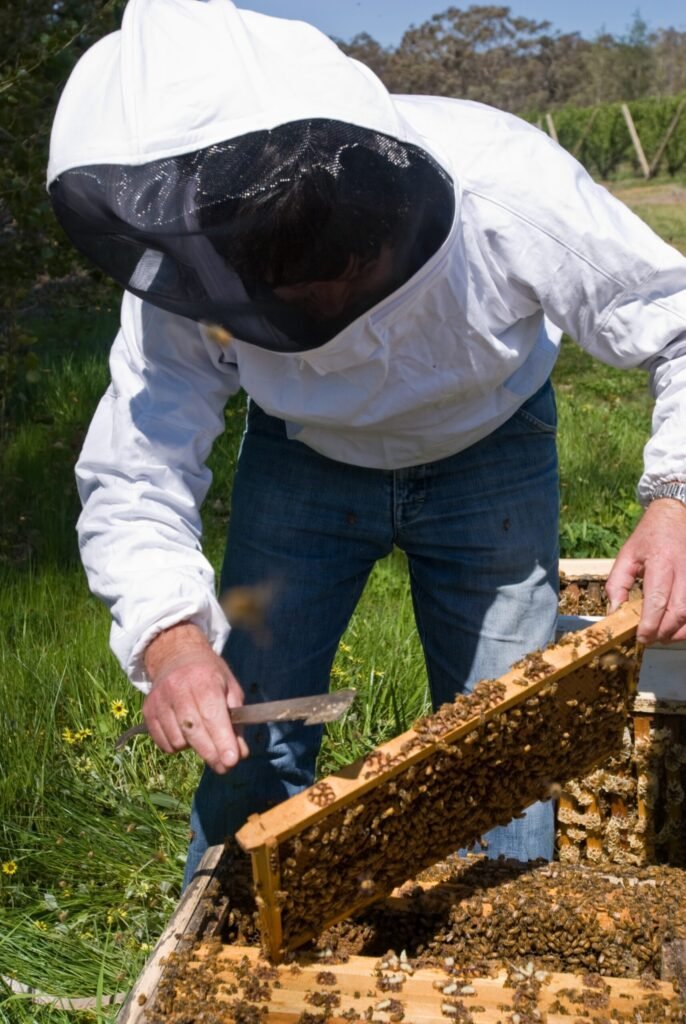
Arriving at a club meeting or a first conversation with a potential mentor already having read a beekeeping book or taken an introductory class makes a real difference. It’s not about impressing anyone — it’s that a baseline of shared vocabulary and basic concepts lets a mentor actually engage with your specific questions rather than starting from zero every conversation. Mentors, understandably, tend to invest more time and attention in someone who’s shown genuine initiative before ever asking for help, since it signals the relationship is likely to be worth their time rather than a one-off question that goes nowhere.
Bringing a written list of observations or specific questions to each interaction also genuinely helps, both practically and as a signal of seriousness. “My hive seems slower than last week, is that normal for this time of year” is a far more useful question for a mentor to engage with than a vague “how’s beekeeping going,” and it demonstrates you’re actually paying attention to your own colony rather than passively waiting to be taught. Mentors consistently respond better to mentees who show this kind of active engagement over time.
Questions Worth Asking Upfront
Before committing to a mentoring relationship, a few concrete questions save both sides real friction later: How long has this person been keeping bees, and how many hives do they currently manage? Have they mentored someone before? How often are you expected to meet, and is texting or calling with questions between visits okay? Is there any fee, trade arrangement, or expectation involved, or is the relationship purely volunteer? Some mentors charge a modest hourly or seasonal fee, others work in trade (help with hive work in exchange for guidance), and many simply volunteer their time — there’s no universal standard, so it’s worth clarifying rather than assuming, ideally before the relationship gets underway rather than discovering a mismatched expectation partway through a season.
It’s also worth asking directly whether the mentor is willing to sell you a starter colony in the spring, since an experienced local beekeeper is often a better source for a nuc or package than a distant supplier – both because you know exactly what genetics and health history you’re getting, and because a mentor invested in your success has real incentive to set you up with a strong colony rather than simply making a sale. Not every mentor offers this, but it’s worth asking rather than assuming it isn’t on the table.
What to Do If No Mentor Is Available
Given how many people take up beekeeping each year, it’s genuinely common for demand to outpace the supply of available mentors in a given area. If a one-on-one mentor genuinely isn’t available near you, workshops, club meetings, conferences, and active online discussion groups are a real, if less personalized, fallback — attending consistently, asking specific questions, and volunteering at club events still builds real knowledge and real relationships over time, even without one dedicated mentor. This kind of self-directed, community-based learning isn’t as efficient as one-on-one mentorship, but it’s a genuinely viable path, not a consolation prize, and many experienced beekeepers built their early skills exactly this way before a more focused mentor relationship eventually developed naturally.
Online discussion groups deserve a specific caveat, though: beekeeping is genuinely local in a way that makes generic online advice less reliable than advice from someone managing hives in your actual climate and region. A forum post about mite treatment timing written by someone in a completely different climate zone can be actively misleading if applied without adjustment to your own conditions. Online communities are most useful as a supplement for general knowledge and troubleshooting, not a full substitute for eventually finding someone who beekeeps in your specific area.
Best Time of Year to Start Looking
Late winter and early spring, before the active season’s first colony inspections and management decisions begin in earnest, is generally the best window to connect with a potential mentor. Experienced beekeepers have more available time before their own apiary work ramps up, and you’ll be positioned to shadow real hands-on activity from the very start of the season rather than joining mid-cycle already behind on context. Many clubs also schedule their new-member orientation and mentorship-pairing events specifically for this pre-season window, so checking a club’s calendar in January or February — rather than waiting until spring buildup is already underway — puts you ahead of the seasonal rush of other new beekeepers making the same search.
One Mentor’s Advice Isn’t the Whole Picture
A good mentor relationship still benefits from cross-checking advice against broader sources occasionally, since even experienced beekeepers develop regional habits or personal preferences that aren’t necessarily universal best practice — a mentor’s specific timing or technique choices reflect their own apiary’s particular conditions and experience, not necessarily the single correct approach for every situation. This isn’t a reason to distrust a good mentor, just a reminder that one person’s experience, however valuable, is still one perspective rather than the complete picture.
Along the same lines, learning from more than one experienced beekeeper — whether formally or just through casual club interaction with several members — is genuinely valuable rather than something to avoid. Different beekeepers emphasize different aspects of the craft, and seeing several approaches to the same problem (like swarm prevention or overwintering prep) builds a more complete, flexible understanding than relying on a single perspective alone, even a very good one.
Mentorship as a Path Toward Certification
A strong mentor relationship can also naturally support progress toward formal credentials like Master Beekeeper certification, since many certification programs — including the Eastern Apicultural Society’s Master Beekeeper Certification Program — value or explicitly require documented hands-on experience and practical skill demonstration that a mentor relationship helps build genuinely, not just theoretically. Beekeepers with longer-term certification goals should mention this to a potential mentor early, since an experienced mentor can often tailor guidance to specifically prepare you for whatever formal pathway you’re eventually aiming toward, whether that’s a state-level program or one of the university-run options covered above.
What You Can Offer a Mentor in Return
Beyond a fee or trade arrangement settled upfront, new beekeepers often bring genuinely useful contributions a busy, established beekeeper appreciates — extra hands during time-sensitive tasks like swarm season or extraction, help with equipment assembly or maintenance, or simply covering routine checks during a mentor’s vacation or busy period. Framing the relationship explicitly around this kind of practical reciprocity, rather than assuming your presence alone is sufficient payback, tends to produce a genuinely stronger and more sustainable mentorship.
Youth and Family Mentorship Programs
Some clubs and 4-H-affiliated programs specifically offer youth beekeeping mentorship, pairing younger or teen beekeepers with experienced adult volunteers in a structured educational setting, distinct from general adult mentorship pairing. Parents or guardians looking to introduce a young person to beekeeping should specifically ask local clubs about youth-focused programming, since not every club structures its general mentorship offering in a way that’s well-suited to younger participants without a more tailored program in place.
A Realistic Timeline for the Relationship
A genuinely solid mentor relationship generally develops over a full season or more rather than forming instantly after a single meeting, so beekeepers new to this search shouldn’t expect an immediate deep connection. Showing up consistently to club events and apiary workdays over several months, and letting the relationship develop naturally through repeated, genuine interaction, produces a stronger and more durable mentorship than trying to force a fast connection with any single experienced beekeeper.
Keeping Notes From Your Mentor Sessions
Writing down key advice, timing recommendations, and troubleshooting tips shortly after each mentor session helps you actually retain and apply what you’ve learned, rather than relying purely on memory during a season already full of new information — a simple notebook or notes app dedicated specifically to mentor-session takeaways becomes a genuinely valuable personal reference you can revisit in future seasons long after the specific conversation has faded from memory. This same habit of tracking your colony’s condition over time also makes it easy to start contributing your own data to community science resources like Bee Informed Partnership, once you’re ready.
Common Mistakes to Avoid
Approaching a potential mentor with zero prior effort to learn independently, expecting every basic concept explained from scratch, undervalues the time investment you’re asking for and reduces your odds of a willing match. Treating a mentor as an on-call service available for constant, unstructured questions without respecting their own time and apiary responsibilities strains the relationship quickly. Giving up after one unsuccessful attempt to find a good match overlooks that mentor-mentee fit varies genuinely by personality and teaching style — trying a different club member or program is a normal, reasonable next step, not a sign the search itself failed.
Once you have the experience, running a beekeeping workshop is a good way to pass those skills on.
Club members often sell bees; see where to buy bees locally.
Frequently Asked Questions
Where’s the best place to start looking for a beekeeping mentor?
Your local beekeeping association — search “[your town or county] beekeepers association” or check your state association’s club directory for the nearest chapter.
Should I already know something about beekeeping before looking for a mentor?
Yes — reading a book or taking an introductory class first gives you shared vocabulary and specific questions, making you a more engaging mentee than arriving with no background at all.
Do beekeeping mentors typically charge for their time?
It varies — some charge a modest fee, some work in trade, and many volunteer entirely. Ask directly and clarify expectations before the relationship begins.
Are there formal university-run mentoring programs?
Yes, several land-grant universities run structured programs, including Minnesota’s Bee Squad, Oregon State’s Master Beekeeper Program, and Texas A&M’s Honey Bee Extension Team.
What if there’s no mentor available in my area?
Workshops, club meetings, and active online discussion groups are a genuine fallback – less personalized than one-on-one mentorship, but a real, viable way to build knowledge and community connections.
Should I bring anything when meeting a potential mentor for the first time?
Genuine, specific questions about your own situation and goals are more valuable than any physical item — showing up prepared to discuss what you actually want to learn signals real interest and helps a potential mentor gauge whether they’re a good fit to help you.
How many mentor sessions should I expect in a typical season?
This varies widely by mentor availability and your own schedule, but many new beekeepers meet with a mentor several times over a season — informal club interactions plus a handful of dedicated apiary visits during key management periods like spring buildup and fall preparation.