Last Updated September 15, 2026
Bee Informed Partnership (BIP) is the nonprofit that built the largest annual U.S. colony loss survey and, since Fall 2023, is no longer the organization running it — its founders’ 16-year-old survey now continues under a new partnership between Auburn University, Oregon State University, and the Apiary Inspectors of America. Understanding both halves of that story — what BIP built, and what changed — is what actually lets you use this data and cite it correctly today.
Key Takeaways
- BIP was founded in 2007 by Dr. Dennis vanEngelsdorp and Karen Rennich at the University of Maryland, and ran the national colony loss survey for 16 straight years.
- BIP publicly restricted its activities in Fall 2023 due to funding shortfalls and let go of staff; its main website now redirects to an archived snapshot rather than an active site.
- The flagship annual survey didn’t disappear — it continues as the U.S. Beekeeping Survey, run since 2024 by Auburn University, Oregon State University, and the Apiary Inspectors of America (AIA).
- The most recent survey (April 2025–April 2026) recorded 39.9% total colony losses, down from record highs of 55.1% (2023–24) and 55.6% (2024–25) — see our full breakdown of this year’s results.
- Some BIP-founded programs, like Tech-Transfer Team sampling, appear to continue in reduced form through founding partner institutions such as the University of Maryland Bee Lab — but confirm current availability directly before assuming a specific service is still running nationally.
Table of Contents
- What Bee Informed Partnership Is — and What Changed in 2023
- Founding and History
- The Annual Colony Loss Survey: Then and Now
- The Latest Survey Results
- The Tech-Transfer Team Program Today
- How to Participate in the Current Survey
- Why Regional Breakdown Matters More Than the National Number
- What the Data Shows Drives Losses
- How to Cite This Data Correctly Now
- Who Should Actually Use This Data
- Common Mistakes
- FAQ
What Bee Informed Partnership Is — and What Changed in 2023
Bee Informed Partnership is a U.S. nonprofit research collaboration between university researchers and beekeepers, historically best known for running the country’s largest annual colony loss and management survey and for its Tech-Transfer Team diagnostic program for commercial beekeepers. In late Fall 2023, unofficial reports of an imminent shutdown were confirmed: BIP restricted its activities due to funding issues and was, in its own words, “not planning to organize a national survey” going forward. Staff were let go while the organization worked to move its data and ongoing projects to other research centers. As of today, BIP’s own domain (beeinformed.org) redirects visitors to an archived snapshot of the old site rather than serving a live, current one — a fact any beekeeper citing “BIP” as a current, ongoing source should know before doing so.
Founding and History
BIP was founded in 2007 by Dr. Dennis vanEngelsdorp and Karen Rennich, based at the University of Maryland, during the period when U.S. beekeepers were first reporting the sharp, unexplained losses that entered public discussion as “colony collapse disorder.” Rather than relying only on smaller controlled studies, the founders built BIP around the idea that understanding losses at a meaningful scale required directly surveying working beekeepers across as many operations and regions as possible — the logic behind the annual survey that became the organization’s most visible public output for the next 16 years, through 2023.
The Annual Colony Loss Survey: Then and Now
From 2007 through 2023, BIP ran the survey directly, collecting data from thousands of beekeepers across hobbyist, sideline, and commercial operations to build a genuinely representative national picture of colony survival trends. That 16-year, BIP-run dataset remains a real and valuable historical record. Since Fall 2023, the survey itself has continued under new stewardship: the University of Maryland transferred the work to a partnership between Auburn University, Oregon State University, and the Apiary Inspectors of America, who have run it as the “U.S. Beekeeping Survey” for the 2023–24, 2024–25, and 2025–26 survey years. The methodology and mission are continuous with BIP’s original work; the organizational home and name are not — a distinction that matters if you’re trying to cite a current figure correctly.
The Latest Survey Results
| Survey period | Total colony loss | Run by |
|---|---|---|
| 2022–23 and earlier | Historical BIP data (16 years, 2007–2023) | Bee Informed Partnership |
| 2023–24 | 55.1% (record high) | Auburn University / OSU / AIA |
| 2024–25 | 55.6% (record high) | Auburn University / OSU / AIA |
| 2025–26 | 39.9% | Auburn University / OSU / AIA |
The most recent survey drew responses from more than 2,300 beekeepers managing roughly 219,000 colonies — about 13% of the USDA’s estimated 2.4 million managed honey-producing colonies nationwide, a genuinely representative sample rather than a small anecdotal poll. National loss figures like these are most useful once they feed into an actual management plan at the individual apiary level — see this guide to long-term colony health strategies for how to turn survey-level trends into year-over-year decisions. For the full detail behind that 39.9% figure, including the winter-versus-total-loss split and operation-size breakdown, see our complete write-up of the 2025–26 results.
The Tech-Transfer Team Program Today

Beyond the public survey, BIP’s other well-known offering was its Tech-Transfer Team program: trained field specialists sampling commercial colonies directly for mite loads and pathogen presence, then benchmarking results against regional and national data. The national BIP organization that coordinated this centrally has scaled back, but sampling work in this vein appears to continue in reduced, decentralized form through founding partner institutions — the University of Maryland Bee Lab, for instance, still describes itself as a partner and founding member offering Tech-Transfer Team-style sampling. Availability likely varies significantly by region and institution now compared to BIP’s earlier centrally coordinated program, so confirm current service directly with a specific university bee lab near you rather than assuming a specific offering is still running nationally the way BIP once ran it.
How to Participate in the Current Survey
Participating in the U.S. Beekeeping Survey is free and open to any U.S. beekeeper, conducted each April and covering the preceding year’s colony count, losses, and management practices. It’s administered today through the Apiary Inspectors of America’s survey portal rather than a BIP-branded page, so search for the current year’s “U.S. Beekeeping Survey” (Auburn University / AIA) rather than looking for a BIP survey link, which is likely to lead to the archived, inactive site instead.
Why Regional Breakdown Matters More Than the National Number
A national average loss figure blends beekeepers facing very different climates, forage conditions, mite pressure, and management traditions, which makes a regional breakdown — comparing your losses against beekeepers in a genuinely similar climate and forage context — almost always the more actionable comparison. A beekeeper in a northern climate with a long, harsh winter and one in a mild coastal climate face structurally different loss-risk profiles, and treating a single national number as the relevant benchmark for both risks the wrong conclusion about whether a given loss rate actually signals a problem.
What the Data Shows Drives Losses
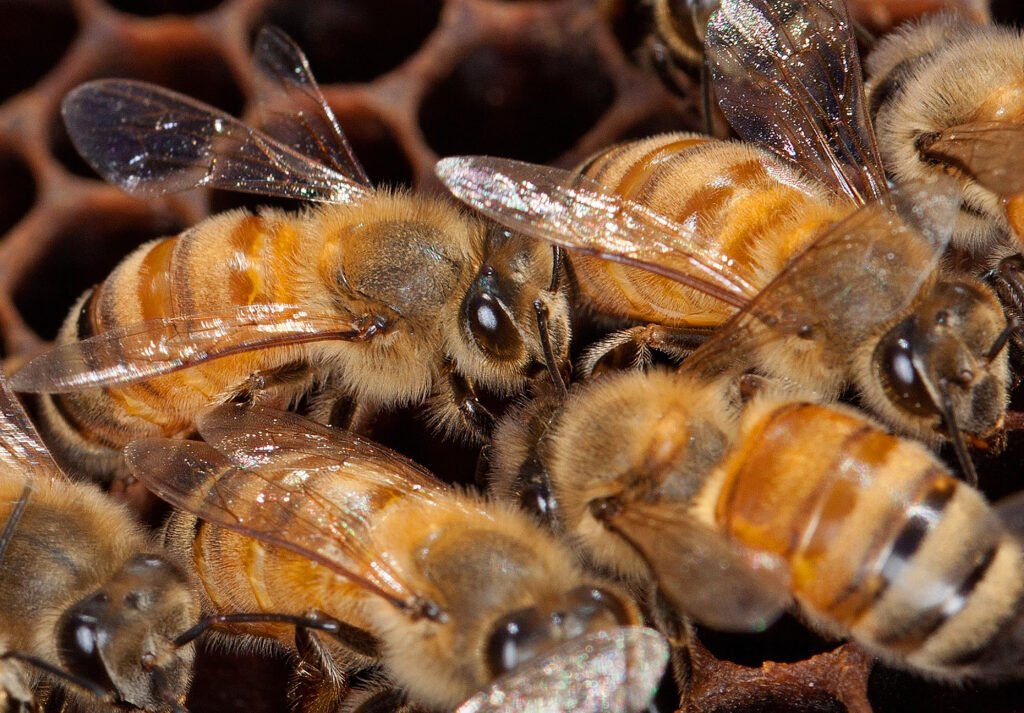
Across years of survey results — under both BIP and its successors — varroa mites and associated viruses consistently show up as the most commonly cited factor beekeepers associate with their colony losses, followed by queen-related issues, weather, and starvation, though the relative ranking shifts somewhat by year and region. Pairing survey-level trends with your own regular mite monitoring, using a tool like the Varroa EasyCheck, gives you both the big-picture context and the specific data for your own colonies.
How to Cite This Data Correctly Now
For any survey year 2023–24 or later, cite the “U.S. Beekeeping Survey” and its current operators (Auburn University, Oregon State University, and the Apiary Inspectors of America) — not “Bee Informed Partnership,” which is no longer the entity conducting it. For historical figures from 2007 through 2022–23, BIP remains the correct and accurate attribution, since that data was genuinely collected and published under BIP. Getting this distinction right is a small detail, but citing an outdated organizational attribution undermines exactly the credibility citing survey data is supposed to provide in the first place.
Who Should Actually Use This Data
Any beekeeper wanting genuine, data-grounded context for their own colony losses, anyone teaching or mentoring newer beekeepers who wants credible sources to reference (alongside pursuing a Master Beekeeper certification for a more formal credential), and commercial beekeepers weighing whether a regional Tech-Transfer-style sampling service is worth pursuing are all reasonable users of this data. A hobbyist with minimal interest in broader trend data beyond their own colonies doesn’t need to track this closely, though the free published survey results remain useful context even for occasional reference. See also our guide to state bee inspector programs and apiary registration, another free, credible resource in the same category.
Common Mistakes
The single most common mistake now is assuming Bee Informed Partnership is still the organization actively running the national survey — it isn’t, as of Fall 2023, even though its name is still the one most beekeepers associate with this data. Citing a current-year loss figure as “BIP data” instead of correctly attributing it to the Auburn/OSU/AIA-run U.S. Beekeeping Survey is a factual error, not just a style preference. Assuming survey data from one region automatically applies to a significantly different climate or management context overlooks the real regional variation the data itself documents. And assuming a specific BIP-era service (like Tech-Transfer Team sampling) is still available nationally, rather than confirming with a specific regional institution, risks planning around a program that no longer exists in its original form.
Sources
Organizational history and the 2023 status change verified against beekeeper community reporting and BIP’s own archived public statements; current survey administration and results verified directly against the Apiary Inspectors of America’s U.S. Beekeeping Survey page and Auburn University’s own reporting on the 2025–26 results, plus the survey’s 2025–26 results page directly. See our companion piece, the 2025–2026 U.S. colony loss survey results in full, for the detailed current-year breakdown.
FAQ
Is Bee Informed Partnership still running the annual colony loss survey?
No. BIP restricted its activities in Fall 2023 due to funding issues and is not organizing a national survey. The survey itself continues under a new partnership between Auburn University, Oregon State University, and the Apiary Inspectors of America.
Is beeinformed.org still a working website?
The domain currently redirects to an archived snapshot of the old site rather than serving an actively maintained one, consistent with the organization having restricted its activities in Fall 2023.
How do I cite current colony loss survey data correctly?
For 2023–24 and later, cite the “U.S. Beekeeping Survey” and its operators (Auburn University, Oregon State University, Apiary Inspectors of America) rather than Bee Informed Partnership. For 2007 through 2022–23, BIP remains the accurate historical attribution.
What was the most recent national colony loss figure?
U.S. beekeepers reported losing an estimated 39.9% of managed colonies between April 2025 and April 2026 — down from record highs of 55.1% (2023–24) and 55.6% (2024–25), but still elevated compared to what the industry considers sustainable.
Is the Tech-Transfer Team diagnostic service still available?
Apparently in reduced, decentralized form through some founding partner institutions, such as the University of Maryland Bee Lab, but not through a centrally coordinated national BIP program the way it once operated. Confirm current availability directly with a specific university bee lab in your region.
Who founded Bee Informed Partnership?
Dr. Dennis vanEngelsdorp and Karen Rennich founded BIP in 2007 at the University of Maryland, during the period when U.S. beekeepers first began reporting the unexplained losses associated with colony collapse disorder.
For beekeepers dealing with this, our article on understanding new emerging honeybee viruses (2025 update) walks through the details.
Image credits: Photo: Ich, Wikimedia Commons, CC BY-SA 4.0.