Last Updated September 16, 2026
A quick search for “online beekeeping course” turns up everything from a $159 self-paced Penn State Extension module to an $899 Cornell University certificate program, and telling which one is actually worth the money isn’t obvious from the sales page alone. Online beekeeping education has genuinely expanded access to structured learning for people without a local mentor or in-person class nearby, but the category covers a wide, uneven range of real quality and rigor. This guide covers what to actually check before enrolling, how the major university-affiliated programs actually compare on price and format, and how online learning fits alongside the in-person mentorship and certification paths already covered on this site.
Table of Contents
- Key Takeaways
- Why Online Course Quality Varies So Widely
- University-Affiliated Online Programs, Compared
- Choosing a Course by Experience Level
- Independent Commercial Courses
- Free Resources: Genuinely Useful but Unstructured
- What to Actually Check Before Enrolling
- Why Online Learning Doesn’t Replace Hands-On Mentorship
- Passive Video Content vs. Genuinely Interactive Courses
- Regional Associations and Exam-Based Credentials
- Self-Paced vs. Cohort-Based Course Formats
- Access Duration and Content Updates
- Common Mistakes
- Frequently Asked Questions
Key Takeaways
- Three university-affiliated online programs are directly comparable and independently verifiable: Penn State Extension’s Beekeeping 101 ($159, self-paced, 10 modules), the University of Florida’s UF/IFAS Master Beekeeper Program Apprentice course ($250, self-paced, first of four tiers), and Cornell’s Master Beekeeping certificate ($899, ~5 months, includes written/oral/field exams).
- A claim in an earlier version of this guide about a University of Guelph “online Master Beekeeper Certificate” could not be verified against Guelph’s own Honey Bee Research Centre pages, which currently list in-person introductory courses and a for-credit university course rather than a public online certificate — it has been removed rather than repeated unverified.
- The Eastern Apicultural Society’s Master Beekeeper Certification Program (easternapiculture.org) is not an online course at all — it’s an exam-based credential requiring five years of beekeeping experience and four in-person exams at the annual EAS conference.
- No online course, regardless of price or university affiliation, replaces hands-on mentorship at an actual hive; treat structured online coursework as a complement to local mentorship, not a substitute for it.
- Penn State’s Beekeeping 101 was named an official honoree in the 2013 Webby Awards’ Education category — a rare, independently verifiable quality signal in a marketplace with almost no other outside vetting.
Why Online Course Quality Varies So Widely
Unlike the structured, examiner-assessed certification pathways covered elsewhere on this site, “online beekeeping course” isn’t a regulated or standardized category, meaning literally almost anyone with basic video recording equipment and some beekeeping experience can produce and sell one, alongside genuinely rigorous programs developed by university apiculture extension specialists. This wide variance makes it genuinely important to evaluate a specific course on its actual merits, instructor background, content depth, and any real assessment component, rather than assuming any course labeled “beekeeping certification” or “master class” carries comparable weight to a formal credential.
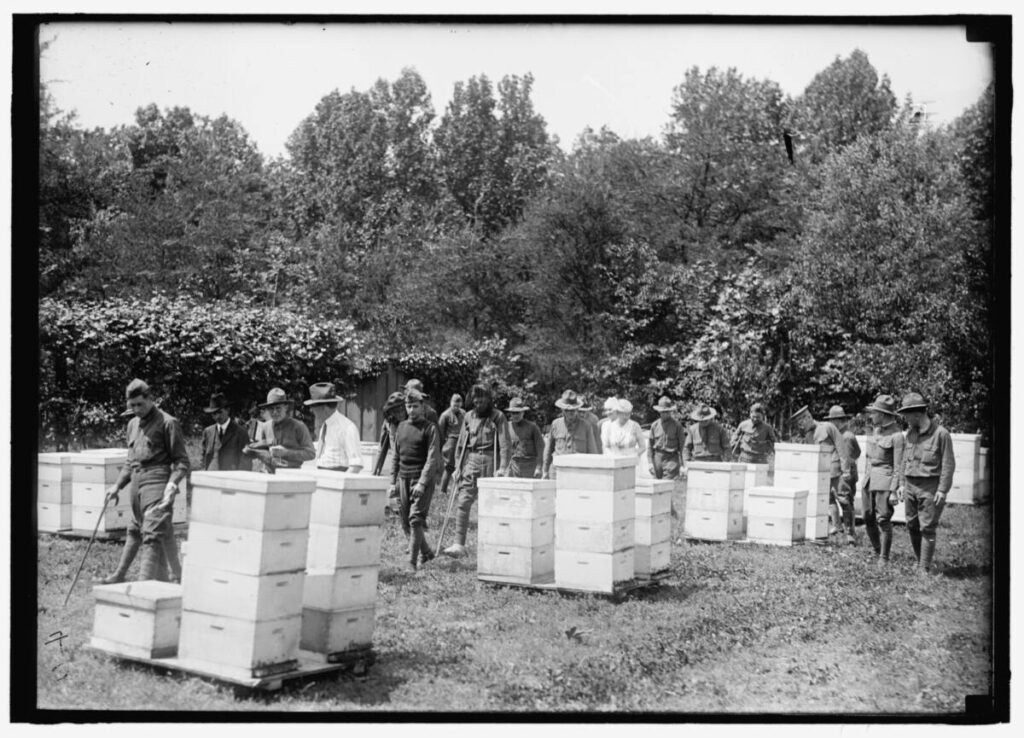
Formal, structured beekeeping instruction is not a new idea — organized beekeeping instruction programs date back over a century, including therapeutic apiculture instruction documented by the Library of Congress as early as 1919. What has changed is the delivery format, not the underlying need for real instructor credibility and content rigor.
University-Affiliated Online Programs, Compared
Three university-affiliated online beekeeping programs are directly verifiable against their own official program pages, and they sit at meaningfully different price points and commitment levels. Penn State Extension’s Beekeeping 101 is a $159, ten-module, self-paced course built by Penn State Extension horticulture educator Tom Butzler and retired senior extension associate Maryann Frazier, covering roughly nine hours of video, multimedia, and interactive content with 365 days of access and a certificate of completion on passing the final quiz. The University of Florida’s UF/IFAS Master Beekeeper Program starts with a $250 self-paced Apprentice-level online course — the entry tier of a four-tier program (Apprentice, Journeyman, Craftsman, Master) — and beekeepers with two or more years of experience can test out of the Apprentice level entirely. Cornell’s Master Beekeeping certificate, delivered through eCornell, costs $899 and runs roughly five months at three to five hours of study weekly across four sequential courses, combining self-paced coursework with moderated discussions and ending in written, oral, and field exams; completers earn 77 Professional Development Hours (7.7 CEUs) through Cornell’s Department of Entomology.
| Program | Provider | Price | Format | What You Get |
|---|---|---|---|---|
| Beekeeping 101 | Penn State Extension | $159 | Self-paced, 10 modules, ~9 hrs, 365-day access | Certificate of completion |
| Master Beekeeper Program (Apprentice) | University of Florida (UF/IFAS) | $250 | Self-paced online; entry tier of 4 | Apprentice credential; path to Journeyman/Craftsman/Master |
| Master Beekeeping | Cornell University (eCornell) | $899 | Self-paced + moderated discussions, ~5 months | Master Beekeeping Certificate, 7.7 CEUs, written/oral/field exams |
| Free extension & association webinars | Varies by state/region | Free (often membership-based) | Unstructured, self-organized | No formal credential |
An earlier version of this guide cited a “University of Guelph online Master Beekeeper Certificate Program” as a comparable option. That claim could not be verified: Guelph’s Honey Bee Research Centre currently lists in-person introductory beekeeping courses and a for-credit university course (ENVS*2210, Apiculture & Honey Bee Biology), not a public online certificate program of that name. Rather than repeat an unverified claim, it’s been removed in favor of the three programs above, each confirmed directly against its own official program page.
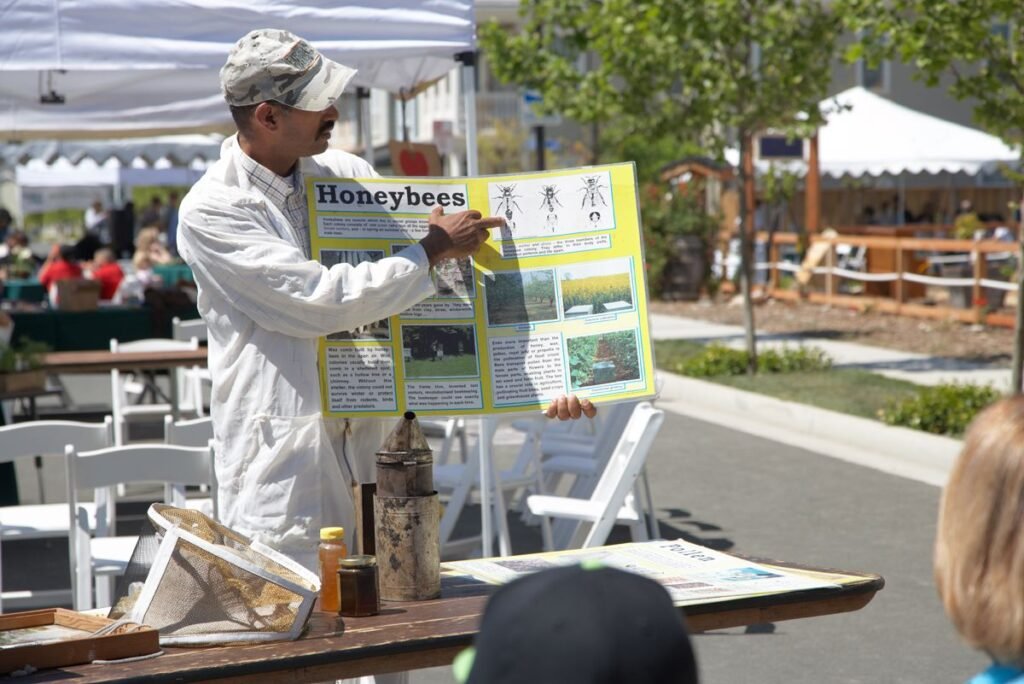
Penn State’s own video below covers how Beekeeping 101 moves hands-on beekeeping instruction into a self-paced online format — useful context before deciding whether a similar self-paced structure fits how you actually learn.
Video: “Online course takes beekeeping out of the classroom,” Penn State University’s official channel — a short overview of how Beekeeping 101 was built and what it covers.
“Beekeeping requires maintenance and care throughout the year. Beekeeping 101 examines how to work with hives throughout the seasonal calendar, helping participants understand what’s happening in their hives at all times of the year.”
Choosing a Course by Experience Level
Which of these actually makes sense depends heavily on where you are before you enroll, not just on budget. A complete beginner with zero hive experience is generally better served starting with Penn State’s $159 Beekeeping 101 or a state association’s free webinar series to build foundational vocabulary and concepts before spending real money on a credential-track program. Someone who has kept bees for a season or two and wants a structured next step is the clearest fit for UF/IFAS’s $250 Apprentice course, particularly since it’s explicitly designed to also work as a test-out gateway for beekeepers who already have two-plus years of hands-on experience. Someone specifically pursuing a recognized, resume-worthy credential — for extension work, a teaching role, or serious personal commitment — is the audience Cornell’s $899 program and the exam-based EAS Master Beekeeper Certification (covered below) are actually built for, and neither is a sensible first purchase for someone who hasn’t kept a hive yet.
Independent Commercial Courses
Beyond university-affiliated options, a large number of independently produced commercial beekeeping courses are sold through general online course marketplaces, ranging genuinely widely in quality from experienced, credentialed beekeepers sharing real practical expertise to less rigorous content produced primarily for sales volume rather than educational depth. Because these platforms typically don’t vet instructor beekeeping credentials the way a university program’s own reputation implicitly does, evaluating an independent commercial course requires genuinely more due diligence from the buyer before purchasing — see the red flags covered in the FAQ below.
Free Resources: Genuinely Useful but Unstructured
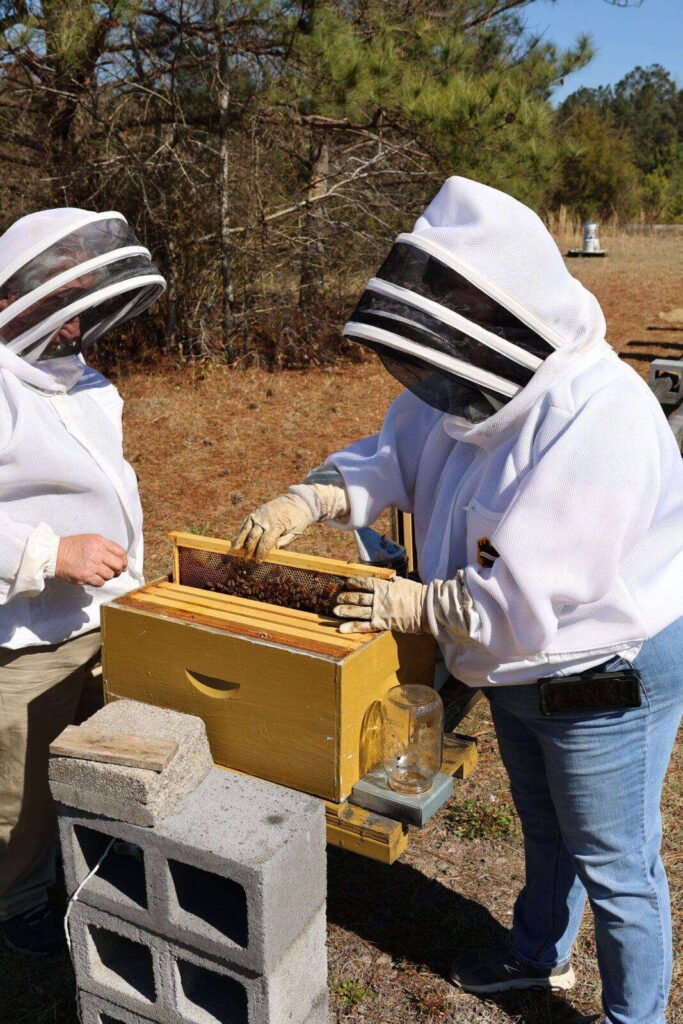
A substantial amount of free beekeeping educational content exists online, including university extension publications, recorded webinars, and instructional video content from experienced beekeepers, and much of it is genuinely valuable, particularly material published directly by extension services or organizations like the Bee Informed Partnership already covered on this site. The real limitation of free resources generally isn’t quality but structure: without a defined curriculum sequence or assessment component, a beginner has to do considerably more work themselves to organize scattered free content into a coherent learning path compared to a structured paid course.
What to Actually Check Before Enrolling
Before paying for any online beekeeping course, it’s genuinely worth confirming a few specific things: who the instructor actually is and what their real beekeeping and teaching credentials are, whether the course is affiliated with a university, extension service, or recognized beekeeping association, whether completion leads to any actual certificate or credential and what that credential specifically represents, and whether the course includes any assessment or interactive component beyond passively watching video content. A course that can’t clearly answer these basic questions on its own sales page is generally a weaker bet than one that addresses them directly and transparently.
Why Online Learning Doesn’t Replace Hands-On Mentorship
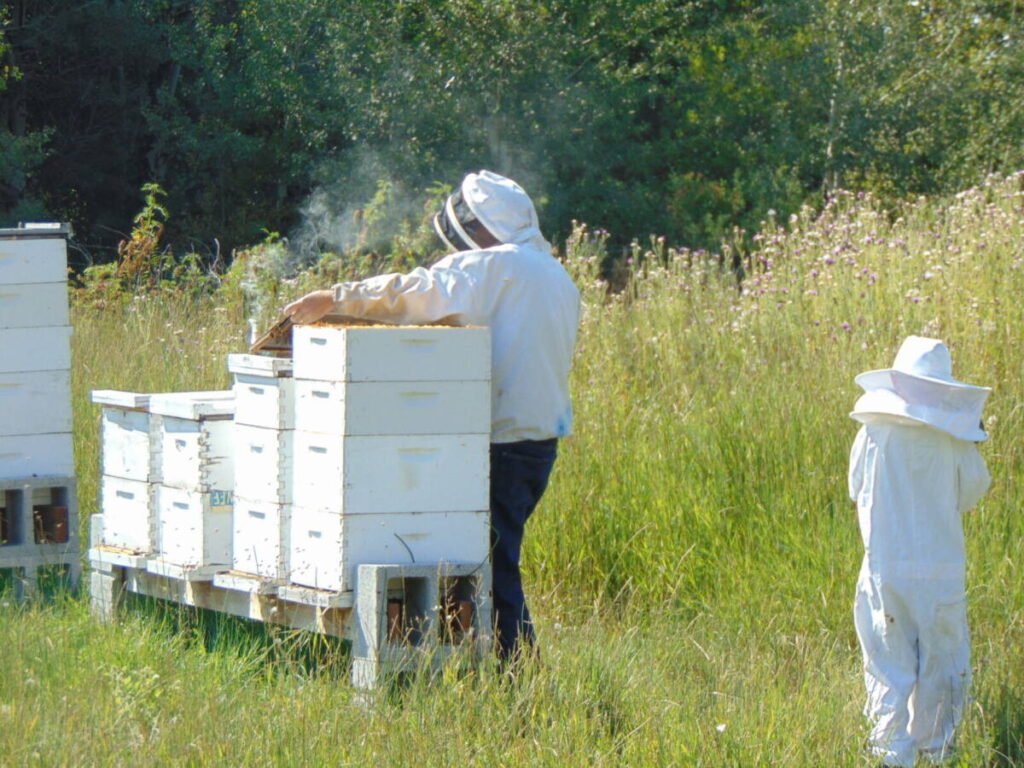
Even the strongest online beekeeping course has a genuine, inherent limitation: it can’t replicate the real-time, hands-on feedback of working alongside an experienced beekeeper at an actual hive, which is precisely why online courses are best understood as a genuinely valuable complement to, rather than a replacement for, the in-person mentorship relationship covered in more depth in this site’s guide to finding a beekeeping mentor. Many experienced beekeepers recommend combining structured online theory learning with local hands-on mentorship specifically because the two genuinely address different, complementary learning needs.
Passive Video Content vs. Genuinely Interactive Courses
A real, meaningful distinction exists between a course consisting entirely of pre-recorded video lectures watched passively and one incorporating genuine interactive elements, quizzes, assignments, discussion forums with instructor feedback, or live Q&A sessions, since the interactive format generally produces meaningfully stronger retention and understanding than passive video consumption alone. Penn State’s Beekeeping 101 explicitly builds in multimedia and interactive activities rather than pure video playback, which is part of why it was recognized with a 2013 Webby Award honoree distinction in the Education category — one of the only independent, outside quality signals that exists anywhere in this otherwise unregulated course market.
Regional Associations and Exam-Based Credentials
Beyond universities and commercial platforms, many regional and state beekeeping associations have developed their own online educational content, webinar series, or course offerings specifically for their membership, often at low or no cost beyond membership dues. It’s worth keeping these distinct from exam-based credentials like the Eastern Apicultural Society’s Master Beekeeper Certification Program, which isn’t an online course at all: it requires a minimum of five years of serious beekeeping experience and four exams — written, laboratory, oral, and field — administered in person at the annual EAS conference. Founded by Dr. Roger Morse at Cornell in 1978 and administered by EAS since 1981, it’s the oldest program of its kind in the US, but it certifies existing expertise rather than teaching beginners.
Self-Paced vs. Cohort-Based Course Formats
Online beekeeping courses generally follow one of two broad delivery formats: self-paced courses that a student can work through entirely on their own schedule with no fixed start or end date, and cohort-based courses where a group of students progresses through the material together over a defined period, often with scheduled live sessions or discussion deadlines. All three university-affiliated programs compared above are primarily self-paced, though Cornell’s incorporates moderated discussion windows within each course module. Self-paced formats offer genuinely more flexibility for students juggling other commitments, while cohort elements can provide more built-in accountability and peer interaction.
Access Duration and Content Updates
It’s genuinely worth checking how long a course grants access after purchase — Penn State’s Beekeeping 101, for example, explicitly grants 365 days rather than lifetime access — and whether the course content is periodically updated to reflect current research and best practices or was recorded once and left unchanged indefinitely. Beekeeping guidance around topics like pest management genuinely evolves as new research and treatment options emerge, so a course that hasn’t been updated in many years risks presenting outdated information as current best practice, an important consideration alongside instructor credibility when evaluating overall course quality.
Common Mistakes
The most common mistake is assuming any course using the word “certification” in its marketing carries formal, recognized credential weight, when the term is used loosely and inconsistently across the online course marketplace without regulation — as the comparison above shows, a genuine credential like Cornell’s or the EAS exam-based program looks very different from a course that simply uses the word in its sales copy. Another mistake is treating online course completion as sufficient preparation to start keeping bees without any hands-on mentorship or in-person guidance, when theoretical knowledge alone doesn’t substitute for the practical judgment developed through real hive experience. People also sometimes dismiss free resources as inherently lower quality than paid courses, when many free extension and research-backed materials are genuinely excellent, simply less structured than a purpose-built paid curriculum.
Frequently Asked Questions
Does completing an online beekeeping course count toward a formal Master Beekeeper certification?
Not automatically. Cornell’s own online program grants its own Master Beekeeping certificate directly, but it’s a separate credential from the Eastern Apicultural Society’s exam-based Master Beekeeper Certification, which requires five years of experience and in-person exams regardless of what online coursework a candidate has already completed. UF/IFAS’s Master Beekeeper Program is the clearest bridge between the two models, since its own online Apprentice course is explicitly the first of four tiers within one continuous credentialing path.
Are there any red flags that reliably signal a lower-quality online beekeeping course?
Genuine warning signs include a total absence of any identifiable instructor name or credentials, promotional language promising expert-level results with minimal effort, no sample lesson or preview content offered before purchase, and a complete lack of any university, extension, or established beekeeping association affiliation to independently verify the content’s accuracy.
Are there online beekeeping courses specifically designed for children or family learning?
Some exist, and families interested in that specific angle may also find this site’s coverage of youth-focused apiculture education, including the guide to 4-H beekeeping programs, a more structured and mentored alternative to a purely online course for younger learners specifically.
Does taking an online beekeeping course require any prior beekeeping experience to enroll?
No, most online courses, particularly beginner-oriented ones like Penn State’s Beekeeping 101, are specifically designed to require no prior experience at all, making them a genuinely accessible entry point for someone considering beekeeping for the first time. The one notable exception is a test-out path, like UF/IFAS offers for beekeepers with two-plus years of experience who want to skip the Apprentice level.
Do online beekeeping courses typically cover regional differences in climate and bee management?
Coverage varies by course; university-affiliated programs often address regional considerations more thoroughly given their research background, while some independent commercial courses may be developed around a specific region’s practices without always clearly flagging where local adaptation is needed.
Is it worth paying for an online course if free extension resources cover similar material?
It genuinely depends on how much value the buyer places on structure and sequencing; a paid course’s main advantage over free resources is typically organization and guided progression rather than access to fundamentally different information not otherwise available for free.
Further Reading
- Beekeeping Courses and Training: A Comprehensive Guide
- The Complete Glossary of Beekeeping Terms
- BBKA Certification: The UK’s Beekeeping Qualification System Explained
- 4-H Beekeeping Programs: Getting Youth Started in Apiculture
- How to Find a Beekeeping Mentor (and What to Ask Them)
Image credits: Photo: USDA Forest Service, Pacific Southwest Region, via Flickr/Wikimedia Commons. Licensed CC BY 2.0; Photo: An Errant Knight, via Wikimedia Commons. Licensed CC BY-SA 4.0.