Last Updated September 15, 2026
Unlike the university-affiliated Master Beekeeper programs common in the United States, the United Kingdom’s most established beekeeping qualification system runs almost entirely through practical, in-the-apiary assessment conducted by trained examiners, layered on top of a separate series of written theory exams a candidate can take independently. The British Beekeepers Association’s certification pathway represents one of the oldest, most structured national beekeeping qualification systems in the world, and its four-tier progression offers a genuinely quite different model from the beekeeping certification approach already covered elsewhere on this site. This guide covers what BBKA certification actually involves, how its practical husbandry assessments differ from its separate theory module exams, the full four-tier pathway to Master Beekeeper, and how it compares structurally to American certification programs.
Table of Contents
- Key Takeaways
- What BBKA Certification Actually Is
- The Four-Tier Practical Husbandry Pathway
- The Separate Theory Module Exam Series
- Reaching Master Beekeeper
- Delivered Through Local County Associations
- A Genuine Note on UK-Wide Coverage
- BBKA vs. US Master Beekeeper Certification
- Why BBKA Certification Carries Genuine Weight
- How Candidates Typically Prepare
- A Long-Running, Established System
- The Role of Approved Examiners
- Relevance Beyond Hobbyist Beekeepers
- Common Mistakes
- Frequently Asked Questions
Key Takeaways
- BBKA certification is a structured, multi-level system for beekeepers in England and Wales, combining hands-on practical husbandry assessments at the hive with a separate series of written theory modules.
- The practical pathway runs through four tiers: Basic Assessment, General Husbandry Certificate, Advanced Husbandry Certificate, and Master Beekeeper — each assessed in the field by an approved BBKA examiner.
- BBKA specifically covers England and Wales; Scotland and Northern Ireland have their own separate national associations and certification structures.
- Certification is delivered through local county beekeeping associations rather than centrally, so a candidate’s preparation experience is shaped by their local association’s mentors and resources.
- Most candidates take multiple years across several beekeeping seasons to progress from Basic Assessment to Master Beekeeper.
- Once achieved, a certificate level generally stands as a permanent qualification without periodic renewal, though active county association membership is expected.
What BBKA Certification Actually Is
The British Beekeepers Association (BBKA) maintains a genuinely structured, multi-level certification system specifically for beekeepers in England and Wales, combining hands-on practical husbandry assessments conducted directly at the hive with a separate series of written theory examinations covering bee biology, disease, and beekeeping practice in depth. Unlike a single pass/fail exam, the BBKA system is built as a genuine progression, with each level representing a meaningfully higher standard of both practical skill and theoretical knowledge than the one before it.
The Four-Tier Practical Husbandry Pathway
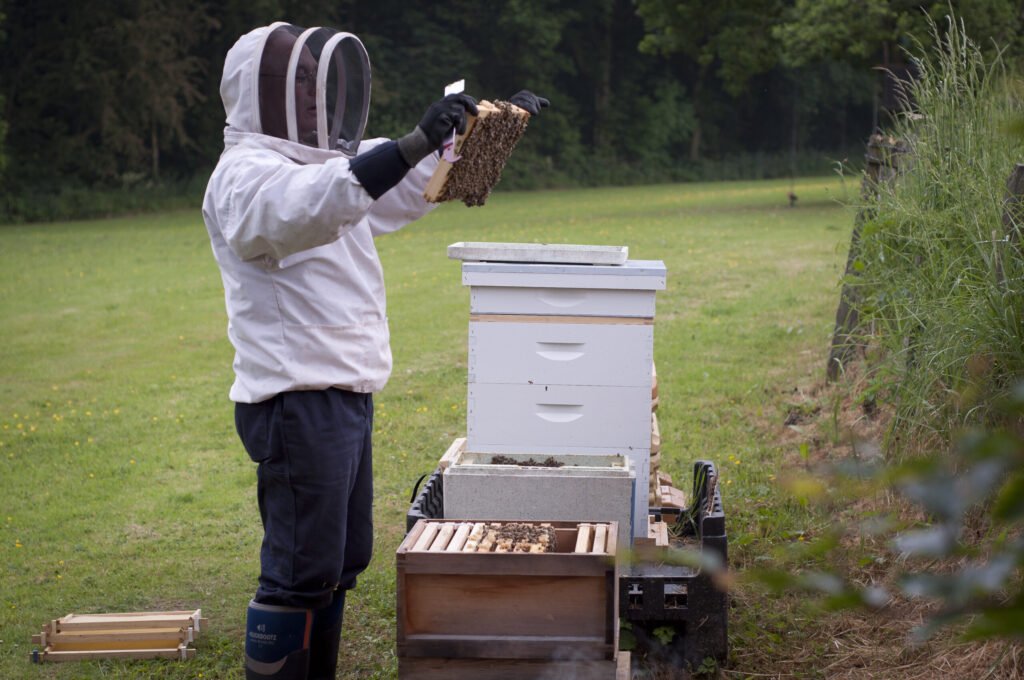
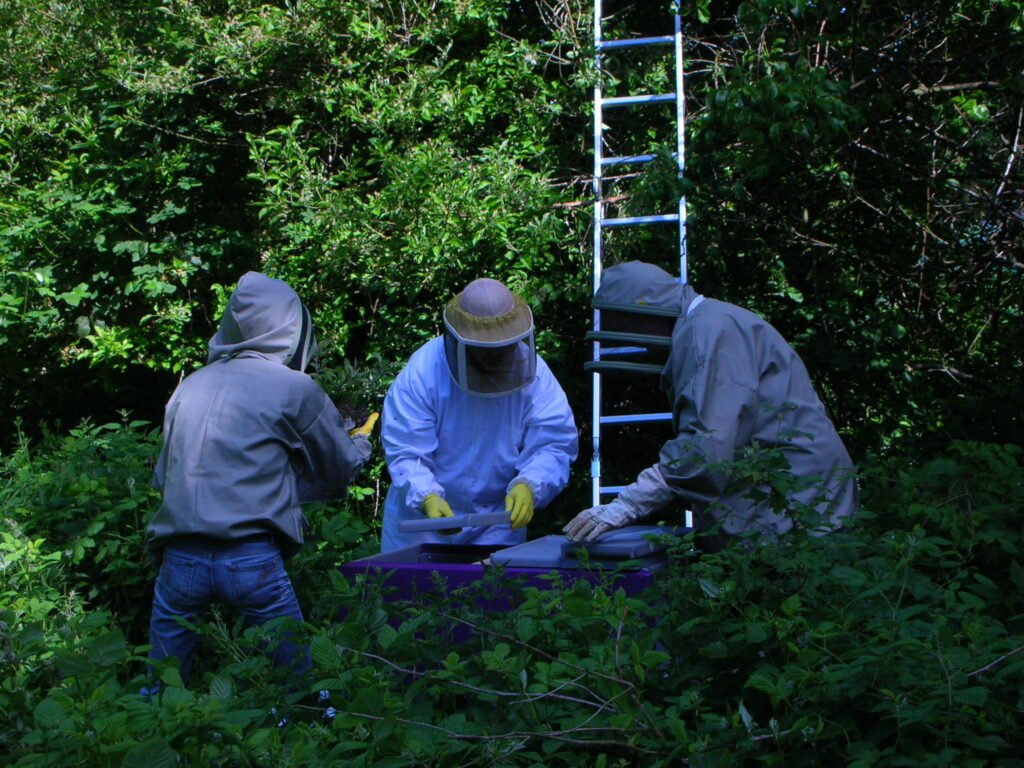
The core practical pathway runs through four progressive levels: the Basic Assessment, an entry-level practical evaluation of fundamental safe hive-handling and inspection skills; the General Husbandry Certificate, a more demanding assessment of broader colony management competence; the Advanced Husbandry Certificate, requiring a genuinely deep, comprehensive command of beekeeping practice; and finally Master Beekeeper, the top qualification in the system. Each level is assessed directly in the field by an approved BBKA examiner observing the candidate’s actual hive-handling and decision-making in real time, a genuinely hands-on evaluation model distinct from a written exam alone.
The Separate Theory Module Exam Series
Running alongside the practical husbandry pathway, BBKA also administers a separate series of numbered written theory modules, covering topics including honey bee biology, pests and diseases, products of the hive, breeding, and the history and current developments of beekeeping, among others. These modules include broad coverage of bee biology and breeding principles applicable across honey bee subspecies generally, rather than certifying expertise in any single specific bee breed or genetic line, keeping the credential’s focus on general beekeeping competence rather than specialized breeding certification. Candidates can take these theory modules independently and in any order over time, and a specific combination of both practical husbandry certificates and passed theory modules is required to progress toward the system’s highest qualification, making the two tracks genuinely complementary rather than either one alone being sufficient. There’s meaningful flexibility in module order and pacing, since candidates often study for and sit individual theory modules across multiple years alongside their practical assessment progress, though reaching the top qualification does require a specific combination of both practical and theory achievements rather than either track completed in isolation.
Reaching Master Beekeeper
The Master Beekeeper qualification represents the culmination of the BBKA system, generally requiring a candidate to have completed the full practical husbandry pathway through the Advanced Husbandry Certificate, passed a substantial set of the theory modules, and in many cases completed an additional practical or written project component demonstrating genuinely expert-level command of both the theory and practice of beekeeping. Given the multi-year time investment typically required across both tracks, achieving BBKA Master Beekeeper status is genuinely recognized within UK beekeeping circles as a significant, hard-earned accomplishment rather than a routine credential. Master Beekeepers are often called upon informally for mentorship, teaching, and examining roles within their local county association given their demonstrated expertise, though the qualification itself functions primarily as a personal credential rather than automatically conferring a fixed official position within the national BBKA organization.
Delivered Through Local County Associations
BBKA certification isn’t administered centrally in a single location; practical assessments and much of the surrounding training and mentorship happen through local county beekeeping associations affiliated with the national BBKA body, meaning a candidate’s actual day-to-day preparation experience is genuinely shaped by their specific local association’s resources, mentors, and examiner availability. This decentralized, locally rooted delivery model is a genuinely distinctive structural feature of how BBKA certification actually functions in practice compared to a more centralized national testing system.
A Genuine Note on UK-Wide Coverage
It’s worth being accurate here rather than overgeneralizing: BBKA specifically covers England and Wales, while Scotland and Northern Ireland maintain their own separate national beekeeping associations, the Scottish Beekeepers Association and the Ulster Beekeepers’ Association respectively, each with related but independently administered certification structures. “UK beekeeping certification” isn’t literally a single unified system covering the entire United Kingdom under one examining body, a genuinely important distinction for anyone researching UK beekeeping qualifications specifically rather than assuming BBKA credentials apply uniformly nationwide. Policies on whether beekeepers from outside England and Wales can still sit BBKA theory module exams for their own learning can vary, and interested beekeepers outside the association’s core geographic area should check current eligibility directly with BBKA or a local affiliated association, since availability for non-local candidates isn’t necessarily guaranteed in the same way it is for members of an affiliated county association within England and Wales.
BBKA vs. US Master Beekeeper Certification
| Trait | BBKA (England & Wales) | US Master Beekeeper Programs |
|---|---|---|
| Structure | Four-tier practical pathway + separate theory modules | Varies by program, often university/regional-association based |
| Assessment style | Heavy emphasis on in-field practical examiner assessment | Mix of written exams, practical tests, and service requirements |
| Delivery | Through local county associations | Through universities or regional beekeeping associations |
| Geographic scope | England and Wales specifically | Varies by specific US program/region |
Why BBKA Certification Carries Genuine Weight
BBKA certification’s reputation rests substantially on its practical, examiner-observed assessment model, since a candidate genuinely has to demonstrate real hive-handling competence in front of a trained evaluator rather than simply answering questions correctly on paper. This hands-on emphasis means the credential is widely regarded within UK beekeeping circles as a reliable, meaningful signal of actual field competence, not just theoretical knowledge, which is part of why local associations, mentorship programs, and even some commercial beekeeping operations in England and Wales treat BBKA-certified status as a genuinely useful reference point when evaluating a beekeeper’s practical skill level.
How Candidates Typically Prepare
Preparation for BBKA assessments generally combines structured study for the written theory modules with substantial hands-on apiary time, often under the guidance of an experienced local mentor or through organized county association training days specifically built around assessment preparation. Because the practical assessments are observed directly by an examiner evaluating real-time decision-making and technique, candidates typically benefit from extended, repeated hive-handling experience across multiple seasons rather than concentrated last-minute preparation, reflecting the genuinely skill-based nature of the practical assessment tiers.
A Long-Running, Established System
The BBKA itself has a genuinely long history within organized British beekeeping, and its structured certification system has developed and been refined over many decades, giving it a genuine level of institutional maturity and well-established precedent that many newer certification programs elsewhere often simply lack. This longevity means the assessment standards, examiner training, and overall program structure have been tested and adjusted across a genuinely long track record, contributing to the credential’s widely recognized credibility within UK beekeeping specifically.
The Role of Approved Examiners
Every practical husbandry assessment in the BBKA system is conducted by a specifically trained and approved examiner, individuals who themselves have typically progressed through the certification pathway and received additional training specifically in how to evaluate candidates fairly and consistently. This examiner-training layer is genuinely important to the system’s overall credibility, since it helps ensure that a candidate assessed by one examiner in one county receives a comparably rigorous, consistent evaluation to a candidate assessed elsewhere, maintaining a genuinely uniform standard despite the decentralized, county-association-based delivery model covered elsewhere in this guide.
Relevance Beyond Hobbyist Beekeepers
While many candidates pursuing BBKA certification are hobbyist beekeepers looking to formally validate and build on their skills, the credential also carries genuine relevance for beekeepers moving toward more serious semi-commercial or educational roles, including those interested in eventually mentoring newer beekeepers or teaching through their local county association. Achieving higher tiers of the certification, particularly Master Beekeeper, is often viewed within the UK beekeeping community as a meaningful signal of readiness to take on exactly these kinds of teaching and leadership roles within local beekeeping circles.
Common Mistakes
The most common mistake is assuming BBKA certification is a single pass/fail exam rather than a genuinely multi-year, multi-level progression combining separate practical and theory tracks. Another mistake is assuming BBKA covers the entire United Kingdom uniformly, when Scotland and Northern Ireland maintain their own distinct national certification structures. People also sometimes assume US and UK beekeeping certification systems are directly equivalent or interchangeable, when the two have genuinely different structures, assessment emphasis, and delivery models, making direct credential comparison across countries less straightforward than it might first appear.
Sources and Further Reading
This guide draws on the British Beekeepers Association‘s own certification structure, the Scottish Beekeepers Association for UK-wide context, and the Eastern Apicultural Society’s Master Beekeeper Certification Program for the US comparison.
- The Complete Glossary of Beekeeping Terms
- Online Beekeeping Courses Compared: Which Ones Are Actually Worth It
- The 4-H Beekeeping Project: A Complete Starter Guide
Frequently Asked Questions
Do you need to already be a BBKA member to pursue certification through the association?
Yes, pursuing BBKA certification generally requires membership through an affiliated local county beekeeping association, which also typically provides access to the training, mentorship, and examiner network needed to prepare for and sit the assessments.
How long does it typically take to progress from Basic Assessment to Master Beekeeper?
Given the depth of both the practical and theory requirements at each level, most candidates take multiple years, often spanning many beekeeping seasons, to progress through the full pathway to Master Beekeeper, reflecting the genuinely substantial skill and real knowledge development required rather than a program designed purely for rapid completion.
Is BBKA certification recognized or relevant for beekeepers outside England and Wales?
While the credential itself is specifically administered within England and Wales, it’s widely recognized and respected within the broader international beekeeping community as a rigorous, well-established qualification, even for beekeepers who wouldn’t be pursuing it directly given their own location.
How does BBKA certification relate to the general topic of finding a beekeeping mentor?
The two are closely connected in practice, since local county associations delivering BBKA training often provide exactly the kind of structured mentorship relationship covered in more general depth in this site’s guide to finding a beekeeping mentor.
Does BBKA certification require ongoing renewal, or is it a one-time qualification once achieved?
Once a specific certificate level is achieved, it generally stands as a permanent qualification rather than requiring periodic renewal or re-testing, though continued BBKA membership through a local county association is typically expected to remain active within the organization’s broader community and training network.
Are there any additional specialist BBKA qualifications beyond the core Basic-to-Master pathway?
Yes, beyond the core husbandry and theory module pathway, BBKA also offers additional specialist assessments in certain areas, such as bee disease recognition and microscopy skills, giving experienced beekeepers a way to further specialize and validate expertise in specific technical areas beyond the general husbandry progression.
Is there a minimum amount of hands-on beekeeping experience required before attempting even the Basic Assessment?
While specific requirements can vary somewhat by local county association, candidates are generally expected to have at least one full season of genuine, practical hive-keeping experience before attempting the Basic Assessment, since the evaluation is built around demonstrating real hands-on competence rather than testing theoretical knowledge alone.