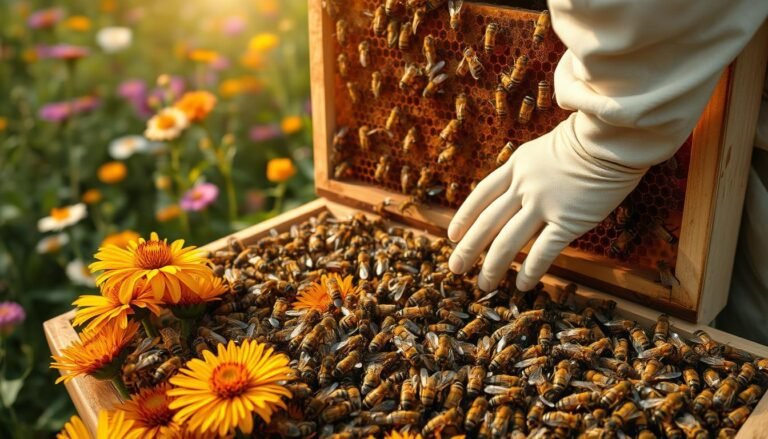
This brief guide gives beekeepers a fast, reliable way to spot robbing at the hive. It focuses on clear signs at the entrance, subtle shifts in bee activity, and visible comb clues. The aim is simple: act before a colony is overwhelmed and protect honey and apiary health.
Robbing often peaks in late summer and early fall during nectar dearth, and it can return in early spring before the first major flow of the year. Look for grappling at the landing board, bees with no pollen loads, and ragged cappings on the bottom board.
Compare traffic among nearby hives, note the grim, darting scouts that work until dusk and restart at first light, and separate that from brief afternoon orientation flights. If signs match, follow a clear decision flow: observe entrances, inspect comb, then deploy controls like entrance reduction, a robbing screen, or a wet sheet.
Key Takeaways
- Spot fighting at the entrance and torn cappings as immediate red flags.
- Robbing runs until dusk and restarts at first light — timing matters.
- Compare hive traffic to tell normal foragers from robber scouts.
- Quick fixes — reduce the entrance or add a robbing screen — can stabilize a colony in minutes.
- Good beekeeping hygiene and careful honey handling reduce triggers across the apiary.
Table of Contents
- What robbing looks like in bees: a quick primer for beekeepers
- How This Guide Helps You Secure Your Hives
- Seasonal patterns: when robbing is most likely in the United States
- At the entrance: early signs to watch before chaos erupts
- Flight behavior clues that reveal a robbery in progress
- How to identify robbing behavior early
- Robbing vs orientation flights: make the right call
- Comb and debris diagnostics: reading the cappings and wax
- Special case: detecting low-key early spring and progressive robbing
- Immediate actions to stop robbing and stabilize the colony
- Using entrance reducers and robbing screens the right way
- Prevention-first beekeeping: reduce triggers and strengthen defenses
- Vulnerable scenarios and risk factors to manage
- Conclusion
- FAQ
What robbing looks like in bees: a quick primer for beekeepers
At the hive entrance, a raid looks like a sharp, tense rush rather than the calm flow of returning foragers. Watch the landing board: pairs and groups will grapple, roll, and refuse to stop when you disturb them.
Robbing bees rip open capped cells, fill honey stomachs, and ferry stores back to their own colony. Look for torn wax cappings and crumbs on the bottom screen and dead bees piled by the entrance.
The sound changes. Expect a louder, tenser buzz during an assault compared with routine hive traffic. Robber scouts probe seams, backboards, and side cracks, swaying side to side like wasps while they wait to enter.
Contrast this with normal forager activity: pollen on legs, buoyant flight, and orderly returns. A vigilant beekeeper should stand aside from the entrance and note traffic patterns, since theft spreads disease and mites between colonies and can strip honey fast.
| Sign | What it looks like | Quick check |
|---|---|---|
| Grappling | Pairs/ groups rolling on landing board | Observe for 60 seconds from 5–10 ft |
| Debris | Ragged cappings and crumbs on bottom board | Lift bottom board or look through screen |
| Noise & losses | Louder buzz and dead bees at entrance | Count dead in front of hive over 15 minutes |
How This Guide Helps You Secure Your Hives
Use this short, reliable plan to spot signs at the hive entrance and act before losses mount. It is written for both new keepers who need a dependable checklist and experienced caretakers who want faster confirmation and a stronger response plan.
Who should use this guide
New beekeepers gain a clear, repeatable way to read traffic and debris. Experienced beekeepers get a quick method for closing a weak colony the same day and limiting spread in the apiary.
What you’ll learn
Spot early signals at the entrance, verify theft with bottom-board debris, then stabilize the hive within a single day. The step-by-step way is simple: observe traffic, compare with other hives, inspect cappings, then deploy controls in order.
- Fast checkpoints: timing through the day, pollen presence, and flight demeanor.
- Tools: entrance reducer, robbing screen, smoker, wet sheet, and hardware cloth for severe events.
- Risk tradeoffs: reduce openings enough for guard bees without choking ventilation.
- Safety: approach an agitated entrance slowly, wear protection, and use smoke for brief reprieve.
A clear decision path halves the time robbers have to strip stores and keeps colonies healthier across the apiary.
For practical best practices and more detailed guidelines, see residential beekeeping best practices and a comprehensive resources guide.
Seasonal patterns: when robbing is most likely in the United States
Seasonal shifts set the stage for theft; knowing those windows helps you plan inspections and protections.
Late summer and early fall are the most active periods. Nectar dries up in many regions, and longer, hotter days push foragers into desperate searches. That pressure drives bees from one hive toward neighbor stores.
Watch for brief warm snaps in early spring. Small groups may uncork honey slowly during the warmest time of day. Cold hives with limited guard strength are especially vulnerable.
Regional variation matters. Drought, delayed bloom, or extended winter will shift risk windows. Strong colonies can act as aggressors or be attacked when foraging pressure peaks.
- Prepare: have an entrance reducer and a robbing screen ready before dearths.
- Record season and year trends to predict recurring threats.
- Increase checks during nectar lows and just before the first major flow.
| Season | Typical trigger | Action |
|---|---|---|
| Late summer / fall | Nectar dearth, heat-driven foraging | Reduce entrances; monitor hives daily |
| Early spring | Warm spells before main flow | Check for neat uncaps; use screens during thaws |
| Winter thaws | Dormant colony collapse leaves stores exposed | Secure dead hives; inspect during warmer days |
At the entrance: early signs to watch before chaos erupts
Start by watching the landing board. A quick, calm check often reveals whether plain traffic or conflict is unfolding at the entrance. Note differences in pace, sound, and the way individuals meet one another.
Fighting and rolling bees vs normal traffic
Fighting bees tumble and roll on the landing board or in tight air fights. That contrasts with orderly foragers carrying pollen and moving in steady lines.
Dead bees piling near the entrance and ragged scraps of wax are strong signs that fighting has escalated.
Guard bees, reduced entrances, and patrol behavior
Guard bees cluster where the opening is smallest. A partially reduced entrance shortens the line they must hold and helps the guard repel intruders without choking ventilation.
Persistent patrols at the threshold and repeated interception of outsiders suggest the colony needs quick reinforcement or screening.
Wasps hovering and shiny, hairless fighters
Some fighters look shiny and black from hair loss after repeated combat. Wasps or swaying, wasp-like scouts hover and may scavenge dead bees during an attack.
Robbers examining cracks, seams, and the back/sides of the hive
Watch beyond the landing board. Robber bees will probe seams, cracks, and the hive sides for scent leaks. If one hive shows fighting but neighboring hives do not, prepare a reducer and a robbing screen.
- Do not open the hive at this stage; exposing frames will make fighting worse.
- Compare entrance activity with other hives to confirm a localized threat.
| Sign | What it looks like | Action |
|---|---|---|
| Grappling/rolling | Tumbling bees on landing board, loud tense buzz | Observe; add entrance reducer and robbing screen if repeated |
| Shiny fighters | Black, hairless bees among attackers and defenders | Limit opening; avoid inspections; reinforce guard line |
| Probing at sides | Bees checking cracks, backboards, and seams | Seal scent leaks; monitor other hives for spread |
Flight behavior clues that reveal a robbery in progress
A menacing, rapid flight pattern often gives a clearer clue than any single torn cell at the bottom board. Watch how the insects move before opening equipment. Short, sharp flights and direct dives are the first hint.
Busy flurry with a grim, darting demeanor
Observe the air around the hive face. A frantic, tense loop differs from playful orientation loops of young bees.
No pollen loads; abdomens full leaving, slimmer returning
Inbound workers lack pollen. Outbound insects often crawl up the box front, weighed by honey, then dip on takeoff.
Crawling up the wall and dipping on takeoff
Use these flight cues as a non-invasive check before any frame work. Compare nearby colonies for yard-wide disturbances.
- Frantic flight pattern signals higher risk.
- No pollen on legs supports a theft call.
- Departures that crawl and dip show heavy loads.
- Attackers probe seams rather than the main entrance.
Action in this way: if signs match, add an entrance reducer and a robbing screen quickly. Stay at the side or rear while you work and record the time and conditions for follow-up.
| Clue | What you see | Quick response |
|---|---|---|
| Flight pattern | Short, darting, direct | Watch; compare hives |
| Pollen presence | Inbound legs bare | Verify before opening |
| Departure posture | Crawling then dipping | Install reducer and screen |
For stepwise protective methods, see preventing and managing robbing.
How to identify robbing behavior early
Listen at the hive face: a louder, metallic buzz can signal trouble before you see it. That sound often precedes chaos at the entrance and warns you an alert is needed.
Listen for louder-than-normal hive noise
Start with sound. An edgy, raised hum from inside a colony often shows growing stress. Note changes across the day and record the time when the tone peaks.
Compare suspect hive traffic with neighbors
Stand back and watch several hives in the apiary at once. If one hive displays tense, darting flight while others remain steady, that mismatch is a strong cue.
Check timing: runs until dusk, restarts at first light
Use time as a diagnostic. Theft-style activity typically runs through dusk and resumes at first light. Short, warm-afternoon flights that stop with nightfall are less likely theft.
- Note absence of pollen carriers and probing at seams as added confirmation.
- A repeat pattern across days strengthens your assessment.
- Avoid opening a hive during suspected attacks; act the same day with an entrance reducer and a robbing screen if signs align.
| Clue | What you see | Quick action |
|---|---|---|
| Raised hive noise | Louder, tense hum from inside | Observe; log time; compare hives |
| Mismatched traffic | Tense darting at one colony, others calm | Stand back; avoid opening; reduce entrance |
| Timing pattern | Runs until dusk, restarts at first light | Record days; install robbing screen same day |
Robbing vs orientation flights: make the right call
A quick yard comparison often makes the difference between a practice flight and a theft-driven assault.
Orientation flights are brief, usually in the warm afternoon, and last 20–30 minutes. They show playful, looping movement as young bees learn the landscape.
By contrast, robbing runs through dusk and restarts at first light. Look for a grim, direct flight and fights at the landing board. Those signs point toward loss rather than learning.
- Timing: short afternoon session versus long all-day pressure that returns at dawn.
- Demeanor: buoyant loops versus purposeful, menacing darts around the entrance and seams.
- Evidence: grappling on the landing board, no pollen carriers, a harsh continuous buzz and ragged cappings underneath the hive.
- Quick way forward: if unsure, reduce the entrance and monitor. If normal traffic resumes in 24 hours, reopen gradually.
| Clue | Orientation | Robbing |
|---|---|---|
| Duration | 20–30 minutes | All day; restarts at first light |
| Pollen | Some pollen carriers | Usually absent |
| Landing board | Calm | Grappling and rolling |
Comb and debris diagnostics: reading the cappings and wax
A close look at cappings and wax debris gives a quick, reliable read on recent loss from frames. Pulling the bottom board or scanning the landing board often reveals whether bees have been uncaping stores or if heavier damage occurred.
Large, ragged cappings on screens or the landing board point to active honey theft at the comb. These pieces are irregular and shredded, unlike the tiny, neat holes that bees patch quickly during normal consumption.
Spring signs differ. Neatly trimmed uncaps or slightly ragged edges with caps left on rims suggest slow removal during cold snaps when small groups work carefully.
In mid-summer, mass events show heavy chewing into cell walls. You may see a third to half of wall thickness removed, which weakens comb structure and reduces storage capacity.
- Inspect frames only when the yard is calm; open boxes can worsen an active situation.
- Cross-check cappings with entrance activity before making a diagnosis.
- Document which side of the comb shows damage to infer entry points and robber paths.
| Sign | What it means | Quick check | Action |
|---|---|---|---|
| Ragged cap fragments | Active tearing of honey cells | Look on bottom board and landing board | Install reducer and screen; protect stores |
| Neat uncapping (spring) | Slow, targeted removal by small groups | Small trimmed rim pieces on caps | Monitor; secure hive at dusk; inspect later |
| Cell-wall chewing (summer) | Severe mass theft; comb weakened | Frames with missing wall thickness | Treat as emergency; close openings; plan comb repair |
| Tiny patched holes | Normal consumption | Small, quickly repaired exits in caps | No immediate action; watch for escalation |
Use debris diagnostics to prioritize which hive needs securing first and where screens or reducers will help most. For more notes on bottom-board reads, see bottom-board observations.
Special case: detecting low-key early spring and progressive robbing
Small, steady theft often hides in plain sight during cool spring afternoons when only a few dozen intruders work brief warm windows.
What to watch: neat, slightly ragged uncaps on frames and minimal chewing of cell walls. These signs show methodical removal rather than a mass attack.
Check entrances daily for sticky trails near dead or cold hives. That tacky material often reveals slow siphoning of stores instead of normal survival activity.
Progressive loss among packages, nucs and weak units
One modest colony can strip a neighbor over several days. Track weight and feed use; a robber that gains unusually fast often signals ongoing theft.
- Expect low-volume traffic and short warm windows — easy to miss.
- Compare abdomen size: heavy leaving, slimmer returning is a clear cue.
- Extend observations across sunny days before opening boxes.
A few days of careful watching will often uncover slow theft before comb is ruined.
| Clue | What it means | Quick action |
|---|---|---|
| Neat uncaps | Methodical removal | Reduce entrance; monitor |
| Sticky entrance | Siphoning from cold/dead hive | Shield vulnerable units first |
| Slow weight gain | Progressive theft | Reassess layout; install screens |
Immediate actions to stop robbing and stabilize the colony
When an assault starts, simple gear changes can shift control back to the defending bees within minutes. Act quickly but calmly. Closing or narrowing openings gives guard bees a chance to hold the doorway and reduces losses.
Add a reducer and a screen fast
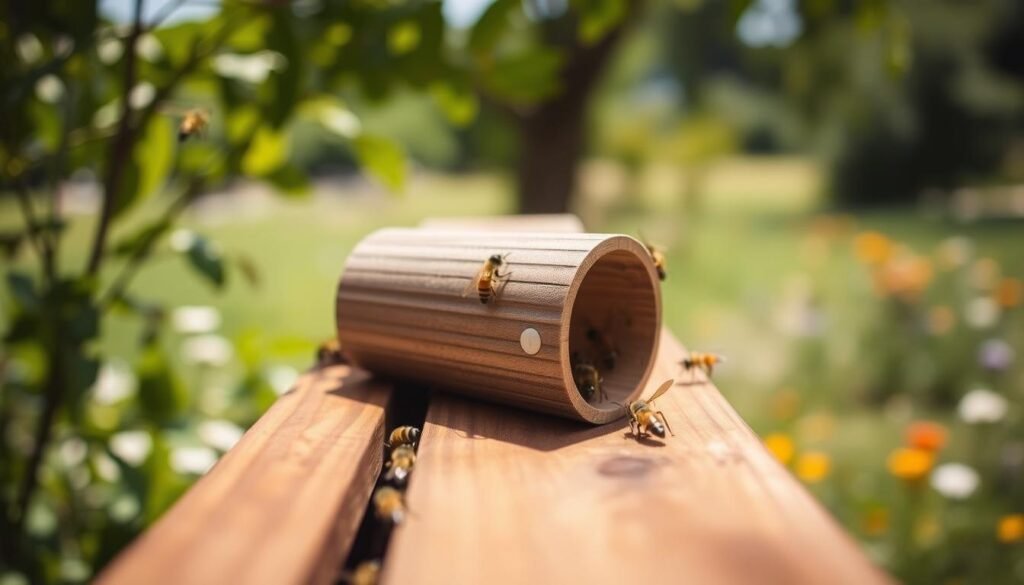
Fit an entrance reducer at once and add a robbing screen. That combination shortens the line defenders must hold and blocks direct mass entries.
Use smoke for a short reprieve
Smoke will not stop an attack, but it calms surface agitation long enough to fit the reducer and screen without opening boxes. Work quickly; do not expose frames.
Wet sheet for quick confusion
Throw a water-saturated towel or wet sheet over the hive. The damp sheet confuses outsiders while residents can still enter beneath. This cools the exterior and buys critical minutes.
Seal tightly if severe and support the colony
For intense cases, close the entrance with #8–#10 hardware cloth or a stout screen for several days. If confined, provide syrup, water, and pollen substitute so the colony can feed and ventilate. Tighten gaps, remove yard spills, and cover exposed supers.
- Reduce and redirect: install reducer and screen immediately.
- Short smoke window: calm while you fit gear.
- Wet sheet: quick confusion for attackers.
- Close with hardware cloth: hold for a few days if needed; ensure airflow.
- Supply: syrup and water if hive is sealed; avoid opening boxes during the event.
After the situation eases, reopen gradually to a small entrance and monitor traffic over the next day. Keep reducers, screens, extra sheets, and hardware cloth on hand so you can respond in minutes.
Using entrance reducers and robbing screens the right way
A well-placed screen changes the contest at the entrance long before a mass assault begins. Install screens and reducers before nectar dries so the colony adapts and guard bees learn the new approach.
When to install and how to size openings
Fit a screen ahead of dearth and leave it in place so residents build scent trails beneath and around the new doorway.
For active events, reduce the opening to a single-bee width. Expand slowly as defenders regain control.
Why displacement and scent trails help residents but deter robbers
A screen creates displacement. Bees follow familiar scent cues under the screen and find the real way in.
Attackers usually butt the screen and fail to locate the entrance. That confusion gives defenders an edge.
- Pairing: place an entrance reducer behind the screen when defense is weak.
- Upper entrances: add a nuc-style screen to stop bypass routes.
- Adjustable screens: let you shift openings without removing hardware.
- Ventilation: check airflow in warm weather; keep the screen flush to prevent scent leaks.
| Purpose | Setting | Recommended opening |
|---|---|---|
| Pre-dearth acclimation | All hives | Full-width screen, small opening |
| Active pressure | Weak colony or mass attack | Single-bee width |
| Upper entrance control | Supers, nucs | Nuc-style screen |
Prevention-first beekeeping: reduce triggers and strengthen defenses
A clear prevention plan focuses on removing attractants and giving each hive the tools it needs to repel intruders.
Keep colonies strong with timely nutrition, disease checks, and queen care. Healthy colonies field a steady guard force and resist loss during a nectar dearth or at the end of a flow.
Avoid common-feeding and entrance feeders. Shared feeders concentrate scent and lure attackers. Place supplemental food well away from hives and stop communal feeding during high risk periods.
Cover boxes during inspections and never leave honey frames exposed. Shorten checks and close supers quickly so scent does not broadcast across the yard.
Clean spills of syrup or broken comb at once. Wash equipment, hose down sticky grass, and remove residues that advertise food.
- Keep an entrance reducer and screen staged for fast use.
- Balance ventilation and defense when restricting openings in warm weather.
- Train helpers on a prevention checklist and review yard layout to limit scent drift between hives.
- Use a wet sheet or sprinkler as a short-term deterrent in emergencies.
| Threat | Prevention | Quick action |
|---|---|---|
| Attractant spills | Clean syrup and broken comb immediately | Wash area; remove sticky debris |
| Weak colony | Maintain nutrition and queen health | Combine or support feeders away from yard |
| Yard scent drift | Place feeding stations downwind | Rearrange hives; pre-stage reducer |
Vulnerable scenarios and risk factors to manage
Some colonies become clear targets long before a full assault; spotting those risk factors saves time and stores.
Queenless, small, or weak units need early attention. Flag any colony with low brood or thin population and consider combining before nectar dries. A bolstered unit usually holds a line better and recovers faster.
Stock traits matter. Italian bees are reported to engage in theft more often, so monitor those bees closely and keep tighter control at the mouth of the hive.
Remove entrance feeders during dearth and rethink layout. Spread boxes, vary entrance directions, and block scent corridors across the apiary. These steps reduce attraction and cross-yard pressure.
If one unit stays under siege, plan a dusk move after residents are in. A short relocation can break a robber’s homing and give relief for the next day.
Treat chronic victims with permanent screens and narrow openings until population and brood recover.
| Risk | Sign | Action |
|---|---|---|
| Queenless | Low brood, falling weight | Combine or requeen |
| High-risk stock | Frequent aggression among bees | Tighten entrance control |
| Chronic target | Repeat hits each year | Log events; install permanent screen |
- Avoid yard-wide openings unless experienced; that tactic often fails.
- Use brood and population assessments to pre-stage reducers.
- Coordinate with neighbors when apiaries sit close; shared planning lowers pressure.
Guard bees are the colony's first line of defense against robbers; see how bees detect hive intruders.
If robbing starts at feeding time, see how to feed bees without setting off robbing.
Once robbing starts, see entrance options once robbing starts.
Conclusion
Final checks and quick fixes keep a struggling hive from losing honey and strength.
Early recognition of tense flight, entrance fighting, bare-legged returns, and ragged cappings saves stores, bees, and the colony. Act fast: reduce the opening, add a robbing screen, and, when needed, use a wet sheet or temporary closure with #8–#10 mesh.
Expect higher risk in late summer and fall dearths and during warm spring snaps. Regular yard checks and cross-hive comparisons sharpen your eye for abnormal activity and cut losses over time.
Prevention-first routines—covered inspections, no exposed honey, and clean work—protect one hive and the whole apiary from pests and disease. For practical notes and Q&A see robbing Q&A and wider yard planning at beekeeping expansion tips.
FAQ
What are the earliest signs that a hive is under attack by robbers?
Look for a sudden increase in aggressive, darting flight at the entrance, louder-than-normal buzzing, and bees without pollen coming and going. Small fights and rolling bees near the landing board, plus wasps or shiny, hairless intruders, are early red flags.
How can I tell robbing apart from normal orientation flights?
Orientation flights are brief, buoyant, and happen in warm afternoons. Robber activity is persistent, aggressive, and often runs until dusk and resumes at first light. Robbers have purposeful, fast darts and often lack pollen loads.
What entrance clues should I monitor each day?
Watch traffic compared with neighboring colonies, note any crawling on the front wall, bees dipping on takeoff, and guards patrolling. Use an entrance reducer or robbing screen at the first unusual sign to slow attackers.
Which seasonal windows carry the highest risk in the United States?
Late summer into early fall during nectar dearths and early spring before major nectar flows are the riskiest. Colonies low on stores or weak after winter face higher likelihood of being targeted.
What comb and debris evidence points to theft?
Ragged cappings and honey-soaked debris on the bottom board indicate violent theft. Neatly trimmed uncaps can appear in early spring robbing, while mass summer attacks show heavy chewing into cell walls and scattered wax.
How can I confirm progressive or low-key robbing in cold weather?
Small groups uncapping slowly, especially in small or queenless colonies, signal progressive robbing. Check for incremental loss of stores over several days and tiny groups moving in and out at low temperatures.
What immediate steps stop an active raid?
Fit an entrance reducer and a robbing screen right away, use a few gentle puffs of smoke to give you time, and cover the hive with a wet towel or sheet briefly to confuse invaders. For severe attacks, close the hive with hardware cloth for several days.
When and how should I fit an entrance reducer or robbing screen?
Install during first signs of aggression or at the start of a dearth. Size the opening small enough for resident bees to pass while allowing guards to control traffic. Position the screen so returning foragers can find the entrance but robbers face filtering and scent confusion.
What prevention practices reduce risk across the apiary?
Keep colonies strong and populous, avoid entrance feeders or exposed syrup during dearth, clean spills immediately, and cover frames when inspecting. Reduce entrance size during nectar gaps and maintain good apiary spacing to limit scent trails.
Which colonies need extra protection or action first?
Queenless, small, or recently imported nucs and packages are most vulnerable. Italian honey bees can show higher robbing tendencies; monitor them closely and consider combining weak colonies when appropriate.
How long should protective measures stay in place after an incident?
Maintain reduced entrances and screens for several days to a week after activity subsides. Keep monitoring traffic patterns and only reopen fully when normal, peaceful flight resumes and stores recover.
Can hive location or layout influence robbing risk?
Yes. Crowded apiaries or sites with a dominant weak colony attract robbers. Spread colonies, avoid placing weak hives near strong ones, and consider moving a victim colony at dusk to break scent trails if repeat attacks occur.
Are there humane deterrents that work long-term?
Maintaining colony strength, consistent inspections, removing spilled syrup, and using robbing screens during dearths are effective and low-stress. Hardware cloth closures are a short-term emergency tactic rather than a permanent solution.
What role does scent and displacement play in deterrence?
Scent trails guide robbers. Changing the hive’s scent by moving the box slightly, adding a scent distractor, or installing a screen confuses intruders and helps resident guards regain control of access routes.