
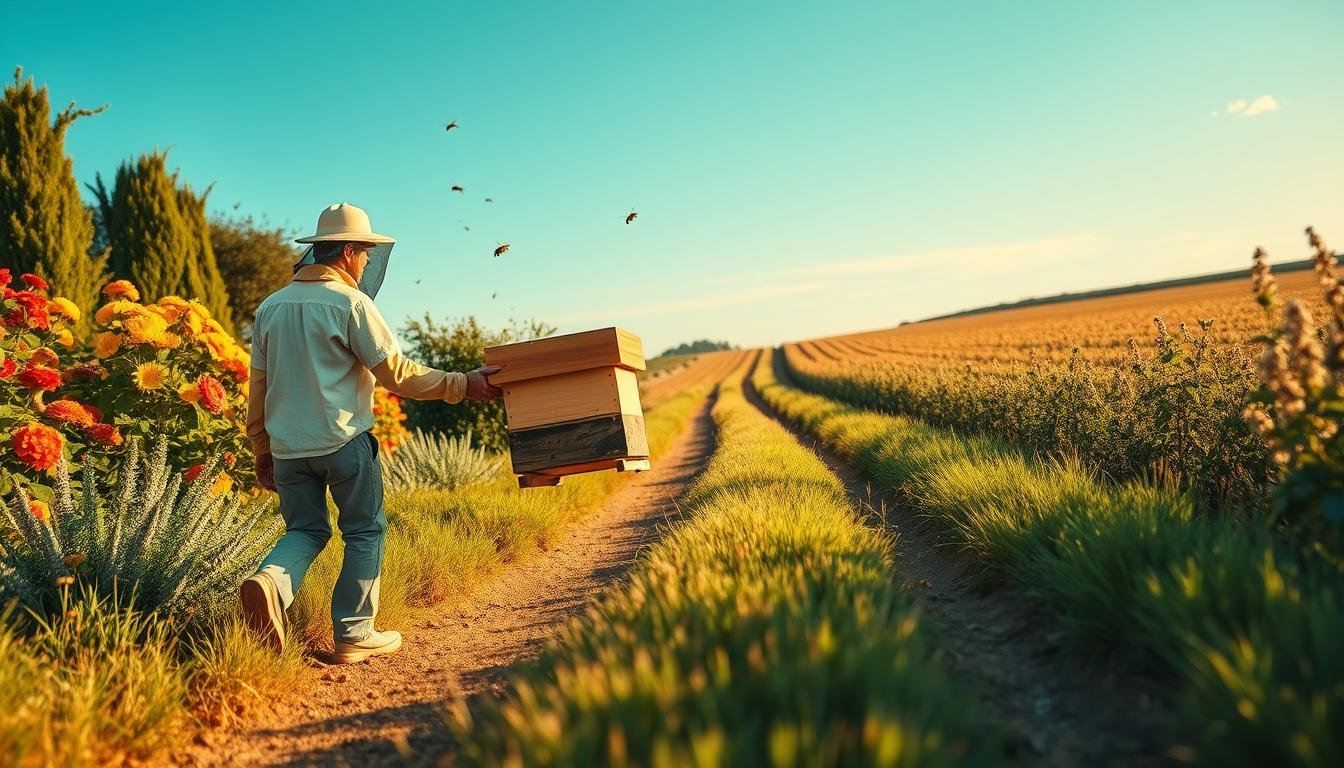
Moving a hive demands clear planning to keep the colony healthy and productive. Simple rules help: small shifts under three feet usually keep foragers working, while moves beyond three miles force bees to accept a new location. The right method depends on distance, season, and your transport gear.
Prepare the boxes at night and secure them with ratchet straps. Seal entrances briefly, add ventilation with travel screens, and use reorientation aids like a leafy branch or towel at the entrance for 24–72 hours. Level the load on a pickup or trailer and avoid putting hives inside a closed vehicle.
This short guide explains step-by-step choices for feet-per-day shifts, staged miles-long relocations, and when to let the colony reset. You’ll learn entrance management, timing, and safe transport to protect honey stores and the bees’ sense of home.
Key Takeaways
- Follow the less-than-three-feet or more-than-three-miles rule for best orientation results.
- Move at night, seal entrances briefly, and ensure screened ventilation during transit.
- Use incremental yard-by-yard shifts or a staged miles method based on distance and brood state.
- Secure boxes with straps, keep the hive level, and transport on a pickup or trailer.
- Use simple reorientation cues and a 24–72 hour closure to reduce returns to the old site.
What this How-To guide covers and why distance matters
This section maps the scope of the guide and explains why how far you move a hive determines the best approach.
The guide covers safety preparation, ventilation, tools, staged and straight moves, timing by season, setup at the new location, troubleshooting, and special cases.
Bees are geo‑located to their home and memorize landmarks. Moving just a few feet keeps familiar cues, while moves of several miles erase them and force reorientation. For intermediate ranges, a two‑stage move (away for about three weeks, then back) often works.
Practical topics you’ll get:
- When to seal entrances and how long (24–72 hours).
- How to prepare each box and load for transport.
- Choosing the right method by area, terrain, and colony strength.
Preview reorientation aids such as entrance blocks and simple visual obstacles. Learn timing tips that protect brood and honey, and steps to reduce forager loss.
| Range | Typical Method | Key Action |
|---|---|---|
| Feet (under ~3 feet) | Incremental shift | Keep entrance direction; move slowly |
| Intermediate (~3 feet to miles) | Two‑stage or reorient | Temporary relocation, 3 weeks off‑site |
| Miles (several miles+) | Straight transport | Seal at night; let bees reorient at arrival |
For full step‑by‑step instructions and tools, see our guide on how to move hives.
Search intent: understanding 30. moving a beehive short distance vs long distance
Understanding bee behavior is the first step to pick the right method for relocating a hive. Bees learn landmarks, so how far you move the colony changes your plan.
If you force reorientation, seal the entrance at night or early morning and keep the colony sequestered for 24–72 days with screened ventilation. After that period, place a leafy branch or towel at the entrance for a couple of days to trigger reorientation flights.
For small shifts measured in feet, use incremental moves to preserve site memory. For miles-long transfers, rely on sealing, secure transport, and a reorientation cue on arrival.
Prepare straps, travel mesh, and a plan for the first few days. Expect minor drifting for several days; collect returnees or use a trap box if needed.
- Intent: compare methods for a few feet versus many miles.
- Questions answered: when to close the hive and how many days to keep it sealed.
- Outcome: reduce drifting and help bees accept the new location.
| Range | Method | Key Steps |
|---|---|---|
| Under a few feet | Incremental shift | Move slowly, keep entrance facing same way |
| Intermediate miles | Two‑stage or reorient | Temporary move off-site ~3 weeks, then return |
| Several miles+ | Straight reorientation | Seal at night, ventilate, use branch at entrance |
For more detail on legal and practical considerations, see things to consider when moving hives.
Safety first: protective gear, calm handling, and hive security
Personal safety and hive security come first whenever you prepare to relocate colonies. Suiting up and stabilizing the load reduces stress for both the beekeeper and the colony.
Personal protection: suit, gloves, veil, smoker readiness
Wear a full suit with gloves and a veil before you touch the hive. Even calm bees can become defensive when boxes shift.
Keep a smoker ready and use gentle puffs at the entrance to move bees inward. Avoid heavy smoke that can agitate or overheat the colony.
Strapping and sealing: keeping boxes together without crushing bees
Strap the baseboard to the brood box with ratchet straps so the box stays intact when lifted. Lift smoothly and avoid jolts that can break comb or roll bees between boxes.
For moves beyond thirty feet, seal at night or very early morning when most foragers are inside. Use steel wool, foam, or mesh that keeps the entrance closed but allows airflow.
- Make sure the lid and inner cover are tight before transport.
- Confirm ventilation through a screened bottom or travel mesh to prevent overheating during transit.
- Retighten straps after the first lift and carry an extra box of tools and mesh for quick fixes.
Ventilation and temperature control during a move
Airflow and heat management are vital when you prepare a hive for transit. Poor ventilation raises internal heat and risks brood and honey quality. Keep procedures simple and deliberate to reduce stress on the colony.
Screened bottoms, mesh, and airflow best practices
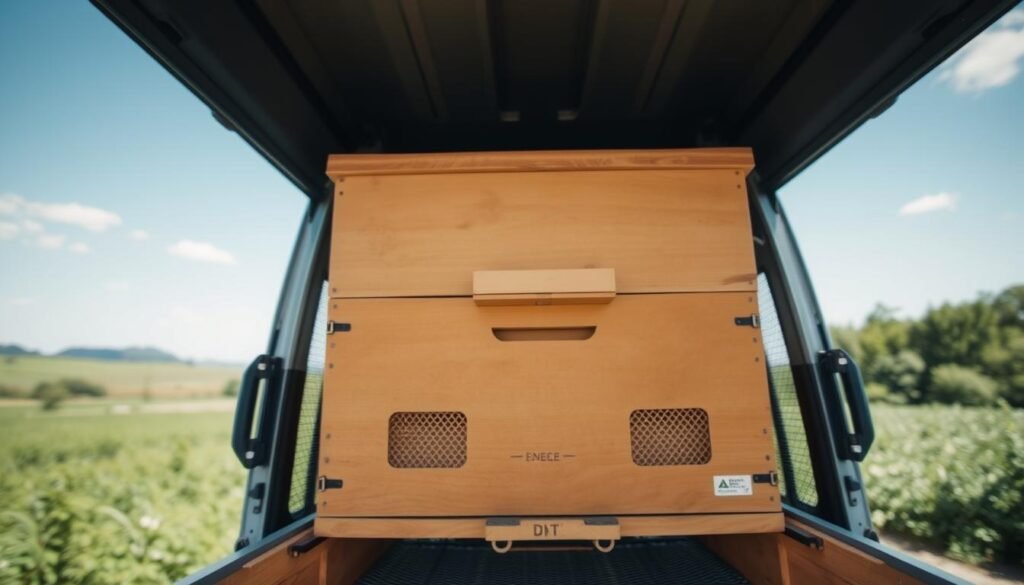
Use screened baseboards or travel screens to maintain steady ventilation without letting bees escape. Flow Hives and screened inner covers give extra control over air movement during staging and transport.
When you seal the main opening, provide another airflow path. A small mesh panel or screened inner cover keeps air flowing and helps the colony regulate temperature.
- Keep mesh-covered vents open while the entrance is blocked.
- Avoid tight stacking; add spacers so air circulates around each hive.
- If you hear heavy fanning or see bearding under straps, increase screened openings right away.
Heat risks: shade, travel timing, and avoiding sun exposure
Stage hives in shade and plan moves for the coolest part of the day. Limit the time a sealed hive sits in direct sun to prevent overheating.
After arrival, let the hive settle for about 30 minutes before opening the entrance. This pause reduces the chance of bees rushing out and overheating themselves while reorienting to their new home.
| Risk | Sign | Action |
|---|---|---|
| Overheating | Excessive fanning, bearding | Open screened vents, move to shade |
| Poor airflow | Condensation or dripping inside | Add mesh panels or spacers; avoid tight stacks |
| Transport stress | Restless buzzing, comb sag | Travel early or late in the day; ensure screened ventilation |
Tools and materials checklist for beekeepers
A well-prepared tools kit keeps the hive secure and reduces stress for bees and beekeeper.
Pack gear that secures boxes and keeps airflow open. Ratchet straps fasten the brood box to the baseboard and stop the stack from shifting. Use steel wool or fine mesh to block entrances while letting bees breathe.
For incremental shifts, a hivebarrow or heavy-duty dolly with a level platform lets you roll the hive feet by feet without daily lifting. Furniture dollies help for short loads.
Essentials to bring
- Spare straps, mesh, foam, tape, and a small pry tool in a toolbox.
- Entrance blocks for poly hives, plus a leafy branch and towel for reorientation at the new place.
- Nonslip mats and tie-down points when you load onto a vehicle; water and a flashlight/headlamp for night work.
- Screened travel cover and a brood-safe thermometer or infrared reader to monitor heat during staging.
“Secure the stack first, then check ventilation — both protect brood and honey.”
| Tool | Purpose | When to use |
|---|---|---|
| Ratchet straps | Keep box stack stable | Every lift and transit |
| Mesh / steel wool | Block entrance, allow airflow | During sealed moves for days |
| Hivebarrow / dolly | Move hive incrementally without lifting | Short shifts under feet per day |
| Thermometer / infrared | Protect brood from heat | Staging and hot transit |
Moving a hive 30 feet or less: the incremental method
When shifting the colony just yards, slow, steady changes help bees keep their bearings.
Daily increments: For moves under 30 feet, push the hive less than 6 feet per day with the entrance left open. This method lets foragers use local cues and find the hive without mass confusion.
Stand leveling and approach: Keep the entrance facing the same direction at every stop. Level the stand each time so frames remain vertical and comb stays intact. A hivebarrow with a level platform lets you move the hive in feet-sized steps without lifting.
When to pause: Avoid shifts during cold snaps or tight clustering—moving then can chill brood. Also skip moves during peak flight; choose reduced-activity times to cut drifting and lost bees.
- Record each day’s shift so you stay within safe feet-per-day limits.
- Repeat the short shift the next day and confirm the stand is stable before release.
- This gentle method reduces stress while keeping the colony close enough to reorient naturally.
Short-range relocations (30 ft to 4 miles): reorientation techniques
When you shift a hive within a local radius, clear reorientation steps cut losses and speed acceptance. Seal the colony at night or very early morning so most foragers are inside. Move the hive and provide steady airflow with mesh or a screened inner cover while it is closed.
Blocking, timing, and the branch cue
Keep the hive sealed for 24–72 days. On reopening, place a leafy branch or towel directly in front of the entrance. Position it within an inch or two so departing bees must navigate around it and trigger reorientation flights.
Managing stragglers and airflow
Expect some bees at the original location. Leave a box there to collect stragglers and bring them back over the next days. Do not add a second exit during this period; one controlled exit helps bees relearn the new spot.
Safety and special cases
If bees get agitated or temperatures rise, increase ventilation immediately. In that case, shorten the closure; safety beats longer reorientation every time.
| Step | Action | Why it helps |
|---|---|---|
| Seal at night | Block entrance and add mesh vent | Locks in foragers, keeps airflow |
| Keep closed 24–72 days | Monitor temp and behavior | Encourages new map learning |
| Use branch | Place in front of entrance | Forces reorientation flights |
| Handle stragglers | Box them at original location | Recover lost bees over next days |
Long-distance moves (4 miles and beyond): the straightforward option
When you take a hive more than four miles, the colony loses local landmarks and will reorient naturally after release.
Seal at night or very early morning so most bees are inside. Block the entrance and add screened ventilation to keep fresh air while the colony is closed.
Load the stacked box level on a pickup or trailer. Secure with ratchet straps and check tension after a short drive; vibrations can loosen lids and fasteners.
Never transport inside a closed vehicle. Escape risk and sudden temperature spikes make trucks and open trailers the safer vehicle way to haul hives.
- Keep a smoker ready and use gentle puffs if boxes shift.
- Avoid direct sun while staged; ensure air flow to prevent overheating.
- Space multiple hives at the new location to cut drifting.
On arrival, level the hive, unstrap carefully, inspect the stack for gaps, then open the entrance and step back. Bees will orient to their new site on their own time and in their own way.
Intermediate distances: two-stage relocation strategy
When the gap between yards is too large for short shifts but not far enough for a single straight haul, use a two-stage plan to reset orientation.
Move the colony 3+ miles away for about 21 days, then bring the hive back to its final location. The first stage forces the bees to learn the distant yard. After several days away they forget the original site and will accept the new placement on return.
Temporary staging and timing
Seal late at night or very early morning so most foragers are inside. Use insect mesh travel screens for airflow and ratchet straps to secure the stack during each transit.
When to choose this staged method
This method fits yards from roughly 500 yards up to a few miles where drifting is likely, or where terrain and access make incremental shifts unsafe. It is labor intensive but reliable when you need a predictable outcome on a fixed schedule.
- Consider brood state; avoid peak brood rearing or ensure extra ventilation during moves.
- Label boxes and standardize gear for multiple hives to speed both stages.
- Re‑level stands and check entrance direction after the second move to help fast settlement.
30. moving a beehive short distance vs long distance: choosing the right method
A clear decision path helps you pick between tiny shifts, staged moves, or a full haul based on risk factors.
Decision tree by distance, season, colony strength, and terrain
Under ~3 feet: keep the entrance facing the same way and shift the hive in small steps. This keeps foragers oriented and limits loss.
Between feet-level and a few miles: choose either incremental moves or a two-stage plan. If terrain or access blocks yard-by-yard work, use the staged option to reset bees’ map.
Beyond ~4 miles: perform a straight long haul. Seal at night, provide screened ventilation, and let bees reorient on arrival to avoid returns to the old place.
- Select the method by season and colony strength; heavy brood or nectar flow needs minimal handling and extra airflow.
- Avoid suddenly reversing entrance orientation unless planned; that change can confuse bees temporarily.
- Factor in how many hives you must move—multiple hives demand staging space and extra equipment.
- When in doubt, pick the safest way given your gear, weather, and beekeeping schedule.
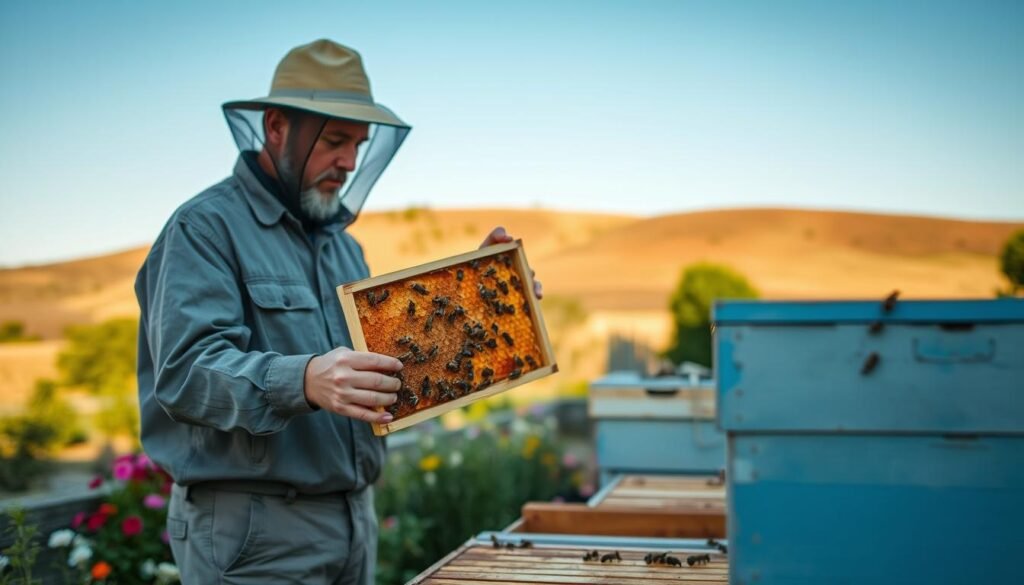
For step-by-step procedures and gear lists, see how to move hives for a practical checklist and examples.
Timing your move: time of day, season, and weather in the United States
Good timing reduces stress: coordinate your transfer with forager patterns, seasonal brood cycles, and short-term forecasts. Picking the right time cuts losses and helps the colony settle at its new home.
Night and early morning work best. Seal the entrance at night or very early in the morning when most bees are inside. This captures foragers and lowers defensive behavior during handling.
Choose windows with cooler temperatures and low flight activity. That limits chaotic traffic after release and shortens the unsettled period for the hive.
Cold snaps and clustering: when not to move
Avoid moves during tight clustering or sudden cold fronts. Moving clustered bees risks chilling brood and raises mortality over the following days.
In hot spells, pre-stage shade and boost ventilation while sealed. Generous airflow protects brood and stored honey during loading and transit.
- Wait about 30 minutes after placement before opening the entrance so bees can calm and re-cluster on frames.
- Coordinate with local weather; plan backup days if storms or fronts appear.
- If conditions are marginal, shorten staging time and increase screened ventilation.
“Good timing reduces drifting, protects the field force, and helps bees reestablish home quickly.”
| Condition | Recommended Time | Action |
|---|---|---|
| Cool, low flight | Night / early morning | Seal, transport, wait 30 minutes before opening |
| Cold snap | Delay | Postpone until milder days to protect brood |
| Hot spell | Cooler parts of day | Pre-stage shade, increase ventilation while sealed |
Hive orientation, entrances, and landmarks at the new location
Where you place the hive matters: bees learn landmarks quickly and use them on first flights. Set the hive on the exact spot you intend to keep it so the colony maps the area and recognizes that place on return.
Entrance direction shapes flight paths. Align the entrance to a clear flight corridor with minimal foot traffic. A consistent entrance reduces drift and helps foragers find their way back.
Landing boards, fronts, and reorientation cues
Give each hive a distinct front or color pattern so bees can pick out their doorway among neighbours. Landing boards and bright fronts speed recognition in a busy yard.
Use a leafy branch or towel at the hive entrance for a day or two at a new location to force careful reorientation flights. This simple cue prompts bees to re-scan nearby landmarks before they depart.
- Set the hive exactly where it will remain; this fixes the spot in the bees’ map.
- Keep the approach clear of tall grass and obstacles that block the final landing.
- Space entrances so they do not face one another directly; offset angles cut wrong-door entries.
- Level the stand and, if windy, orient the entrance leeward or add a windbreak.
“A thoughtful setup aligns with bee behavior, helping them establish home quickly and reduce unnecessary losses.”
| Element | Why it helps | Action |
|---|---|---|
| Precise placement | Fixes landmarks in bee memory | Set hive on final spot before first flights |
| Distinct front / color | Speeds entrance recognition | Paint or mark the front with bold colors |
| Branch cue | Forces reorientation flights | Place foliage at the entrance for 24–48 hours |
Transport logistics and setup at the new spot
Plan the load and the landing before you travel. Pack hives on a pickup or trailer with nonslip surfaces and solid tie-down points. Never place stacked boxes inside a closed vehicle; open beds reduce heat and escape risk.
Leveling the hive and securing on stands
Level and place stands before unloading
Make sure each hive sits level to protect comb and reduce internal shifting. Bring shims or adjustable stands for uneven ground so you can set the stand once and avoid repeated lifting.
For Flow Hive models, check and adjust legs or feet so the box rests true. Position the stand, then set the hive down before you unstrap.
Ratchet straps and load stability in transit
Use multiple ratchet straps around each hive stack and across the load. Check tension after the first couple of miles and again at stops.
Pack a spacer between hives so straps do not rub lids or block entrances. Keep sealed hives shaded during any pause; heat builds quickly inside a closed brood box.
Practical tips
- Load on a pickup or trailer; never inside a sealed vehicle.
- Plan an unloading sequence to avoid blocking flight paths for multiple beehives.
- If you must carry extra feet to the stand, use a dolly or hivebarrow to protect the stack and your back.
- On arrival: level, unstrap, seal any gaps, then open the entrance and step back.
| Step | Action | Why |
|---|---|---|
| Load | Pickup/trailer, nonslip | Reduce shifting |
| Secure | Multiple ratchet straps, spacers | Stability in transit |
| Set | Level stand, unstrap, open entrance | Safe reorientation |
Troubleshooting: bees returning to the original location
A small number of foragers often return to the original location after a short shift; plan to collect and reunite them quickly. Expect this for a few days while the colony learns the new spot.
Using a box to collect returnees over the next days
- If bees return to the original location, set a ventilated box there during the warmest part of the day to trap stragglers.
- Bring the collected box to the new hive and shake the bees in front of the entrance so they can rejoin the colony.
- Repeat this for several days; the next day numbers usually decline as more workers map the new site.
- Keep a visual cue such as a leafy branch or towel at the entrance to force careful reorientation flights.
- Ensure only one active entrance; a second opening can undo your efforts.
- If bees get concentrated at nearby structures, remove attractive cavities and use gentle smoke to guide them into the collection box.
- Confirm the stand is level and entrance direction is consistent; misalignment can increase returns.
- Consider a brief 24–48 hour closure with good ventilation if returns persist, or change method if problems continue.
“Quick, calm retrieval over a few days keeps the colony whole and reduces forager loss.”
Special cases: heavy flow, brood management, and ventilation stress
High nectar flow and full supers change risk levels during any transfer. Strong colonies run hotter and weigh more, so protect brood temperature and keep air moving while you handle the stack.
Heavy colonies, brood temperature, and avoiding overheating
During heavy honey flows, add screened bottoms, travel screens, or mesh to preserve steady ventilation when entrances are closed. This reduces heat buildup that can harm brood.
Avoid moving tightly clustered bees in cold spells; chilling can set the brood back. Allow about 30 minutes after placement before opening the entrance so the colony can settle.
- Handle heavy beehives with team lifts or equipment to prevent drops that break comb and injure bees.
- Make sure staging time in sun is minimal and load efficiently to limit internal heat.
- Secure full supers with extra straps and check for shifting during transit.
- If you suspect heat stress, open additional screened areas immediately rather than relying on minimal vents.
“Protect brood first: airflow and careful handling preserve colony momentum during the busiest nectar periods.”
Common mistakes to avoid when moving beehives
A careful checklist prevents the most frequent problems when you move hives between sites.
Don’t transport beehives inside a car or van. Escaped bees put people at risk and you lose control. Always use an open pickup or trailer and secure stacks with ratchet straps before you start.
When you seal the hive for transit, provide screened airflow. Failing to include mesh or a travel screen can overheat brood and ruin honey. Listen for heavy fanning and adjust vents if air seems restricted.
Keep only one entrance during reorientation. Opening a second exit undoes the reorientation cue and confuses foragers. Expect some workers to return to the original location; plan a ventilated collection box for a few days.
- Under‑strapping leads to shifting boxes and crushed bees — check tension twice.
- Move at cool times and avoid long sun staging; heat stress is real when sealed.
- Level the stand at the new place to prevent comb collapse and traffic problems.
| Mistake | Why it matters | Fix |
|---|---|---|
| Poor ventilation | Overheats brood | Use mesh/screens |
| Loose straps | Stack shifts | Use strong ratchet straps |
| Wrong timing | High stress | Choose cool hours |
For a full checklist and step-by-step guidance on how to move hives, see how to move hives.
Conclusion
A careful final inspection at the new location will save you hours of troubleshooting in the next day.
Match the method to distance, secure straps, keep ventilation open, and set the hive level on its stand. For long moves, let the bees reorient at their new home; for short shifts use incremental steps or a 24–72 hour closure with a branch or towel at the entrance.
Expect a couple of returnees during the first days. Place a ventilated collection box at the old spot, then bring those workers back to the new location. Protect brood and honey by avoiding heat and prioritizing airflow while sealed.
Standardize gear and steps across multiple colonies to reduce errors. With these checks you will keep colonies healthy and settled across the area.
FAQ
How far can I shift a hive in one day without confusing the bees?
Move the hive less than six feet per day if you want bees to find the new spot while keeping the entrance open. Small, incremental shifts let foragers update landmarks gradually and reduce the chance of lost bees.
What’s the simplest method for relocating a hive a few feet on the same property?
Use the incremental method: lift and set the hive a few feet each day, keep it level and facing the same direction, and avoid disturbing brood. This keeps orientation cues consistent so workers adapt quickly.
When should I block the entrance and transport the colony sealed?
Seal the hive for moves beyond the local landmark range—typically when relocating several hundred yards or more, and always for moves of miles. Close at night or early morning when most foragers are in the hive, then open on arrival per instructions.
Is it safe to move a hive during a heavy nectar flow or when brood is present?
Extra caution is required. Heavy flows and large brood nests increase heat and ventilation needs. Avoid long transports on hot days, ensure screened ventilation or mesh covers, and consider staging the move or doing it during cooler hours.
How do I prevent bees from returning to the original location after a move?
For short-to-moderate relocations, block the entrance for 24–72 hours so bees reorient from the new site. Use a branch or towel over the entrance initially to guide them. For larger moves, reorient by opening in daylight after travel while keeping the hive secured and level.
Should I use a pickup bed, trailer, or inside a vehicle to transport hives long distances?
Use a pickup or trailer only. Do not transport hives inside a closed vehicle. Secure boxes with ratchet straps, ensure airflow with screened bottoms or mesh, and position hives level to avoid crushing bees and spilling frames.
How long should I keep the entrance blocked after moving the hive several miles?
Typically block the entrance overnight and until late morning of the arrival day if moving several miles. Some beekeepers keep it closed 24 hours when relocating beyond the foraging range to let scouts reorient from the new location.
What protective gear and tools do I need for a move?
At minimum wear a suit with veil, gloves, and have a smoker ready. Bring straps, entrance blocks or mesh, steel wool or screening for ventilation, a dolly or hive barrow, and basic hive tools for rapid checks.
When is the best time of day and season to move a hive in the United States?
Night or very early morning are best to catch most foragers inside. Prefer cool, stable weather—avoid cold snaps and extreme heat. Late spring through early fall works well, but avoid moving during heavy nectar flows if possible.
How do I handle stragglers or returning bees at the original site?
Leave an empty box or trap at the old location to collect returnees for several days. Check and transfer collected bees to the new hive during daylight. Placing a few frames of brood or bees into the trap speeds the process.
What steps do I take immediately after arriving at the new location?
Park on stable ground, unstrap carefully, set the hive level on a stand, remove the entrance block per your reorientation plan, and allow bees to orient. Monitor for activity and ventilation; reopen fully once bees settle.
When should I use a two-stage relocation (temporary site then final site)?
Use a staged move when you must move several miles but want bees to reorient gradually, or when road access or seasonal forage suggests a temporary stop. Hold the colony about three weeks at the interim site before final placement.
How do I secure hive boxes to prevent crushing bees while keeping frames stable?
Use ratchet straps or hive straps to bind supers and nucs firmly. Add foam or wood spacers to prevent lateral movement. Avoid overtightening, which can deform boxes and harm bees.
What ventilation steps prevent overheating during transport?
Provide screened venting or mesh at the top and bottom to allow airflow while keeping bees contained. Travel during cooler parts of the day, park in shade during stops, and avoid prolonged exposure to direct sun to protect brood and prevent stress.
How do I decide between incremental, staged, or long-distance sealed moves?
Choose by distance, colony strength, season, and terrain. Use incremental moves for very short shifts, staged moves for intermediate relocations when reorientation time is needed, and sealed transport at night for long-distance transfers beyond the bees’ navigation range.
What common mistakes should I avoid when relocating hives?
Don’t move hives too far without sealing, avoid transporting in closed cars, don’t neglect ventilation, and don’t move during extreme weather or peak foraging without planning. Also avoid changing entrance direction and level at each short move.


