
Reviewed by Daniel M. · Last Updated September 24, 2026 · How we review
For a hive that stays in one place through a cold, wet, windy winter, a telescoping cover over an inner cover is the better choice. Its overhang sheds rain, grips the box against wind, and leaves room for insulation and feeders. A migratory lid is better when hives are moved on pallets or you run many colonies and want a cheap, flush lid. Most comparisons miss one point: you are not choosing a single board. A telescoping cover almost always comes with an inner cover, while a migratory lid usually sits straight on the frames. That changes ventilation, winter moisture and how easy the hive is to open.
Key Takeaways
- Telescoping cover: it overhangs all four sides, is usually capped with metal, and is used with an inner cover. It gives the best weather protection for stationary hives.
- Migratory lid: it has no overhang on at least two sides, so hives can sit tight together on pallets. It is cheaper, lighter and easy to build.
- The inner cover matters as much as the lid. It gives a dead-air space, an optional upper entrance and a platform for feeders or insulation.
- In the Red River Valley, prairie wind and long winters favour telescoping covers on home-yard hives. Migratory lids suit outyards that move.
- Either lid needs paint on the outside only, and weight or a strap in wind.
On this page
Table of Contents
- What Each Lid Actually Is
- Side-by-Side Comparison
- The Lid Is Part of a System
- Choosing for a Northern Prairie Climate
- When a Migratory Lid Is the Better Choice
- Frequently Asked Questions
- The Bottom Line
What Each Lid Actually Is
Beekeepers use “lid,” “cover” and “top” interchangeably. Here they all mean the outermost piece on a Langstroth hive. University of Florida IFAS’s 4-H honey bee project book, Welcome to the Apiary!, gives a clear definition:
“Telescoping lids are wooden lids with overhang on all four sides.”
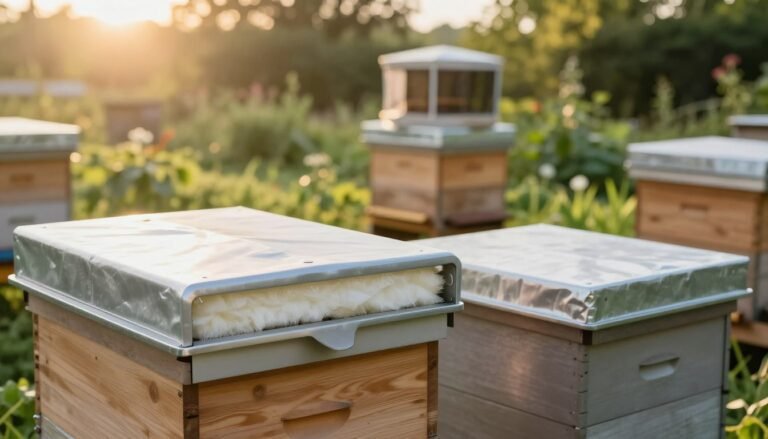
The same publication describes the telescoping lid as often topped with a thin sheet of metal and used with an inner cover on the top box. It describes the migratory lid as having no overhang on at least two sides, so hives can sit closely side by side and stack neatly. The overhang is where the name comes from: the cover slides down over the top box like the sections of a telescope, usually by a couple of inches.
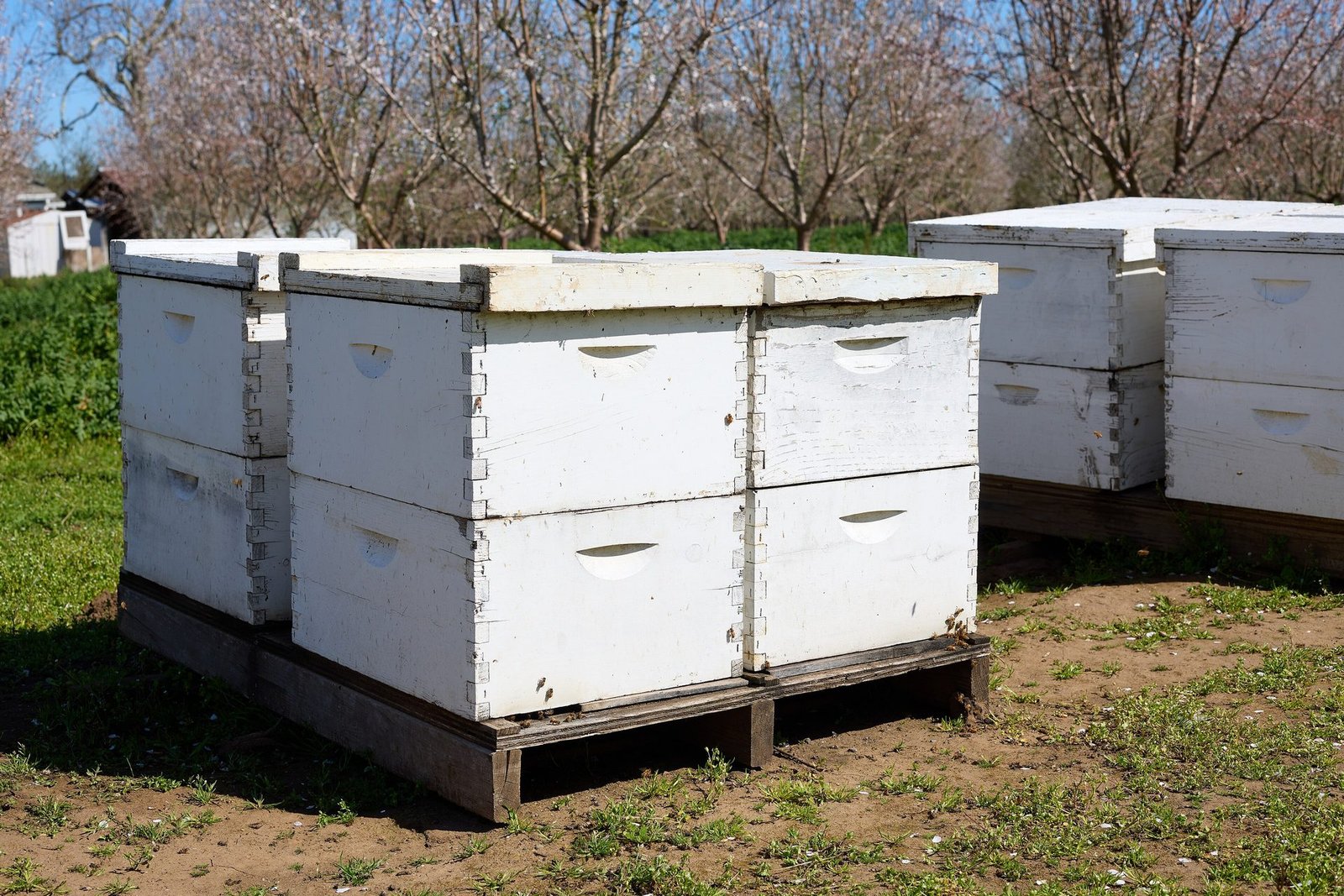
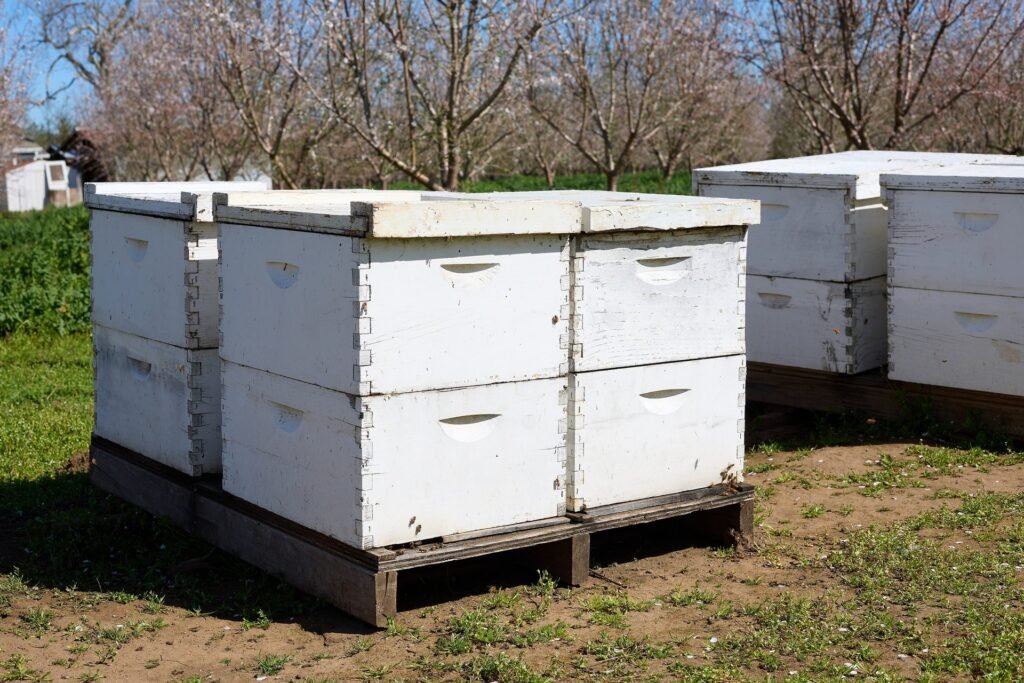
A migratory lid is a flat board, usually with cleats across the ends. It sits directly on the top box, level with its sides. Because nothing hangs over the sides, four hives can sit on a pallet with their walls touching.
Side-by-Side Comparison
| Feature | Telescoping cover | Migratory lid |
|---|---|---|
| Fit | Overhangs all four sides | Flush on at least two sides |
| Inner cover | Normally used | Usually not. The lid sits on the frames. |
| Rain and snow | Overhang sheds water away from box joints | Water can run down the box walls and joints |
| Wind | Overhang keeps it from sliding off, but it can still lift | Only propolis and weight hold it |
| Weight and cost | Heavier, costs more, often metal-capped | Light, cheap, simple to build |
| Pallets and stacking | Overhang stops hives from sitting tight together | Designed for tight pallet loads |
| Opening the hive | Lifts off easily. The inner cover takes the propolis. | Glued to the top bars and must be pried off |
| Winter add-ons | Room for a feeder rim, insulation board or moisture board underneath | Needs a separate rim or insulated top |
The Lid Is Part of a System
Most migratory lid vs telescoping cover articles compare the two boards and stop there. What you actually live with is the whole top of the hive.
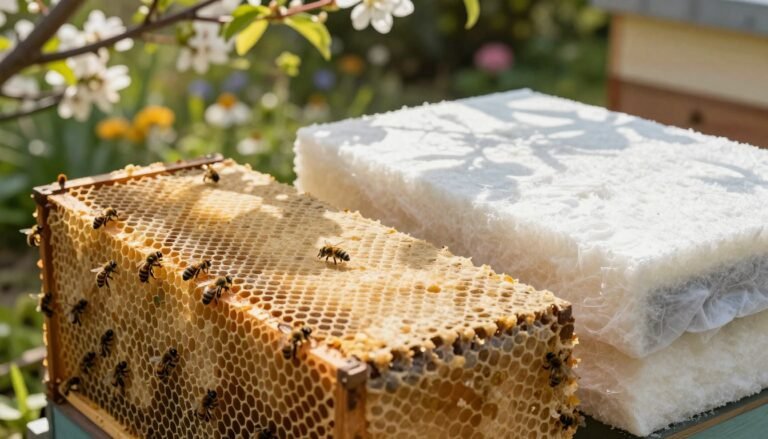
A telescoping cover over an inner cover makes a two-layer hive top with a dead-air gap between them. The inner cover takes the propolis, so the outer lid lifts off cleanly. Its notch can serve as an upper entrance or vent (see inner cover notch up or down). Its centre hole takes a feeder, and it can carry a layer of insulation, which our inner cover insulation thickness guide covers in detail. The deep rim of a telescoping cover also leaves room for a moisture board in winter. See our best moisture board for winter hives.
A migratory lid on its own is a single board directly over the bees. That is quicker to handle in a big operation. But the bees glue it to the top bars, and there is no dead-air layer. In winter, warm, moist air from the cluster meets the underside of that board. If the board is thin and uninsulated, it is the coldest surface above the bees, which is where condensation forms. Beekeepers who winter under migratory lids usually add insulation on top. Our comparison of an insulated hive top vs a plain telescoping cover covers those options.
Choosing for a Northern Prairie Climate
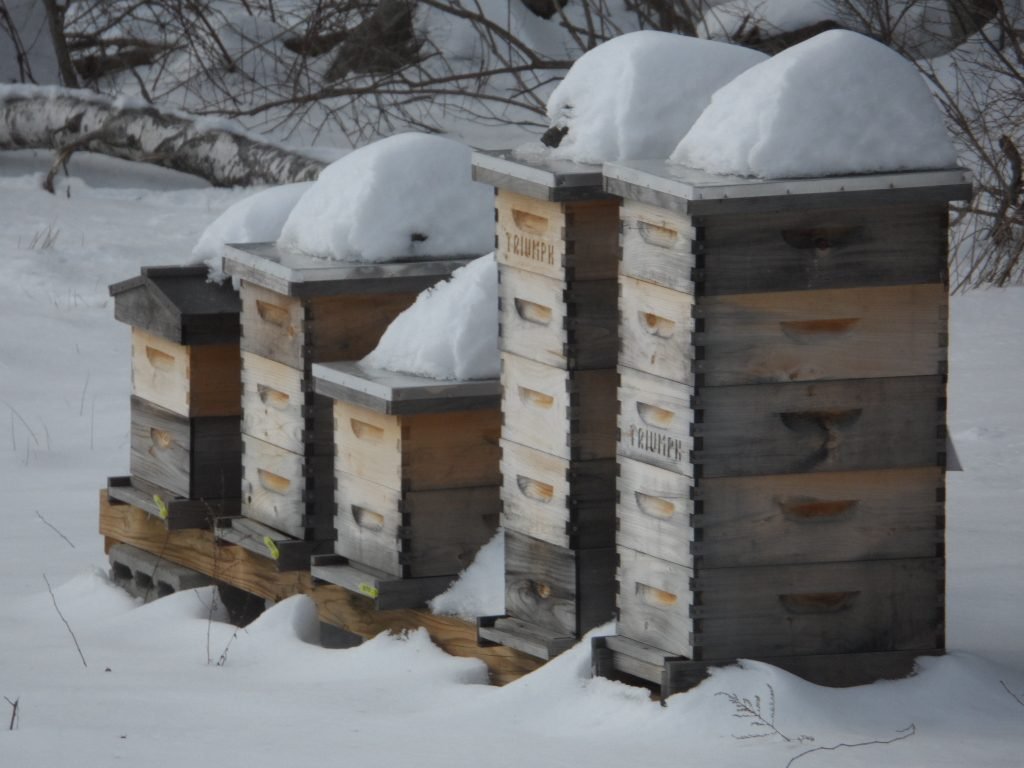
In eastern North Dakota and western Minnesota, a lid has to cope with open-country wind, driving spring rain and months of snow and freeze-thaw. That tilts the choice for home-yard hives:
- Wind. A telescoping cover’s overhang stops it from sliding off in a gust, but a strong gust can still lift it. Add a brick or stone, or strap the hive to its stand, whichever lid you use.
- Rain and melt. The overhang keeps water off the top joint between box and lid, where rot starts. Keep hives tipped very slightly forward so water drains out of the entrance.
- Winter setup. Telescoping covers fit easily with inner-cover insulation, moisture boards and wraps. Check that any hive wrap for cold climates still lets the lid seat properly.
- Paint. UF/IFAS’s guide to preserving woodenware in beekeeping operations recommends painting outer and migratory covers with a non-toxic exterior paint, two or three coats, and avoiding very dark colours. It warns against painting inner covers or the inside surfaces of boxes, because paint there traps moisture. For metal-capped vs painted options, see metal roof vs painted wood hive covers.
When a Migratory Lid Is the Better Choice
A migratory lid is the right tool in several situations:
- You move hives. Pollination and migratory operations load colonies tight on pallets and trucks. Flush lids let hives sit together and strap down as one block. Our migratory pollination checklist covers the move itself.
- You run many colonies and cost adds up. Migratory lids are simple flat boards that many beekeepers build themselves from plywood and cleats.
- Summer outyards. Where wind and winter aren’t the concern, the lighter lid speeds up work.
- Nucs and temporary setups. A flat lid is quick for splits and bait hives.
Some beekeepers use both: migratory lids through a season of moves, then telescoping covers and inner covers in the home yard for winter. A spare telescoping cover also makes a handy stand for boxes during inspections.
Frequently Asked Questions
Do I need an inner cover with a telescoping cover?
It is strongly recommended. Without one, the bees glue the telescoping cover to the top bars, and it becomes hard to remove without jarring the hive. The inner cover also gives a dead-air space, an optional upper entrance and a place for feeders or insulation.
Can you use an inner cover under a migratory lid?
You can. It adds a propolis barrier and some dead-air space, though it adds a layer to pallet loads. Most migratory lids are designed to sit directly on the top box without one.
Which lid is better for cold winters?
For stationary hives, a telescoping cover over an inner cover. It sheds snowmelt and rain, and it has room for insulation or a moisture board. If you use migratory lids in winter, add insulation on top to cut condensation.
Why is it called a migratory lid?
Because it was designed for beekeepers who move hives. With no overhang, hives can sit tight together on pallets and trucks, as migratory and pollination operations do.
How do I stop a hive lid from blowing off?
Put a brick or heavy stone on top, or run a ratchet strap around the hive and stand. A telescoping cover resists sliding better, but a strong gust can lift either type.
Should I paint the inside of a hive lid?
No. UF/IFAS recommends painting only exterior surfaces. Paint on the inner cover or inside surfaces traps moisture in the hive.
The Bottom Line
Choose the lid for how you keep bees, not for which one looks better. For stationary hives facing northern winters, use a telescoping cover over an inner cover. For hives on pallets, or when cost and speed matter most, use a migratory lid, and insulate it if it stays on through winter.
Image credits: Photo: Frank Schulenburg, CC BY-SA 4.0.


-104A8312.jpg)