The outer cover is the roof of a beehive. It takes the rain, sun, snow, and wind so the boxes below don’t have to. Most covers sold for Langstroth hives come in one of two finishes: a wooden cover with a sheet-metal top, usually galvanized steel, or a cover that is all wood, protected only by paint. The material affects how long the cover lasts, how hot or cold it gets, how much upkeep it needs, and what it costs.
This guide compares the two materials. If you are choosing between cover designs, such as a deep-rim telescoping lid or a flat migratory lid, see Migratory Lid or Telescoping Cover: Which to Choose? For roof shape, see Gabled Roof vs Flat Roof: Choosing the Best Hive Cover.
Key Takeaways
- Metal-topped covers shed water better and usually outlast all-wood covers, but they cost more.
- Painted wood covers are cheaper, lighter, and easy to build, but they depend entirely on the paint. Once it fails, the wood soaks up water.
- Bare metal heats up in strong sun and gets cold in winter. An inner cover, a bit of insulation, or a light-colored coat of paint deals with both.
- Flat, flush-fitting wooden lids are the norm for hives that are moved or packed tightly on pallets.
- Whatever the material, secure the cover against wind with a weight or a strap.
Table of Contents
- What Each Cover Is
- Durability and Weather Resistance
- Heat in Summer
- Cold and Condensation in Winter
- Cost, Weight, and Handling
- Stacking and Migratory Use
- Side-by-Side Comparison
- Which Should You Choose?
- Conclusion
- FAQ
What Each Cover Is
Metal-Topped (Metal “Roof”) Covers
The classic Langstroth telescoping outer cover is a wooden frame and top clad in a thin sheet of metal that folds down over the edges. Blythewood Bee Company describes its telescoping lid as a deep-rim hive lid with a galvanized metal top that overhangs the box (Blythewood Bee Company). The metal is the waterproof layer, and the wood underneath gives the cover its shape and some insulation.
Painted Wood Covers
An all-wood cover has no metal skin. The most common type is the migratory lid: a flat board or plywood panel, often with cleats at each end, that sits flush with the hive walls. Beekeeping Made Simple describes it as a flat piece of wood (Beekeeping Made Simple). Some beekeepers also build telescoping-style or gabled covers entirely from wood and rely on paint alone for weatherproofing.
Durability and Weather Resistance
This is where the two materials differ most. A galvanized top gives a continuous waterproof surface. Rain runs off, and the wood beneath stays dry for years with little attention. Beekeeping Made Simple notes that the telescoping outer cover will last longer than the migratory lid, and recommends it where there is a lot of rain or a cold winter.
A painted wood cover is only as good as its paint. The flat top faces the sky, so it takes the most UV and standing water of any part of the hive. When the paint cracks, water gets into the grain or the plywood layers. Wet wood can warp, check, and eventually rot, and a leaking lid drips straight into the top box. Painted covers can last a long time, but only if you repaint them regularly. For finish choices, see The Best Exterior Paint for Bee Hives.
Heat in Summer
Bare metal in full sun heats up quickly. On a metal-topped telescoping cover, that heat is not trapped against the bees, because the inner cover underneath leaves an air space between the hot metal and the top bars. In hot climates, many beekeepers go further: they paint the metal a light color, add afternoon shade, or put a thin sheet of insulation under the lid.
A painted wood cover absorbs less heat through its surface than bare metal, especially if it is painted white or another light color. Heat still matters with either cover. Protecting Beehives from Extreme Heat: Effective Strategies covers shade, ventilation, and water in more detail.
Cold and Condensation in Winter
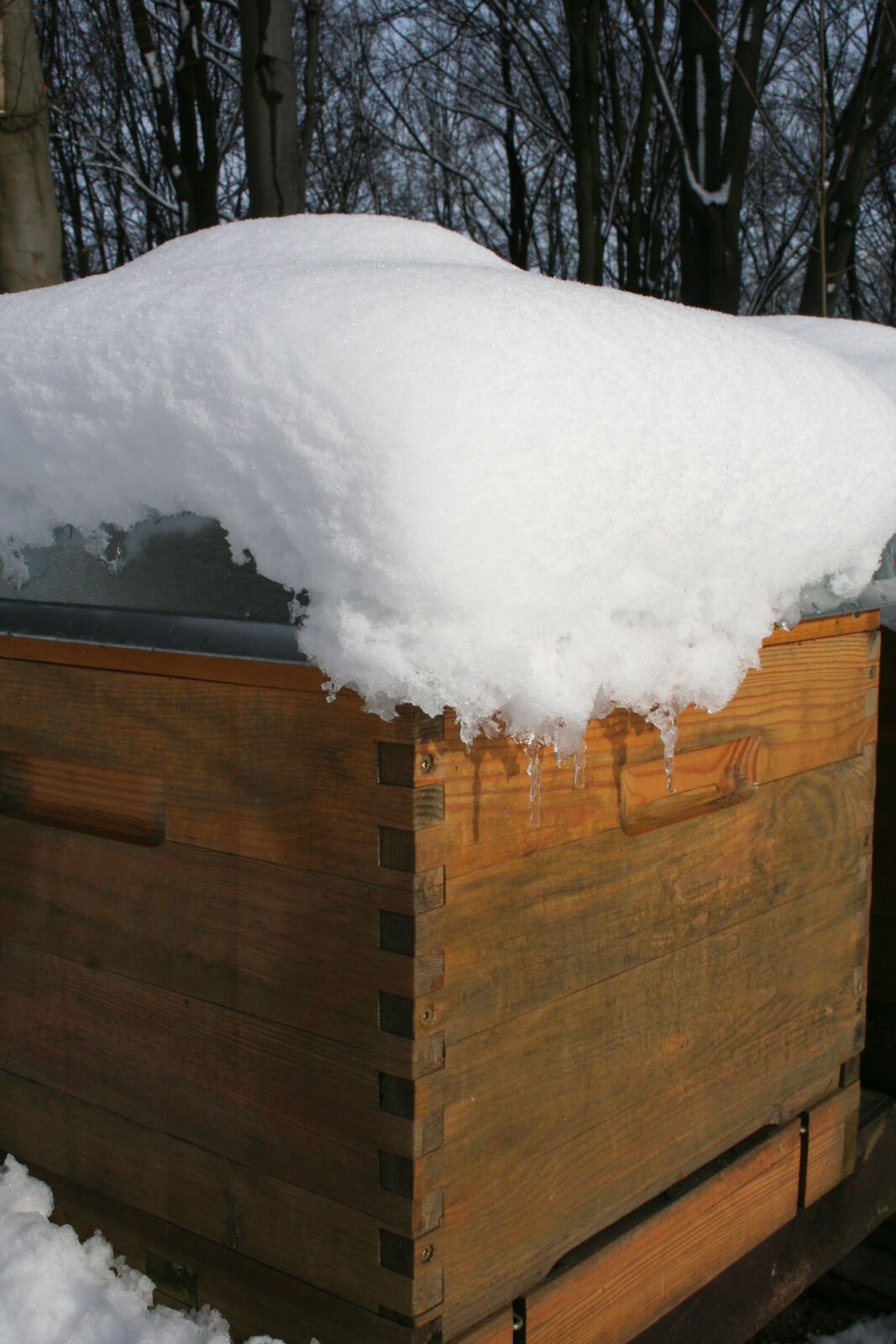
Metal is a poor insulator, so a metal-topped cover gets cold on winter nights. If warm, moist air from the cluster reaches a cold ceiling, water condenses and can drip back onto the bees. On a standard setup, the inner cover is the surface directly above the bees, not the metal. A layer of foam above the inner cover keeps that ceiling warm and largely removes the problem. See Optimal Inner Cover Insulation Thickness for the details.
A thick wooden lid gives a little more insulation on its own. Many beekeepers who use flat wooden covers in cold regions still add foam or a quilt box on top in winter.
Cost, Weight, and Handling
- Cost: Painted wood lids are the budget option. Beekeeping Made Simple describes the migratory lid as cheaper than the telescoping cover, and Blythewood’s catalog prices it lower too, and a flat wooden lid is simple to build from offcuts.
- Weight: A flat wooden lid uses less material than a deep-rim, metal-clad telescoping cover, so it is lighter to lift and carry. The flip side is that a light lid is easier for wind to lift.
- Wind: A cover blown off in winter can kill a colony. The UK National Bee Unit recommends securing hives to their stands with hive straps or ratchet straps so roofs are not blown off (National Bee Unit). A brick or stone on the lid is the low-tech alternative.
Stacking and Migratory Use
Commercial and migratory beekeepers have a strong reason to prefer flat wooden lids. A migratory top cover sits flush with the hive body, so hives can be packed side by side for transport, as Blythewood’s product description notes. Beekeeping Made Simple adds that because the migratory lid does not extend over the sides, beekeepers can fit four hives on a pallet. A telescoping cover’s overhanging rim stops boxes from sitting tight against each other. It also needs an inner cover underneath to keep the bees from gluing it down with propolis.
Side-by-Side Comparison
| Factor | Metal-topped cover | Painted wood cover |
|---|---|---|
| Water resistance | Excellent while the metal is intact | Good only while the paint is intact |
| Typical lifespan | Longer; little upkeep | Shorter unless repainted regularly |
| Summer sun | Bare metal gets hot; use an inner cover, shade, or light paint | Absorbs less heat, especially in a light color |
| Winter | Cold surface; add insulation above the inner cover | Slightly more insulating; insulation still helps |
| Cost | Higher | Lower; easy to build yourself |
| Weight | More material | Lighter; secure against wind |
| Stacking/transport | Overhang prevents tight packing | Flush-fitting lids pack tightly on pallets |
| Maintenance | Check for dents, lifted edges, and rust at nail holes | Repaint when the finish cracks or chalks |
Which Should You Choose?
- Backyard hive in a wet or snowy climate: a metal-topped telescoping cover over an inner cover is the low-maintenance choice.
- Hot, sunny apiary: either works. Paint metal tops a light color, or add shade and a thin layer of insulation.
- Tight budget or DIY builder: painted wood lids are cheap and effective if you stay on top of the paint.
- Moving hives for pollination or packing them on pallets: flat, flush wooden lids are the practical standard.
Plenty of beekeepers use both: metal-topped covers on hives that stay put, and flat wooden lids on nucs and hives that travel.
Conclusion
Choosing between a metal-topped and a painted wood hive cover comes down to durability versus cost and convenience. Metal cladding keeps water out with almost no upkeep and usually lasts longer. Painted wood is cheaper, lighter, and easier to stack, but only as weatherproof as its last coat of paint. Whichever you choose, keep an inner cover or insulation between the lid and the bees, and secure the cover so the wind cannot take it.
FAQ
Is a metal-topped hive cover better than a painted wood cover?
For durability and water resistance, usually yes. The metal skin keeps rain off the wood and needs little upkeep. Painted wood covers cost less, weigh less, and stack better, so they suit budget setups and hives that are moved often.
Does a metal hive cover make the hive too hot in summer?
Bare metal gets hot in direct sun, but on a standard setup the inner cover leaves an air gap between the metal and the bees. In hot climates, paint the metal a light color, give the hive some afternoon shade, or add a thin sheet of insulation under the lid.
Can I paint a galvanized metal hive cover?
Yes. Many beekeepers paint metal tops a light color to reflect sunlight. Clean off any oil or residue first and use a paint made for galvanized metal so it bonds properly.
How often should a painted wood cover be repainted?
Repaint whenever the finish starts to crack, peel, or chalk, especially on the top surface. Keeping the paint intact is what stops the wood or plywood from soaking up water and breaking down.
Do I need an inner cover with either type?
With a telescoping metal-topped cover, an inner cover is standard. It stops the bees from gluing the lid down and provides an air space. Flat migratory lids are usually placed directly on the top box without one.
Further Reading
Image credits: Photo: EdytaT, CC BY-SA 4.0, via Wikimedia Commons.