Reviewed by Daniel M. · Last Updated September 23, 2026 · How we review
Turn the inner cover notch down, at the front of the hive, when you want a top entrance or extra ventilation. That means through a northern winter, and for strong colonies during a heavy flow. Turn it up, or close it off, when you don’t want a top entrance: while a colony is small, while you’re feeding, and through late-summer robbing season. The catch is that on most covers the notch is cut into the deeper rim. Notch down can leave too much space above the frames, so the bees fill it with burr comb. Notch up opens into the space under the outer cover. Each setting gives the bees a gap somewhere, so choose the gap that fits the season.
Key Takeaways
- The notch is an opening whichever way up it faces. What changes is where it leads: right above the frames, or into the “attic” under the outer cover.
- Notch down gives a direct upper entrance, but often too much space over the top bars, which invites burr comb.
- Notch up keeps bee space over the frames on most covers, but bees can get into the attic and build comb there.
- In a northern winter, an upper exit is standard practice. The notch facing down is one option; a drilled hole in the top box is another.
- Close upper openings on small colonies, while feeding, and in robbing season.
- Manufacturers differ, so measure your own cover’s rims.
Table of Contents
What the Notch Actually Does
A standard Langstroth inner cover is a flat board with a rim on each face and an oval hole in the middle. On most wooden covers the rims aren’t equal. One face has a rim of roughly a bee space, about 3/8 inch, and the notch is cut into it. The other face has a shallow rim or none. Plastic and some pine covers differ, so lay a ruler across each face before deciding anything.
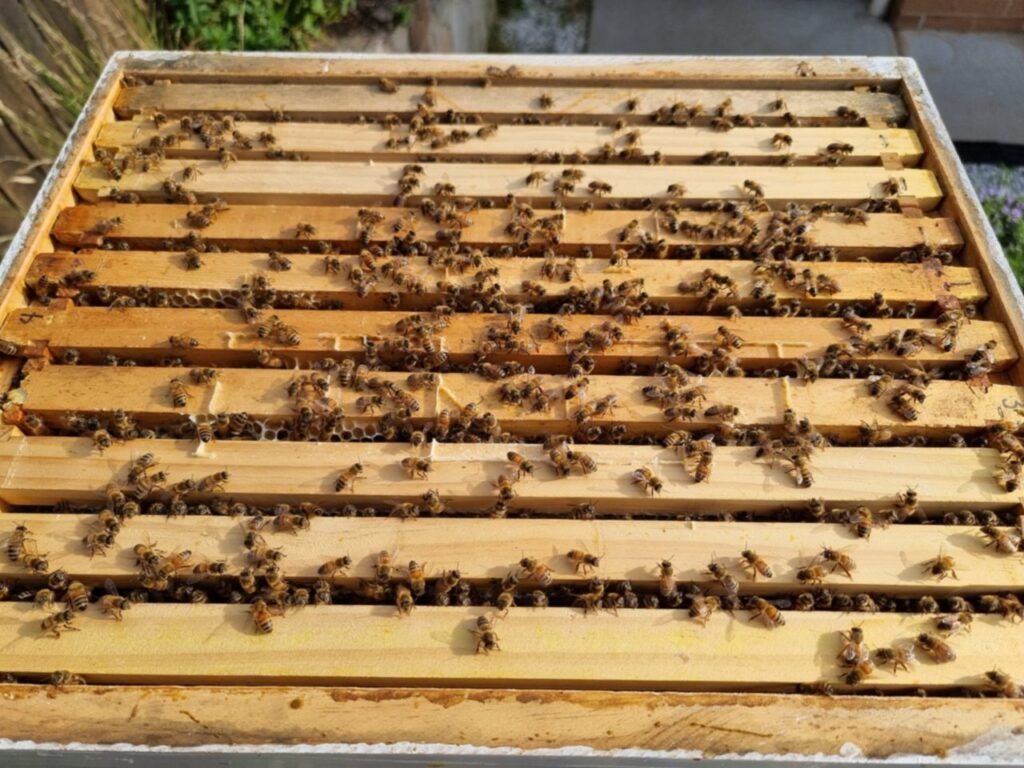
Whichever face is down adds its rim to the space above the top bars. Bees leave a gap of about 1/4–3/8 inch alone and fill anything bigger with burr comb. The face that’s up creates an attic between the inner cover and the telescoping lid. Bees reach the attic through the center hole, and through the notch too if it faces up.
Notch Down vs Notch Up
| Notch down | Notch up | |
|---|---|---|
| Where the opening leads | Straight into the top of the hive | Into the attic, then down through the center hole |
| As an upper entrance | Direct; best option | Indirect |
| Ventilation | Good; moist air leaves at the top of the box | Some, via the center hole |
| Burr comb risk | On the top bars, if the gap exceeds bee space | In the attic, between the covers |
| Snowed-in bottom entrance | Keeps an exit open | Less useful |
Two beekeeping writers come down on opposite sides, and each is right about her own gap. Charlotte Ekker Wiggins keeps the notch down so bees don’t build comb between the lid and the inner cover:
“The inner cover notch should be open to the bottom of the inner cover.”
Charlotte Ekker Wiggins, Home Sweet Bees, “Which Side Up?”
Chari Elam of The Bee Supply also uses notch down for ventilation and a top entrance, but names the cost:
“You may notice bees building burr comb under the cover when the notch side is down. This is due to exceeding bee space.”
Chari Elam, The Bee Supply, “Inner Cover Notch Up or Down?”
That cost is why many beekeepers use notch down mainly in winter. The bees aren’t building then, so extra space over the frames doesn’t matter.
The Setting for Each Season in a Northern Climate
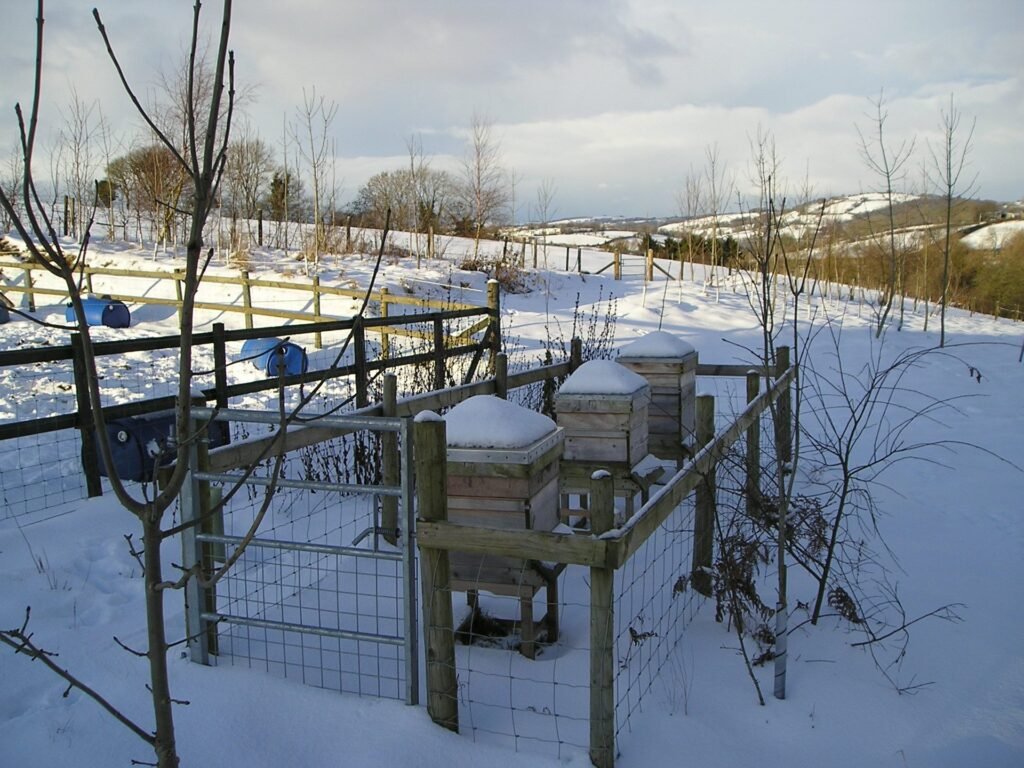
In eastern North Dakota and western Minnesota, the season has sharp edges, and the notch setting should follow them:
- Spring packages and nucs (April–May): keep the upper opening closed. A new colony can’t guard two entrances, and on cold nights an extra vent leaks heat.
- Main flow, strong colonies (late June–July): notch down at the front, with the outer cover slid forward enough for bees to pass. Foragers can then unload straight into the supers.
- Late summer and fall feeding (August–September): close it. Flows end abruptly on the prairie, and robbing pressure is high where colonies are dense. North Dakota had an estimated 460,000 honey-producing colonies in 2025 (USDA NASS).
- Winter (after the last mite treatment, through March): open an upper exit. Snow drifts and dead bees can seal a bottom entrance for weeks, and moist air needs a way out at the top. The notch facing down at the front works. The University of Minnesota Bee Lab’s wintering system instead uncorks a small ventilation hole drilled in the top box. It places a moisture board on the inner cover, with at least one edge exposed to the air, and insulation above (UMN Bee Lab, A Guide to Beekeeping in Northern Climates). Whichever you use, make sure the board or wrap doesn’t block it.
Flip the cover on a calm, mild day, and check its underside for the queen before you turn it over. For winter moisture, see how to reduce moisture inside winter hives and quilt box vs moisture board. For the entrance question on its own, see upper vs lower entrance in winter.
What Burr Comb Under the Cover Tells You
The bees will show you whether the cover is right for your boxes:
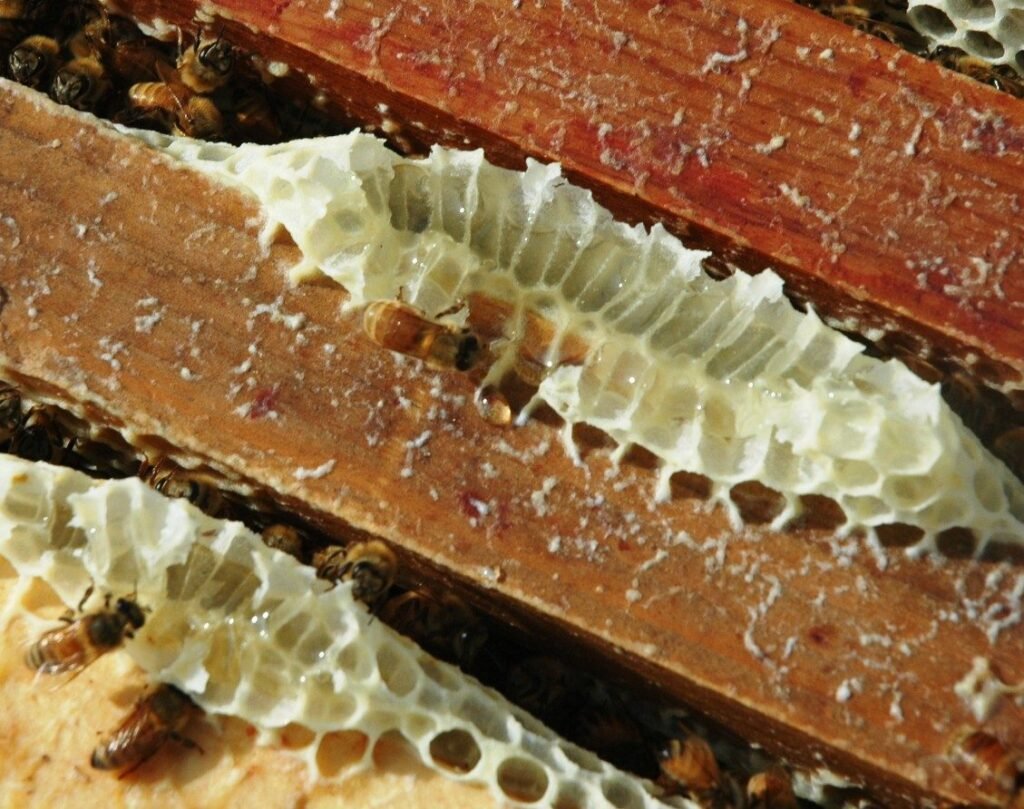
- Comb joining the top bars to the underside of the cover: the gap is more than bee space. In the building season, flip the cover so the shallow rim faces down.
- Comb or bees in the attic: bees are getting in through an upward-facing notch or the center hole. Turn the notch down, or cover the hole when you aren’t feeding through it.
- Dead bees trapped between the covers: bees got into the attic and couldn’t find a way out. Wiggins warns about exactly this. Give the attic an exit or close it off.
For removing it and stopping it, see preventing burr comb under inner covers. If you’re adding insulation above the cover, see inner cover insulation thickness.
If Your Inner Cover Has No Notch
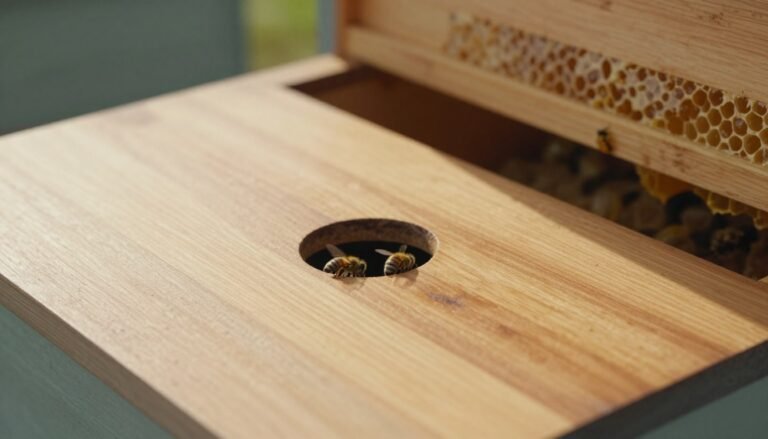
Wiggins suggests cutting away about a half inch of the rim to make one. Keep it narrow, a couple of inches wide, so a colony can defend it. The alternative is the UMN approach. Drill a 7/16- to 1-inch ventilation hole in the top box and keep a cork for it. A drilled hole can’t be blocked by a shifting moisture board.
Frequently Asked Questions
Should the inner cover notch face up or down in winter?
Down, at the front, if it’s your winter upper exit. That puts the opening directly above the cluster, where moist air rises and bees can leave if snow blocks the bottom entrance.
Should the inner cover notch face up or down in summer?
For a strong colony on a flow, notch down with the outer cover slid forward gives a useful top entrance. For a small colony, or in late-summer robbing season, turn it up or close it.
Why are my bees building comb on top of the inner cover?
They’re getting into the space above it through the notch or center hole and treating it as part of the hive. Turn the notch down, or cover the center hole when you aren’t feeding through it.
Does the inner cover notch go at the front or back?
The front, in most setups. There it lines up with the bees’ flight path, and you can open or close it by sliding the outer cover forward or back.
Is a top entrance bad for robbing?
It can be. Every extra entrance is one more place to guard. Close upper openings on weak colonies and whenever a nectar dearth sets in.
The Bottom Line
There’s no universal right answer to “notch up or down.” Measure your cover and decide where you want the gap. Notch down, at the front, when you want an upper entrance or vent: winter in the north, and strong colonies on a flow. Close it the rest of the time. If comb shows up on the top bars or in the attic, flip the cover.