Last Updated September 17, 2026
A solid bottom board is cheaper, warmer, and simpler; a screened bottom board gives you ventilation and a way to monitor varroa drop — and the best multi-year survey data available shows no meaningful difference in winter survival between the two, so pick by climate and by how you manage mites, not by folklore. The choice is a small, inexpensive piece of equipment, but it ripples through the rest of colony management: how you check for mites, how the hive sheds moisture, and what you do with the floor when the first hard frost arrives.
This guide compares the two designs head to head, then tackles the question that generates the most argument among U.S. beekeepers — whether to leave a screened floor open in winter — using a small on-farm trial and a large regional survey rather than opinion. It finishes with moisture control, winter feeding above the cluster, and a climate-by-climate recommendation.
Key Takeaways
- Hive type matters: Langstroth hives let you swap floors with the bees in place; top-bar hives need a permanent choice before the colony moves in.
- Solid boards retain warmth and pheromones, cost less, and keep debris off the stand; screened boards improve airflow and let mites and debris fall out.
- A screen is a monitoring tool, not a mite treatment — natural drop counts must be calibrated against an alcohol wash.
- In the Pacific Northwest survey, colonies on screened boards lost 27% over winter versus 25% on solid boards — not a meaningful difference — and beekeepers who closed their screens for winter had the heaviest losses (31%).
- Moisture, not cold, kills most overwintering clusters; ventilation above the cluster and a dry, wind-sheltered stand matter more than the floor type.
- Cold, wet regions lean solid or closed-screen; hot, humid regions lean open screen; transitional climates are best served by a removable insert.
Table of Contents
- Understanding the solid vs. screened bottom board debate
- Benefits of solid bottom boards
- Advantages of screened bottom boards for hive health
- Screened bottom boards in winter: open or closed?
- Managing moisture and ventilation for winter survival
- Winter feeding above the cluster
- Seasonal adjustments and entrance management
- Choosing the right bottom board for your apiary
- FAQ
Understanding the solid vs. screened bottom board debate
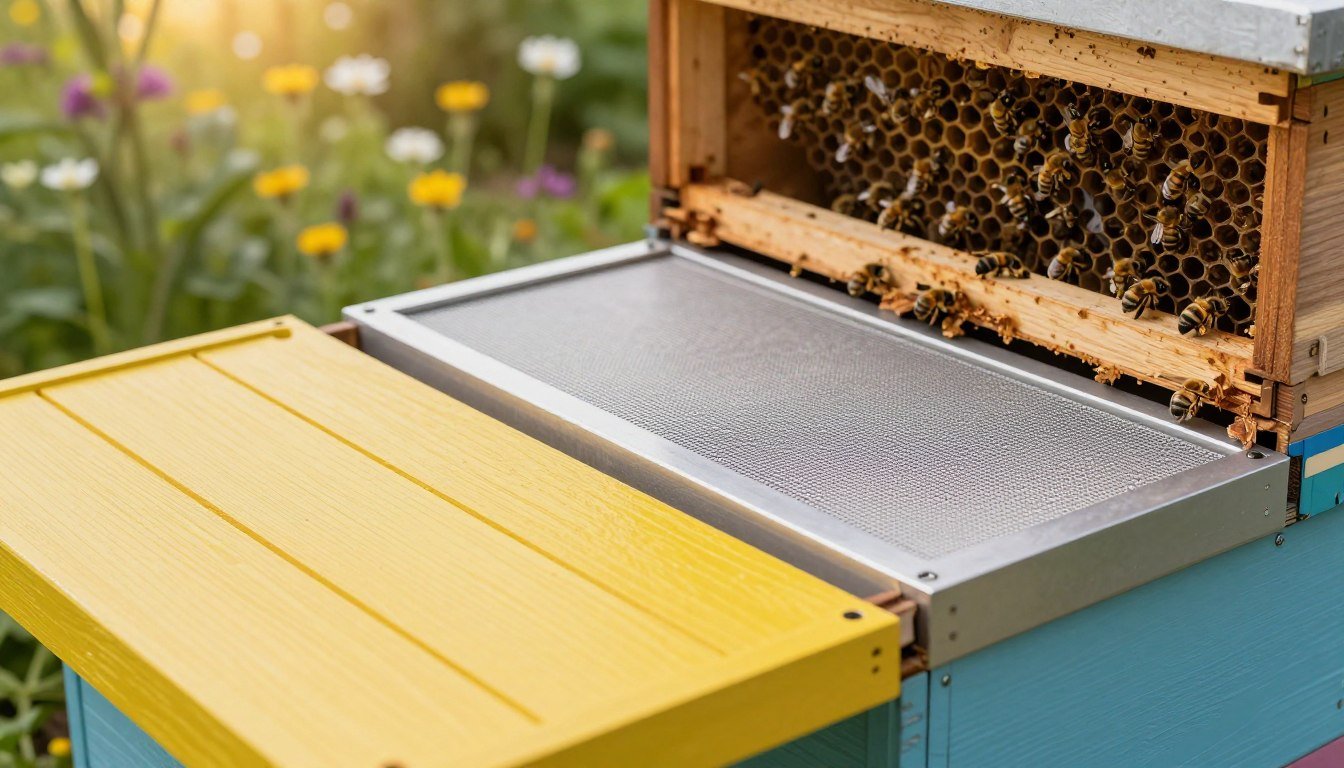
Deciding between a closed panel and mesh at the hive base shapes ventilation, debris control, and how you monitor pests.
Foxhound Bee Company walks through both board types side by side — construction, the slide-in insert, and how each behaves through the seasons — a useful visual companion to the comparison below.
Why it matters: the floor affects hive warmth, airflow, pest monitoring, and how clean the stand stays. Closed panels are usually cheaper and easier to build, and they keep wax cappings, pollen, and spilled honey from falling onto the stand, where they draw ants, wasps, and small hive beetles from nearby colonies.
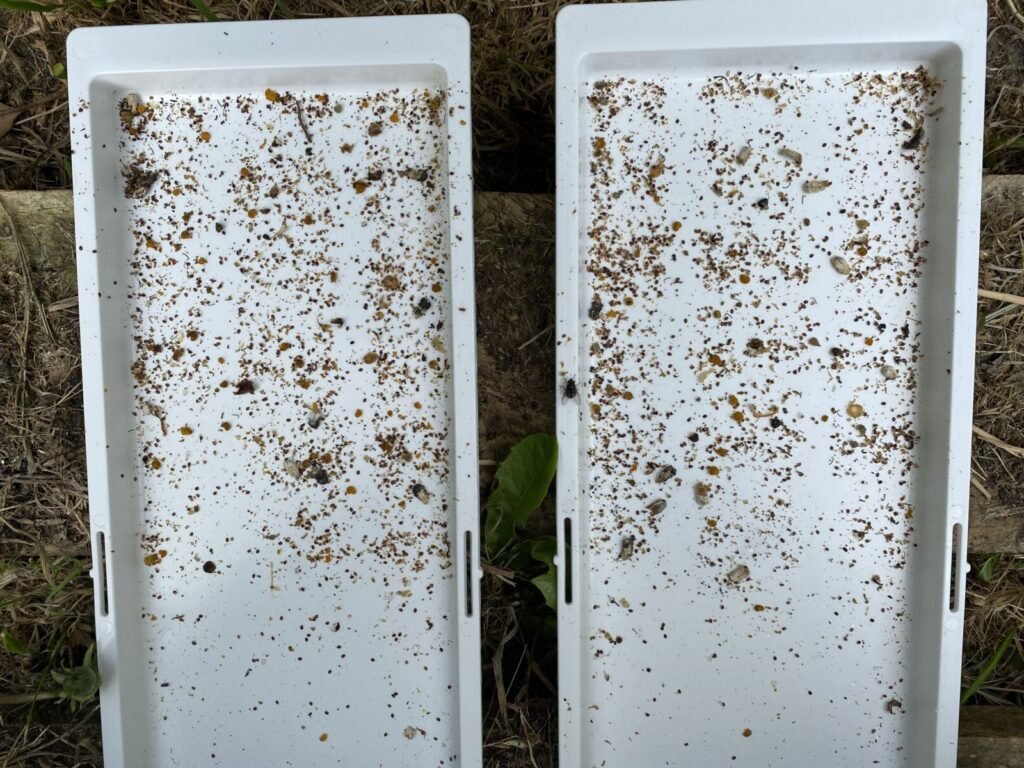
Mesh floors let mites and debris fall through. Many beekeepers slide a sticky card under the screen to count fallen mites after a treatment, which gives a quick read on pest pressure over time. Pairing that with a proper sampling method — see how often to test colonies for varroa — gives a far more reliable picture than sticky-board counts alone, because natural mite drop can under- or overstate the true infestation depending on the season.
- Closed panel: lower cost, better insulation, blocks debris, no extra hardware.
- Mesh base: improved ventilation, mite monitoring, needs periodic checks underneath, costs a little more to build or buy.
- Mixed use: many keepers alternate by season, sliding in a solid insert for winter and pulling it once daytime temperatures reliably stay above the mid-50s°F.
| Feature | Solid (closed) board | Screened (mesh) board |
|---|---|---|
| Cost / build | Lower; DIY friendly | Higher; requires #8 hardware cloth fitting |
| Ventilation | Limited (entrance only) | High |
| Pest monitoring | Limited | Easy with a sticky card or tray |
| Debris control | Debris stays inside; bees haul it out | Falls through; check the ground beneath |
| Warmth / pheromone retention | Better | Reduced unless an insert is used |
| Winter handling | Nothing to do | Decide open vs. closed (see below) |
Two supplier guides — PerfectBee’s comparison and The Bee Supply’s comparison — cover construction details and the insert designs on the market.
Benefits of solid bottom boards
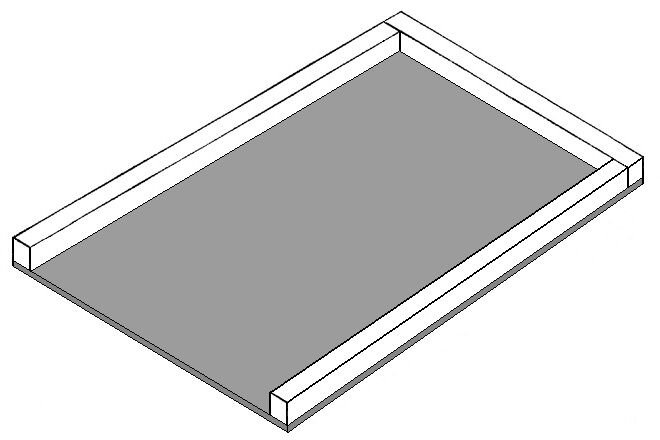
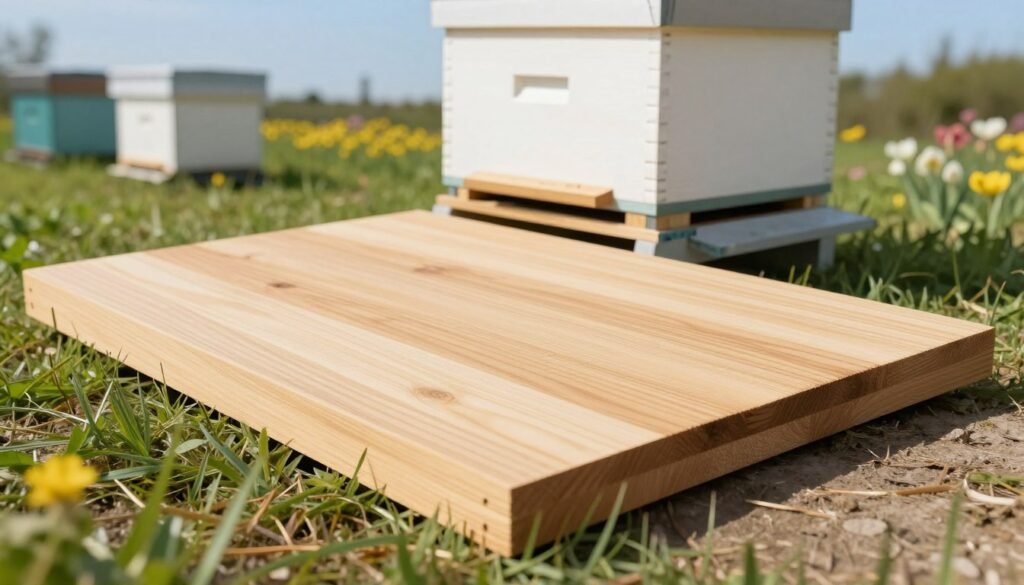
A fully enclosed base helps colonies hold pheromones and warmth, which influences brood timing in spring.
Propolis and colony hygiene
Bees coat interior surfaces with propolis, a plant-resin mixture with antimicrobial properties that research has linked to lower immune-gene expression (that is, less immune stress) in colonies with a heavy propolis envelope. On a solid floor that resin layer stays put and accumulates over a season; a screened floor lets some of the propolis-sealed debris layer fall away.
Thermal regulation and brood development
Enclosed floors reduce heat loss during cold spells. When hive temperatures stay steady, the queen often begins brood rearing earlier, and less energy spent heating means more honey left for growth. In practice that can mean a stronger workforce by the first major nectar flow, because the colony did not burn through reserves simply keeping the cluster warm.
- Warmth retention: helps colonies through harsh winters and reduces the honey consumed purely to generate heat.
- Pheromone retention: supports communication and cohesion inside the hive.
- Energy savings: bees spend less effort shivering, conserving honey for brood.
Cold-climate winter prep is covered in winterizing beehives in northern states.
Advantages of screened bottom boards for hive health
A screened floor alters airflow and gives beekeepers a passive way to watch mite loads.
Mite monitoring, not mite control
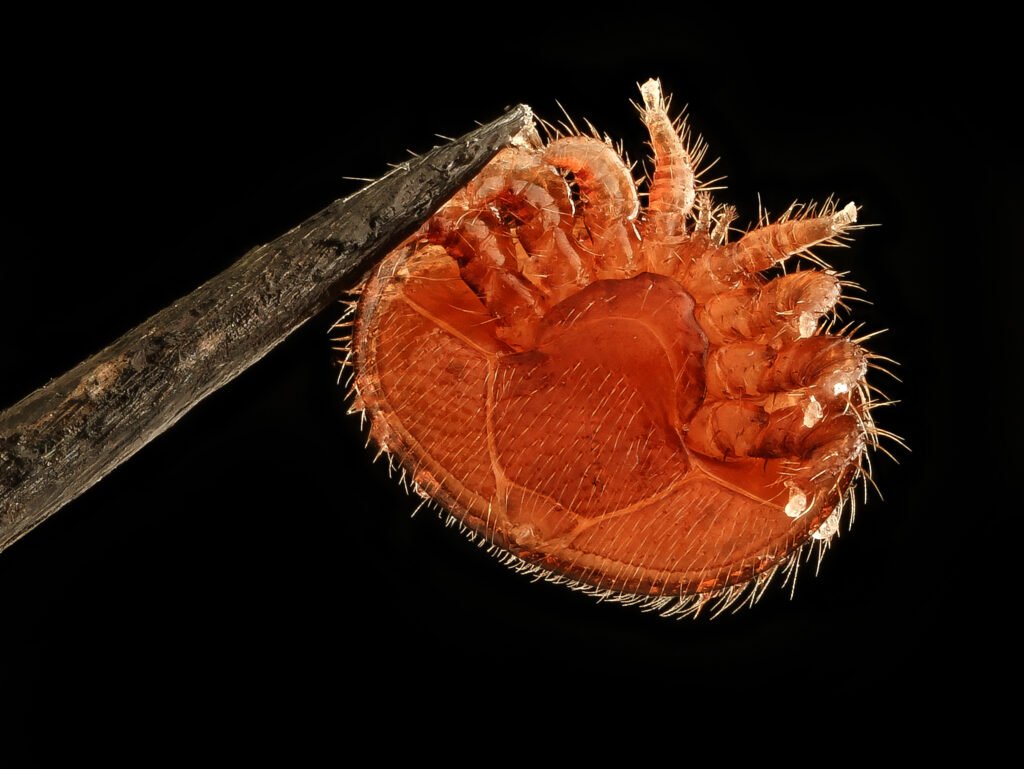
The mesh lets mites that groom or fall off bees drop out of the hive instead of climbing back onto a passing worker. Studies of screened floors have found modest reductions in mite populations in some settings and none in others, so treat the screen as a monitoring aid and a minor help — never as a treatment. Comparing sticky-board counts before and after a treatment cycle is one of the simplest ways to judge whether the treatment actually worked, but base treatment decisions on an alcohol wash, which measures mites per 100 bees directly.
Ventilation and moisture control
Improved airflow keeps condensation down during warm months and makes the hive environment healthier for brood. Less fanning to evaporate excess humidity means more bee-hours for foraging and comb building at the height of the season — a real advantage in regions with hot, humid summers, where trapped moisture encourages mold on frames. Our guide to hive ventilation and humidity covers the whole airflow picture.
- Helps mites fall out and lets you count debris on a sticky card.
- Supports summer cooling and reduces moisture problems, especially in humid climates.
- Can reduce pheromone retention, and comb may be drawn through the mesh if unmanaged — add a quick look underneath to your inspection routine.
- Lets cold air reach the cluster from below in harsh winters, so plan the seasonal decision covered next.
Screened bottom boards in winter: open or closed?
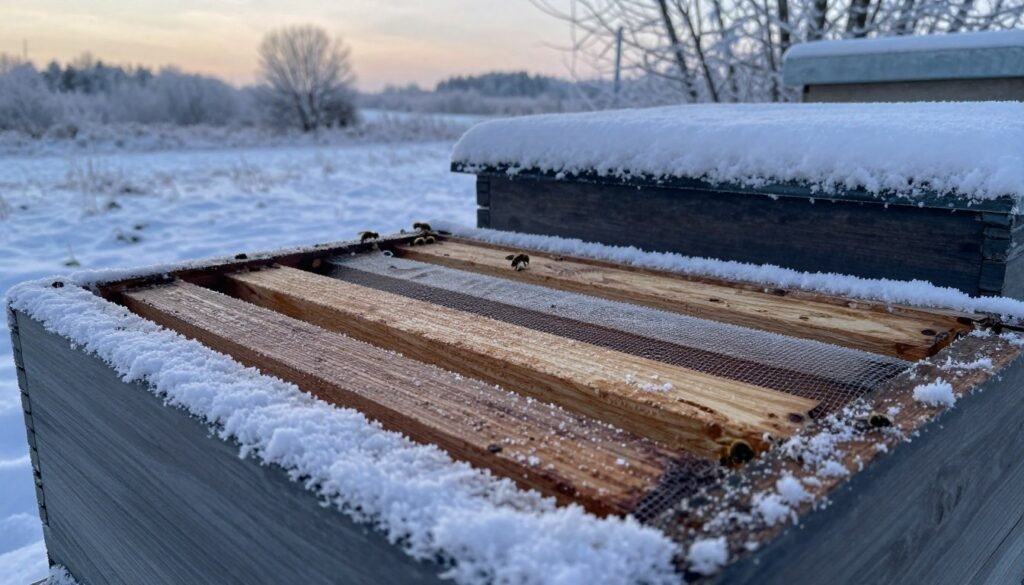
This is the question that generates the most argument, and the evidence points the same way from two very different sources: an open screen does not hurt winter survival, and closing it may not help.
A small on-farm trial in Illinois
David Burns of Long Lane Honey Bee Farms in central Illinois ran a simple test and wrote it up in 2009:
“We placed covers over 3 colony’s screen bottom board and left the others open. We lost all three that were covered.”
Three colonies is an anecdote, not a study, but the mechanism he describes is sound: cold air sinks and warm air rises, so an open floor rarely chills the cluster as much as the trapped moisture that condenses on a cold inner cover and drips back down on the bees. The farm has left its screens open through Illinois winters since.
What a regional survey of hundreds of beekeepers found
The Pacific Northwest Honey Bee Survey, run by Dr. Dewey Caron, asked beekeepers in Oregon and Washington about bottom boards and matched the answers to overwinter losses:
“For those 33 individuals who said they did not use screen bottom boards, their loss rate was 25% and for those individuals who said they had a SBB on 100% of their colonies (97 individuals) the loss rate was 27%.”
A two-point difference across that many respondents is noise. The more interesting finding was about closing the screen: respondents who never closed their screens lost 24%, those who sometimes closed them lost 27%, and those who closed them for winter lost 31% — the heaviest loss of the three groups. That does not prove closing a screen causes losses (beekeepers who close screens may keep bees in colder sites), but it is strong evidence that an open screen is not the danger it is often made out to be in a maritime climate.
| Region / winter type | Recommended floor in winter | Why |
|---|---|---|
| Maritime, wet, mild (PNW, Mid-Atlantic coast) | Screen open, or solid with upper ventilation | Moisture is the killer; airflow matters more than warmth |
| Continental, dry, very cold (Upper Midwest, Mountain West) | Solid, or screen with insert plus an upper entrance | Prolonged sub-zero cold and wind; retain heat but still vent moisture |
| Hot-summer, short-winter (South, Gulf Coast) | Screen open year-round | Ventilation and mite monitoring outweigh any winter warmth loss |
| Transitional (Ohio Valley, Mid-South) | Screen with a removable insert | Adjust to the week’s weather without lifting the hive |
Managing moisture and ventilation for winter survival
Moisture control often decides whether a hive weathers the cold months or struggles through them. Condensation forms when warm, humid air from the cluster meets a cold inner cover. That water drips back onto the bees, and even a little water on the cluster cuts its ability to hold temperature.
Condensation control
Give moist air somewhere to go: a small upper entrance or a notched inner cover, and an absorbent layer — a quilt box or moisture board — above the cluster. Compare the two in winter quilt box vs. moisture board. Check the underside of the inner cover on mild days; beads of water or mold mean the hive needs more top ventilation regardless of what the floor is doing. Wet-region specifics are in managing hives in wet climates.
Wind protection
A screened floor raised on a stand has one real winter vulnerability: wind. Burns is explicit that if a hive sits 6 or 8 inches off the ground, the goal is to stop cold wind curling up under it and blowing onto the cluster, which a simple wind block around the stand solves. Face entrances away from prevailing wind, and add a fence, hedge, or straw-bale windbreak in exposed yards.
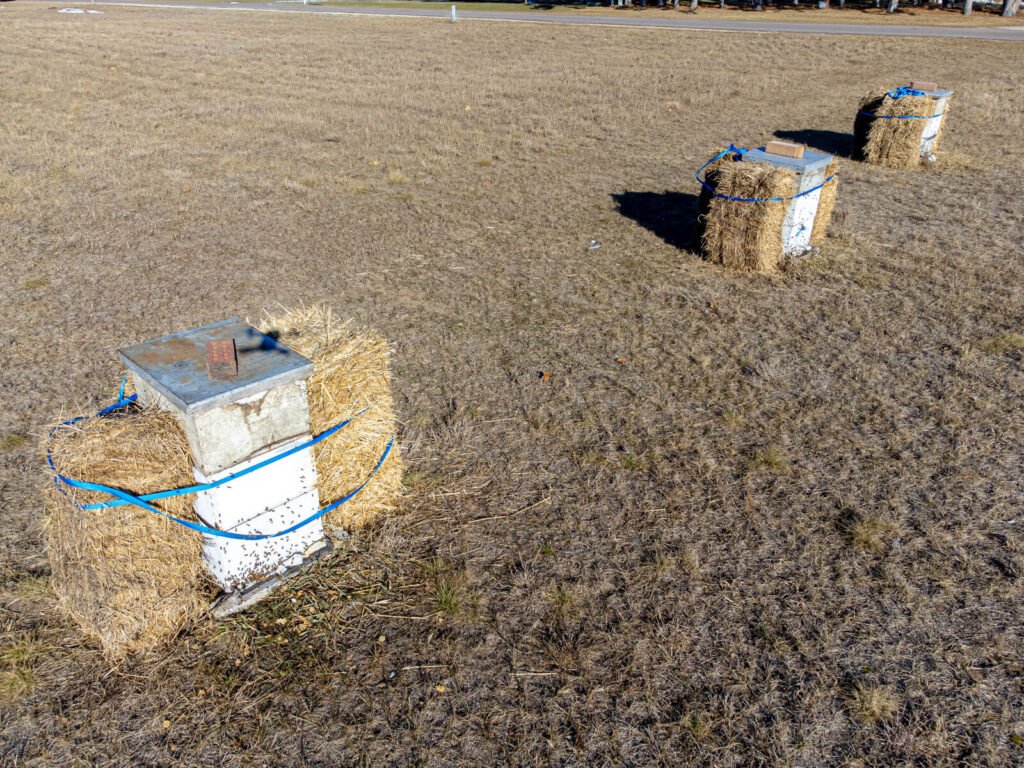
- Tip: check for moisture on the inner cover during mild days.
- Tip: pair whichever floor you use with top ventilation; the floor alone cannot fix condensation.
Winter feeding above the cluster
Floor type does not change how the cluster eats, and starvation kills far more winter colonies than either warmth or airflow. Fall feeding with 2:1 syrup should be finished before nights turn cold, done inside the hive with the entrance reduced so it does not trigger robbing. Once it is too cold for syrup, solid sugar directly above the cluster is the emergency reserve. Mississippi State University Extension describes the standard approach:
“A nonstimulative way to supply emergency food during the winter is to use a candy board that places several pounds of hard sucrose candy or even granulated table sugar over the top bars in case the bees run out of honey.”
A candy board that replaces the inner cover has a bonus: it usually includes an upper entrance and an absorbent layer, so it handles ventilation and moisture at the same time as food. Our comparison of candy boards vs. sugar bricks covers the options, and a colony that is running short shows warning signs first — see how to detect early hive starvation.
Seasonal adjustments and entrance management
Small changes at the entrance often yield larger survival gains than the floor choice itself.
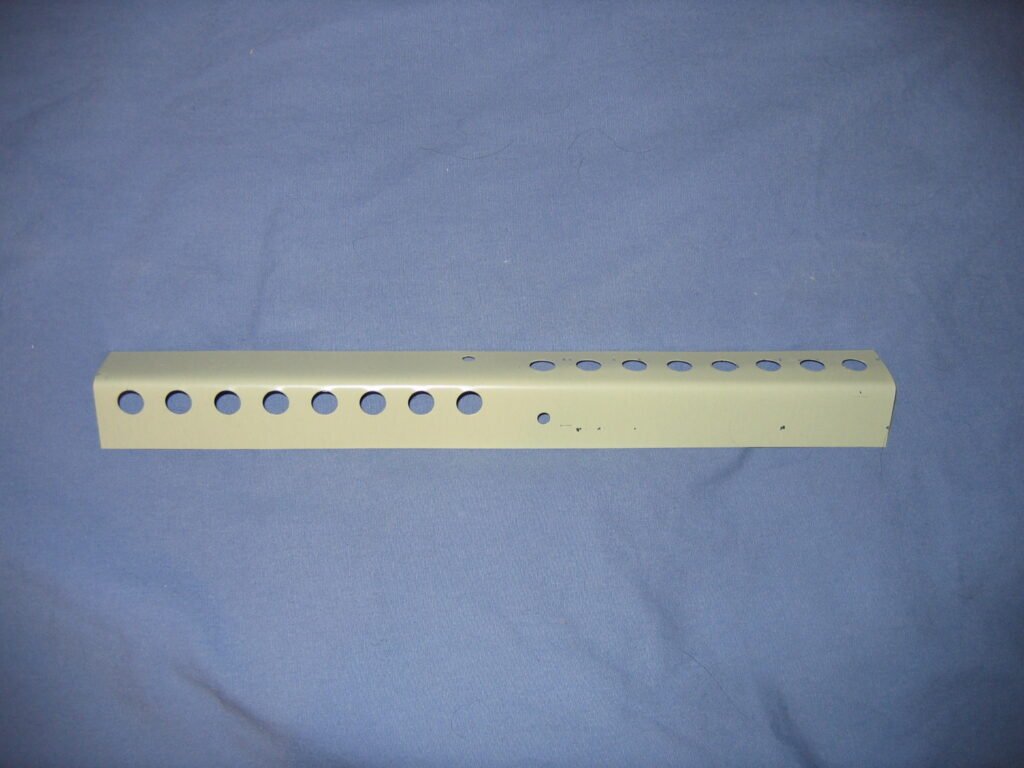
Reduce the entrance when you install a nuc or package, during a dearth, and before winter. A reducer helps a small colony defend itself and stops robbing while it orients to the site. Fit a mouse guard before the first frosts — installing a mouse guard without blocking drones shows the timing and the sizing.
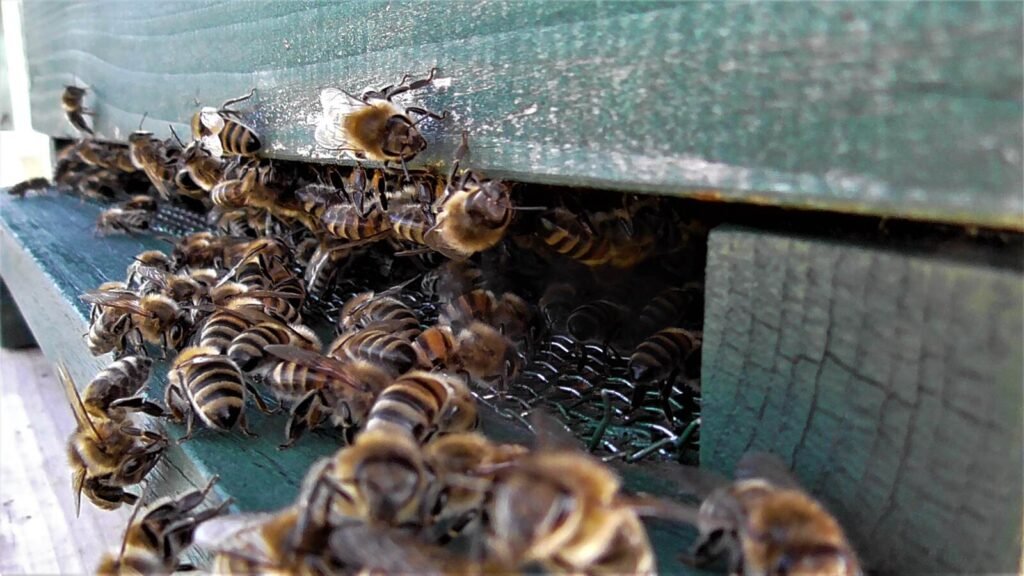
Watch bee behavior: bearding at the entrance signals a need for more ventilation on hot days, which is exactly when an open screen (or a raised outer cover) helps. When temperatures fall, put a brick on the cover, secure the stand, and — if you run a screen with an insert — decide on the insert based on your region rather than the calendar.
- Monitor entrances and adapt quickly.
- Restrict access for new colonies to reduce stress and robbing.
- Keep ventilation balanced to protect honey and brood.
Choosing the right bottom board for your apiary
Your choice of hive base should match local weather patterns and your beekeeping priorities. In warm, humid areas a screened board improves ventilation and helps manage moisture — see our beekeeping tips for humid climates. In cold, dry regions a solid board, or a screen with a winter insert, preserves heat. Beekeepers in climates that swing between both extremes usually end up preferring a removable insert over committing permanently to either design.
If you keep just one or two hives, try both types over time. Keep a simple log of which board each hive used alongside its winter survival, spring buildup, and mite counts; a season or two of that record is worth more for your specific site than any general rule. Full winter preparation, whichever floor you choose, is in how to winterize beehives.
Conclusion
Neither floor is universally right. Solid boards win on warmth, cost, and simplicity; screened boards win on airflow and mite monitoring; the survey data says winter survival is a wash. Decide by climate, keep the cluster dry and fed from above, and let your own hive records settle the argument for your yard.
FAQ
What are the main differences between a solid and a screened bottom board?
A solid board seals the hive floor, retaining warmth and pheromones; a screened board uses #8 mesh to boost ventilation and let mites and debris fall through. Solid helps in cold months and keeps the brood area warmer; screened improves summer cooling and makes mite monitoring easy. Neither is universally correct — the right pick depends on winter length and summer humidity where you keep bees.
Will a screened bottom board reduce mite problems?
Only slightly, and only as one layer of a plan. The mesh lets mites that fall off bees drop out of the hive and makes monitoring easy, but it is not a treatment. Base treatment decisions on an alcohol wash and use the sticky board to confirm a treatment is working.
Should I close a screened bottom board for winter?
Not automatically. In the Pacific Northwest survey, beekeepers who closed screens for winter had the heaviest losses (31%) and those who never closed them the lightest (24%), and a small Illinois trial lost all three covered colonies while the open ones survived. In very cold, dry continental winters a solid insert plus an upper entrance is reasonable; in wet or mild winters, leave it open and focus on moisture control above the cluster.
Does a solid board help colonies survive winter better?
It conserves heat, which helps in prolonged sub-zero cold, but the survey data shows no meaningful survival advantage overall (25% loss with solid boards vs. 27% with screens). Pair a solid floor with an upper entrance and a quilt box or moisture board so condensation has an exit.
How does ventilation differ between the two types?
Mesh floors provide continuous airflow from below, lowering humidity and condensation risk. Solid floors limit passive ventilation, so you rely on the entrance and top ventilation — a notched inner cover, a shim with an upper entrance, or a quilt box — to move moist air out.
Can I switch floor types during the season?
Yes. On a Langstroth hive the floor swaps in a couple of minutes once the hive body is lifted clear, and many screened boards accept a slide-in insert so you can switch without disturbing the cluster at all. Top-bar hives generally need a permanent choice.
Are there pests or debris concerns with mesh floors?
Mesh lowers debris inside the brood nest, but wax flakes and dead mites accumulate on the ground or tray beneath, where small hive beetles and ants can shelter. Check under the hive periodically, keep the tray clean if you use one, and use a mouse guard and entrance reducer in fall regardless of floor type.