Reviewed by Daniel M. · Last Updated September 24, 2026 · How we review
To fit a mouse guard without trapping drones, get two things right: the opening and the timing. Use a guard with 3/8-inch (9.5 mm) holes. Drones pass that size easily. Put it on in autumn, after the colony has thrown out its drones and before mice move in. In eastern North Dakota and western Minnesota, that’s usually late September to mid-October. Take it off in spring before drone flights and heavy forager traffic build up. Most “blocked drone” problems come from mesh that’s too fine, or from a guard left on too long. The guard itself isn’t usually the issue. The steps below cover checking for a mouse already inside, fastening the guard so it comes off easily, and what to watch for over winter.
Key Takeaways
- Choose 3/8-inch openings. Drone thorax width is about 5.1 to 5.7 mm, well under 9.5 mm. Avoid 1/4-inch and finer mesh on any guard that stays on while drones are flying.
- Time it to the colony. Fit the guard after autumn drone eviction and before cold nights send mice looking for shelter. In the Red River Valley, the first frost typically arrives by late September.
- Look for a mouse before you close the entrance. A guard fitted over a mouse traps it inside with the bees.
- Use a drill and short screws, or push pins, rather than a hammer when bees are in the hive.
- Clear dead bees behind the guard on mild winter days. Remove the guard in spring when the colony is flying strongly.
Table of Contents
Why a Mouse Guard Can Block Drones
Drones are the widest bees in the colony. A 2021 study by Metz and Tarpy in the Journal of Insect Science measured drones reared in drone cells at an average thorax width of 5.73 mm. Smaller drones reared in worker cells averaged 5.12 mm. A standard 3/8-inch hole is 9.5 mm across, so it isn’t the problem. Drones get stuck in three situations:
- The mesh is too fine. Quarter-inch (#4) hardware cloth has openings close to drone thorax width. #5 cloth stops drones completely. Our guide to mouse guard hole size sets out the measurements.
- The guard goes on too early. Healthy colonies evict their drones as the season winds down. A guard fitted in August, while drones are still flying, can leave drones and ejected drone bodies piled at the entrance.
- The guard stays on too late. In spring the colony starts rearing drones again, and forager traffic builds. A guard left on into late spring becomes a bottleneck.
A queenless colony may keep drones well into autumn. If you see plenty of drones in October, investigate the colony before worrying about the guard.
When to Install: A Northern Timeline
Mice move indoors as nights turn cold. UC IPM’s house mouse guide notes they “frequently enter homes in autumn when nighttime temperatures become colder.” A beehive is a warm cavity full of food. For Fargo, the National Weather Service’s climatology says the first frost typically occurs by September 24 (NWS Grand Forks, Fargo climate summary). Mann Lake’s mouse guard product page suggests having guards on by September. In our area, that works out to the window below.
| When (Red River Valley) | What the colony is doing | Mouse guard action |
|---|---|---|
| Late August–mid September | Feeding and mite treatment wrapping up. Drones being evicted. | Have guards ready. Don’t fit them while you’re still feeding heavily and inspecting often. |
| Late September–mid October | First frosts. Few or no drones. Brood rearing slowing. | Check for mice, then fit the guard. |
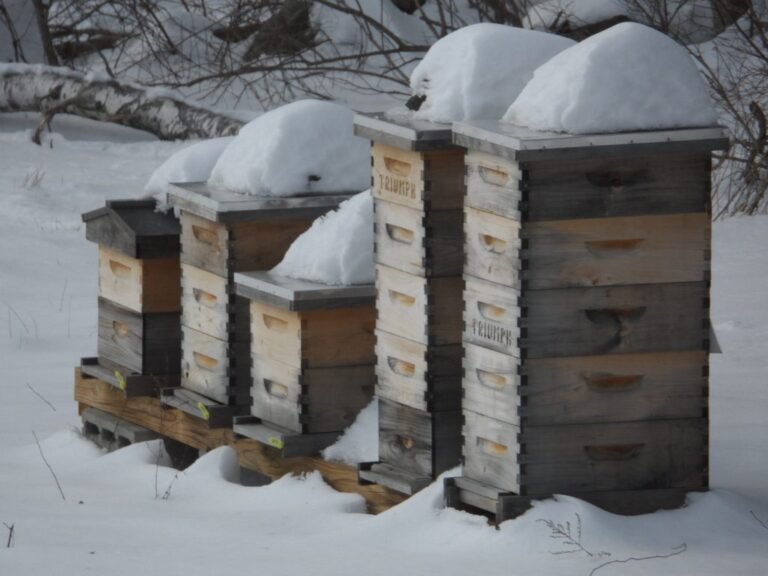
| Late October–November | Cluster forming. Hives wrapped. | Confirm the guard is tight. Open the upper entrance when you wrap. |
| December–March | Clustered. Cleansing flights on mild days. | Clear dead bees from behind the guard after mild spells. |
| Late April–mid May | Rapid buildup. Drone rearing restarts. | Remove the guard once the colony flies strongly and brings in pollen. |
These dates are a guide. Watch your own colonies, and use our checklist of signs your bees are preparing for winter. The trigger to install is “few drones, cold nights.” The trigger to remove is “strong flight and new drones.” For how the lower guard works with an upper opening, see upper vs lower hive entrances in winter.
Check for a Mouse Before You Fit It
A guard keeps mice out. It also keeps in any mouse that’s already there. Nebraska Extension’s NebGuide notes that mice may nest underneath the winter cluster, chew comb and woodenware, and foul the stores. Before fitting the guard:
- Look at the bottom board through the entrance with a flashlight. Signs of a mouse are shredded grass or leaves, droppings, or chewed wax debris spilling out.
- If you see any of these, lift the boxes and clear the nest out before fitting the guard. Get a second person, because a hive full of winter stores is heavy.
- On a screened bottom board with a removable tray, pull the tray and look for chewed comb debris.
Step-by-Step Installation
Step 1: Choose the guard. Use a metal guard with 3/8-inch openings, long enough to cover the full entrance width. Pick more than one row of holes so a few dead bees can’t seal it. Our best mouse guards roundup compares ready-made options.
Step 2: Pick your moment. Work on a cool day when few bees are flying, but warm enough that the colony isn’t tightly clustered. Give the entrance a light puff of smoke.
Step 3: Remove or keep the wooden reducer. A stamped guard usually replaces the reducer across the full opening. If you keep the reducer, the guard goes in front of it. Either way, the holes must line up with open entrance, not with a solid block of wood.
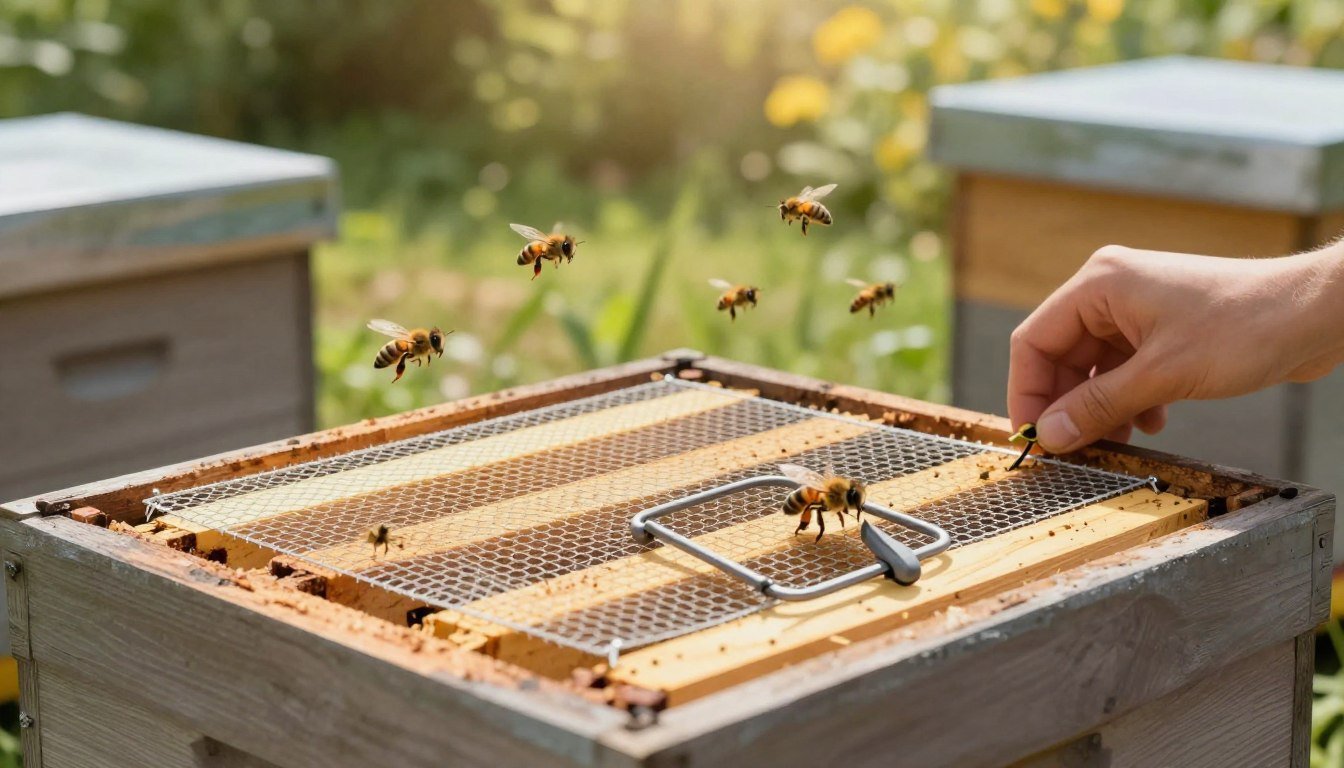
Step 4: Fasten it gently. Mann Lake points out that hammering disturbs the colony and recommends a drill when bees are in the hive. Use short screws in pre-drilled holes, or the push pins or staples many guards are designed for. Place fasteners in the box face or bottom board, not where they will stop you lifting the box later.
Step 5: Watch for five minutes. Workers should walk straight through. If any bee hesitates or struggles, check that the openings aren’t partly covered by the reducer or the bottom board lip.
Step 6: Protect the upper exit. When you wrap the hive, keep a small upper entrance open. If snow or dead bees block the guard, the colony still has a way out. Our guide to inner cover notch position shows one easy way to make it.
Three Guard Setups Compared
| Setup | Drone passage | When it’s on | Notes |
|---|---|---|---|
| Stamped metal guard, 3/8-inch holes | Easy | Autumn to spring | The standard option. Around $11 at US suppliers (checked September 24, 2026). Comes off for the season. |
| DIY 1/4-inch (#4) hardware cloth | Marginal | Only after drone eviction and before spring drone flights | Cheap and very mouse-tight. File the cut edges and staple it firmly. |
| UNL All-Season Mouse Guard (3/8-inch slot) | Easy | Year-round, permanent | A plywood insert on 3/8-inch spacers. NebGuide G2361 reports zero mouse invasions in 105 hives over five years. |
The Nebraska design deals with the timing problem by never coming off. Its authors estimate about $1 in materials per hive, compared with about $18 for a separate metal guard and wooden reducer. If you’d rather not handle guards twice a year, it’s worth a look.
Winter Checks and Spring Removal
During winter, dead bees collect on the bottom board and can build up behind the guard. After a mild spell, look at the entrance. If the holes are packed, rake the dead bees out gently with a bent wire through the holes, or through the upper opening if the guard is screwed on. Don’t push deep into the hive. After storms, check that the guard hasn’t been knocked loose, and look for chew marks at the ends.
In spring, remove the guard when the colony is flying hard and bringing in pollen, and before drones are flying in numbers. Around Fargo, that’s usually late April into May. If you’re also reducing the entrance to guard against robbing, keep the reducer in and take the guard off. Our robbing protection plan explains when a small entrance helps.
Frequently Asked Questions
Do mouse guards trap drones?
A 3/8-inch guard doesn’t physically trap drones. Drones get stuck behind 1/4-inch or finer mesh, or when a guard is left on during drone season. Fit guards after the autumn drone eviction and remove them in spring.
When should I put a mouse guard on my hive?
After the colony has evicted its drones and before cold nights send mice looking for shelter. In eastern North Dakota and western Minnesota, that’s usually late September to mid-October.
When should I take the mouse guard off?
In spring, once the colony is flying strongly and bringing in pollen, and before drone flights build up. Around Fargo, that’s typically late April to mid-May.
Should I use screws or nails to attach a mouse guard?
Screws in pre-drilled holes, or push pins, work best when bees are in the hive. Hammering jars the colony, and nails are harder to remove in spring.
Can I use a mouse guard and an entrance reducer together?
Yes. Put the guard in front of the reducer, with its holes lined up with the reducer’s opening. Many beekeepers simply use the guard alone across the full entrance.
What if a mouse is already inside the hive?
Remove the nest before fitting the guard. If you find one mid-winter, open the hive briefly on the mildest day available, clear the nest from the bottom board, and refit the guard.
The Bottom Line
Drones and mouse guards get along fine when the holes are 3/8 inch and the guard goes on after the drones have gone. Check for a mouse first and fasten the guard without hammering. Clear dead bees on mild days and take the guard off when spring traffic builds. For the size evidence behind the 3/8-inch rule, read our mouse guard hole size guide.