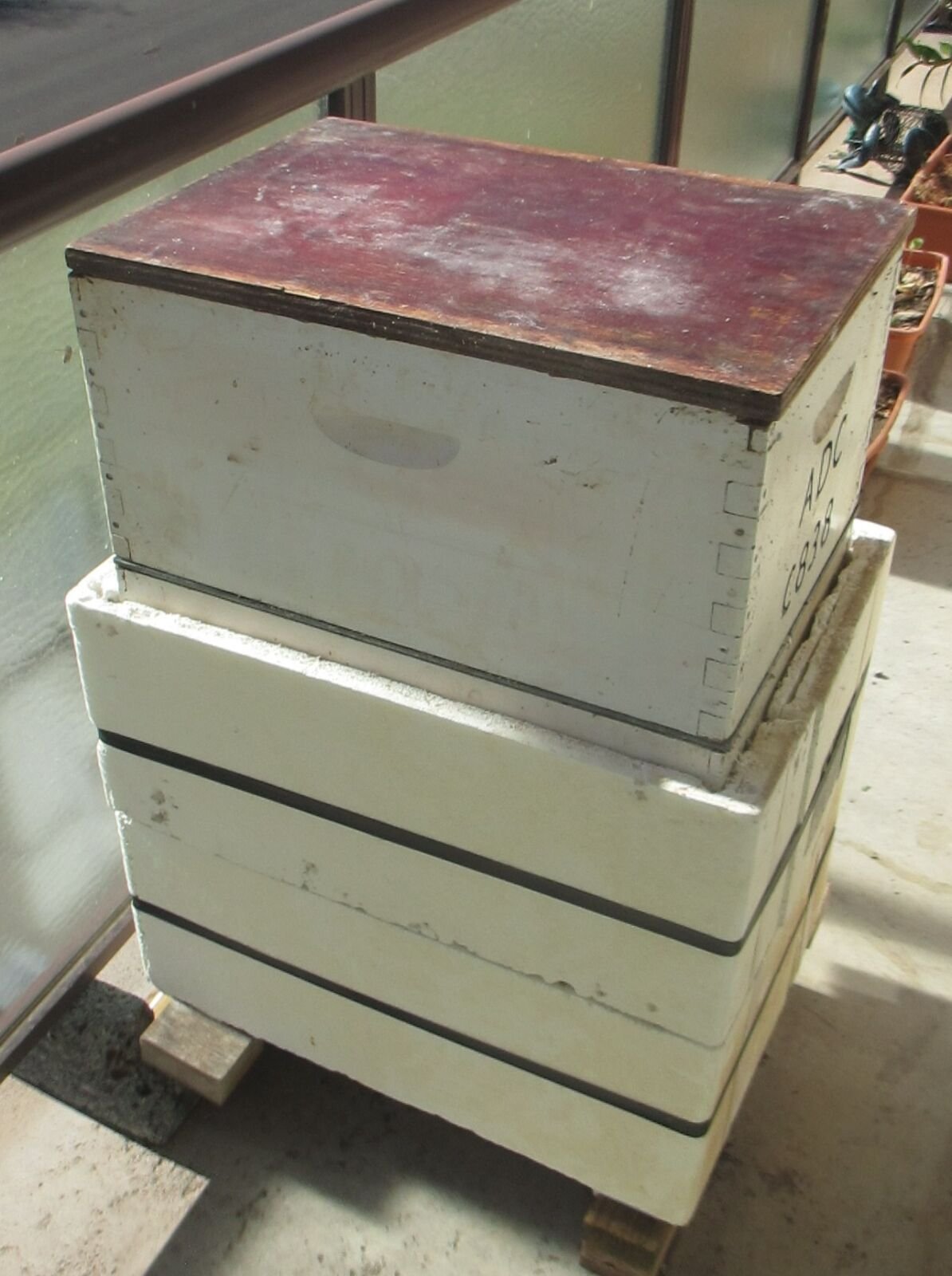
Wrapping a hive for winter, with black roofing felt (tar paper), a commercial hive wrap, or foam board, cuts the wind and lets the hive pick up some warmth from the sun. It also brings a risk: a wrap that seals the hive too well traps the water vapor the cluster produces, and a damp colony is in more danger than a cold one. The fix is to leave the right openings when you wrap, most importantly a small upper opening, working with the bottom entrance so moist air can leave.
This guide explains why that ventilation gap matters, what opening sizes beekeepers commonly use, and how to wrap a hive without sealing moisture in.
Key Takeaways
- Wrapping helps most in genuinely cold climates. Its benefits are less wind and some solar warming.
- Always leave a way for air to move through the hive: a lower entrance plus a small upper opening that the wrap does not cover.
- No single tested “optimal” size exists. Common upper openings are the inner cover notch, a round hole of roughly 3/4 to 1 inch, or a narrow notched shim.
- Small openings are easier for the bees to defend than long, continuous gaps.
- Pair the wrap with insulation above the inner cover so the ceiling stays dry.
Table of Contents
- Why Beekeepers Wrap Hives
- The Real Problem: Moisture, Not Just Cold
- How Big Should the Ventilation Gap Be?
- How to Wrap a Hive Without Sealing In Moisture
- Signs the Ventilation Is Wrong
- Adjusting for Your Climate
- Conclusion
- FAQ
Why Beekeepers Wrap Hives
A University of Florida IFAS Extension publication on overwintering in northern climates notes that beekeepers in the far northern states and Canada may wrap colonies to reduce wind infiltration and to warm the hive on sunny days (Ellis and Hammons, UF/IFAS, ENY-161). Black roofing felt is popular because it is cheap, sheds water, and absorbs sunlight.
Honey Bee Suite sums up the trade-off well: done properly, wrapping can raise the hive temperature, reduce condensation over the cluster, and cut drafts. Done poorly, it can leave the colony damp and diseased (Honey Bee Suite, To wrap or not to wrap). The same article suggests wrapping makes most sense where a healthy wild colony would struggle to survive the winter. For product options, see Best Hive Wraps for Cold Climates.
The Real Problem: Moisture, Not Just Cold
A winter cluster produces a steady stream of water vapor as it eats honey. The UK National Bee Unit points out that this vapor condenses on cool hive walls, and that hives need good air circulation because damp, rather than cold, kills bees. It adds that insulation may be used where winters are particularly harsh, provided good ventilation is maintained (National Bee Unit).
Honey Bee Suite is just as direct. An upper entrance or ventilation port should be used together with a lower entrance or open bottom board, so air can circulate through the hive from bottom to top. The mistake it warns against is wrapping so tightly that moisture produced inside cannot escape. For more ways to keep a winter hive dry, see Effective Ways on How to Reduce Moisture Inside Winter Hives.
How Big Should the Ventilation Gap Be?
No controlled study gives an ideal upper-opening size for every hive and climate. What beekeepers use in practice falls into a fairly narrow range. The aim is an opening big enough to let moist air out and stay clear of frost and dead bees, and small enough that it does not chill the cluster or become a weak point against robbers and mice.
| Upper opening | Typical size | Notes |
|---|---|---|
| Inner cover notch | The notch built into the rim of the inner cover (size varies by manufacturer) | The simplest option. Face the notch forward and make sure the outer cover and wrap do not block it. |
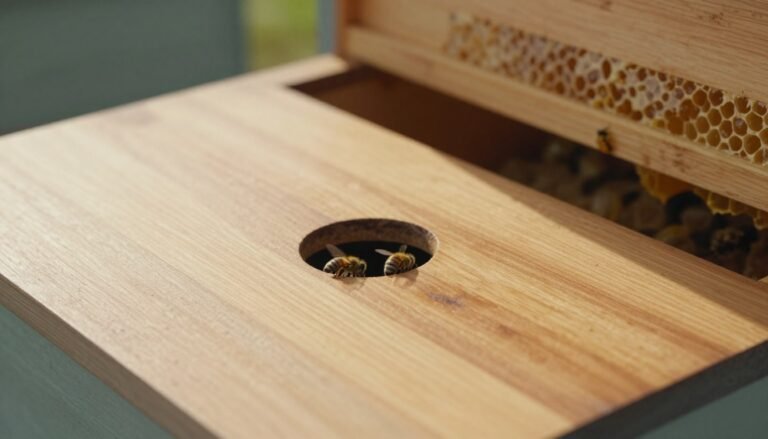
| Round hole in the top box or an eke | Commonly about 3/4 inch to 1 inch in diameter | Honey Bee Suite describes using one-inch holes. Plug with a cork when not needed. |
| Notched shim (Imirie-style) | A notch of about 3/4 by 3/8 inch | Dimensions as described by Honey Bee Suite. It sits between boxes and adds no permanent hole. |
| Bottom entrance | Reduced for winter, with a mouse guard | Keep it clear of snow and dead bees. It supplies the air that leaves through the top. |
Honey Bee Suite also cautions against making upper entrances too big. A small entrance, round or rectangular, is easier for the bees to defend than a long, continuous gap across the whole width of the hive. Large top openings are best closed before robbing season (Honey Bee Suite, A gentle warning about upper entrances). For the pros and cons of each entrance position, see Upper Entrance vs Lower Entrance in Winter: Which is Better?
How to Wrap a Hive Without Sealing In Moisture
- Finish the fall work first. Make sure the colony is strong, well fed, and treated for mites before you wrap. Wrapping cannot rescue a weak colony.
- Set up the top. Put the inner cover in place with its notch or other upper opening clear, add rigid foam or a quilt box above it, and refit the outer cover. See Optimal Inner Cover Insulation Thickness.
- Cut the wrap. In its step-by-step guide, Honey Bee Suite uses a piece of 15-pound roofing felt about 80 inches long, cut to the height of the boxes between the bottom board and the telescoping cover (Honey Bee Suite, How to wrap a bee hive).
- Wrap and fasten. Wrap it snugly around the boxes and staple or tie it in place, overlapping the ends on a side that faces away from the prevailing wind.
- Cut out every opening. Slit the wrap cleanly over the bottom entrance and over any upper hole or notch so nothing is covered. Covering these is the most common wrapping mistake.
- Secure the lid. Weigh down or strap the cover so winter wind cannot lift it.
- Unwrap in spring once the weather settles and the colony is building up, so the hive does not overheat on warm days.
Signs the Ventilation Is Wrong
- Too little ventilation: water dripping from the underside of the inner cover, mold on the outer frames, wet or stained bottom boards, or ice forming inside the top of the hive.
- Too much ventilation or a poorly placed opening: a strong draft through the cluster area, or an opening so large that robbing starts on mild days.
- Blocked openings: an upper hole iced over, or a bottom entrance buried in snow or dead bees. Check both after storms.
Check on a mild day without opening the hive for long. A quick look under the outer cover, and at the entrances, tells you most of what you need to know.
Adjusting for Your Climate
In regions with long, hard winters, a wrap plus top insulation and a small upper opening is a common, well-tested setup. In milder or very damp climates, wrapping may add little. Moisture control through ventilation, top insulation, or a quilt box usually matters more there. If you are unsure whether to wrap, start with ventilation and top insulation. They help in almost every climate, and a wrap is an optional extra on top.
Conclusion
The “gap” that matters when wrapping a hive for winter is the path you leave for moist air: a working bottom entrance and a small upper opening, often the inner cover notch or a hole of about 3/4 to 1 inch, that the wrap does not cover. Keep openings small enough to defend, pair the wrap with insulation above the inner cover, and check a few times through the winter that everything is still dry and unblocked.
FAQ
How big should the upper ventilation hole be on a wrapped hive?
There is no single proven size. Common choices are the inner cover notch, a round hole of roughly 3/4 to 1 inch drilled in the top box or an eke, or a narrow notched shim. Keep it small enough for the bees to defend, and make sure the wrap does not cover it.
Should I cover the upper entrance when I wrap the hive?
No. Cut the wrap away from both the bottom entrance and the upper opening. Air moving in at the bottom and out at the top is what carries moisture out of a wrapped hive.
Does wrapping a beehive cause condensation?
Wrapping itself usually reduces condensation by keeping the hive walls warmer. Problems come from wrapping too tightly with no ventilation, so moisture has nowhere to go. Add top insulation and keep a small upper opening.
What material should I use to wrap a hive?
Black roofing felt (tar paper) is a cheap, traditional choice that sheds water and absorbs sunlight. Commercial insulated wraps and foam board are also common. Whatever you use, leave the entrances clear.
Do I need to wrap my hives at all?
Not always. Wrapping helps most in very cold, windy climates. In mild or damp regions, good ventilation and insulation above the inner cover usually matter more than a wrap.
When should I remove the winter wrap?
Take it off in spring once the weather has settled and the colony is building up, so the hive does not overheat on warm, sunny days.