Last Updated September 17, 2026
A quilt box and a moisture board solve the same winter problem — water vapor from the cluster condensing on a cold cover and dripping back onto the bees — but they solve it differently. A quilt box is a shallow, cloth-bottomed box of pine shavings that absorbs the vapor, insulates the top of the hive, and vents the moisture out through small holes. A moisture board is a rigid sheet of absorbent fiberboard (Homasote is the usual brand) that sits on or in place of the inner cover and wicks condensation away. For cold, wet winters the quilt box is the safer and cheaper choice; the moisture board is the quicker, lower-profile option for drier cold and for large apiaries. Neither one is a candy board, which is a feeding tool, not a moisture tool.
Key Takeaways
- A wintering colony burns roughly 40 to 60 pounds of honey and breathes out more than three gallons of water vapor doing it (Betterbee). That vapor condenses on the coldest surface above the cluster, usually the underside of the cover.
- A quilt box (2–4 inches of pine shavings over a cotton floor) holds more water, adds real insulation, and costs almost nothing to build. It replaces the inner cover and needs a shim below it for an upper entrance.
- A moisture board (about ½-inch Homasote fiberboard) goes on in seconds and stacks flat, but holds less water and insulates little, so it is usually paired with a foam panel above it.
- Derek Mitchell’s hive-thermodynamics work (American Bee Journal, 2017) warns that a top vent can cancel the benefit of insulation; a 2022 PLoS ONE field trial found insulated covers raised winter survival from 72.7% to 95.5%.
- Cold and damp: quilt box. Cold and dry, or many hives: moisture board plus an insulated cover. Mild winters: a notched inner cover is often enough.
- Whichever you use, keep a small upper entrance open, never use burlap or old bed sheets as the quilt floor, and remove the quilt box when you super up in spring.
Table of Contents
- Why Winter Hives Get Wet in the First Place
- What a Quilt Box Is and How It Works
- What a Moisture Board Is and How It Works
- Quilt Box vs Moisture Board: Side by Side
- Ventilate or Condense? The Debate Behind the Choice
- Which One Should You Use?
- Installing Either One
- Mistakes That Make Either One Fail
- A Moisture Board Is Not a Candy Board
- FAQ
Why Winter Hives Get Wet in the First Place
Honey bees heat the cluster, not the hive, and they do it by burning honey. Burning sugar produces water, which the bees exhale as vapor; warm air carries it up until it meets a surface colder than the dew point — usually the inner or outer cover — where it condenses and eventually drips back onto the cluster. Betterbee, the New York equipment maker that sells both quilt boxes and moisture boards, puts the scale of it plainly:
“Over the course of the winter, a colony will consume 40 to 60 pounds of honey as their main source of calories. As they metabolize this honey, they’ll give off moisture as water vapor in their breath. This moisture can amount to more than three gallons of water over the course of a winter!”
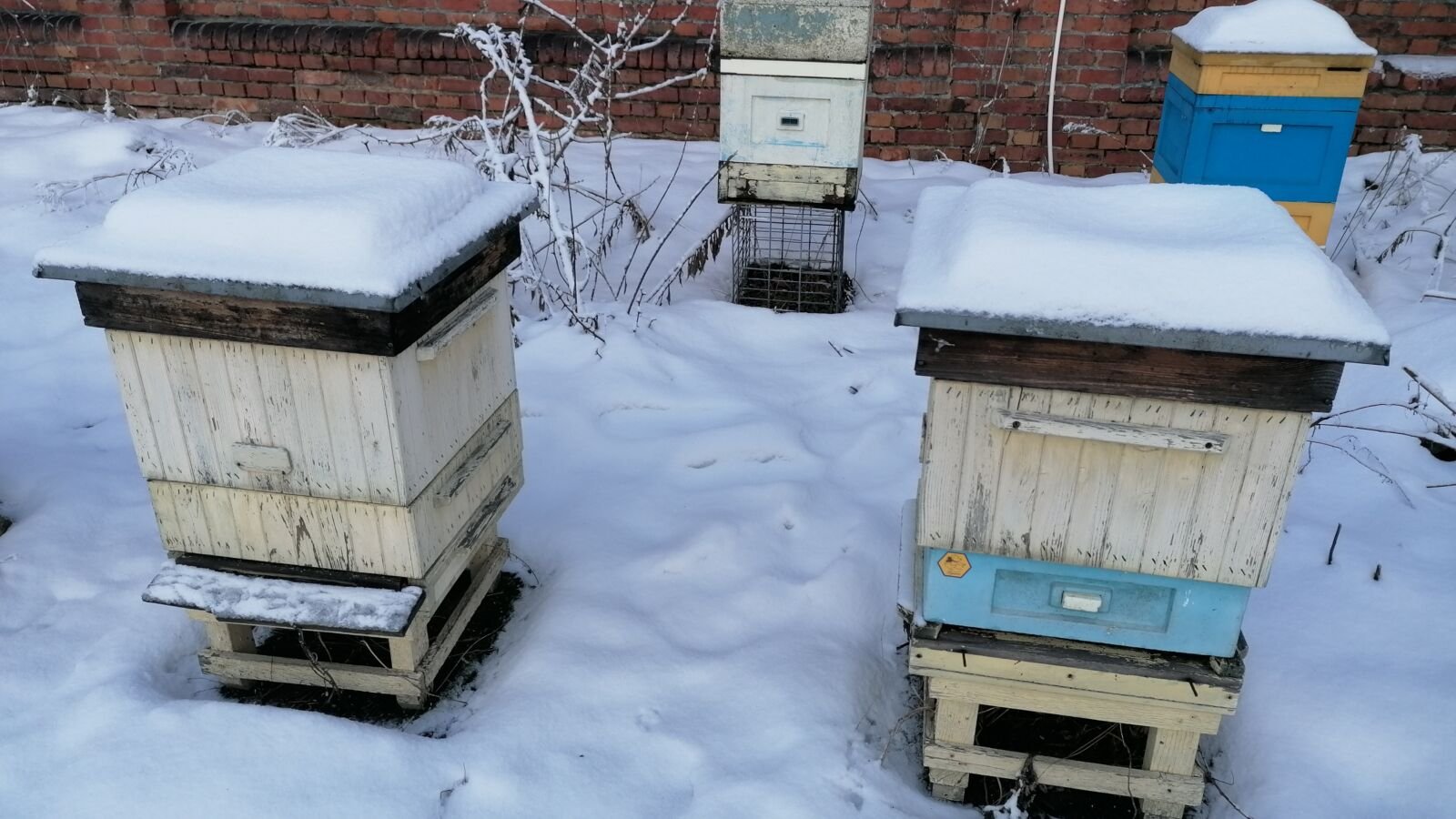
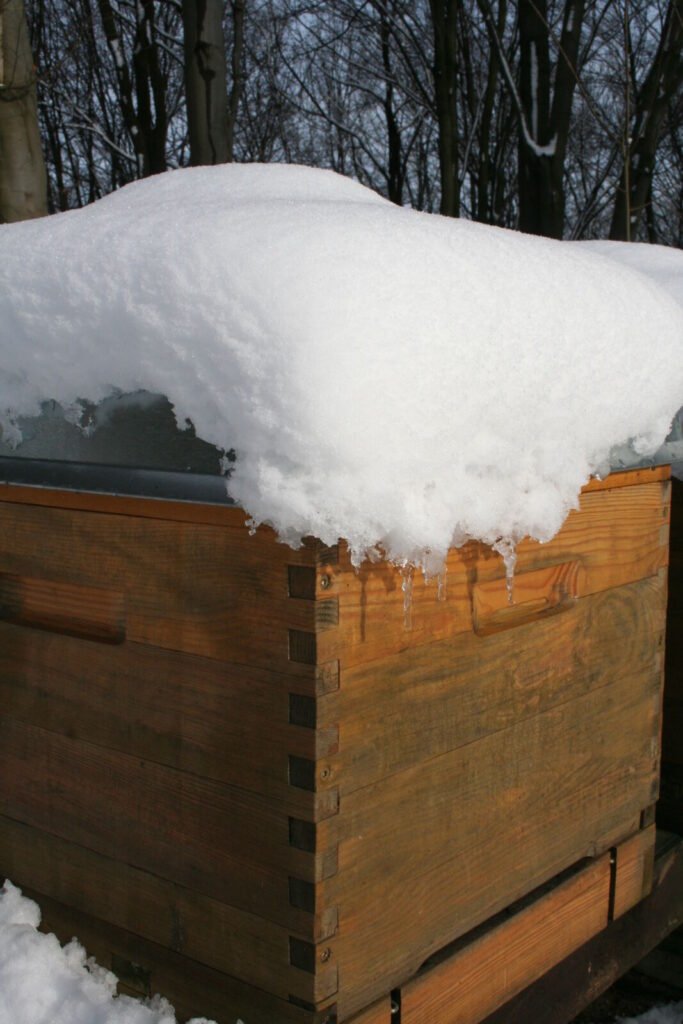
Bees tolerate cold well as long as they stay dry; a wet cluster loses heat fast and outer combs grow mold. That is why what sits above the cluster matters more than the wrap on the sides when you are winterizing a hive in a northern state: you either catch the vapor before it drips (quilt box or moisture board) or keep the top warm enough that it never condenses there (the “condensing” approach discussed below).
What a Quilt Box Is and How It Works
A quilt box (or moisture quilt) is a shallow wooden box, open at the top, with a cloth floor stapled across the bottom and loose pine shavings inside. It sits at the top of the hive in place of the inner cover. Moist air passes up through the cloth, the shavings absorb the water, and on drier days it evaporates out through vent holes. Because shavings also insulate, the surface directly above the bees stays warm and little condenses on it in the first place.
The idea comes from the Warré hive, whose roof sits over a shallow “quilt” of absorbent material, and it was popularized for Langstroth equipment by Washington beekeeper Rusty Burlew of Honey Bee Suite, who has run moisture quilts on her own hives since about 2009.
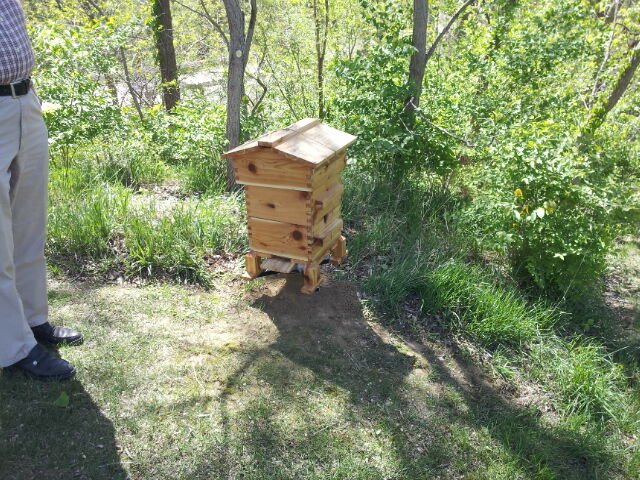
The stack, from the top brood box upward, is: a shim or feeder rim (1–3 inches; its notch is the upper entrance and its space holds fondant or sugar — see what hive shims are used for); the quilt box, cloth side down; an optional second shim with vent holes if the box has none; and the telescoping cover. No inner cover is used.
Fill material: pine shavings and nothing fancier
Kiln-dried pine shavings sold as animal bedding are light, absorbent, open enough for vapor to move through, and cost a few dollars a bag. Betterbee warns against the usual substitutes: sawdust is too dense for vapor to pass, straw and hay ferment once damp, leaves do not absorb water, and fiberglass sheds glass fibers onto the combs.
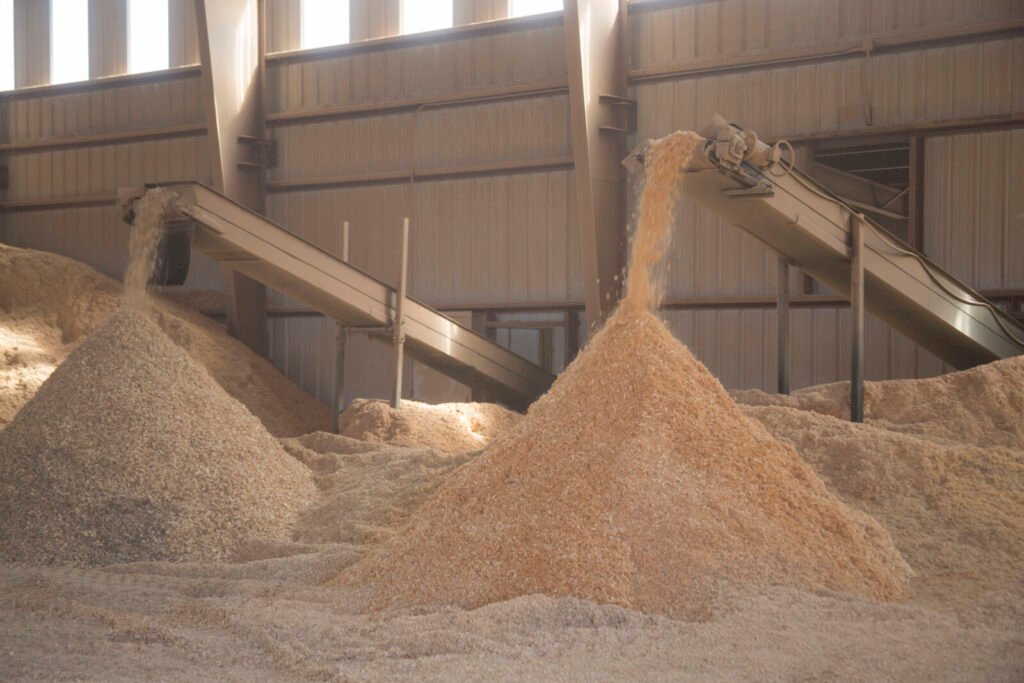
Depth matters less than people assume. Burlew’s quilts hold only two inches, and she reports that even on triple-deep hives the moisture never collects below the top quarter- to half-inch. Three to four inches is the common recommendation; four to six makes sense if you also want the quilt to insulate.
The floor: tightly woven cotton, not burlap
Use clean, tightly woven, unbleached cotton. Betterbee advises against burlap, feed bags, and window screen, which let dust rain down on the bees, and against old bed sheets because of detergent residue. Burlew’s current design uses #8 hardware cloth for strength with cotton laid over it so no crumbs fall between the frames.
Ventilation holes: where and how big
Burlew drills three 1-inch screened holes in the sides of the box; Master Beekeeper Charlotte Anderson of Carolina Honeybees uses ½-inch screened holes angled so rain cannot enter; Betterbee puts the vents in a shim above the shavings, arguing that holes above the fill expose more surface to evaporation. Any of these works, as long as vapor can leave the top of the stack.
In the video above, Illinois beekeeper and educator David Burns of Long Lane Honey Bee Farms weighs whether a quilt box earns its place on a winter hive and shows where it sits in the stack.
What a Moisture Board Is and How It Works
A moisture board is simpler hardware: a flat sheet of absorbent fiberboard cut to the footprint of the hive. Nearly every commercial version is Homasote, a dense recycled-paper building board that soaks up and slowly releases water without falling apart. Mann Lake’s own how-to specifies a board “about half an inch thick” with a lengthwise groove roughly an inch wide and 3/8 inch deep so it can expand and contract as it takes on and sheds moisture.
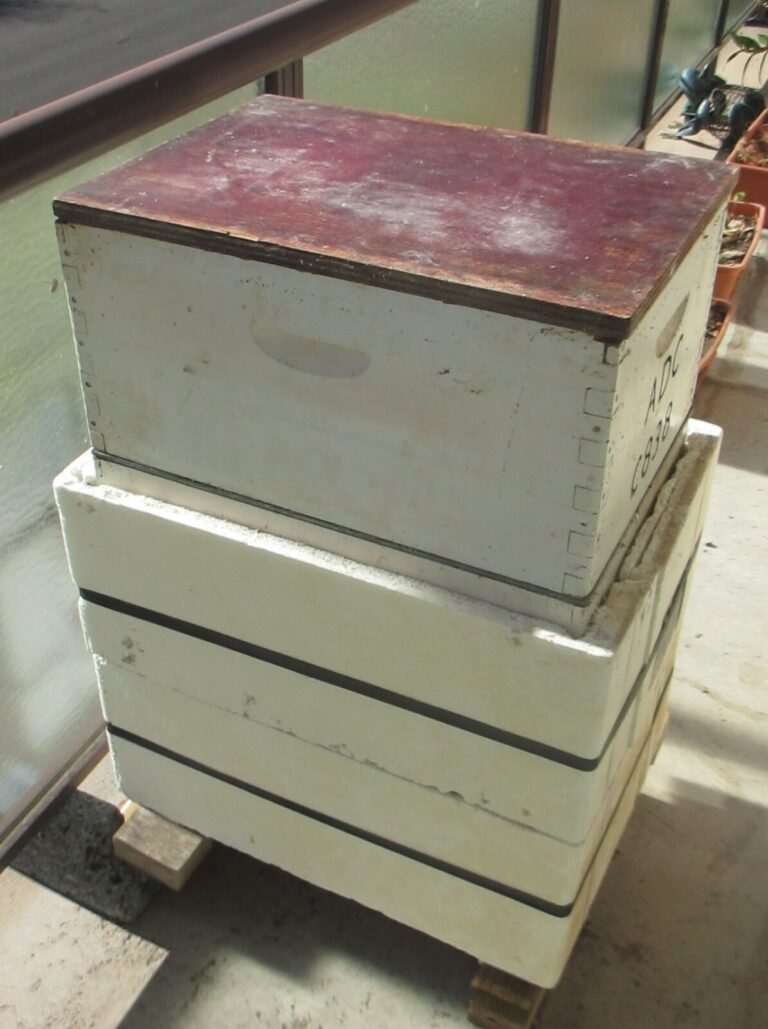
Mann Lake sets the board on the inner cover, groove down and aligned with the notch, leaving a channel that works as both upper entrance and top vent; other beekeepers put it directly on the top box over a shim. Either way the board’s underside is the cold surface the vapor meets first, and instead of forming droplets the water soaks into the fiber and migrates out through the entrance channel. A board holds far less water than a box of shavings and adds little insulation, which is why suppliers sell foam panels to go above it and why a board in a very wet climate can be found saturated by midwinter. Our roundup of the best moisture boards for winter hives compares the ready-made options.
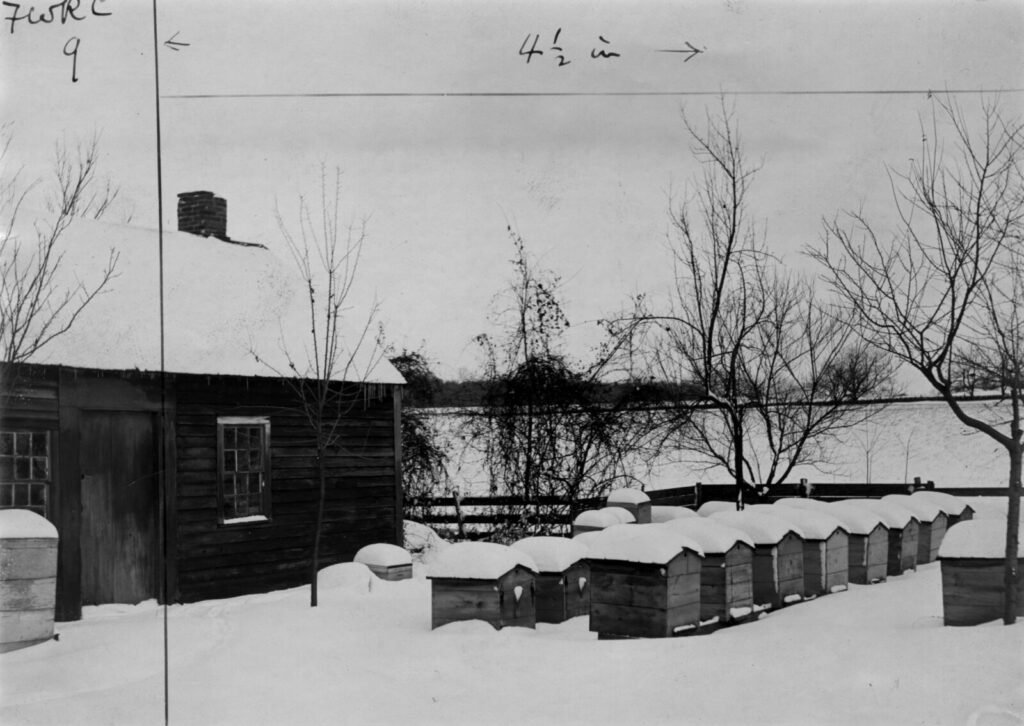
None of this is new. The Cornell photograph above shows colonies wintered around 1900 in double-walled “chaff hives,” packed with loose chaff to hold heat and take up moisture. The quilt box and the moisture board are simply the two cheapest modern versions of that old idea.
Quilt Box vs Moisture Board: Side by Side
| Feature | Quilt box | Moisture board |
|---|---|---|
| What it is | Shallow box, cloth floor, 2–4 in of pine shavings | Rigid ½-in Homasote fiberboard cut to the hive footprint |
| Where it sits | On a shim above the top box, replacing the inner cover | On the inner cover (groove down) or directly on the top box |
| How it handles water | Vapor passes through cloth into shavings and evaporates out of vent holes | Wicks condensate from its underside and releases it through the entrance channel |
| Water capacity | High; moisture stays in the top ½ in of shavings | Limited; can saturate in long wet spells |
| Insulation | Moderate to good; deeper fill = more insulation | Low; usually paired with a foam panel above |
| Winter feeding | Lift one edge, slide sugar or fondant into the shim space | Lift the board and cover off |
| Cost per hive | Lowest: scrap lumber, cotton, one bag of bedding | Ready-made boards cost more for a small apiary; one 4×8 sheet of Homasote makes several |
| Storage and handling | Bulky; shavings need refreshing every year or two | Stacks flat; lasts many seasons if dried each spring |
| Best for | Cold, damp winters; hobby apiaries; DIY beekeepers | Cold, drier winters; larger apiaries; minimal hardware |
Ventilate or Condense? The Debate Behind the Choice
Both classic tools assume moisture has to leave through the top of the hive. A growing camp, backed by heat-transfer research, argues the opposite: insulate heavily, leave no top vent, and let the vapor condense harmlessly on the cool lower walls where it can drain out or be drunk by the bees. Derek Mitchell, whose University of Leeds work models hives with computational fluid dynamics, made the engineering case in the American Bee Journal:
“The consequence for the honey bees is that any thermal advantage of the insulation can be negated and perhaps even reversed by the addition of a top vent.”
Field data support the insulation half of that argument. In a randomized trial across eight central Illinois apiaries in the 2020–21 winter, St. Clair, Beach and Dolezal covered 22 of 43 colonies with black corrugated plastic topped by R-7.5 foam board; covered colonies lost weight at roughly half the rate of the controls, and 95.5% survived to spring against 72.7% (PLoS ONE, 2022). Whether you also vent is where opinions split; Betterbee says a foam panel above the inner cover helps but does not completely solve cold-surface dripping, which is exactly why it sells quilt boxes.
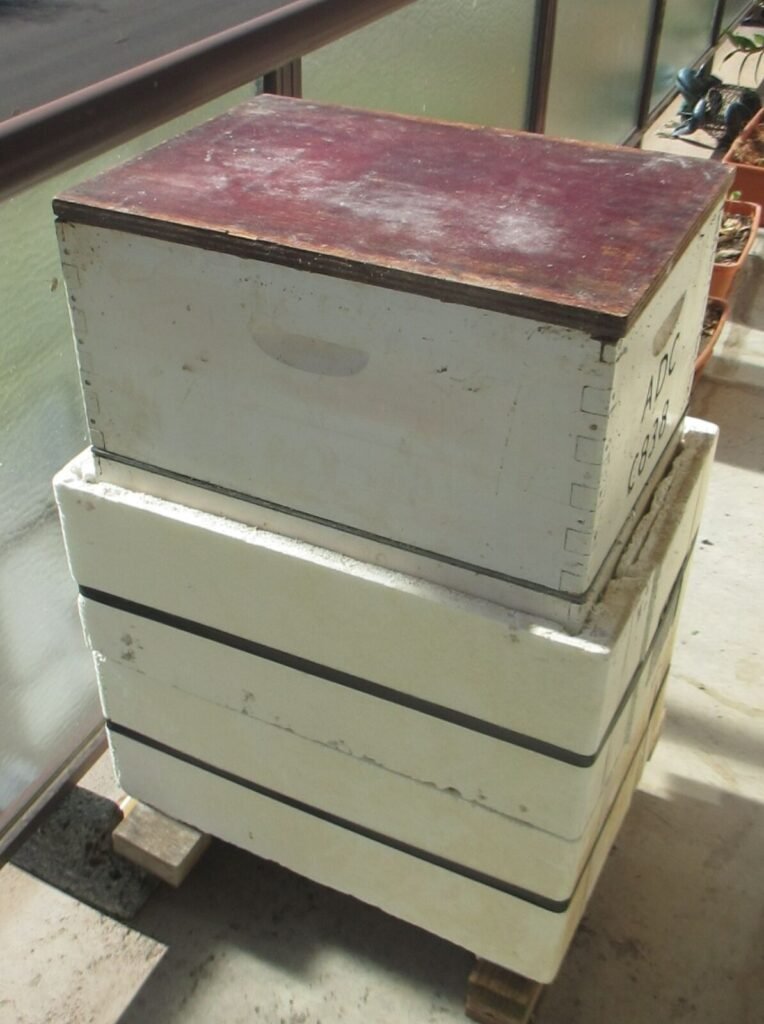
For this decision: a quilt box is a ventilated design whose shavings also insulate, so it sits in the middle of the debate and can be run with its vent holes plugged and foam above it. A moisture board does almost nothing for heat retention, so add insulation or choose an insulated hive top instead of a plain telescoping cover. A fully insulated “condensing” hive may need no absorber at all, but a bare wooden hive with its top vent closed is the worst of both worlds; our review of whether insulated beehives actually help colonies goes deeper.
Which One Should You Use?
Climate decides most of it. Burlew, who keeps bees on the 47th parallel in a wet USDA zone 8 winter, gives the clearest testimonial for the quilt box in that kind of weather:
“I’ve used quilts for five years now, and on average, I went from overwintering 50-60 percent of my hives, to overwintering 80-100 percent.”
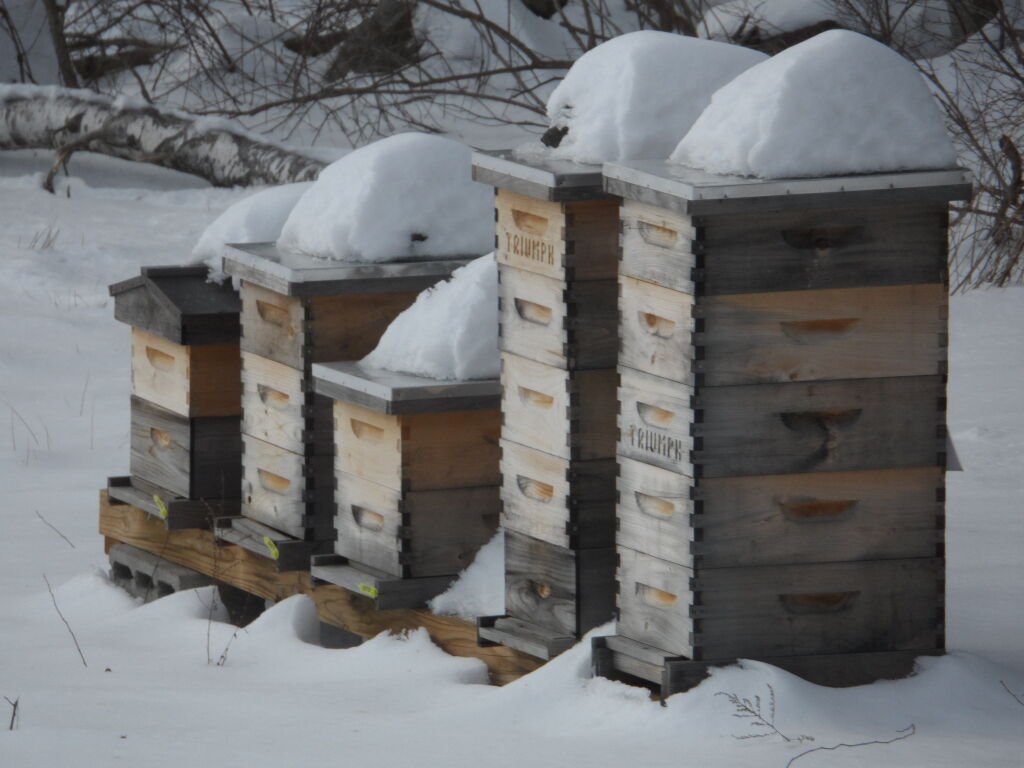
- Cold and damp (Pacific Northwest, Great Lakes, New England, the Appalachians): quilt box. Long stretches of near-freezing, high-humidity weather are where a board saturates and a box of shavings keeps working.
- Cold and dry (Northern Plains, Mountain West, prairie provinces): heat loss is the bigger threat. A moisture board under a foam panel, or a deep 4–6-inch quilt with reduced vents, both work; think insulation first and compare thermal insulation materials for winterizing.
- Mild winters (zone 8 and warmer): condensation is a nuisance rather than a killer; a shim or a notched inner cover turned the right way usually suffices.
- Many hives or a tight budget: boards stack flat and go on in seconds, which matters at twenty hives; a DIY quilt box is the cheapest winter gear you will ever build, while ready-made boards cost more per hive when you need only one or two.
Installing Either One
Quilt box: after the last fall inspection, when nights are consistently cold, remove the inner cover and feeder. Set a shim on the top box, notch forward, with any sugar brick or fondant on the top bars inside it. Set the quilt box on the shim, cloth side down, add 2–4 inches of dry shavings mounded slightly toward the middle, then the telescoping cover, making sure its rim does not block the vent holes. On mild days lift the cover and feel the shavings; swap them only if soaked. Betterbee’s quick life check is to push a bare hand down through the shavings to the cloth — a live cluster is warm to the touch. Remove the box when you super up in spring; left on all summer, bees chew through the cloth.
Moisture board: cut the board to the hive’s outer dimensions and, if it has no groove, cut a shallow one across one face. Set it groove-down on the inner cover, aligned with the notch, or directly on the top box over a shim; add a foam panel above it if you have one, then the outer cover. Check it once or twice over the winter and swap in a dry spare if the underside is wet through. Dry it fully in spring before storing, since a damp board can grow mold.
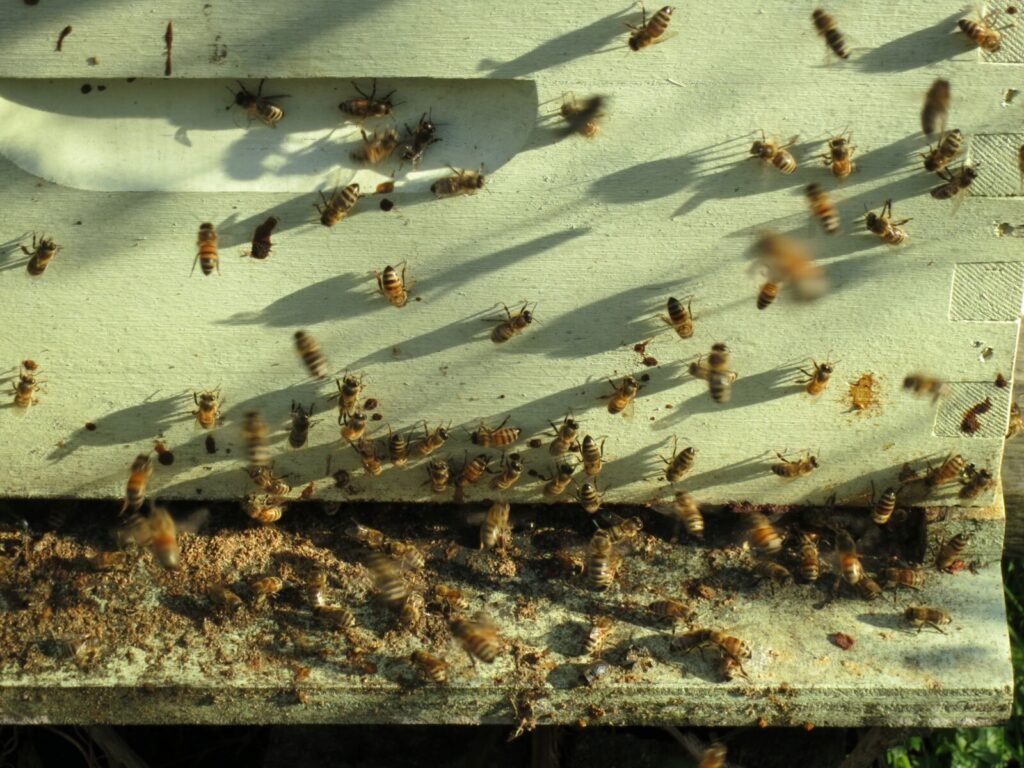
With either setup the upper entrance is not optional: snow and dead bees can block the bottom entrance for weeks, and the bees need an exit for cleansing flights on mild days. Our comparison of upper versus lower entrances in winter covers sizing and mouse guards.
Mistakes That Make Either One Fail
- Burlap, feed sacks, or old bed sheets as the quilt floor, and sawdust, straw, or fiberglass as fill. Buy a yard of unbleached muslin and a bag of pine bedding.
- A solid inner cover left above the quilt box. It traps the vapor in the shavings with nowhere to go. The quilt replaces the inner cover; it does not sit under one.
- Leaving a saturated moisture board in place. Once soaked it stops absorbing and drips like the cover it replaced. Carry a spare.
- Venting a well-insulated hive wide open. Per Mitchell, a big top vent throws away the heat the insulation was keeping. Keep vents small, or plug them on a heavily insulated hive.
- Expecting moisture control to fix a mite or food problem. A dry hive still starves, and a dry hive with a high fall mite load still collapses. Moisture is one leg of the plan in our guide to keeping bees alive through winter.
A Moisture Board Is Not a Candy Board
The two get confused because both live at the top of a winter hive. A candy board is a rim holding a slab of hardened sugar (or, in the Mountain Camp method, dry sugar on newspaper) that feeds the colony in late winter; any moisture it absorbs is a side effect, and a wet candy board simply dissolves. A moisture board contains no food. If you need both, stack them: feeding rim or candy board on the top box, quilt box or moisture board above it. Our comparison of candy boards versus sugar bricks covers the feeding side.
FAQ
Can I use a quilt box and a moisture board together?
You can, but it is redundant: both are absorbers doing the same job. A better pairing is either one with a foam panel above it. If you own both, the board can serve as the quilt box floor in place of cloth.
Do I still need an inner cover with a quilt box?
No. The quilt box replaces the inner cover, with a shim beneath it providing the upper entrance and feeding space. A solid inner cover above or below the quilt blocks the vapor path.
How deep should the shavings be?
Two inches is enough to catch the moisture; Rusty Burlew reports it never penetrates below the top half inch even on large hives. Three to four inches is the usual recommendation, and four to six where the quilt also serves as insulation.
When does it go on, and when does it come off?
Install after your final fall inspection, once nights are consistently near freezing and syrup feeding is finished. Remove in spring when you add the first honey super; a quilt box left on through summer will have its cloth chewed through.
Will the shavings or the board get moldy?
Shavings in a working quilt box stay surprisingly dry because moisture evaporates out as fast as it arrives; swap them only if soaked. A Homasote board can grow mold if stored damp, so dry it fully first.
Do bees in warm climates need either one?
Rarely. Condensation is a problem of cold covers, so in zone 8 and warmer a notched inner cover or a small ventilation shim is usually enough. Wet, mild coastal climates are the exception and often justify a quilt box.