Last Updated September 14, 2026
Not all hive insulation is created equal, and picking the wrong material can trade one winter problem for another. A wrap or board that holds heat well but traps moisture can leave a colony worse off than no insulation at all, since damp, chilled bees fare far worse than dry, cold ones.
This guide compares the materials and methods beekeepers actually use to insulate hives for winter, what each one does well, and where each one tends to fall short. For the full picture of preparing a colony for cold weather beyond insulation alone, see our general guide on how to winterize beehives.
The right choice depends heavily on local climate, hive design, and how much moisture management the setup already includes, so this is less about finding a single “best” material and more about matching material to conditions.
Key Takeaways
- Insulation and moisture management have to be considered together, not separately.
- Rigid foam board offers the highest R-value per inch but needs to be paired with adequate ventilation.
- Commercial hive wraps trade some insulating power for convenience and reusability.
- Quilt boxes address moisture directly rather than just retaining heat, and often outperform pure insulation in damp climates.
- Overinsulating without addressing airflow is a common and avoidable mistake.
Table of Contents
- Insulation and Moisture: Why They Have to Be Considered Together
- Rigid Foam Board
- Commercial Hive Wraps
- Insulated Hive Tops and Covers
- Quilt Boxes and Moisture Boards
- Reflective and Tar Paper Wraps
- Material Comparison at a Glance
- Choosing a Material for Your Climate
- Conclusion
- FAQ
Insulation and Moisture: Why They Have to Be Considered Together
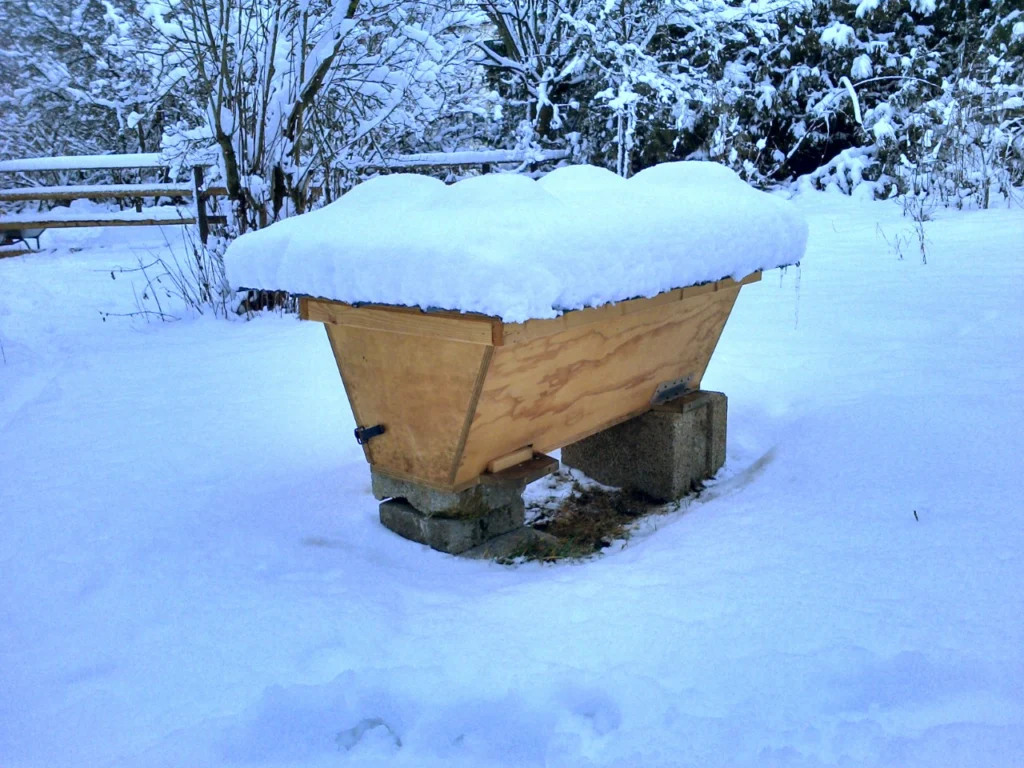
A cluster of bees generates a surprising amount of moisture through respiration over the course of a winter, and that moisture has to go somewhere. Insulation that traps heat but blocks that moisture from escaping can lead to condensation dripping back down onto the cluster, which is far more dangerous to a colony than cold, dry air.
This is why experienced beekeepers tend to think about winterizing as a moisture-management problem first and a heat-retention problem second. A peer-reviewed 2022 study from the University of Illinois, published in PLOS ONE, put real numbers behind this: across eight central-Illinois apiaries, covered colonies survived winter at markedly higher rates than uncovered ones — under 5% mortality for covered hives versus over 27% for uncovered controls — while also consuming less of their stored food. The full study is available via its DOI record for anyone who wants the underlying methodology rather than a summary. Our comparison of winter quilt boxes versus moisture boards covers the moisture side of this tradeoff in more depth.
Rigid Foam Board
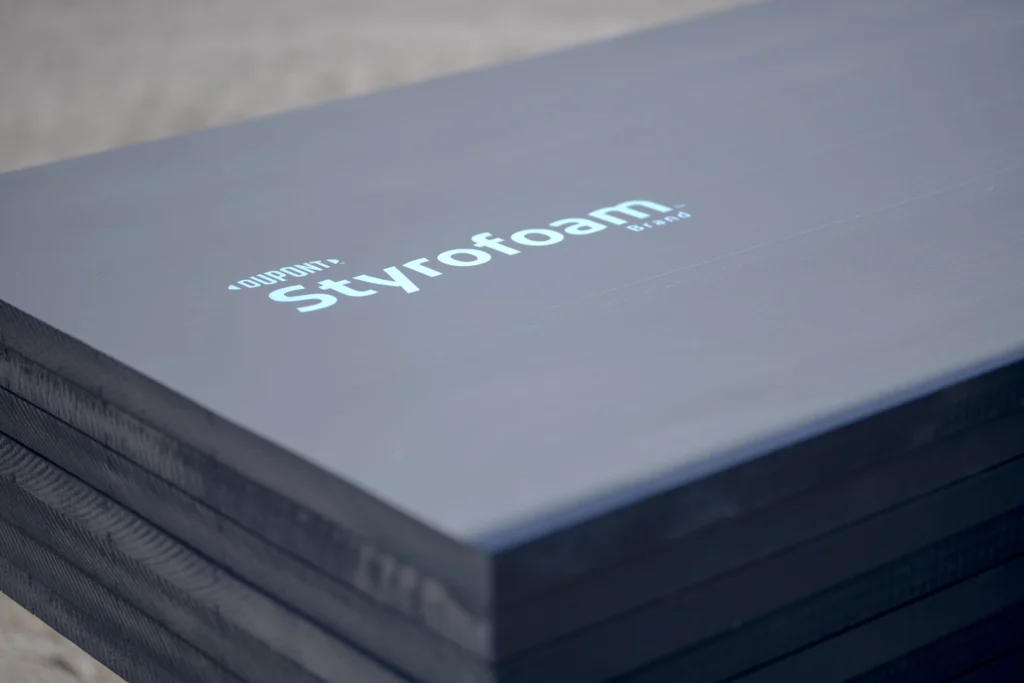
Rigid extruded or expanded polystyrene foam board offers the highest insulating value per inch of thickness of any material commonly used on hives, typically in the R-4 to R-5 per inch range depending on the product.
Foam board is usually cut to fit around hive bodies as a removable wrap, or used inside a specially built insulated cover. Its main drawback is that it does nothing for moisture on its own. It must be paired with an upper entrance, moisture quilt, or ventilated cover to let humid air escape, as covered in our guide to insulated hive wraps versus foam board wraps.
Commercial Hive Wraps
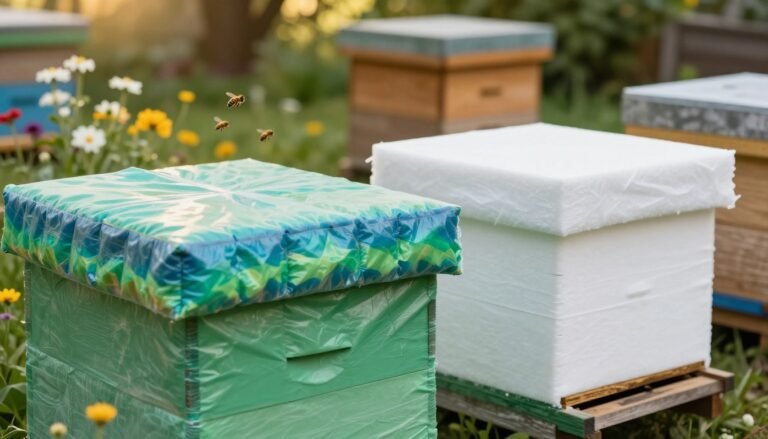
Products like the BeeCozy wrap and similar commercial options offer a middle ground between insulating power and ease of use. These typically use a foam or foil-lined fabric that wraps around the hive body and secures with straps or zippers, avoiding the cutting and fitting foam board requires.
Our full BeeCozy hive wrap guide and broader roundup of best hive wraps for cold climates compare specific products in detail. Wraps generally insulate slightly less effectively than rigid foam board but are reusable season after season and far faster to install and remove.
Insulated Hive Tops and Covers
Because a large share of winter heat loss happens through the top of the hive, an insulated inner cover or telescoping cover is often one of the highest-value single upgrades available. See our comparison of insulated hive tops versus plain telescoping covers for the practical differences.
Insulated covers pair particularly well with an uninsulated hive body, since they address the area of greatest heat loss without the moisture-trapping risk that comes with insulating the entire box.
Quilt Boxes and Moisture Boards
Rather than focusing purely on retaining heat, a quilt box sits above the brood chamber and is filled with an absorbent material like wood shavings or burlap-wrapped straw, which soaks up rising moisture before it can condense and drip back down.
In consistently damp or maritime climates, a well-built quilt box often does more for colony survival than any amount of added insulation, since it solves the moisture problem directly. Our DIY hive moisture board guide walks through building one from basic materials.
Reflective and Tar Paper Wraps
Tar paper wraps, a traditional cold-climate approach, work primarily by absorbing solar radiation on dark-colored paper to add a small amount of passive warming on sunny winter days, rather than through significant insulating value on their own.
Reflective wraps work in the opposite direction, useful mainly in climates with intense winter sun where the goal is moderating temperature swings rather than maximizing retained heat. Neither approach insulates as effectively as foam board or a dedicated wrap, but both are inexpensive and simple to apply.
Material Comparison at a Glance
| Material | Approx. R-value | Moisture Handling | Reusability | Best Climate |
|---|---|---|---|---|
| Rigid foam board | R-4 to R-5/inch | None (needs added ventilation) | High (cut once, store, reuse) | Cold, dry |
| Commercial hive wrap | Lower than foam board | None (needs added ventilation) | High, fast install/removal | Cold, dry to moderate |
| Insulated cover/inner cover | Targets top heat loss only | Neutral | High | Mild, occasional hard freeze |
| Quilt box / moisture board | Low (not its purpose) | Best of all options | Moderate (rebuild material each season) | Cold, damp/maritime |
| Tar paper / reflective wrap | Minimal | None | Low-moderate | Sunny winters, mild cold |
Choosing a Material for Your Climate
- Cold, dry climates: Rigid foam board or a commercial wrap paired with a simple upper entrance for ventilation.
- Cold, damp or maritime climates: Prioritize a quilt box or moisture board over heavy insulation, since moisture is the bigger threat.
- Mild climates with occasional hard freezes: An insulated cover alone, without wrapping the full hive body, is often sufficient.
- Windy, exposed sites: Combine any insulation choice with a windbreak, since wind-driven heat loss can outweigh the benefit of the insulation itself.
The University of Florida IFAS guide to overwintering honey bee colonies in northern climates covers how to balance wind protection with the ventilation bees need to avoid moisture buildup inside an insulated hive.
Conclusion
The best insulation material for winterizing a hive depends on climate as much as it does on R-value. Rigid foam board and commercial wraps maximize heat retention, insulated covers target the area of greatest heat loss efficiently, and quilt boxes solve the moisture problem that insulation alone cannot.
Most successful winterizing setups combine two or more of these approaches rather than relying on a single material, matched carefully to local conditions and hive design.
FAQ
What is the best insulation material for beehives in winter?
Rigid foam board offers the highest insulating value per inch, but the “best” choice depends on climate, since damp climates often benefit more from a moisture-managing quilt box than from maximum insulation alone.
Can too much hive insulation actually hurt a colony?
Yes. Insulation that traps heat without allowing moisture to escape can lead to condensation dripping onto the cluster, which is more dangerous than cold, dry conditions.
Do I need both insulation and a quilt box?
Not always, but in consistently damp or maritime climates, combining light insulation with a quilt box for moisture control typically outperforms heavy insulation on its own.
Are commercial hive wraps worth it compared to DIY foam board?
Commercial wraps trade a small amount of insulating value for convenience, reusability, and faster installation, which many beekeepers find worthwhile even though rigid foam board insulates slightly better per inch.
Does the color of a hive wrap matter?
Yes, to a degree. Dark-colored wraps, like traditional tar paper, absorb more solar heat on sunny winter days, while reflective wraps are better suited to climates with intense winter sun where moderating temperature swings matters more.
Further Reading
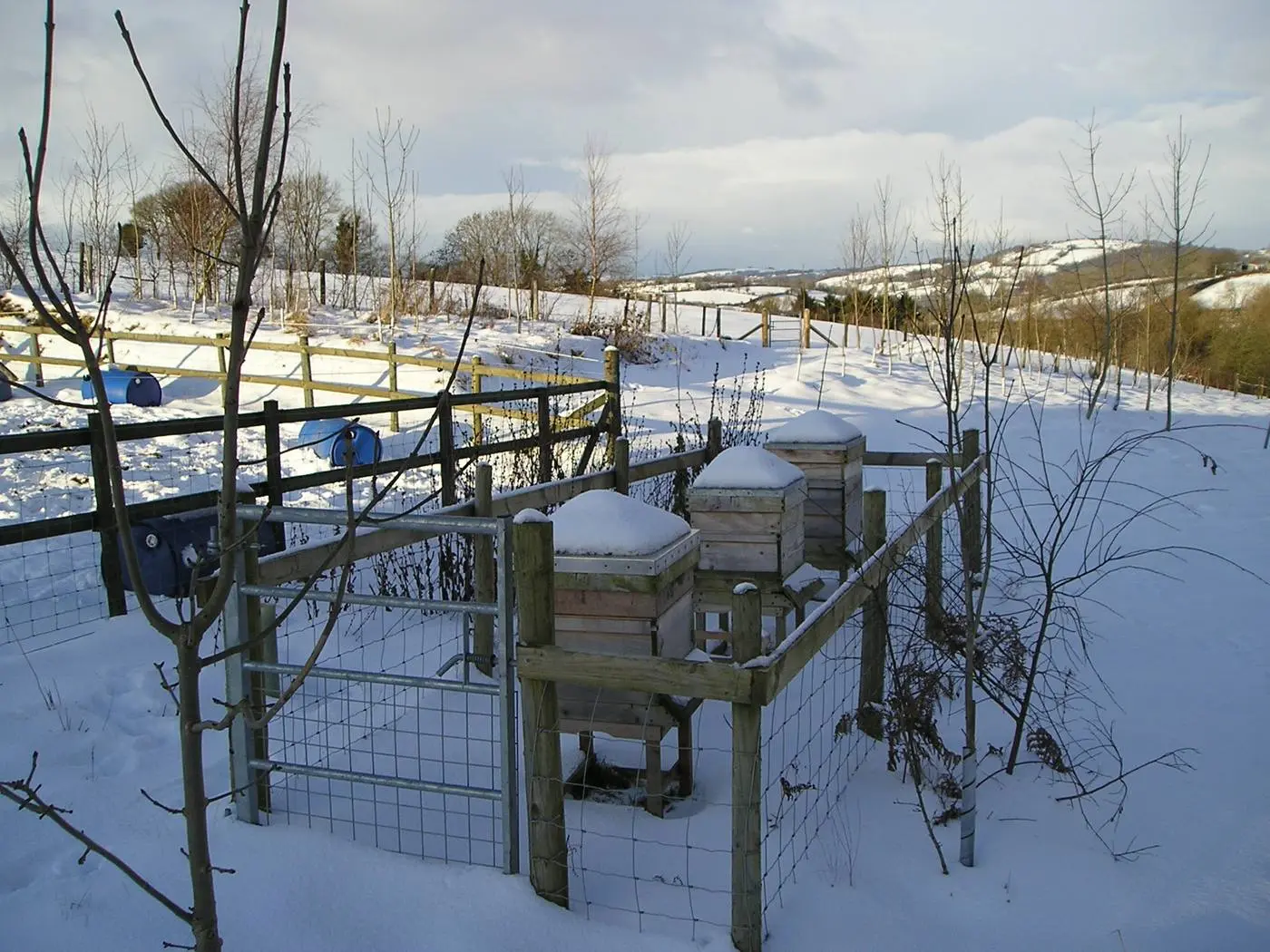
Image credits: Photo: Beehives with snow-capped roofs in winter. Photo by Marion Phillips, licensed CC BY-SA 2.0, via Wikimedia Commons.