Reviewed by Elena P. · Last Updated September 24, 2026 · How we review
There are four main types of propolis trap: plastic grid traps laid over the top bars, fine-mesh screens, wall-mounted traps or roughened hive walls, and side-wall collectors built into the hive body. For harvesting propolis in a northern Langstroth hive, a top-bar screen is the practical choice, and published trials favor fine openings of 1–2 mm. Wall traps and rough interiors are best used to help the colony build its own propolis layer, not for harvest. Side-wall collectors come from tropical beekeeping and don’t suit a North Dakota or Minnesota yard. Whichever you use, install it in summer while resin sources are available and remove it before you set the hive up for winter.
A propolis “trap” doesn’t catch or kill anything. It is a surface with gaps that bees fill with propolis. That makes it a different piece of equipment from a pollen trap, which strips pollen pellets from returning foragers, and from pest traps for beetles or wax moths.
Key Takeaways
- Bees fill gaps too small to pass through with propolis. Every propolis trap uses that behavior.
- In a Greek field trial, 1 × 1 mm and 2 × 2 mm screens collected the most propolis. A 4 × 4 mm screen collected almost none.
- Traps stapled to the walls and roughened wood increase propolis deposits for colony health, but that propolis is meant to stay in the hive.
- Side-wall collectors are a tropical design. A Langstroth side-wall modification collected nothing in the same Greek trial.
- Utah State University Extension puts a typical harvest at 50–100 grams of propolis per hive per season.
Table of Contents
- How a Propolis Trap Works
- Propolis Trap Types Compared
- When to Use a Propolis Trap
- Harvesting and Cleaning the Trap
- Harvest Trap or Propolis Envelope?
- Frequently Asked Questions
How a Propolis Trap Works
Honey bees collect plant resins and use them to seal cracks, narrow openings and coat the inside of the nest cavity. In a hive, bees fill gaps too small to walk through with propolis. Bigger spaces get comb or are left open as passages. A propolis trap is a sheet of narrow openings that sets off that sealing behavior in a place you can remove.
“A propolis trap is essentially just a queen excluder with smaller holes.”
Light and air flow increase the effect. USU’s fact sheet suggests placing the trap on the top box in place of the inner cover and propping the outer cover open slightly with a small stick or stone, so light reaches the trap and prompts the bees to seal it.
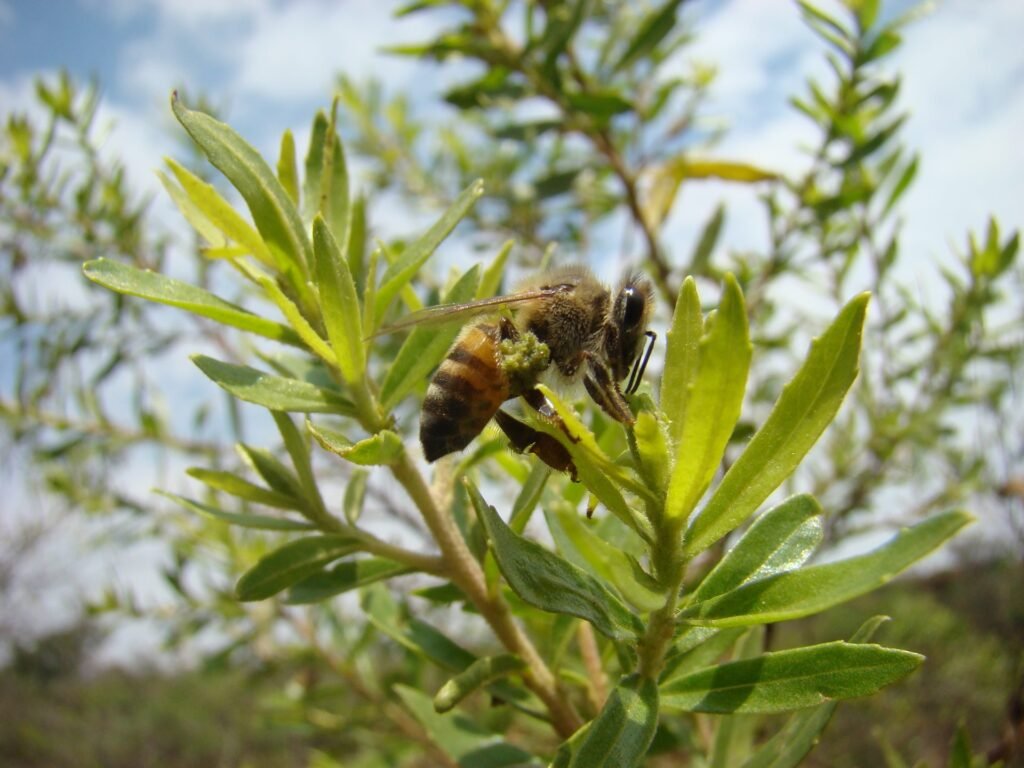
What the bees bring back depends on the plants around your yard. In temperate zones, including North America, resin from poplar buds is the main source of propolis, according to a 2021 review in Plants. Cottonwoods and aspen are poplars too, so apiaries near wooded river corridors such as the Red River usually have resin sources within flight range.
Propolis Trap Types Compared
| Type | Where it goes | What trials show | Best use |
|---|---|---|---|
| Commercial plastic grid trap | On the top bars, in place of the inner cover | 15.6 g average per collection period in a Greek trial (3 × 16 mm slots) | Easy, reusable harvest trap |
| Fine-mesh screen (1–2 mm) | On the top bars | 29.6 g (1 × 1 mm) and 23.7 g (2 × 2 mm) per period in the same trial; filled fastest | Highest harvest per trap in that trial |
| Coarse screen (4 × 4 mm) | On the top bars | 1.2 g per period | Not worth using |
| Wall-mounted trap or roughened walls | Inside the hive-body walls | Significantly more propolis deposited than on smooth walls | Colony health (the propolis envelope), not harvest |
| Side-wall collectors and lateral openings | Removable slats or openings in the side of the box | Used in Brazil; 0 g in the Greek trial’s side modification | Tropical beekeeping; not recommended for northern yards |
| Scraping (no trap) | Frames, top bars and box edges | Collects a mix of propolis, wax and debris | Occasional, small amounts only |
The figures in the first three rows come from Tsagkarakis and colleagues, who tested four top-bar screens and one side-wall modification on Langstroth hives at two Greek apiaries. Average collection time was about 20 days (Tsagkarakis et al., 2017, Advances in Entomology 5:68–74). It is one trial in one climate, so treat the numbers as a comparison between trap types, not a yield forecast for your hives.
Type 1: Commercial plastic grid traps
These are the flexible plastic sheets sold by most beekeeping suppliers, sized to cover a 10-frame or 8-frame box. The narrow slots are the key feature. They are easy to install, survive repeated freezing and flexing, and produce fairly clean propolis because the bees deposit it on the trap rather than on wax. Check that the sheet you buy matches your box size and sits flat. A warped trap leaves bigger gaps that bees fill with burr comb instead.
Type 2: Fine-mesh screens
In the Greek trial, homemade polypropylene screens with 1 × 1 mm and 2 × 2 mm openings collected significantly more propolis than the commercial trap and filled faster. The same material with 4 × 4 mm openings barely collected any. If you make your own screen, the main rule is to keep the openings small.
Type 3: Wall traps and rough interiors
Here the trap material goes on the inside walls of the brood box. In Georgia, Hodges, Delaplane and Brosi compared plastic trap material stapled to interior walls, saw kerfs and wire-brushed walls. All three increased propolis deposits over smooth walls. Trap material and roughened wood performed more consistently than the kerfs (Hodges et al., 2019, Journal of Economic Entomology 112:986–990). The authors also suggested that unplaned lumber doesn’t use up any bee space, while a trap about 3 mm thick does.
A 2024 study co-authored by Marla Spivak of the University of Minnesota went further. Colonies in rough-walled boxes built more propolis than those with traps stapled to the walls. Migratory colonies in rough boxes also had lower levels of several pathogens (Shanahan et al., 2024, PLOS ONE). This propolis is meant to stay in the hive.
Type 4: Side-wall collectors and lateral openings
Brazilian beekeepers developed ways to collect propolis through the sides of the hive body. These include removable slats in the wall and openings covered with a flexible plastic seal. Souza and colleagues compared these with plastic screens, a wooden spacer block under the lid, and scraping in Africanized colonies in São Paulo. They found that the collection method affected the mineral content of the propolis (Souza et al., 2016, Brazilian Journal of Biology 76(2)). In a northern apiary, openings in the hive wall are one more thing a colony has to seal and defend, and the Greek side-wall modification collected nothing. Stick with a top-bar trap.
When to Use a Propolis Trap
- Install in early to mid-summer. Use strong colonies only, once they are established and resin sources are active.
- Leave it about three weeks, then check. In the Greek trial, traps averaged about 20 days per collection. Harvest when most openings are sealed.
- Put the trap on top of the uppermost box. If supers are on, that means on top of the top super, never between brood boxes.
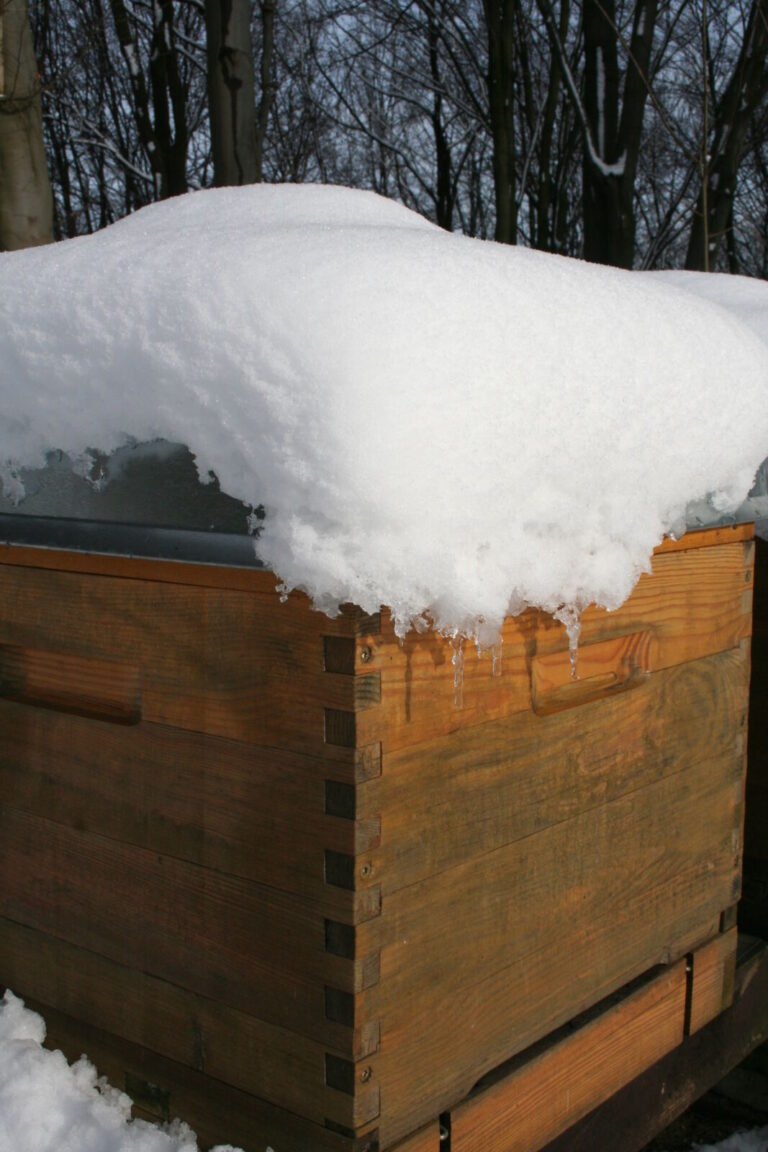
- Remove it before winter setup. Around the Red River Valley, take traps off by late summer. A fully sealed trap can block upper ventilation, so restore your inner cover, upper entrance and moisture board for winter.
- Skip weak colonies. Collecting resin takes foragers. A colony still building up is better off without a trap.
Some bees collect far more resin than others. Caucasian bees are known for it, as described in our guide to Caucasian honey bees. For other ways to raise yields, see how to increase propolis production.
Harvesting and Cleaning the Trap
- Remove the trap and put it in a sealed plastic bag.
- Freeze it until the propolis is hard and brittle. USU suggests a refrigerator or freezer, and the Greek researchers froze screens for 24 hours.
- Over clean paper or a tray, twist and flex the trap so the brittle propolis snaps off. Tap or brush off the remaining pieces.
- Pick out bee parts and debris, and store the propolis in a sealed container in a cool, dark place.
- Clean and store the trap until next season. See disinfecting pollen and propolis traps, especially for traps from a colony that had disease.

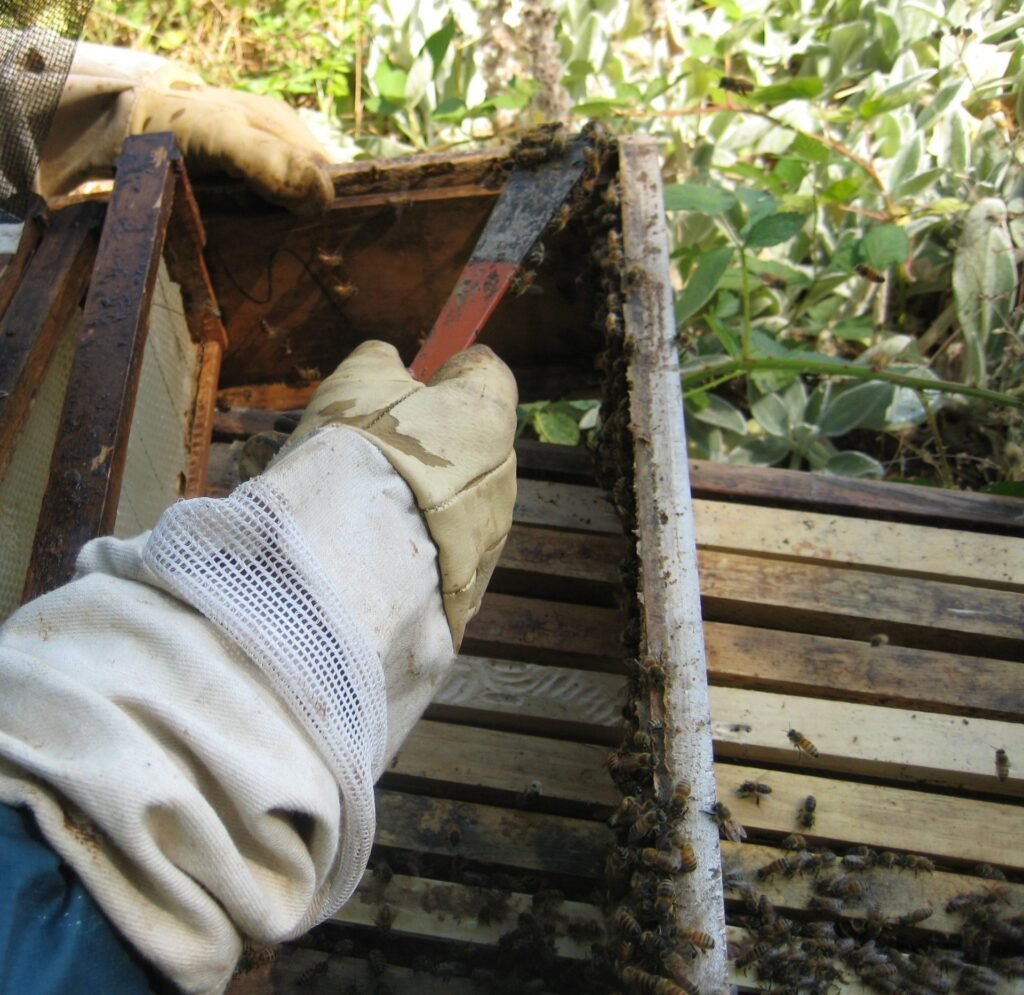
Propolis stains clothing and sticks to everything, so wear old clothes and keep a good hive tool handy. Utah State estimates a typical harvest of 50 to 100 grams per hive per season, so expect modest amounts from a hobby yard.
Harvest Trap or Propolis Envelope?
Harvesting and colony health don’t have to conflict. The trap on top is for you. The walls can be left rough so the colony builds its own propolis coating, which research links to better colony immunity. Our overview of how bees collect and use propolis covers the biology. If you want to know what harvested propolis can and can’t do for people, see what the research actually shows.
Frequently Asked Questions
What is the best type of propolis trap?
For harvesting, a top-bar screen with fine openings. In a field comparison, 1 × 1 mm and 2 × 2 mm screens outperformed a commercial slotted trap, and a 4 × 4 mm screen barely worked. For colony health, roughened interior walls performed best in recent research.
How long should a propolis trap stay in the hive?
Roughly three weeks per round in summer, depending on colony strength and resin sources. Check it, harvest when most openings are sealed, and remove it before winter setup.
How much propolis can one hive produce?
Utah State University Extension estimates 50 to 100 grams per hive per season. It varies with bee genetics, colony strength and local resin plants.
Can I use a queen excluder as a propolis trap?
Not effectively. Excluder openings are sized to let workers through, so bees walk through them instead of sealing them. The trap principle only works with openings too small for bees to pass. In the Greek trial, even 4 × 4 mm openings collected almost nothing.
Should I leave a propolis trap on over winter?
No. In a northern climate the top of the hive should be set up for ventilation and moisture control in winter. Harvest the trap in late summer and replace it with your winter covers.
Is a propolis trap the same as a pollen trap?
No. A pollen trap sits at the entrance and knocks pollen pellets off returning foragers. A propolis trap gives bees small gaps to fill with resin inside the hive.
The Bottom Line
Use a fine-opening screen on the top bars in summer for harvest, leave the walls rough if you want to support the colony’s own propolis coating, and skip side-wall collectors in a northern yard. Remove traps before winter and expect modest yields.