Table of Contents
- Origin: The Caucasus Mountains
- Physical Appearance
- Temperament: One of the Gentlest Races
- The Long Tongue Advantage
- Heavy Propolis Use: A Real Trade-Off
- Brood Buildup Timing
- The Honest Winter Question
- Who Should Consider Caucasian Bees
- Common Mistakes
- How Caucasian Bees Compare to Carniolan and Italian Bees
- Swarming Tendency
- Honey Production Characteristics
- Buying and Sourcing Caucasian Queens
- Hybridizing Caucasian Bees with Other Races
- Practical Inspection Tips for Propolis-Heavy Colonies
- Best Regional Fit for Caucasian Bees
- Disease Susceptibility Beyond Nosema
- How Caucasian Bees Fit Into U.S. Breeding History
- Requeening Considerations for Caucasian Colonies
- Combining with Other Races in the Same Yard
- A Practical Equipment Note
Origin: The Caucasus Mountains
The Caucasian honey bee (Apis mellifera caucasica) originates from the high valleys of the central Caucasus region, with the Republic of Georgia widely regarded as its central homeland, alongside populations found in eastern Turkey, Armenia, and Azerbaijan. American beekeeping first paid serious attention to the race after entomologist E.F. Phillips traveled to the Soviet Union and Georgia in 1932 specifically to study the breed’s unusually long tongue and calm temperament.
Physical Appearance
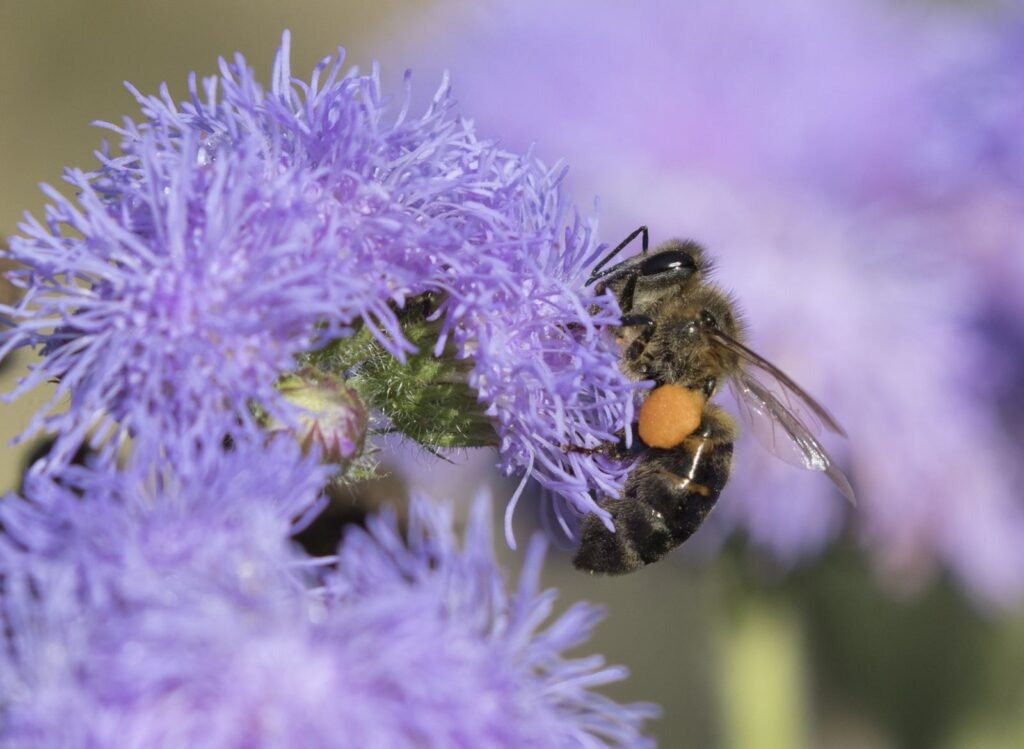
Caucasian bees are dark in color, sometimes showing brown spotting, with a distinctive lead-grey hair covering that sets them apart visually from the golden-banded Italian bee. In overall body size and shape, they’re quite similar to the Carniolan bee, another dark, cold-adapted European race.
Temperament: One of the Gentlest Races
Caucasian bees are widely regarded as among the calmest, most docile honey bee races kept anywhere, staying notably settled on the comb during inspections compared to more defensive stock. This gentleness, combined with a genuine willingness to forage in cooler temperatures and even light rain that would keep other races clustered indoors, makes them a popular choice for beekeepers who prioritize ease of handling.
The Long Tongue Advantage
Caucasian bees have among the longest proboscises of any honey bee race, measured at up to roughly 7.3mm, letting them reach nectar in deep, trumpet-shaped blossoms that shorter-tongued races like the Italian bee simply can’t access as efficiently. Red clover, a classic deep-throated forage plant, is the flower most commonly cited as a beneficiary of this trait, making Caucasian bees a genuinely useful choice in regions where clover is a significant part of the local forage.
Commercial beekeeper Bob Binnie walks through his own first-hand experience introducing Caucasian bees into an established apiary, including the temperament and propolis differences covered throughout this guide.
Heavy Propolis Use: A Real Trade-Off
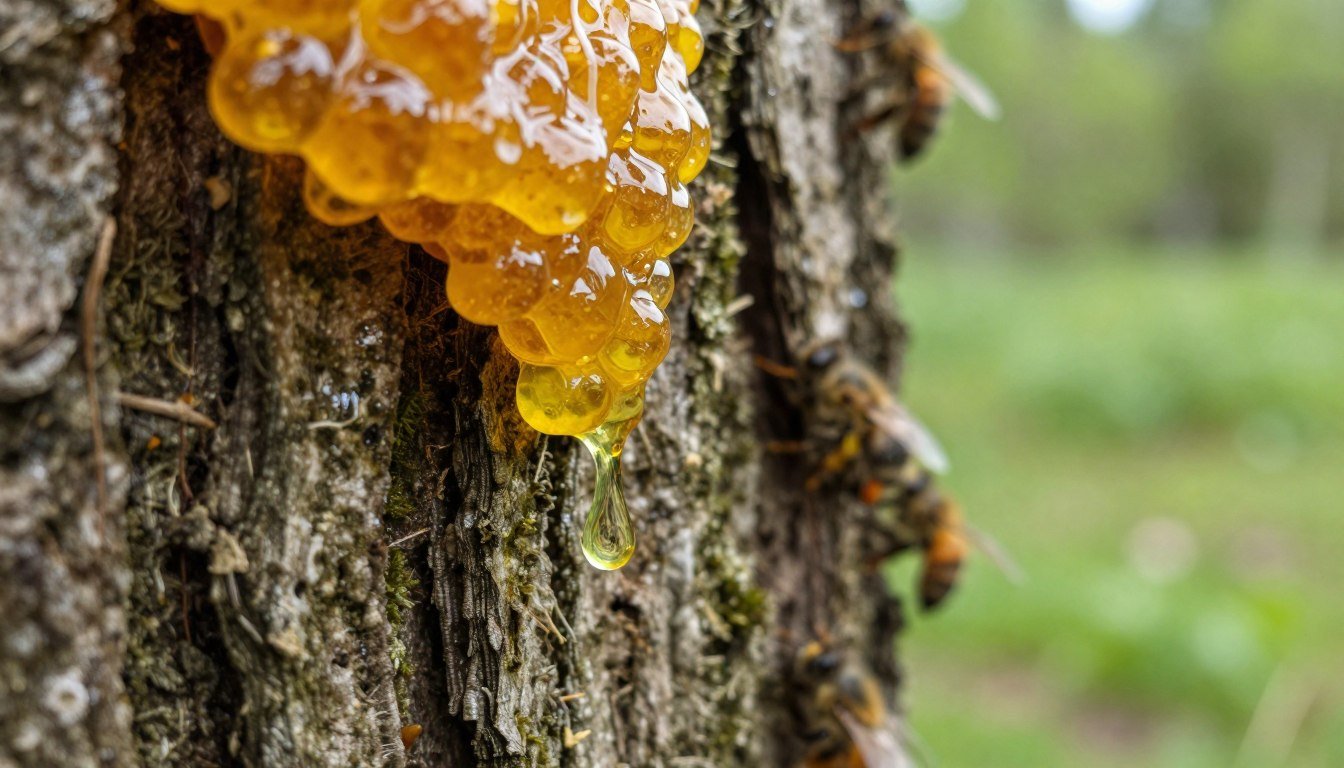
Caucasian bees are widely recognized as the heaviest propolis users among commonly kept honey bee races, coating frame rests, box seams, and inner cover edges far more thickly than an Italian or Carniolan colony typically would. While propolis itself has real value, this trait has a genuine practical downside: frames and boxes get glued together more substantially, making routine inspections slower and requiring more hive-tool prying than beekeepers used to other races may expect. A 2024 study in Food Science & Nutrition analyzing 17 Caucasian bee propolis samples from across Turkey found total phenolic content ranging from roughly 23 to 98mg gallic acid equivalent per gram depending on extraction method, with a strong correlation between phenolic content and antioxidant activity – real chemical evidence behind why beekeepers bother collecting this byproduct at all rather than simply scraping it away as waste.
Brood Buildup Timing
Caucasian colonies build brood strongly but tend to reach peak colony strength in mid-summer rather than early spring, a timing pattern that works well in regions where the dominant nectar flow itself arrives mid-summer. In regions where the main flow comes earlier in spring, this later buildup timing can be a genuine mismatch, with the colony reaching its strongest population after the best forage window has already started to close.
The Honest Winter Question
Caucasian bees are sometimes described as winter-hardy on the strength of their willingness to fly in cool, damp conditions other races avoid, but this claim deserves an honest qualifier: the race is also commonly cited as more prone to nosema and dysentery during long periods of winter confinement in colder northern climates, likely connected to their heavy propolis use complicating ventilation and moisture management inside the hive. Beekeepers in genuinely harsh, long-winter climates should weigh this real trade-off rather than assuming cool-weather foraging ability automatically means strong overwintering performance.
Who Should Consider Caucasian Bees
Caucasian bees suit beekeepers who prioritize calm, easy-to-handle colonies, particularly in regions with significant clover forage or a mid-summer-dominant nectar flow, and who don’t mind extra hive-tool effort from heavy propolis. They’re a weaker fit for beekeepers in harsh northern winter climates prioritizing minimal-intervention overwintering, or for anyone who finds heavy propolis buildup a genuine hassle during routine inspections.
How Caucasian Bees Compare to Carniolan and Italian Bees
Caucasian bees share the Carniolan bee’s dark coloring, cold-region ancestry, and generally gentle temperament, but diverge sharply on propolis use, where Carniolans are comparatively light users and Caucasians are the heaviest of any common race. Against the Italian bee, the contrast is starker still: Italians are golden-banded, build up early and aggressively in spring, and use minimal propolis, essentially the opposite profile from a Caucasian colony’s darker coloring, mid-summer buildup, and propolis-heavy habits.
| Trait | Caucasian | Carniolan | Italian |
|---|---|---|---|
| Color | Dark, lead-grey hair | Uniformly dark gray-brown | Golden-yellow banding |
| Propolis use | Heaviest of any common race | Light | Minimal |
| Brood buildup peak | Mid-summer | Early spring, weather-responsive | Early spring, fast |
| Tongue length | Longest (~7.1-7.3mm avg.) | Average | Average |
| Winter performance | Nosema/dysentery risk in long confinement | Strong, conservative stores use | Higher stores consumption |
| US commercial availability | Limited, specialty breeders | Good | Highest, nationwide |
Swarming Tendency
Caucasian bees are generally considered to have a moderate swarming tendency, not as prone to swarm as some more prolific-brooding races but still requiring normal seasonal swarm-prevention attention like adequate super space and, where needed, brood box reversal or checkerboarding during buildup. Their later, mid-summer buildup timing means swarm pressure often peaks later in the season than it would with an early-buildup race, worth factoring into inspection scheduling.
Honey Production Characteristics
Honey production from Caucasian colonies is generally considered solid rather than exceptional, reflecting their steady, later-peaking brood buildup pattern rather than the more explosive early-season population growth associated with heavier honey producers like Italian bees. Where Caucasian bees genuinely shine is on forage sources many other races handle poorly, particularly deep-throated flowers like red clover that reward their unusually long tongue.
Buying and Sourcing Caucasian Queens
Purebred Caucasian queens are less widely available from commercial queen breeders in the United States than Italian, Carniolan, or hybrid lines like Buckfast and Saskatraz, since the breed has never achieved the same commercial popularity domestically. Beekeepers specifically wanting Caucasian genetics should expect a narrower list of specialty breeders and should confirm actual breeding-stock purity with the supplier before ordering, since some queens marketed loosely as “Caucasian-influenced” may carry only partial ancestry from the original race.
Hybridizing Caucasian Bees with Other Races
Caucasian genetics have occasionally been used in hybrid breeding programs aiming to combine their gentleness and long-tongue foraging advantage with the earlier spring buildup or higher honey yield of other races, though no major commercially popular hybrid line has emerged from Caucasian stock the way Buckfast combined multiple European races or Saskatraz combined varroa-resistance traits. Beekeepers interested in Caucasian genetics today are more likely to find them as a relatively pure regional specialty stock than as a component of a well-known commercial hybrid.
Practical Inspection Tips for Propolis-Heavy Colonies
Working a Caucasian colony efficiently means budgeting extra time for prying frames and box seams apart with a hive tool, since propolis buildup will otherwise slow inspections considerably compared to lighter-propolis races. Keeping a sharp, well-maintained hive tool on hand, and expecting to clean accumulated propolis off frame rests periodically rather than treating heavy buildup as a sign something is wrong, both make routine management noticeably smoother.
Best Regional Fit for Caucasian Bees
Caucasian bees are the strongest regional fit for temperate climates with a genuine mid-summer nectar flow and meaningful clover forage, letting their later buildup timing and long-tongue advantage both work in the beekeeper’s favor rather than against the local bloom calendar. They’re a comparatively weaker fit for regions with harsh, extended winters or an early, short spring flow, where their buildup timing and winter-confinement disease susceptibility both work against colony performance.
Disease Susceptibility Beyond Nosema
Beyond the winter nosema and dysentery concerns already covered, Caucasian bees are also commonly cited as somewhat more prone to chalkbrood than some other races, a fungal brood disease that thrives in damp, poorly ventilated conditions – a pattern that fits with the same propolis-driven ventilation complications behind their winter disease susceptibility. Beekeepers running Caucasian colonies should prioritize good apiary drainage and hive ventilation as a practical way to reduce both risks at once.
How Caucasian Bees Fit Into U.S. Breeding History
Caucasian bees arrived in the American beekeeping conversation later and less commercially than Italian bees, which had already become the country’s default stock decades earlier, meaning Caucasian genetics, unlike the Russian bee import that followed decades later, never achieved anywhere near the same widespread adoption despite real, well-documented advantages like gentleness and long-tongue foraging. Today they occupy a niche position: a genuinely useful specialty stock for beekeepers whose specific regional conditions and forage match the breed’s strengths, rather than a mainstream default choice the way Italian or Carniolan bees have become.
Requeening Considerations for Caucasian Colonies
Because purebred Caucasian queens are harder to source than mainstream races, beekeepers wanting to maintain Caucasian genetics over multiple seasons should plan requeening further in advance than they might with a widely available line, since a preferred specialty breeder may have limited stock or a shorter ordering window. Where purebred replacement isn’t available in time, some beekeepers accept a hybrid or locally raised queen from Caucasian stock rather than switching races entirely, preserving at least partial genetics in the yard.
Combining with Other Races in the Same Yard
Running Caucasian colonies alongside other races in the same yard is generally straightforward, since drifting and minor cross-mating between colonies of different races doesn’t cause the kind of problems it might in a dedicated breeding program, though beekeepers specifically trying to preserve purebred Caucasian genetics for future queen-rearing should be aware that open mating with drones from other nearby colonies will affect the purity of any queens raised locally. For beekeepers not actively breeding queens themselves, this is a minor consideration rather than a practical obstacle to simply enjoying the race’s temperament and foraging strengths.
A Practical Equipment Note
Given the heavy propolis use, beekeepers running Caucasian colonies often find a dedicated, sturdier hive tool with a wider, stiffer blade genuinely worthwhile compared to a lighter tool that flexes under heavier prying, and keeping a small container on hand to collect scraped propolis for later use in tinctures or salves turns an inspection annoyance into a modest secondary hive product. A folding hive tool with a hooked end can also help lift stuck frames without excessive prying force, reducing the risk of cracking comb loose from a heavily propolized frame lug during a routine inspection. A light coat of vegetable oil or a purpose-made lubricant wiped along frame rests at the start of the season can also cut down on how firmly propolis bonds surfaces together over the following months. This small bit of seasonal prep pays off most noticeably on the boxes and frames closest to the brood nest, where propolis accumulation tends to be heaviest across a full working season.
Common Mistakes
Choosing Caucasian bees purely for their gentle reputation while overlooking the real propolis-handling and winter-hardiness trade-offs sets up an avoidable mismatch between expectations and reality. Assuming their cool-weather foraging tolerance automatically translates into strong winter cluster survival ignores the well-documented nosema susceptibility associated with the race in colder climates. Fighting heavy propolis buildup with excessive scraping, rather than accepting it as a normal characteristic of the breed and adjusting inspection technique accordingly, creates unnecessary extra work and colony disturbance.
Sources
Origin, physical trait, and behavioral details reflect published entomological records on Apis mellifera caucasica, including E.F. Phillips’s 1932 field study of the breed in Georgia. See the USDA Agricultural Research Service’s Honey Bee Breeding, Genetics and Physiology Research Unit for additional authoritative detail.
FAQ
What makes Caucasian bees different from other honey bee races?
Their combination of an unusually long tongue, exceptionally calm temperament, and by far the heaviest propolis use of any commonly kept race sets Caucasian bees apart from Italian, Carniolan, and other common stock.
Are Caucasian bees good for cold climates?
Not necessarily. While they’ll forage in cooler, damper conditions than most races, they’re also commonly cited as more prone to nosema and dysentery during long winter confinement in genuinely cold northern climates.
Why do Caucasian bees use so much propolis?
It’s a genetic trait of the race, believed to be an adaptation from their mountain-valley origin, and it results in noticeably more glued-together frames and boxes than other races typically produce.
Where do Caucasian bees originate?
They originate from the high valleys of the central Caucasus region, with the Republic of Georgia considered the breed’s central homeland, alongside populations in eastern Turkey, Armenia, and Azerbaijan.